7 books like Throne of Glass, from A Court of Thorns and Roses to Graceling: assassin heroines, court intrigue, and slow-burn fantasy romance.
Updated June 10, 2026
Throne of Glass opens with a hook that still works after all these years: Celaena Sardothien, the most notorious assassin in Adarlan, is pulled out of a death camp to compete for the title of King's Champion, serving the very empire that destroyed her. What Sarah J. Maas built from that premise (the series began as a story she posted online as a teenager) is an eight-book epic that starts as a competition story in a glass castle and grows into a sprawling war fantasy, with a heroine who is vain, deadly, funny, and carrying far more history than the first book lets on.
Readers who finish the series usually want one of three things. Some want more Maas, full stop, and A Court of Thorns and Roses is the obvious door, with the same blend of romance, danger, and escalating scope. Some want another lethal heroine in a fantasy court, which is where Graceling and Shadow and Bone live. And some loved the competition structure itself, the trials and rivals and a girl fighting for her life in front of an audience, which The Hunger Games and The Selection serve from very different directions.
A practical note: several of these are series openers, so check your appetite before you start. An Ember in the Ashes and Shadow and Bone are completed multi-book runs, The Hunger Games is a tight trilogy, and A Court of Thorns and Roses is still expanding. Each entry below tells you which part of Throne of Glass it echoes so you can pick by what actually kept you reading.
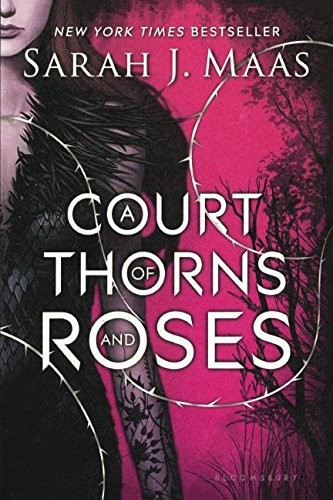
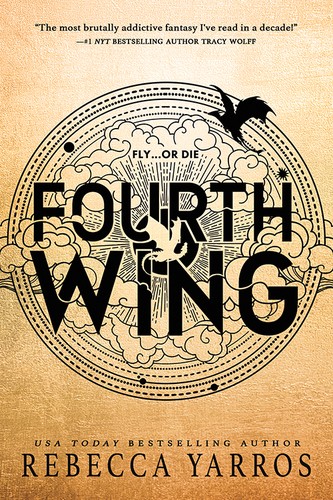
This is the natural next stop, and most Throne of Glass readers get here eventually. Feyre, a mortal huntress dragged into the faerie lands of Prythian after killing the wrong wolf, has the same DNA as Celaena: a hardened survivor who turns out to matter far more than anyone guessed. The Maas signatures are all present, the slow-burn romance that shifts targets as the series deepens, the found family, the world that keeps getting bigger, and the late-series pivot from personal stakes to all-out war.
The difference is the mix. A Court of Thorns and Roses leans much harder into romance, especially from the second book onward, and the content is noticeably more adult than the early Throne of Glass books. The court intrigue is there, but it serves the relationships rather than the other way around. If you read Throne of Glass for Celaena's knives and the politics, start with Graceling instead. If you read it for the romance and the fae, this is the upgrade.
Read this for the closest match to Celaena herself.
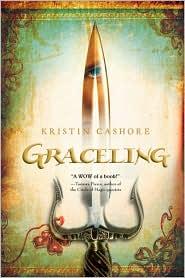
Kristin Cashore's 2008 novel is the book most often shelved next to Throne of Glass, and the kinship is direct: Katsa is a young woman Graced with killing, used as an enforcer by a king she despises, who slowly claims her skills for herself. That arc, a lethal girl deciding what her deadliness is for, is exactly Celaena's, and Katsa's prickly independence and her refusal to be owned by anyone will feel immediately familiar. The romance with Po is a genuine slow burn built on sparring and mutual respect.
Graceling is quieter and more self-contained than Maas. There is no competition structure, less courtly glitter, and the prose is more restrained, with a heroine who is blunt where Celaena is theatrical. It also stands well alone, with companion novels (Fire, Bitterblue) rather than a single continuing epic. Pick it if you want the assassin heroine and the slow-burn romance without committing to another eight-book saga.
Read this if the brutal empire and the military trials were your favorite part.
Sabaa Tahir's series shares the bones of early Throne of Glass: a merciless empire modeled on Rome, a deadly training academy, trials that kill competitors, and two leads (Laia, a scholar turned spy, and Elias, a soldier who wants out) caught in machinery designed to crush them. The Commandant of Blackcliff is one of the genre's great villains, and the Trials sequence delivers the same competition-under-threat tension as Celaena's contest for King's Champion.
Tahir is darker than Maas, and not cosmetically. The violence has real weight, the empire's cruelty is not softened by banter, and the romance stays subordinate to survival for much longer. The dual narration also splits the spotlight rather than centering one charismatic heroine. Choose this if you wished Throne of Glass had stayed in the grim register of its opening chapters; the completed four-book series rewards the commitment.
Read this for the competition with the highest stakes and the tightest plotting.
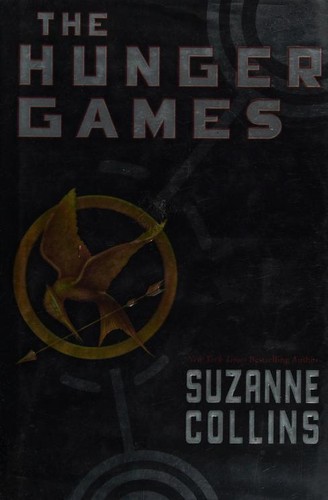
If the King's Champion contest was what hooked you, this is the purest version of that engine. Katniss volunteering for a televised fight to the death gives you the same setup as Celaena's tournament, a skilled, underestimated girl forced to perform lethality for a regime she hates, and Suzanne Collins executes it with relentless pacing. Katniss and Celaena even share the archery, the survival instincts, and the simmering rage at an empire built on spectacle.
This is dystopian science fiction rather than fantasy, so there is no magic, no fae, and far less romance; the love triangle exists but is deliberately secondary to survival and politics. It is also a finished, disciplined trilogy where Throne of Glass sprawls. Most readers have already met it, but if you somehow came to Maas first, The Hunger Games is leaner, harsher, and arguably the best-constructed competition story the YA shelf has produced.
Read this if you want court intrigue with a magic system worth the name.
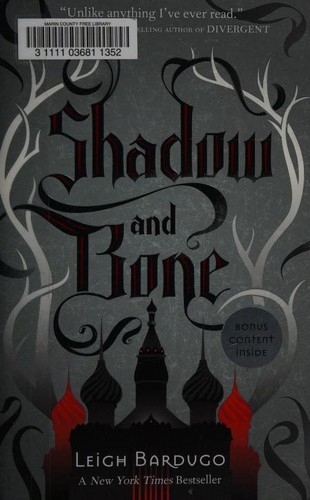
Leigh Bardugo's Grishaverse opener gives you what late Throne of Glass delivers: a girl who discovers she carries a rare, world-altering power and gets pulled from obscurity into a glittering, dangerous court. Alina's rise among the Grisha, and her magnetic, untrustworthy mentor the Darkling, scratch the same itch as Celaena's entanglements with princes and kings, and Bardugo's tsarist-Russia-inspired Ravka is one of YA fantasy's most distinctive settings.
Alina herself is the inversion of Celaena: passive and uncertain where Celaena is swaggering, which frustrates some Maas readers in the first book. The trilogy is also a warm-up for Bardugo's best work; if you only read one thing of hers, many would point you to Six of Crows, set in the same world with a sharper ensemble. Start here if you want the full chronology, or jump ahead if you want Bardugo at peak form.
Read this only if the gowns, the palace, and the prince were the draw.
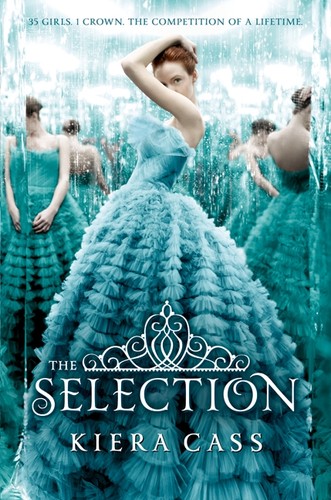
The Selection takes the competition-in-a-castle frame of Throne of Glass and strips out the bloodshed: thirty-five girls compete not to be King's Champion but to marry Prince Maxon, in a caste-divided future America. The pageantry that Maas sprinkles through Celaena's story, the dresses, the court gossip, the heroine who refuses to perform on cue, is the whole meal here, and America Singer's prickliness gives the fluff a spine.
Be honest with yourself about what this is, though. There are no assassins, the stakes are romantic rather than lethal, and the worldbuilding is thin compared to anything else on this list. Readers who came to Throne of Glass for Celaena's body count tend to bounce off it. It earns its place as the comfort-read option: fast, sweet, and finished in three core books, for when you want the palace without the war.
Read this for enemies-to-lovers with actual teeth.
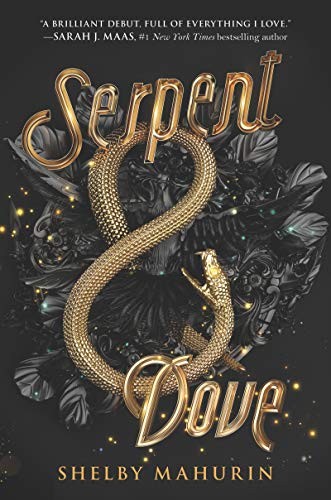
Shelby Mahurin's debut delivers the dynamic Throne of Glass readers chase across the whole Maas catalog: a witch and a witch hunter forced into marriage, each sworn to destroy the other's kind. Lou is a Celaena-adjacent heroine, foul-mouthed, theatrical, hiding her power and her past, and the forced-proximity romance with the rigidly devout Reid generates the banter-heavy, slow-thaw tension that Maas fans recognize on sight. The French-flavored setting, witches burned by a zealous Church, gives the conflict real menace.
The scope is smaller than Throne of Glass. This is a romance-first fantasy where the plot exists largely to keep Lou and Reid colliding, and the worldbuilding stays loose where Maas eventually builds continents. The trilogy also gets more uneven after the first book. Pick it when you want the relationship dynamics concentrated rather than spread across an epic; as a single sitting, the first book is hard to beat for that.
What should I read first after finishing Throne of Glass?
If you want more of the same voice, go straight to A Court of Thorns and Roses, also by Sarah J. Maas; it has the same blend of romance, fae politics, and escalating epic scope. If what you loved was Celaena specifically, Graceling by Kristin Cashore is the closest heroine match in the genre, a girl Graced with killing who breaks free of the king who uses her.
Is Throne of Glass or A Court of Thorns and Roses better to read first?
They are separate series and can be read in either order. Throne of Glass is longer (eight books) and starts more YA before maturing; A Court of Thorns and Roses is shorter so far, more romance-forward, and more adult in content from early on. Maas readers tend to recommend starting with whichever emphasis appeals more, plot and politics (Throne of Glass) or romance (A Court of Thorns and Roses).
In what order should I read the Throne of Glass series?
Publication order works: Throne of Glass, Crown of Midnight, Heir of Fire, Queen of Shadows, Empire of Storms, Tower of Dawn, and Kingdom of Ash, with the prequel collection The Assassin's Blade usually slotted either first or after Queen of Shadows. Many fans also read Empire of Storms and Tower of Dawn in alternating chunks since they run in parallel, but that is optional.
Which book on this list is most like the King's Champion competition?
The Hunger Games is the purest competition story, a skilled girl forced into a lethal contest staged by a regime she hates, with the tightest plotting on the list. An Ember in the Ashes comes close with its deadly Trials at a military academy. The Selection borrows the same structure but swaps the bloodshed for a royal romance contest.
As an Amazon Associate, we earn from qualifying purchases. · About & methodology