8 books like A Court of Thorns and Roses, from From Blood and Ash to The Cruel Prince: fae courts, enemies-to-lovers, and romantasy that delivers.
Updated June 10, 2026
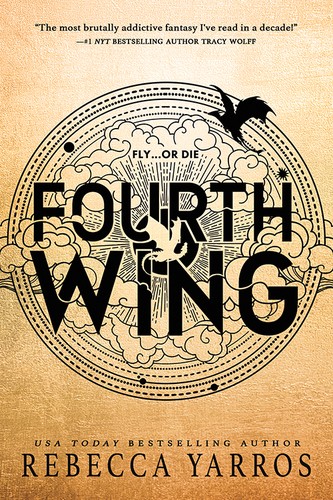
A Court of Thorns and Roses is the book that made faerie courts the center of modern romantasy. Sarah J. Maas starts with a Beauty and the Beast frame, the mortal huntress Feyre dragged into Prythian by the High Lord Tamlin after killing a faerie wolf, then steadily dismantles it: the curse underneath is crueler than the fairy tale, the trials Under the Mountain are genuinely brutal, and the series famously reroutes its own romance in book two. The mix readers chase afterward is specific: a hardened heroine, morally gray fae males, court politics, and a romance that gets explicit.
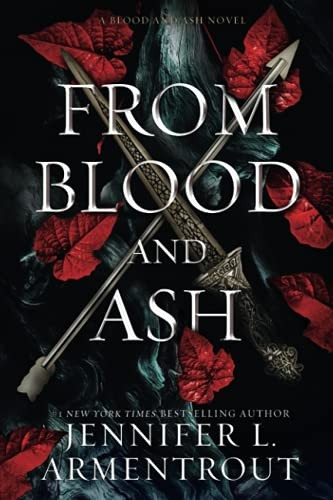
The books below are sorted by which part of that mix you want next. For the closest overall match, adult heat and a maiden-meets-dangerous-protector arc, Blood and Ash by Jennifer L. Armentrout is the series ACOTAR readers most often binge next. For more faerie courts and scheming, The Cruel Prince is the sharpest. The Wrath & the Dawn and Serpent & Dove serve the enemies-to-lovers and forced-proximity readers, while An Ember in the Ashes, A Darker Shade of Magic, Graceling, and The Selection each take one thread (stakes, world-hopping magic, the lethal heroine, the competition romance) and run with it.
One note on heat levels, since that is half the question with ACOTAR readalikes: Blood and Ash is adult and matches Maas. The Wrath & the Dawn and Serpent & Dove are upper young adult with real tension but less explicitness. The Cruel Prince, Graceling, An Ember in the Ashes, and The Selection are young adult, and A Darker Shade of Magic barely has romance at all. Each entry below is labeled accordingly.
Read this if Under the Mountain was the part you could not put down.
What An Ember in the Ashes shares with ACOTAR is not faeries but dread. Sabaa Tahir's Roman-inspired Martial Empire runs on the same engine as Amarantha's court: trials designed to break people, a regime that punishes love, and protagonists forced to do terrible things to protect the people they care about. Laia, who goes undercover as a slave in a military academy to save her brother, has Feyre's exact spine, an ordinary young woman walking into a monster's house on purpose.
This is the grimmest book on the list and the least romance-forward; the slow-burn love story stretches across a four-book series and stays young adult in heat. There are no fae, and the magic is sparse, jinn and visions rather than High Lords and courts. Choose it if ACOTAR's darkest stretch was your favorite and you want stakes that stay high, not if you came for the romance and the wings.
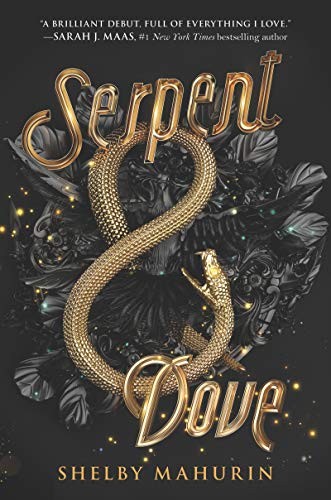
Read this for a forced marriage between natural enemies that actually combusts.
Shelby Mahurin's premise distills the ACOTAR dynamic to its essence: Lou is a witch, Reid is a holy witch hunter, and a public scandal forces them to marry. The hostility-to-devotion arc lands the same beats that made Feyre's romances work, sharpened by genuine ideological opposition. The two of them have real reasons to hate each other, and the French-inspired world of cathedrals, covens, and burnings gives the romance an edge of actual danger.
It is upper young adult, so steamier than most YA but a step below Maas, and the world is much smaller than Prythian, one city and its surroundings rather than seven courts. The plot also leans heavily on the central couple; secondary characters and politics are thinner than ACOTAR's. Pick it when you want the relationship to be ninety percent of the book and you like your enemies-to-lovers with banter and a literal witch hunt.
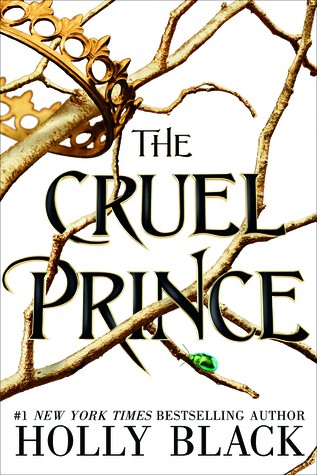
Read this if you want crueler faeries and sharper court politics than Prythian's.
Holly Black has been writing faeries longer than almost anyone in the genre, and Elfhame is what Prythian readers often want next: a court where the fae are genuinely alien, the bargains genuinely binding, and the politics genuinely lethal. Jude, a mortal raised among faeries who murdered her parents, fights for a place there through scheming rather than romance, and her poisonous entanglement with Prince Cardan is the genre's definitive love-hate pairing.
Know what you are trading: this is young adult, so the romance is all charged silences and no explicit scenes, and Jude is harder to love than Feyre, ambitious and morally gray in ways the book never softens. The intrigue, double-crosses and coups and stolen crowns, is the actual main plot. Choose it if ACOTAR's faerie politics interested you more than its bedroom scenes, and read all three books; the trilogy plays as one continuous story.
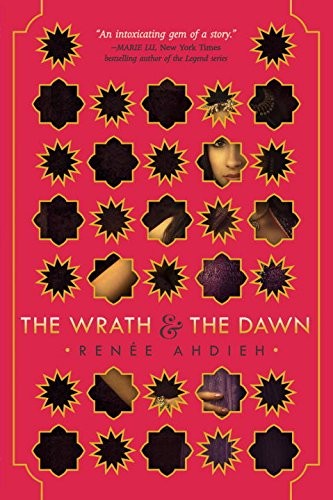
Read this if falling for the monster was the part that hooked you.
Renée Ahdieh retells One Thousand and One Nights the way Maas retells Beauty and the Beast: Khalid is a boy-king who takes a new bride each night and has her executed at dawn, and Shahrzad volunteers to marry him, planning revenge for her murdered best friend. Like Feyre with Tamlin and later Rhysand, she discovers the monster has a curse and a conscience, and the slide from hatred into love is written with some of the most quotable yearning in young adult fantasy.
The world is lush Arabian-inspired court fantasy rather than faerie, and the magic stays at the edges; this is a romance with fantasy seasoning, not a war epic. It is also a tight duology, so there is no seven-book commitment and no series-wide pivot. Heat is upper-YA, sensual but not explicit. Pick it when you want the emotional core of ACOTAR, loving someone you came to destroy, in a shorter, more lyrical package.
Read this if you want the series ACOTAR readers most often binge straight through.
Jennifer L. Armentrout's From Blood and Ash is the closest thing to more ACOTAR that is not by Maas, and the two fandoms overlap almost completely. Poppy is a sheltered Maiden whose entire life belongs to a religious destiny she never chose, until her dangerously charming guard Hawthorne unravels everything she believes. The beats are the ones Maas readers want: a heroine discovering her own power, a love interest with a devastating secret identity, a slow-burn that turns fully adult, and a world whose history is a lie.
The trade-offs are real. Armentrout writes faster and looser than Maas; the books are long, the inner monologue repetitive, and the plotting more soap opera than architecture. But the twist at the heart of book one genuinely lands, and the series (and its prequel arc, Flesh and Fire) offers hundreds of pages of exactly the flavor ACOTAR readers miss. This is the indulgent pick, and the right one if you finished A Court of Mist and Fury wanting more heat and more betrayal.
Read this if the magic and world-building mattered more to you than the romance.
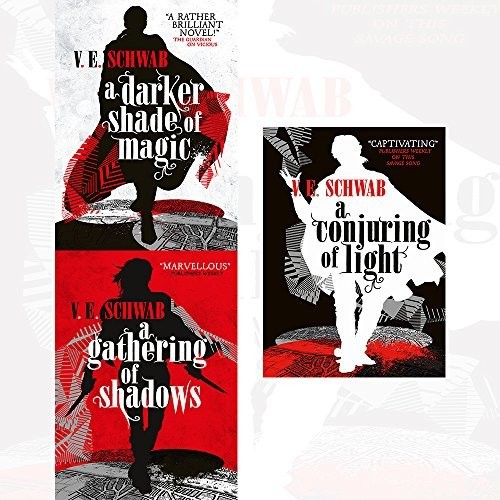
V.E. Schwab's premise is one of fantasy's best hooks: four parallel Londons, from magic-drenched Red London to dying White London to our own dull Grey one, and Kell, one of the last magicians able to walk between them. The atmosphere of beautiful danger, royal courts, and a cross-dressing thief heroine in Lila Bard gives ACOTAR readers the texture they like, and Schwab's prose is cleaner and more controlled than Maas's.
Be clear about what this is not: a romance. Kell and Lila circle each other across three books with barely a kiss, and anyone arriving for Feyre-and-Rhysand chemistry will be frustrated. The draw is the magic system, the villains, and the momentum of the heist-and-chase plotting. Choose it as a palate cleanser when you have read too many fae romances in a row and want craft-forward adult fantasy that still moves fast.
Read this for a heroine who never needs rescuing, not once.
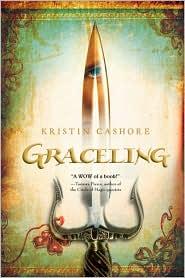
Kristin Cashore's Katsa is what Feyre becomes by the later books, delivered from page one: a young woman Graced with killing, used as a king's thug, who decides to take her life back. The partnership with Po, a prince Graced with combat sense, is built on equality and consent in a way that reads as a deliberate correction to controlling love interests, and readers who side-eyed Tamlin's behavior in ACOTAR tend to love what Cashore does here.
It is a 2008 young adult novel, quieter and more interior than anything Maas writes, with no courts full of scheming fae and a romance that is warm rather than feverish (though unusually frank for its era about Katsa's choice not to marry or have children). The plot is a journey-and-rescue story, not a war. Pick it when you want the strong-heroine thread of ACOTAR with full agency and zero possessiveness.
Read this only if the romance and the gowns were the whole point for you.
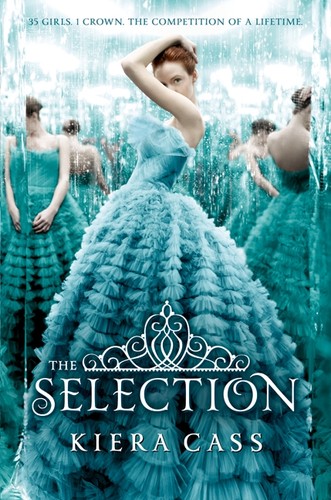
Kiera Cass's series takes one slice of the ACOTAR experience, a girl plucked from poverty into a glittering world of palaces, dresses, and a high-stakes courtship, and builds an entire series on it. America Singer competes with thirty-four other girls for Prince Maxon's hand in a televised contest, The Bachelor crossed with dystopia, and the comfort-read pleasures of court gossip, makeovers, and love-triangle agonizing are delivered without apology.
Be honest about the gap: there is no magic, no fae, minimal danger, and the dystopian caste system is set dressing rather than substance. The writing is breezy young adult and the heat level is chaste. This is the lightest book on the list by a wide margin. Choose it as dessert between heavier fantasies, or skip it if what you loved about ACOTAR was the darkness and the wings rather than the ballgowns.
What is the closest book to A Court of Thorns and Roses?
From Blood and Ash by Jennifer L. Armentrout (listed here as Blood and Ash) is the series ACOTAR readers most often pick up next. It shares the adult heat level, the heroine discovering hidden power, the love interest with a secret identity, and the long binge-able series structure. For the faerie-court element specifically, The Cruel Prince by Holly Black is the closest match.
Should I read Throne of Glass or ACOTAR readalikes next?
If you have not read Maas's other series, start there before moving to other authors. Throne of Glass is a longer, more epic eight-book arc with a slower romantic build, and Crescent City is her adult urban-fantasy series. Most readers who finish all three then move to From Blood and Ash or The Cruel Prince, depending on whether they want more heat or more intrigue.
Is ACOTAR worth continuing past the first book?
Yes, and this matters for choosing readalikes. The general consensus is that book one is the weakest and the series transforms with A Court of Mist and Fury, which reframes the romance and deepens the politics. If you only read book one and felt lukewarm, read the second before deciding the genre is not for you.
Which of these books are appropriate for younger readers?
The Selection, Graceling, The Cruel Prince, The Wrath & the Dawn, and An Ember in the Ashes are all published as young adult, with romance kept to kissing and tension. Serpent & Dove sits at the mature end of YA. Blood and Ash is fully adult with explicit content, like ACOTAR itself, and A Darker Shade of Magic is adult fantasy with violence but little romance.
As an Amazon Associate, we earn from qualifying purchases. · About & methodology