8 books like The Virgin Suicides, from The Bell Jar to We Were Liars: novels of girlhood, memory, and tragedy watched from the outside.
Updated June 10, 2026
Jeffrey Eugenides's 1993 debut is built on a narrative trick that no one has quite pulled off since: it is told in the first person plural. A chorus of middle-aged men, still obsessed decades later, reconstructs the year the five Lisbon sisters died in their 1970s Michigan suburb, working from collected evidence (diaries, photographs, interviews) like archivists of their own adolescence. The sisters stay forever out of reach, which is the point. The book is less about why the girls died than about the boys watching, the suburb forgetting, and the way memory turns real people into myth. Sofia Coppola's 1999 film fixed its hazy, sunlit dread in the culture for good.
No other novel has that exact voice, so this list sorts by what pulled you in. If it was the interior life the boys could never access, The Bell Jar and Girl, Interrupted go inside the very experience the Lisbon girls keep hidden. If it was the structure (tragedy reconstructed afterward by the people it haunted), We Were Liars, The Lovely Bones, A Separate Peace, and Everything Is Illuminated all narrate from the far side of catastrophe. And if it was the book's unsettling refusal to look away, The End of Alice pushes that much further, while How I Live Now bottles the dreamy, doomed-summer atmosphere.
A practical note: these vary widely in intensity. A Separate Peace and We Were Liars are taught to teenagers; The End of Alice is emphatically not, and you should read its entry below before picking it up. Each write-up says which thread of the Eugenides novel it follows and where it breaks off.
Read this for the interior life the Lisbon sisters never get to narrate.
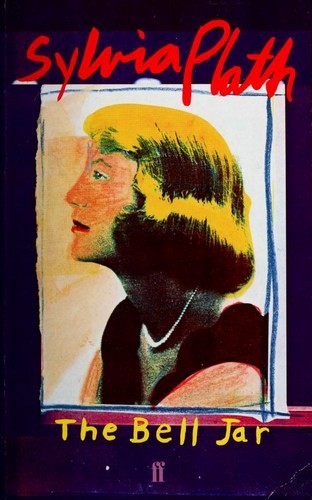
Sylvia Plath's only novel, published in 1963 weeks before her death, is the natural companion to The Virgin Suicides because it supplies exactly what Eugenides withholds. Esther Greenwood, a gifted college student with a glamorous New York magazine internship, narrates her own descent toward breakdown and suicide attempt from the inside, in prose that is precise, funny, and frightening. Where the Lisbon girls are seen only through windows and souvenirs, Esther tells you what the bell jar feels like from underneath, and the 1950s suffocation of female ambition she describes is the same pressure the Lisbon house concentrates.
The difference is that this is testimony, not myth. There is no chorus, no haze of memory, no suburban Greek tragedy; the voice is singular and sharply self-aware, and the book is semi-autobiographical, which gives it a documentary weight Eugenides deliberately avoids. It is also, against expectation, often very funny in its first half. Pick it if you finished The Virgin Suicides wanting to hear from Cecilia or Lux directly. It is the book that conversation always arrives at.
Read this for the dreamy, doomed-summer atmosphere in a different catastrophe.
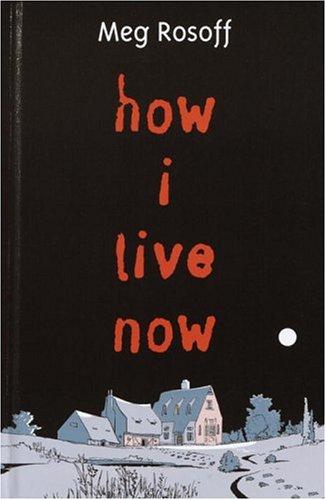
Meg Rosoff's 2004 novel shares The Virgin Suicides' particular spell: adolescence rendered as a hot, hazy idyll with disaster pressing in at the edges. Daisy, a fifteen-year-old New Yorker sent to stay with cousins in the English countryside, narrates a summer of half-feral freedom and first love that is interrupted when war breaks out and occupation reaches even their farm. Like Eugenides, Rosoff is interested in how teenagers build a sealed, mythic world of their own, and in the voice (Daisy's run-on, comma-spliced narration) as much as the plot. Daisy's eating disorder also threads in the self-destruction theme quietly rather than clinically.
It is a different genre: young adult, speculative, and ultimately less bleak, since Daisy survives and the book is about endurance as much as loss. The war premise is kept deliberately vague, which works like the unexplained quality of the Lisbon deaths. Pick it when you want the languid-summer mood and the inventive voice but could use an ending that leaves a door open. It won the Printz Award and the Guardian Children's Fiction Prize.
Read this for the documentary truth behind the myth of the troubled girl.
Susanna Kaysen's 1993 memoir of her nearly two years in McLean psychiatric hospital, beginning in 1967 when she was eighteen, is the nonfiction shadow of The Virgin Suicides, and the two books appeared the same year. Kaysen interrogates exactly the question the neighborhood boys keep fumbling: what was actually happening inside the girl everyone decided was disturbed? She reproduces her own hospital records between chapters, building the book from evidence the way the boys build their archive, except the subject gets to talk back. Her chapters on the borderline personality diagnosis, and on how easily a teenage girl's noncompliance got medicalized, read like a rebuttal to every theory in Eugenides's suburb.
It is a slim, fragmented, essayistic memoir rather than a novel, with no plot to speak of and a cool, skeptical wit in place of Eugenides's lush elegy. Some readers find it dry after the novel's atmosphere. Pick it if the mental health thread is what held you, and you want fact instead of fable. The 1999 film with Winona Ryder and Angelina Jolie softens and dramatizes it considerably.
Read this for memory and loss layered into an elaborate narrative archive.
Jonathan Safran Foer's 2002 debut shares The Virgin Suicides' deepest preoccupation, which is not death but reconstruction: the living assembling stories, documents, and guesses around the dead. A young American named Jonathan travels to Ukraine to find the woman who may have saved his grandfather from the Nazis, and the novel braids his invented magical history of the shtetl with letters from his translator Alex, whose mangled, thesaurus-drunk English starts as comedy and ends somewhere else entirely. Like Eugenides, Foer makes the act of narrating a tragedy the real subject, and lets the unknowable stay unknowable.
The canvas is wider and the register swings harder, from broad comedy to the Holocaust, where Eugenides holds one elegiac tone throughout. There are no teenage girls and no suburb; the kinship is structural and emotional rather than topical. Pick it if the first-person-plural chorus and the archive of exhibits were what fascinated you, and you want another debut novelist showing off formal invention in service of grief.
Read this only if you want the dark obsession theme pushed to its limit.
A.M. Homes's 1996 novel takes the most disturbing element of The Virgin Suicides, the adult and adolescent gaze fixed on young girls, and refuses the gauze Eugenides wraps it in. It is built as a correspondence between an imprisoned middle-aged pedophile and a nineteen-year-old college student who is pursuing a twelve-year-old boy, and Homes writes the prisoner's voice with a seductive fluency that is designed to implicate the reader. Where Eugenides's narrators romanticize their watching, Homes drags watching into the light and makes you sit with it. The lineage runs through Nabokov's Lolita, the book both novels answer to.
Be clear about what you are signing up for: this is one of the most graphic and confrontational literary novels of the 1990s, with explicit content many readers find unbearable, and it offers none of The Virgin Suicides' nostalgic beauty as compensation. It is admired and detested in roughly equal measure. Pick it only if you read Eugenides partly as an indictment of the boys and want that indictment made impossible to look away from.
Read this for the closest structural match: a golden family, a tragedy, and a story told in fragments afterward.
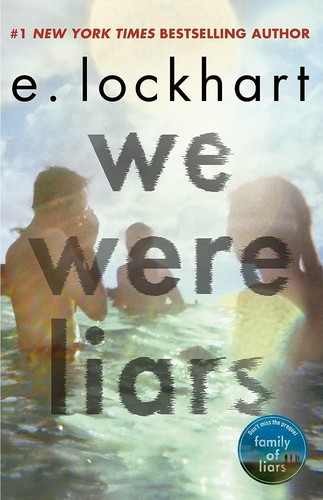
E. Lockhart's 2014 bestseller is the YA novel most often handed to Virgin Suicides readers, and the architecture really is parallel. The Sinclairs are a beautiful, wealthy, performatively perfect family summering on a private island, and narrator Cadence is reconstructing, through migraine fog and missing memories, what happened two summers ago, the event no one will explain to her. Like Eugenides, Lockhart writes privilege as a kind of curse, beauty as a surface over rot, and the truth as something assembled from fragments until it detonates in the final pages. The fairy-tale interludes Cadence writes mirror the mythologizing the neighborhood boys do.
It is faster, plottier, and aimed at teenagers, with short chapters and a twist ending that is the whole point in a way Eugenides's deaths never are; once you know it, the reread changes completely. The prose imitates lyricism more than it achieves it, which bothers some adult readers. Pick it for one compulsive sitting when you want the same haunted-summer shape with a mystery engine inside it.
Read this if you want the aftermath of a girl's death told by the girl herself.
Alice Sebold's 2002 novel inverts the Eugenides setup. Where the Lisbon sisters are silent objects of other people's narration, fourteen-year-old Susie Salmon, raped and murdered in the first chapter, narrates from her own heaven, watching her 1970s suburban family and neighbors crack and slowly mend over the following years. The two books share the same terrain (a leafy mid-century suburb that cannot absorb the death of its girls, the long half-life of grief in the people left watching) and the same insistence that the community, not the death itself, is the story.
Sebold's novel is warmer and finally consoling, built toward healing in a way Eugenides flatly refuses; some readers find the heaven conceit and the late plot turns sentimental, and the opening chapter is genuinely harrowing in a way nothing in The Virgin Suicides is explicit about. Pick it if you wished the Lisbon girls could speak, and you can accept an answer that offers comfort where Eugenides offers only haze and loss.
Read this for the original elegy of adolescence narrated from guilty memory.
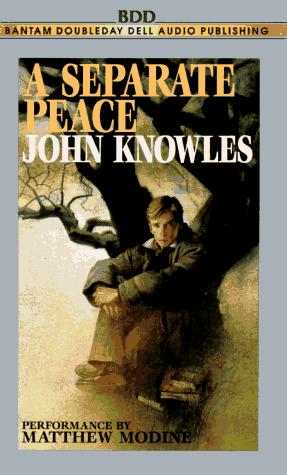
John Knowles's 1959 novel is the mid-century ancestor of what Eugenides does. Gene Forrester returns to his New England boarding school fifteen years on and narrates the wartime summer when his envy of his brilliant, careless friend Phineas led to the fall from a tree that eventually destroyed him. Like the neighborhood boys, Gene is an adult still circling an adolescent catastrophe he half-caused and cannot stop reconstructing, and the book has the same golden, doomed-summer light, the same sense that one season contained everything that mattered and ended it.
The differences: the world is male, the setting is an elite school rather than a suburb, and the guilt is personal and specific where the boys' guilt is diffuse and collective. The prose is plainer and the book is short, a staple of school reading lists for sixty years, which can make it feel familiar even on first read. Pick it for the pure elegiac mechanism, memory as both monument and self-accusation, without the mystery framing.
No book replicates its first-person-plural chorus, but The Bell Jar by Sylvia Plath is the most common pairing, since it narrates from inside the kind of suffocation the Lisbon sisters experience from a distance. For structure, We Were Liars by E. Lockhart is the closest match: a beautiful, doomed family and a tragedy pieced together after the fact. Eugenides's own Middlesex and The Marriage Plot are the obvious next stops within his work.
Should I read The Virgin Suicides book if I have only seen the movie?
Yes. Sofia Coppola's 1999 film is faithful to the mood, but the novel's defining feature, the collective narration by the grown neighborhood boys assembling their archive of exhibits, barely translates to film. The book is also darker and more ironic about the suburb and the media circus around the deaths. It is short, around 250 pages, and reads quickly.
Is The Virgin Suicides about why the sisters died?
Deliberately not. Eugenides never provides a definitive explanation, and the boys' inability to know the girls is the novel's real subject: it is about watching, memory, and myth-making rather than diagnosis. Readers who want the interior experience the novel withholds usually go to The Bell Jar or Girl, Interrupted, both of which narrate a young woman's crisis from the inside.
Is The Virgin Suicides appropriate for teen readers?
It is an adult literary novel dealing with suicide, sexuality, and obsessive voyeurism, though it is not graphic by current standards and is sometimes taught in upper high school grades. For younger readers drawn to its themes, We Were Liars and How I Live Now cover doomed summers and family tragedy in YA form, while A Separate Peace is the standard school-curriculum elegy for lost adolescence.
As an Amazon Associate, we earn from qualifying purchases. · About & methodology