5 books like The Song of Achilles, from Circe to The Silence of the Girls: Greek myth retellings matched to what you loved in Madeline Miller.
Updated June 10, 2026
The Song of Achilles works because Madeline Miller made a structural bet that pays off on the last page: she told the Iliad through Patroclus, the one person who loves Achilles rather than worships him. You know from the start how the Trojan War ends for both of them, and the novel turns that certainty into its engine, a love story narrated toward a death the narrator cannot survive in any ordinary way. Miller spent ten years on it, won the Orange Prize in 2012, and a decade later it found a second enormous life through BookTok, where it became shorthand for a book that wrecks you on purpose.
What readers want next usually splits along two lines, and this list serves both. If you want more Miller, Circe is the obvious and correct answer, the same author at the height of her powers. If you want to stay at Troy but hear from the people the epics talk over, The Silence of the Girls and A Thousand Ships retell the same war through its women, with very different temperatures. And for readers drawn to the Greek world more than the war itself, The Just City drops real philosophers and gods into a thought experiment, while The Song of Orpheus collects the stranger myths most retellings skip.
One practical note: nothing here replicates the exact devastation of The Song of Achilles, because almost nothing does. The closest emotional match is Circe; the closest setting match is The Silence of the Girls, which is deliberately harsher. Each entry below tells you which part of Miller's novel it carries forward so you can choose by what you actually want more of.
Read this if you want Madeline Miller again, writing even better.
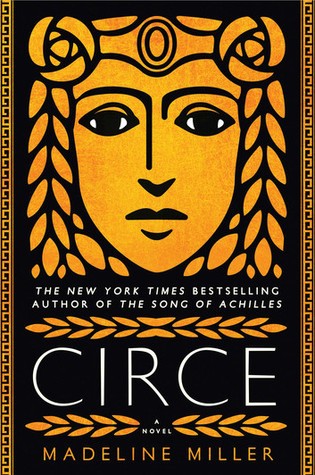
Circe is the real answer to what to read after The Song of Achilles, and most readers should start here. It is Miller again, with the same trick of taking a figure the epics treat as scenery, the witch who turns Odysseus's men into pigs, and giving her a full interior life across centuries. The prose is the same clean, sensory line-by-line pleasure, the gods are the same petty immortals, and familiar figures (Odysseus, Daedalus, the Minotaur, even a brief thread connecting to Achilles's world) move through her island one by one. Many readers consider it the stronger book.
The shape is different, though, and it is worth knowing going in. The Song of Achilles is a two-person tragedy compressed around a war; Circe is one woman's whole long life, episodic by design, about exile, motherhood, and slowly claiming power rather than about romantic love. It builds quietly instead of breaking you at the end. If you cried at Patroclus and want to cry again the same way, Circe will not do exactly that. It does something more durable instead.
Read this if you want the same war stripped of all its glamour.
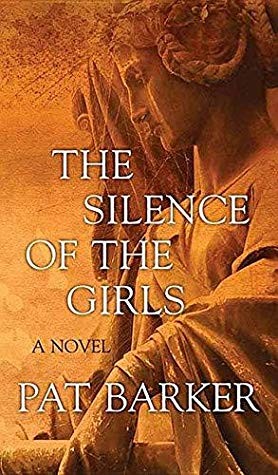
Pat Barker's novel is the direct companion piece to The Song of Achilles: the same camp, the same plague, the same quarrel between Achilles and Agamemnon, told by Briseis, the captured queen whose seizure sets the Iliad's plot in motion. Patroclus and Achilles are major characters here, seen from the perspective of a woman who is property in their world, and readers who know Miller's version will feel the scenes click into place from the other side. Barker, who wrote the Regeneration trilogy about World War I, brings a war novelist's eye to Troy.
Be ready for the temperature drop. Where Miller is lyrical and romantic, Barker is blunt, modern, and unsentimental; her Achilles is a killer first, and the book looks straight at what conquest means for enslaved women. It is the least comforting book on this list and the most bracing. Pick it if you finished The Song of Achilles wondering about everyone the heroes' story stepped over. Skip it for now if you want the warmth of Miller's version preserved.
Read this for the whole Trojan War, told entirely by its women.
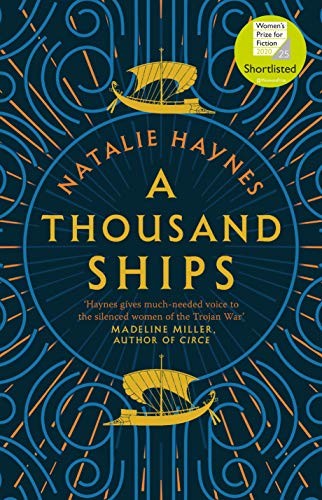
Natalie Haynes attempts something wider than either Miller or Barker: the entire war, from the judgment of Paris to the long aftermath, told through dozens of female voices. Penelope writes increasingly exasperated letters to the absent Odysseus, the muse Calliope talks back to the poet demanding she sing, and the Trojan women wait on the beach after the city falls. For a reader who came away from The Song of Achilles wanting the full map of the myth rather than one thread of it, this is the most generous single book available, and it was shortlisted for the Women's Prize in 2020.
The cost of that breadth is attachment. With so many narrators, no single relationship gets the sustained intimacy Miller gives Patroclus and Achilles, and the tone is more varied, sometimes wry, sometimes grieving, where Miller holds one note of building dread. It reads almost like a linked story collection. Choose it when you want scope, wit, and a complete tour of the war's women, not when you want one love story to live inside.
Read this if the Greek gods interest you more than the Trojan War does.
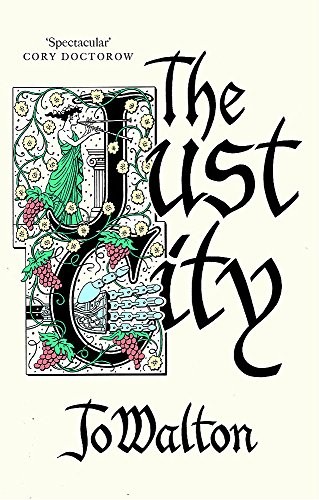
Jo Walton's novel shares Miller's core move of treating Greek gods as real, flawed people you can know. Athena gathers thinkers from across history, Socrates included, plus ten thousand children, on the island of Atlantis to actually build Plato's Republic and see if it works. Apollo, baffled that the nymph Daphne preferred becoming a tree to his attentions, incarnates as a mortal child to learn what consent and equal significance mean. That thread, a god slowly comprehending human vulnerability, is the same current that runs under Thetis and Achilles in Miller's book.
This is the wild card of the list: philosophical fantasy rather than historical retelling, built on debates about free will, education, and what people owe each other, with Socratic dialogue where Miller has battlefield dread. There is no war and no doomed romance. Readers who loved Miller for her emotional directness sometimes bounce off Walton's talkiness; readers who loved the mythology itself often find this the most interesting book here. It is also the start of a trilogy, so budget accordingly.
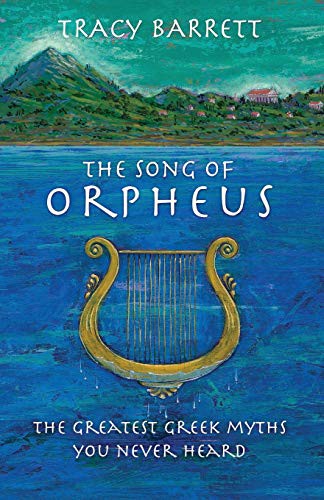
Read this for the strange, lesser-known myths the famous retellings skip.
A note on what this actually is, because the title suggests otherwise: Tracy Barrett's book is not a novel-length romance about Orpheus and Eurydice. It is a collection of Greek myths, framed by Orpheus himself telling the stories, with a focus on the odd and obscure ones that books like Miller's never reach. Barrett is a classicist and longtime writer of mythology for younger readers, and the appeal here is the same raw material that fed The Song of Achilles: the sheer strangeness and emotional charge of the Greek myth world, beyond the three or four stories everyone retells.
It is also written for a younger audience, quick and light, with nothing like the length or emotional weight of the other books on this list. Treat it as a between-books palate cleanser or a myth deep-dive, not a successor to Miller. If you want a full literary treatment of the Orpheus and Eurydice story itself, that book is not on this list; this one is best for readers whose reaction to Miller was wanting more myths, plural.
Circe, Madeline Miller's second novel, is the standard answer and the right one for most readers: same author, same gods, same prose, told by the witch from the Odyssey. If you want to stay with the Trojan War specifically, The Silence of the Girls by Pat Barker retells the same events from Briseis's point of view, with Achilles and Patroclus as major characters seen from outside.
Is Circe as sad as The Song of Achilles?
No, and it is not trying to be. The Song of Achilles is built toward a foretold death, while Circe covers one immortal woman's long life and ends on a note of hard-won resolution rather than grief. It is moving in a slower, steadier way. Readers who specifically want another devastating ending tend to find Barker's The Silence of the Girls closer in weight, though its sadness is grimmer and less romantic.
Is The Song of Achilles historically accurate?
It is a retelling of myth, not history. Miller follows Homer's Iliad closely for the war's events and draws on other ancient sources for Achilles's youth, but the Trojan War itself belongs to legend, and the central romance reflects a long interpretive tradition, debated since antiquity, that reads Achilles and Patroclus as lovers. Homer never states it outright; Plato's Symposium discusses them that way.
Do I need to read the Iliad first?
No. The Song of Achilles is written to stand alone, and the same is true of every book on this list. Knowing the Iliad adds texture, especially for The Silence of the Girls, which mirrors its events scene by scene, but Miller, Barker, and Haynes all assume no prior knowledge. If the novels leave you wanting the source, Emily Wilson's recent translation of the Iliad is the most approachable place to start.
As an Amazon Associate, we earn from qualifying purchases. · About & methodology