7 books like The Silence of the Girls, from Circe to A Thousand Ships: feminist retellings of myth that give the silenced women their say.
Updated June 10, 2026
Pat Barker's The Silence of the Girls retells the Iliad from the bottom of the camp rather than the top of the walls. Briseis, the captured queen handed to Achilles as a war prize, narrates what the epic never bothered to show: the slave women's quarters, the rapes and rationed kindnesses, the daily labor of surviving the men history calls heroes. Barker, who won the Booker for her Regeneration trilogy about World War I, brings the same unsentimental eye for trauma here. Her Troy is not lyrical; it smells of blood and laundry, and Achilles is seen the way a possession sees its owner.
Most readers who finish it want one of three things, and this list covers all of them. If you want to stay in Barker's hands, The Women of Troy is the direct sequel and picks up Briseis's story after the city falls. If you want more Greek myth retold from the margins, Circe, The Song of Achilles, A Thousand Ships, and The Penelopiad each take a different angle on the same project, from Madeline Miller's lush first-person goddess to Margaret Atwood's sardonic Penelope. And two picks step outside Greece entirely: The Forest of Enchantments does for the Ramayana what Barker does for the Iliad, and The Offing is the one non-mythological choice, included for tone rather than subject.
A practical note on order: The Women of Troy should wait until you have finished The Silence of the Girls, since it spoils the ending by design. The rest can be read in any order, and A Thousand Ships in particular works well alongside Barker because the two books cover many of the same women from opposite distances.
Read this if you want a silenced woman of myth given a full life, not just a war.
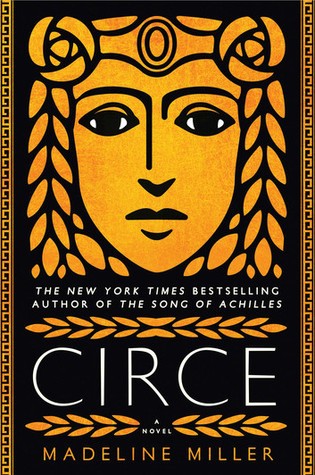
Madeline Miller's Circe is the book most often shelved beside The Silence of the Girls, and the kinship is real. Both take a woman the classical sources treat as a plot device (Briseis is barely a name in Homer, Circe a one-episode witch in the Odyssey) and build an entire interior life for her. Both are interested in what power looks like from underneath it: Circe spends much of the novel exiled and underestimated by gods and men alike, and her gradual claiming of her own strength echoes the quiet endurance Barker gives Briseis.
The difference is register. Miller writes lush, openly emotional prose where Barker is flinty and stripped back, and Circe spans centuries of myth (Prometheus, the Minotaur, Odysseus) rather than weeks in a war camp. It is also, in the end, a more hopeful book; Circe gets to choose her own life in a way Briseis never fully can. Pick it if you loved the feminist reframing but could use less brutality and more wonder.
Read this if you want to see Achilles from the other side, loved instead of feared.
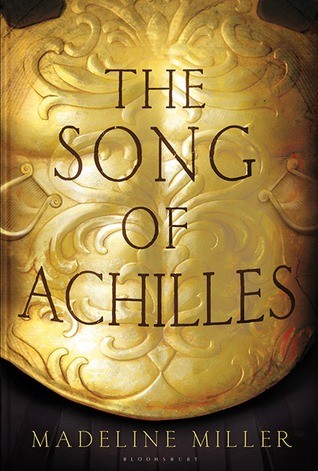
Miller's first novel covers almost exactly the same events as The Silence of the Girls, the Trojan War through Achilles's rage and Patroclus's death, which makes it a fascinating mirror. Where Barker shows Achilles through the eyes of a woman he owns, Miller shows him through the eyes of the man who loves him. Briseis appears in both books, and reading them together is a small education in how completely point of view changes a story. The plot beats you know from Barker land here too, just lit entirely differently.
Be clear about what you are getting: this is a love story first, and a tragedy second, with a romantic warmth Barker deliberately refuses. Some readers of The Silence of the Girls find Miller's Achilles too forgivable after Barker's portrait of him. But that tension is exactly why it is worth reading next, and Miller's handling of the ending, which you already know is coming, is genuinely devastating. Best for readers who want the same war with the cynicism dialed down.
Read this if you want every woman of the Trojan War, not just one.
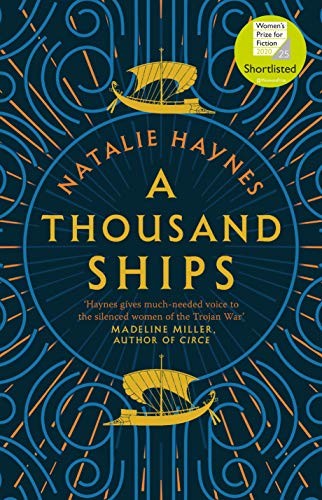
Natalie Haynes attempts the panoramic version of Barker's project. Where The Silence of the Girls stays locked inside Briseis's single vantage point, A Thousand Ships moves through dozens of women: Penelope writing letters to an absent Odysseus, Cassandra cursed to be disbelieved, the enslaved Trojan women waiting on the beach to learn which Greek will own them. The muse Calliope frames the whole thing with the argument both books share, that the women's war was as much a war as the men's, just never sung.
The structure is the trade-off. Because Haynes gives you breadth, no single woman gets the depth Barker gives Briseis, and the book reads more like linked stories than a novel; some chapters land much harder than others. Haynes is also a classicist with a lighter, wittier touch, so the tone is less grim even when the material is dark. Pick it if Barker left you wanting the full roll call rather than a deeper cut of one life.
Read this if you simply want to know what happens to Briseis next.
This is Barker's own sequel, picking up immediately after The Silence of the Girls ends: Troy has fallen, the Greeks are stuck on the beach waiting for a wind to carry them home, and Briseis, now married off and pregnant, moves through a camp full of newly enslaved Trojan women. The voice, the unflinching attention to what conquest means for women, and the cold-eyed portraits of the Greek heroes (Pyrrhus, Achilles's son, is the standout monster here) are all continuous with the first book. If you want more of exactly what you just read, this is it.
It is, though, a quieter book by design. The war is over, so the engine is aftermath and waiting rather than the rage of Achilles, and some readers find it slighter than its predecessor. Barker continued the story again in The Voyage Home, so this is the middle of a trilogy rather than a conclusion. Read it for the continuation of Briseis's voice, not for a second lightning strike.
Read this for the sharpest, most sardonic version of the woman-answers-Homer idea.
Margaret Atwood got to this territory in 2005, well before the current wave of retellings, and The Penelopiad remains the most formally daring of them. Penelope narrates from the underworld, dryly correcting the record on her marriage and her famous fidelity, while the twelve maids Odysseus hanged on his return interrupt as a chorus, in verse, demanding an accounting for their deaths. That insistence on the slave women the epic discards, not just the queen, is the closest thing in spirit to what Barker does with Briseis.
It is a very different reading experience: barely novella length, structured like a cabaret with songs and shifting forms, and funny in a way The Silence of the Girls never tries to be. The bitterness is in the wit rather than the texture. Readers who want immersive historical realism may find it thin; readers who want a brilliant mind turning the Odyssey over in two sittings will be glad they picked it up.
Read this only if you want Barker's humanity without the mythology.
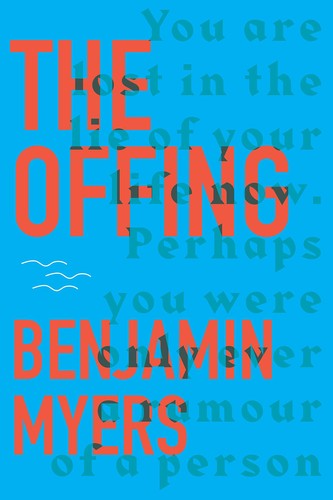
The honest framing first: The Offing has nothing to do with Troy, myth, or retellings. Benjamin Myers's novel follows Robert, a sixteen-year-old miner's son walking the coast of northern England just after World War II, who falls into an unlikely friendship with Dulcie, a fierce, bohemian older woman living alone above the sea. What it shares with Barker is quieter: a deep interest in how war marks the people left standing, a woman who refuses the role her society assigned her, and prose that pays close attention to bodies, work, and landscape.
It is the gentlest book on this list by a wide margin, slow, talkative, and warm, built on conversations about poetry and food rather than survival. If you came to The Silence of the Girls for the feminist reckoning with the classics, skip this one for now. If what stayed with you was Barker's compassion for people history overlooks, and you want something restorative after the brutality of the war camp, this is a good palate cleanser.
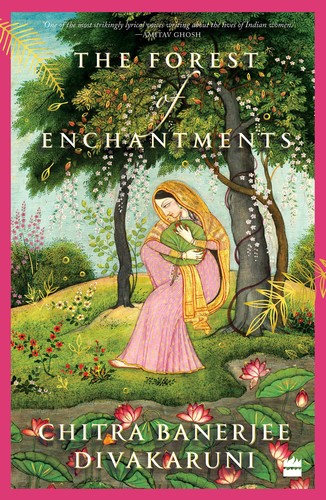
Read this if you want the same reclamation project applied to the Ramayana.
Chitra Banerjee Divakaruni does for the Indian epic what Barker does for the Greek one: she hands the story to the woman it was never really about. Sita narrates the Ramayana herself, from her childhood and marriage to Ram through her abduction by Ravana, and crucially through what comes after her rescue, when the husband who fought a war for her demands she prove her purity and ultimately exiles her. The questions are Barker's questions: what does a woman owe a society that treats her as a prize, and what does fidelity mean when it only binds one way.
The texture is very different. Divakaruni writes in a warmer, more romantic register, closer to Miller than to Barker, and the world is one of gods, demons, and enchanted forests rather than Barker's deliberately demystified war camp. For readers who only know Greek myth, it also doubles as an accessible entry into one of the world's other great epics. Pick it if the retelling impulse itself is what hooked you and you are ready to leave the Aegean.
What should I read after The Silence of the Girls?
If you want Briseis's story to continue, go straight to Pat Barker's sequel The Women of Troy, which picks up after the fall of the city. If you want a different voice on similar material, Circe by Madeline Miller is the most common and most satisfying next step, and A Thousand Ships by Natalie Haynes covers the widest cast of Trojan War women.
Is The Silence of the Girls part of a series?
Yes. It is the first book in Barker's Trojan War trilogy, followed by The Women of Troy (2021) and The Voyage Home (2024). The Silence of the Girls stands on its own with a real ending, but the sequels continue the story of the enslaved women after Troy falls, so read them in publication order.
Should I read The Song of Achilles before or after The Silence of the Girls?
Either order works, since they cover the same events from opposite perspectives and neither depends on the other. Reading Barker first makes Miller's romantic Achilles feel like a deliberate counterargument; reading Miller first makes Barker's version land as a corrective. They are probably the single most illuminating pairing in the current wave of Greek retellings.
Do I need to know the Iliad to enjoy these books?
No. Barker, Miller, Haynes, and Atwood all wrote for readers who may only vaguely remember the myths, and each book explains what you need as it goes. Knowing the broad outline (the war over Helen, the rage of Achilles, the fall of Troy) adds resonance, but a plot summary online is more than enough preparation.
As an Amazon Associate, we earn from qualifying purchases. · About & methodology