8 books like The Road Less Traveled by M. Scott Peck, from Man's Search for Meaning to The Power of Now: psychology and spiritual growth that holds up.
Updated June 10, 2026
M. Scott Peck's The Road Less Traveled opens with three words that set its whole tone: life is difficult. Published in 1978 and a bestseller for years afterward, it is a psychiatrist's argument that mental and spiritual health are the same project, built on discipline (delaying gratification, accepting responsibility, dedication to truth), a famously unsentimental definition of love as the will to extend yourself for another's growth, and a final section on grace. What set it apart from the self-help shelf was its refusal to promise ease; Peck insists that avoiding legitimate suffering is the root of most mental illness.
Readers who want more tend to split three ways, and this list covers each. If Peck's seriousness about suffering and meaning was the draw, Man's Search for Meaning is the essential next read, with The Seven Habits of Highly Effective People carrying the discipline-and-responsibility thread into practical life. If the spiritual section spoke to you, The Power of Now, The Four Agreements, and The Alchemist take that road further, each in a very different register. And if Peck's chapters on facing yourself honestly resonated, Brené Brown's Daring Greatly and The Gifts of Imperfection bring the research, with Awaken the Giant Within as the high-energy outlier.
A practical note: these books disagree with each other. Peck preaches discipline, Tolle preaches surrender, Robbins preaches intensity, Brown preaches self-acceptance. That is a feature. Read the entries below for which part of Peck each one extends, and pick the one aimed at your actual situation rather than working down the list in order.
Read this if Peck's discipline section is the one you keep rereading.
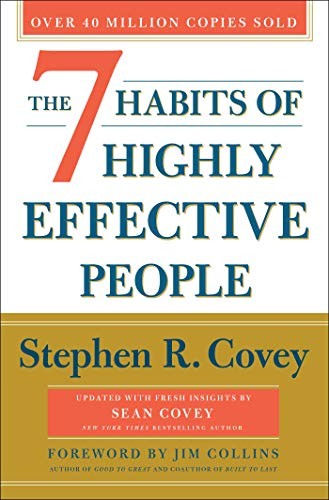
Stephen Covey's 1989 classic is the natural companion to the first quarter of The Road Less Traveled. Peck's discipline tools, delaying gratification, accepting responsibility, dedicating yourself to reality, map almost directly onto Covey's foundation: be proactive, begin with the end in mind, put first things first. Both authors insist that character precedes technique and that lasting change is an inside-out project, and Covey, like Peck, writes from explicit (if understated) spiritual conviction about principles that do not bend to convenience.
The difference is altitude. Peck writes as a psychotherapist working through case studies of suffering people; Covey writes as a management thinker building a system, complete with quadrants, weekly planning, and habits for working with others. There is little in Covey about neurosis, love, or grace, and little in Peck about effectiveness. Choose Covey when you want Peck's responsibility ethic turned into an operating manual for work and family life. It is drier, but it is the most practically usable book on this list.
Read this for the strongest possible case that suffering can be made meaningful.
If you took one idea from Peck, that facing legitimate suffering is how a person grows, Viktor Frankl is its deepest source. The first half is Frankl's account of surviving Auschwitz and other camps as a psychiatrist, observing what kept people alive; the second half outlines logotherapy, his school of psychotherapy built on the drive for meaning rather than pleasure or power. His conclusion, that everything can be taken from a man but the last of the human freedoms, the choice of one's attitude in any given set of circumstances, is the hard bedrock under Peck's gentler clinical version of the same claim.
It is a slimmer, starker book than The Road Less Traveled, with no program of habits and no section on grace; the authority comes from witness, not framework. It is also the pick here with the widest endorsement far beyond self-help, routinely listed among the most influential books of the twentieth century. Read it first among these eight. Almost everyone should read it once regardless of how they found this page.
Read this if Peck convinced you to face yourself but you need a kinder method.
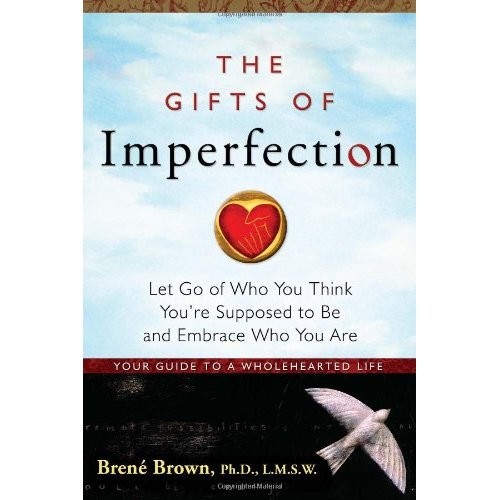
Brené Brown shares Peck's central premise that the truth about yourself, faced squarely, is the path to health, but she comes at it from shame research rather than psychoanalysis. This short book lays out ten guideposts for what she calls wholehearted living, letting go of perfectionism, comparison, and the need for certainty in favor of self-compassion, rest, and authenticity. Where Peck's case studies show people suffering because they dodge responsibility, Brown's research shows people suffering because they believe they are not enough, and both books treat that avoidance of truth as the core problem.
The register is very different: warm, personal, first-person where Peck is clinical and occasionally stern, and there is none of Peck's theology, though Brown does write about spirituality as a guidepost. Readers who valued Peck's toughness sometimes find Brown soft; readers bruised by Peck's demands often find her the necessary counterweight. Pick this one over Daring Greatly if your sticking point is perfectionism and self-judgment specifically.
Read this only if you want Peck's self-responsibility at motivational-seminar volume.
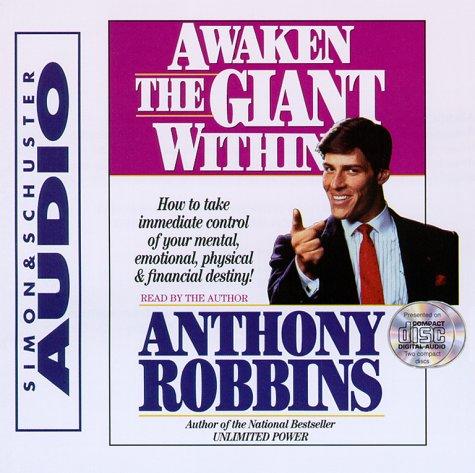
Tony Robbins's doorstop (usually titled Awaken the Giant Within) shares exactly one big conviction with Peck: you are responsible for your life, and change begins with decisions only you can make. Robbins turns that into an arsenal of techniques, reframing beliefs, changing your habitual questions and vocabulary, using pain and pleasure deliberately, aimed at mastering emotions, body, finances, and relationships. For readers who finished Peck agreeing about responsibility but wanting energy and specific levers instead of contemplation, this is the most action-oriented book on the list.
Be honest about the gap in sensibility, though. Peck opens with life is difficult; Robbins promises immediate control of your destiny, and the seminar-stage tone, the exclamation points, and the sheer length are the opposite of Peck's measured clinical voice. There is no equivalent of Peck's sections on love or grace, and skeptical readers will find some claims overreaching. Treat it as a toolbox to raid rather than a philosophy to adopt.
Read this if Peck's final section on grace left you wanting the mystical road itself.
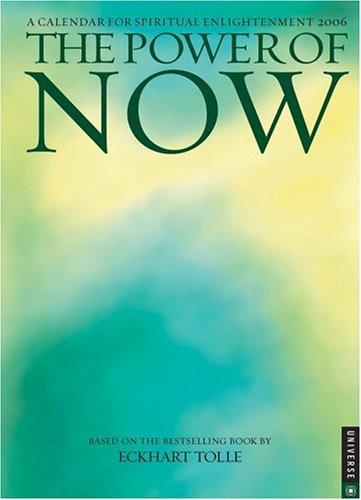
Eckhart Tolle's 1997 book picks up where The Road Less Traveled ends. Peck, a psychiatrist edging toward religion, closes with grace and the evolution of consciousness; Tolle starts from consciousness and stays there. His core teaching is that identification with the thinking mind and its endless past-and-future story is the source of suffering, and that presence, attention to the now, dissolves it. Both books treat spiritual growth as the real point of psychological work, and both found enormous audiences among readers who wanted depth without denominational religion.
The methods are nearly opposite, and that matters. Peck's path runs through effort, discipline, and problem-solving; Tolle explicitly says the mind cannot think its way out and prescribes surrender and observation instead. There are no case studies and no program, just a question-and-answer teaching voice some readers find liberating and others find repetitive or vague. Pick it when the striving itself has become the problem. Skeptics should sample a chapter before committing.
Read this for the research on why facing hard truths requires vulnerability.
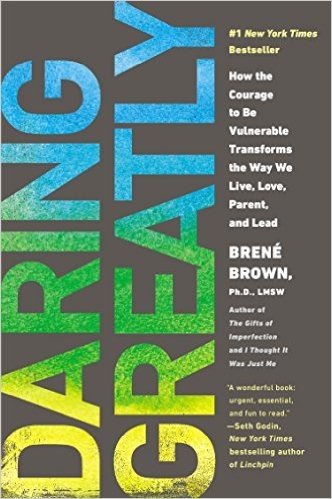
Daring Greatly is Brown's fullest statement, and it connects to Peck at the level of courage. His dedication to truth demands you let your map of reality be challenged; her research says the capacity to do that, to be seen accurately, to risk failure, to have hard conversations, rests on vulnerability, and that the armor we wear against shame is what keeps us stuck. The book extends past the self into parenting, leadership, and workplaces, which makes it the most outward-facing of the Brown pair here, and the title's Theodore Roosevelt arena quote sets the tone: credit belongs to the one who dares, not the critic.
Compared with Peck, there is more data and storytelling and far less philosophy or theology; grace, God, and the unconscious do not figure in it. Compared with The Gifts of Imperfection, it is longer, meatier, and aimed beyond personal habits at how you show up for other people. If you lead a team or a family and Peck's chapters on love as work rang true, start with this one of the two.
Read this if you want the spiritual journey as a fable instead of a treatise.
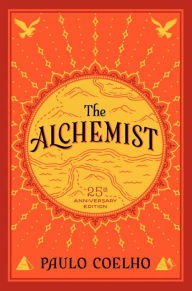
Paulo Coelho's fable is the storybook version of Peck's thesis that life is a journey of spiritual growth. Santiago, an Andalusian shepherd, crosses the desert chasing a recurring dream of treasure at the pyramids, and the trials along the way are openly lessons: listen to your heart, fear of suffering is worse than the suffering, the universe conspires to help the committed. Peck argues for the road less traveled in a psychiatrist's prose; Coelho simply walks a character down it, which is why the two books attract so many of the same readers.
It is the only fiction on this list and by far the easiest read, finishable in an afternoon, and that lightness is also the limitation. Where Peck insists on discipline and the slow work of confronting yourself, Coelho's omens and Personal Legend can feel like the promise of ease Peck wrote his book against. Take it as inspiration and a palate cleanser between the heavier titles, not as the argument itself.
Read this if you want a spiritual code you can hold in one hand.
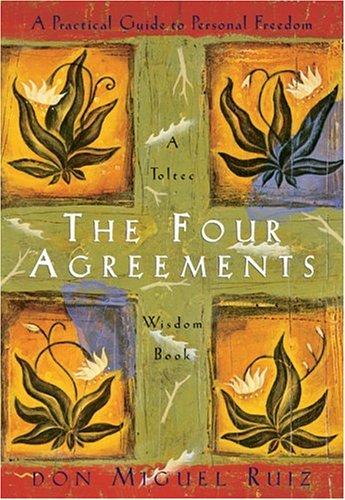
Don Miguel Ruiz's short 1997 book, framed as Toltec wisdom, distills the self-mastery project into four commitments: be impeccable with your word, don't take anything personally, don't make assumptions, always do your best. Like Peck, Ruiz locates suffering in distorted beliefs absorbed early in life (he calls the process domestication) and treats rigorous personal honesty as the way out; the first and fourth agreements in particular are Peck's dedication to truth and discipline compressed to a sentence each.
The contrast is depth versus portability. Peck builds arguments through case studies and is candid about how slow real change is; Ruiz asserts, in plain repetitive prose, and the mythic Toltec framing is loose history at best. Readers who loved Peck's intellectual rigor may find this thin, while readers exhausted by dense books find its simplicity is the point. It works best as a daily-practice companion to keep within reach after the heavier reading is done.
What book is most similar to The Road Less Traveled?
Man's Search for Meaning by Viktor Frankl is the strongest match in spirit: a psychiatrist arguing that facing suffering, not avoiding it, is the path to a meaningful life. For Peck's practical discipline-and-responsibility side, The Seven Habits of Highly Effective People is the closest, and for his spiritual side, The Power of Now is the most common pairing.
Did M. Scott Peck write other books like it?
Yes. Further Along the Road Less Traveled (1993) collects and expands his later lectures, and The Road Less Traveled and Beyond (1997) completes the loose trilogy. His most distinctive other book is People of the Lie (1983), a darker and more controversial study of human evil from a psychiatric and religious angle. The Different Drum (1987) covers community-making.
Is The Road Less Traveled religious?
Partly. Peck wrote it before his formal Christian conversion, and the book treats spiritual growth broadly, with the final section on grace drawing on religious ideas without requiring belief. Readers who want less theology can pair it with Frankl or Covey; readers who want more of the spiritual thread usually go to Tolle or, in fable form, The Alchemist.
Does The Road Less Traveled still hold up?
Mostly. Its core sections on discipline, responsibility, and love as committed work remain widely recommended, and life is difficult has aged into a classic opening. Some of the psychoanalytic framing and case-study conclusions feel dated against current clinical practice, and later revelations about Peck's personal life complicate his authority for some readers. The books on this list cover the same ground with more recent research where it exists.
As an Amazon Associate, we earn from qualifying purchases. · About & methodology