8 books like The Prophet by Kahlil Gibran, from the Tao Te Ching to Siddhartha: poetic wisdom, spiritual fables, and philosophy on living well.
Updated June 10, 2026
Kahlil Gibran's The Prophet, published in 1923, is barely a hundred pages and has never gone out of print. Its frame is the thinnest possible: the prophet Almustafa, about to sail home after twelve years in the city of Orphalese, is asked by its people to speak on love, marriage, children, work, joy, sorrow, and death. What follows is a series of short poetic sermons, each one quotable, gentle, and certain. People read it at weddings and funerals because Gibran writes about ordinary life thresholds in a register that feels like scripture without belonging to any one religion.
Nobody else has written quite this book, so the list below splits by what you actually want more of. If it was the aphoristic wisdom itself, the lines you underline and return to, go straight to the Tao Te Ching or The Four Agreements. If it was the feeling of a spiritual teacher inside a story, Siddhartha, The Alchemist, and The Little Prince wrap similar lessons in actual journeys. And if you want the same questions (suffering, happiness, impermanence) handled in plain modern prose, Man's Search for Meaning, The Art of Happiness, and The Wisdom of Insecurity carry the thread into psychology and philosophy.
A practical note: like The Prophet itself, most of these books reward slow reading. The Tao Te Ching and The Little Prince can technically be finished in an hour, but they are built for a chapter or a verse at a time. The entries below tell you which part of Gibran each book echoes and where it goes its own way.
Read this if you want Gibran's wisdom carried by an actual story.
Paulo Coelho's fable about Santiago, a shepherd who crosses from Spain to the Egyptian pyramids chasing a recurring dream, speaks in the same plain, parable-like register as The Prophet. The alchemist who teaches Santiago could trade lines with Almustafa without anyone noticing: listen to your heart, the universe rewards the seeker, the treasure was near home all along. Coelho has named Gibran as part of the same lineage of spiritual writing, and readers move between the two books constantly.
The difference is that The Alchemist has a plot. There is a quest, omens, a love interest, and an ending with a twist, where The Prophet is pure address with no story at all. That makes Coelho the easier read but also the less dense one; you can finish The Alchemist in an afternoon and feel you got all of it, while Gibran keeps yielding new lines for decades. Pick it if the sermon format of The Prophet left you wanting a journey to follow.
Read this if you want the same spiritual seriousness with more doubt and more depth.
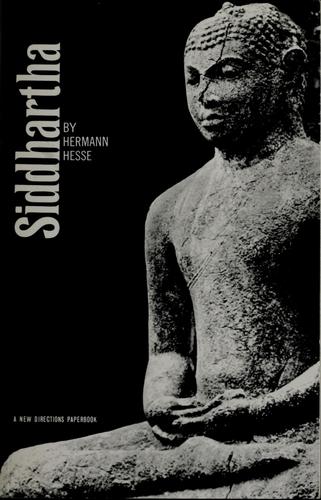
Hermann Hesse's 1922 novel appeared within a year of The Prophet, and the two books share a moment and a temperament: both are short, lyrical, and convinced that wisdom cannot be handed over, only lived. Siddhartha leaves home during the lifetime of the Buddha, studies with ascetics, loves a courtesan, grows rich, despairs, and finally learns to listen to a river. The closing chapters, where ferryman wisdom replaces doctrine, read like Gibran's sermons earned through an actual life.
Hesse is the harder-edged writer. Where Almustafa speaks from serene certainty, Siddhartha fails repeatedly, wastes years, and hurts people, and the book lets those failures count. There is more melancholy here and far less reassurance. If The Prophet sometimes felt too smooth to you, too certain, Siddhartha is the version with friction, and it is the single best next read on this list for most people.
Read this if you want Gibran's themes of joy and sorrow handled in plain modern conversation.
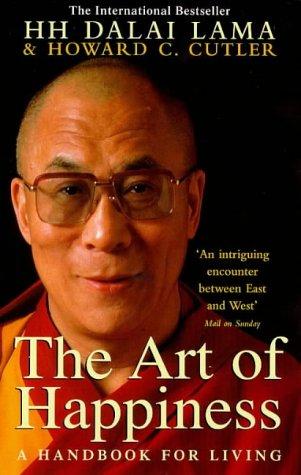
This 1998 book grew out of psychiatrist Howard Cutler's extended interviews with the Dalai Lama, and it covers much of Almustafa's territory: suffering, compassion, intimacy, anger, and what happiness actually consists of. Like The Prophet, it is built around a wisdom figure answering questions from ordinary people, and like Gibran the Dalai Lama insists that joy and sorrow are not opposites but companions.
The form could not be more different. Cutler writes flat, accessible prose and frames everything through Western psychology, with case studies and research alongside the Dalai Lama's answers. There is no poetry here and nothing you will read at a wedding. Choose it when you want the substance of The Prophet's counsel translated into something practical you can apply on a bad Tuesday, and skip it if Gibran's language was the whole point for you.
Read this for the ancient original of the form Gibran was working in.
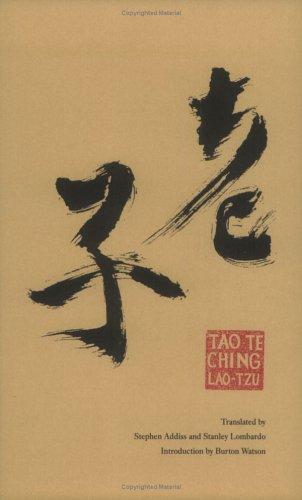
The Tao Te Ching, attributed to Lao Tzu and roughly 2,500 years old, is the closest thing on this list to The Prophet's actual shape: 81 short, poetic chapters of distilled wisdom with no story, no argument, and no system, just compressed verses about how to live in accord with the way things are. Gibran's blend of paradox and gentleness (strength in yielding, fullness in emptiness, the space within the cup) has deep roots in this text, and readers of one almost always respond to the other.
It is more austere than Gibran. The Tao Te Ching offers no warm prophet figure and no consoling voice; the verses are spare, often cryptic, and famously dependent on which translation you pick (Stephen Mitchell's is the most readable, Ursula K. Le Guin's rendition the most loved by writers). Read one chapter a day rather than straight through. If The Prophet's aphorisms were what you underlined, this is the deepest well to draw from next.
Read this if you want the wisdom reduced to rules you can actually use.
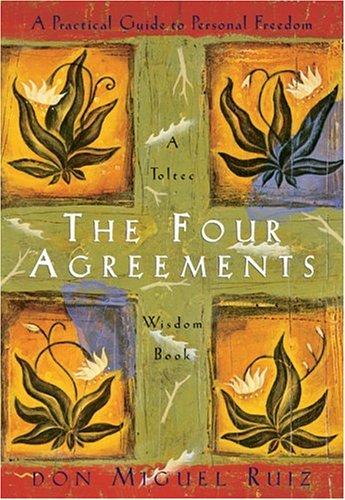
Don Miguel Ruiz's 1997 bestseller shares The Prophet's ambition of compressing a whole philosophy of living into a very small book. Framed as ancient Toltec teaching, it offers four commitments (be impeccable with your word, don't take anything personally, don't make assumptions, always do your best) and unpacks each in short, plain chapters. Like Gibran, Ruiz writes about freedom from inherited beliefs and speaks with the calm certainty of a teacher rather than the hedging of an academic.
Be honest with yourself about the register, though. This is self-help, not poetry; the prose is simple to the point of repetitive, and where Gibran gives you images, Ruiz gives you instructions. The Toltec framing is also loose history at best. It earns its place because it is the most immediately usable book here. If you finished The Prophet inspired but unsure what to actually do differently on Monday, this is the answer some millions of readers landed on.
Read this for Gibran's claim that sorrow carves space for joy, tested in the worst place imaginable.
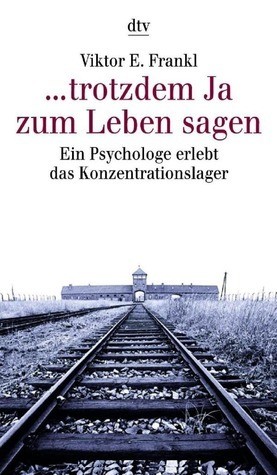
Viktor Frankl's 1946 account of surviving Nazi concentration camps, followed by an outline of his school of psychotherapy, is the book that proves The Prophet's hardest teaching. Gibran writes that the deeper sorrow carves into your being, the more joy you can contain; Frankl shows what that idea looks like when held by a man who lost nearly everything, arguing that humans can endure almost any suffering if they can find meaning in it. The two books are quoted side by side in eulogies for a reason.
This is memoir and psychology, not poetry, and the first half is a harrowing read in a way nothing in Gibran is. It is also more rigorous: Frankl is a clinician, and the second half lays out logotherapy in plain argumentative prose. Pick it when you want the consolations of The Prophet backed by witness rather than lyricism. Of everything on this list, it is the book most likely to change how you handle your own suffering.
Read this if you want a fable that hides its wisdom instead of announcing it.
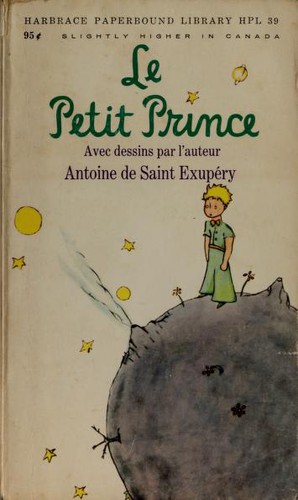
Antoine de Saint-Exupery's 1943 fable shares The Prophet's gift for saying enormous things in tiny, simple sentences. A pilot stranded in the desert meets a small prince from another planet, and their conversations about taming, roses, and seeing with the heart cover Gibran's great subjects (love, loss, what matters) at a child's eye level. Its most famous line, that what is essential is invisible to the eye, could sit inside Almustafa's sermon on love without a seam showing.
The method is opposite, though. Gibran tells you the wisdom directly; Saint-Exupery hides it inside a story and trusts you to find it, which is why The Little Prince makes people cry and The Prophet makes them nod. It is also genuinely sad, with an ending that lands harder on adults than on the children it was nominally written for. Read it in an hour, then keep it on the shelf next to Gibran to reread at different ages.
Read this if you want Gibran's themes argued rather than sung.
Alan Watts's 1951 book takes on the same territory as Almustafa's sermons on joy, sorrow, and time: the impermanence of everything we love and the futility of clutching at it. Watts argues that the anxiety of modern life comes from demanding security in a universe that offers none, and that sanity lies in fully inhabiting the present instead. Readers who loved Gibran's lines about letting your children go and letting sorrow carve you open will recognize the same teaching, drawn from Eastern thought and stated as philosophy.
Watts is an essayist, not a poet, and that is the trade. You get sustained arguments instead of images, and his lucid, slightly professorial voice instead of Gibran's incantatory one. Some readers find Watts repetitive across chapters; he circles one insight from many angles. Choose this when you want to understand the ideas under The Prophet rather than feel them again, and as a bridge toward Watts's longer books on Zen and Taoism.
In form, the Tao Te Ching: both are short collections of poetic wisdom chapters with no plot, meant to be read slowly and reread for life. In spirit, Siddhartha by Hermann Hesse is the most common pairing, a fable from the same early 1920s moment about wisdom that must be lived rather than taught. Which one to pick first depends on whether you want more aphorisms or more story.
Did Kahlil Gibran write anything else like The Prophet?
Yes. Gibran planned The Prophet as the first of a trilogy and published The Garden of the Prophet, completed after his death in 1931, in which Almustafa returns to his home island. His earlier books The Madman and Sand and Foam collect parables and aphorisms in a similar voice. None achieved The Prophet's fame, but devoted readers usually try The Garden of the Prophet next.
Is The Prophet a religious book?
Not in a denominational sense. Gibran was raised Maronite Christian in Lebanon and absorbed Islamic, Sufi, and Baha'i influences along with Romantic poetry, and The Prophet deliberately speaks to all of them without belonging to any. That is a large part of why it gets read at weddings and funerals across traditions. On this list, The Art of Happiness is the most explicitly tied to one tradition, Tibetan Buddhism, while the rest stay similarly unaffiliated.
What order should I read these in?
Start with Siddhartha if you want a story, or the Tao Te Ching if you want more pure wisdom literature. Save Man's Search for Meaning for when you can give it full attention; it is the heaviest and most rewarding. The Four Agreements and The Art of Happiness work anytime as practical companions, and The Little Prince fits in a single sitting whenever you need it.
As an Amazon Associate, we earn from qualifying purchases. · About & methodology