Find books like The Myth of Sisyphus about absurdism, meaning, existential philosophy, and how to live with difficult questions.
Updated June 10, 2026
Albert Camus published The Myth of Sisyphus in 1942, opening with one of the most famous first moves in philosophy: there is only one truly serious philosophical problem, and that is suicide. The essay asks whether life is worth living once you accept the absurd, the collision between our demand for meaning and a universe that offers none, and answers yes. Camus walks through what he calls philosophical suicide (the leap into faith or system that thinkers like Kierkegaard take), then sketches lives lived in full view of the absurd, ending with Sisyphus himself, condemned to roll his boulder forever, of whom Camus insists we must imagine him happy.
Readers who finish it tend to want one of three things, and this list covers all of them. Some want the absurd dramatized rather than argued, which is what Camus's own novels The Stranger and The Plague do, along with Dostoevsky's Notes from Underground, the ancestor Camus himself wrestled with. Some want the rival philosophy: Sartre's Being and Nothingness and Existentialism is a Humanism give you the existentialist system Camus was often lumped in with and quietly disagreed with. And some want the meaning question carried into lived experience and psychology, where Man's Search for Meaning and The Denial of Death pick it up, with Sophie's World as the gentle on-ramp for the philosophy itself.
A practical note: do not start with Being and Nothingness, which is several hundred pages of dense phenomenology. The natural sequence is The Stranger first (Camus wrote the novel and the essay as companions), then outward by appetite. Each entry below says which side of Sisyphus it extends and what it asks of you.
Read this only if you want the full existentialist system the essay gestures at.
Sartre's 1943 treatise is the heavyweight philosophical statement of the moment Camus was writing in, and it tackles the same root condition: consciousness confronting a world without given meaning. Where The Myth of Sisyphus stays at essay length and refuses systems, Sartre builds one, working out what it means that existence precedes essence, that we are condemned to be free, and that bad faith is our standard escape from that freedom. Reading it shows you exactly what Camus was declining to do, which sharpens both books.
Be clear about what you are signing up for. This is academic phenomenology, several hundred pages of it, with vocabulary (being-in-itself, being-for-itself, the look) that takes real effort. Camus is a stylist; Sartre here is a technician. Most readers should take Existentialism is a Humanism first and come to this only if they want the complete architecture. The famous chapters on bad faith and the gaze are the most readable and can be approached on their own.
Read this for the meaning question answered from inside a concentration camp.
Viktor Frankl's 1946 book confronts exactly the problem Camus poses, whether life is worth living when its conditions become unbearable, but from witness rather than argument. Frankl survived Auschwitz and other camps, and the first half records what he observed: the prisoners who kept a reason to live, a person, a task, a future, survived in a way the others did not. The second half lays out logotherapy, his school of psychotherapy built on the claim that the drive for meaning is the deepest human motivation.
Frankl's answer is the one Camus calls philosophical suicide softened into psychology: meaning exists and can be found, in work, in love, in the stance we take toward suffering. Camus would call that a leap; many readers find it the more livable conclusion. The contrast is the reason to read both. It is short, plain, and harrowing in places, and of everything on this list it is the book most likely to matter to you in an actual crisis.
Read this for the clearest short statement of the philosophy next door to Camus.
This is the transcript of a public lecture Sartre gave in Paris in 1945, and it is the best sixty-odd pages anywhere for understanding the intellectual weather around The Myth of Sisyphus. Sartre lays out existentialism in plain language: existence precedes essence, we are condemned to be free, and with no God to underwrite values, each of us is responsible for inventing what we become. It pairs naturally with Camus because the two start from the same godless premise and split on what follows, Sartre toward radical freedom and commitment, Camus toward revolt within the absurd.
It is also the easiest entry point on this list, written for a general audience and readable in an evening. Two cautions: Sartre himself later had reservations about its simplifications, and it is an argument, not literature, so do not expect Camus's prose. Read it right after Sisyphus while the essay is fresh, and the disagreement between the two men, which became a famous public falling-out in 1952, comes into focus.
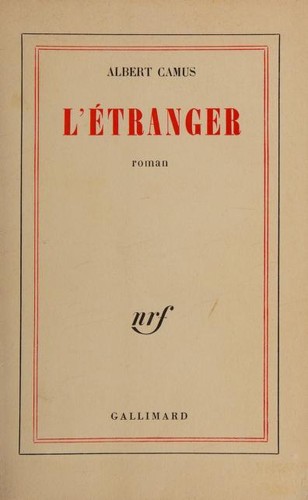
Read this first: it is the novel Camus wrote as the essay's twin.
Camus wrote The Stranger and The Myth of Sisyphus in the same period and published both in 1942; he thought of them, with the play Caligula, as a single cycle on the absurd. Meursault, the detached French Algerian clerk who fails to weep at his mother's funeral, kills a man on a sun-blasted beach, and is condemned as much for his indifference as for the murder, is the absurd man the essay describes, living without appeal to meaning. The final pages, where he opens himself to the benign indifference of the world, are the essay's conclusion turned into fiction.
It is also simply one of the great short novels, around 120 pages in flat, hypnotic first-person prose that influenced decades of writing after it. If the essay's philosophy ever felt abstract, the novel makes it concrete and disturbing; many readers find Meursault repellent and the book unforgettable at the same time. If you read only one other book from this list, it should be this one.
Read this for the bitter ancestor of the absurd man, eighty years early.
Dostoevsky's 1864 novella is the book the existentialists kept returning to, and Camus engages with Dostoevsky directly in The Myth of Sisyphus (his chapter on Kirilov from Demons) and later adapted him for the stage. The unnamed Underground Man delivers a furious monologue against rationalism, utopian progress, and the idea that humans will act in their own interest, insisting that we will choose spite and suffering just to prove we are free. That defense of irrational freedom against a meaningless, mechanical universe is the seed of the whole tradition Camus writes in.
Where Camus is sunlit and composed, Dostoevsky is feverish and self-lacerating; the Underground Man is petty, cruel, and impossible to look away from. The second half shifts from rant to a painful story involving a young prostitute, Liza, where the ideas turn into damage. It asks more tolerance for spiral and repetition than Camus does. Pick it to see the absurd before anyone had a name for it, with all the composure stripped off.
Read this for Camus's answer to what comes after accepting the absurd.
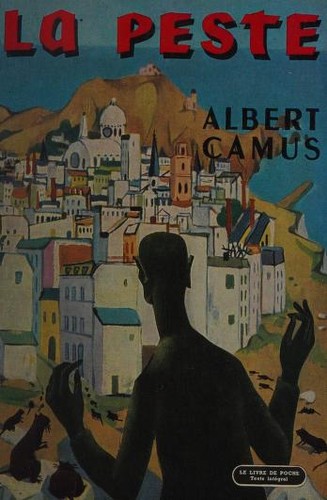
Published in 1947, The Plague is the next movement of Camus's thought. The Algerian city of Oran is sealed off by an outbreak, and the novel follows Dr. Rieux and a handful of others who fight it knowing they will mostly lose. The universe of the book is exactly the one Sisyphus describes, indifferent and lethal without explanation, but the question has shifted from whether to live to how to act, and Camus's answer is solidarity and decency without illusions. Rieux rolling back the plague that always returns is Sisyphus with other people on the hillside.
It is a fuller, warmer novel than The Stranger, with a larger cast and an unmistakable second meaning as an allegory of the Nazi occupation of France and of resistance to it. Some readers find the middle slow; the book earns its ending. Choose it if the essay's final image moved you but felt solitary, because this is where Camus turns absurdism into an ethics, the line of thought he completed in The Rebel.
Read this if you want the philosophical background filled in painlessly.
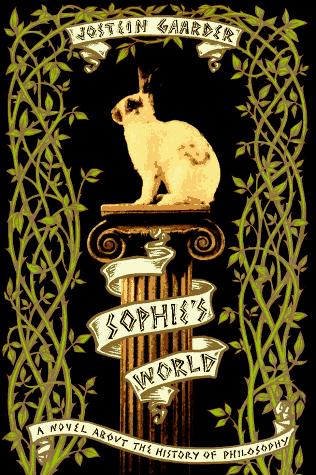
Jostein Gaarder's 1991 novel smuggles a complete history of Western philosophy inside a mystery: fourteen-year-old Sophie starts receiving letters that teach her everything from the pre-Socratics through Kierkegaard, Sartre, and the existentialists, while the story around her grows strange in ways that turn out to be philosophical themselves. If you came to The Myth of Sisyphus without a philosophy background and felt the references to Kierkegaard, Husserl, and Nietzsche sliding past, this is the friendliest way to backfill them.
It is openly didactic, written with young adults in mind, and the lecture-letters dominate the novel, so readers wanting literature first should know what they are getting. The treatment of any single thinker is brief. But the metafictional turn in the second half is genuinely clever and very much in the spirit of questioning what existence is. Treat it as the on-ramp on this list: read it before the Sartre, not after.
Read this for the psychological claim that everything we build is a shield against mortality.
Ernest Becker's 1973 book, which won the Pulitzer Prize for general nonfiction, argues that the fear of death is the mainspring of human activity: culture, religion, ambition, and love are immortality projects, heroic systems we construct so we do not have to stare at our own extinction. That is The Myth of Sisyphus translated into psychoanalytic terms, and Becker engages the same lineage, especially Kierkegaard, while drawing heavily on Otto Rank. Where Camus asks how to live once illusions are gone, Becker explains why the illusions are there at all.
It is the densest nonfiction pick here after Sartre's treatise, written in an urgent but academic register and steeped in Freud and his heirs, some of which has aged unevenly. Becker also ends nearer to faith than Camus would tolerate, suggesting some hero-system is inescapable and the honest move is choosing one consciously. Read it after Sisyphus for the strongest available counterargument to the idea that we can live without appeal.
The Stranger, almost without question. Camus published it the same year as the essay and conceived the two as companions, with Meursault as the absurd man the essay describes. After that, The Plague shows where Camus took the philosophy next, and Sartre's Existentialism is a Humanism gives you the rival position in a single short lecture.
Was Camus an existentialist?
He repeatedly said no. Camus called his position absurdism and criticized the existentialists, including Sartre and the religious thinkers like Kierkegaard, for making what he called a leap, escaping the absurd into systems of meaning. The two camps share a starting point, a universe without given purpose, but split on the response. The Camus and Sartre friendship ended publicly in 1952 after a hostile review of The Rebel in Sartre's journal.
Is The Myth of Sisyphus hard to read?
Moderately. It is a literary essay, not an academic treatise, and the famous opening and closing sections are very readable, but the middle chapters assume some familiarity with Kierkegaard, Husserl, and Nietzsche. Reading a primer like Sophie's World first, or simply pushing through to the Don Juan, actor, and conqueror sketches and the final Sisyphus section, both work. It is short, around 120 pages in most editions.
What is the main difference between Camus and Frankl on meaning?
Frankl believes meaning is real and discoverable, in work, love, and the attitude we take toward unavoidable suffering, and built his psychotherapy on finding it. Camus holds that the universe offers no meaning and that honesty requires living without appeal to one, finding value in revolt, freedom, and passion instead. Frankl offers the more consoling answer, Camus the more austere one, and reading them together is the best way to decide where you stand.
As an Amazon Associate, we earn from qualifying purchases. · About & methodology