9 books like The Millionaire Fastlane by MJ DeMarco, from The 4-Hour Workweek to The Lean Startup: wealth-building reads sorted by mindset, business, and money.
Updated June 10, 2026
MJ DeMarco's The Millionaire Fastlane (2011) built a cult following by attacking the standard advice. DeMarco, who got rich building and selling a limo booking site, divides financial life into three roads: the Sidewalk (living paycheck to paycheck), the Slowlane (save 10 percent, index funds, retire rich at 65, which he mocks as trading your youth for a wheelchair fortune), and the Fastlane, building a scalable business that decouples income from your hours. The book is long, blunt, sometimes repetitive, and unusually honest that the Fastlane is hard; its core frameworks, like the Commandments of Need, Entry, Control, Scale, and Time, are what readers actually keep.
What you should read next depends on which part hooked you, and this list covers all three angles. If it was the escape-the-9-to-5 conviction, Tim Ferriss's The 4-Hour Workweek and Robert Kiyosaki's Rich Dad Poor Dad are the other two pillars of that worldview, each with serious caveats noted below. If it was the actual building of a business, The Lean Startup and the Entrepreneur Media guide get practical where DeMarco stays conceptual. And if it was money itself, Think and Grow Rich, You Are a Badass at Making Money, The Wealthy Gardener, The Automatic Millionaire, and Tony Robbins's Money: Master the Game range from pure mindset to pure mechanics, including, ironically, the best versions of the Slowlane DeMarco rejects.
One honest framing note: DeMarco wrote the Fastlane partly as a rebuttal to several books on this list. He has criticized 4-Hour Workweek-style passive income dreams and Slowlane saving gospel by name. Reading them anyway is useful, both to steelman the alternatives and because most real paths mix the lanes: a Fastlane business funded and followed by Slowlane investing. The entries below tell you which camp each book belongs to. DeMarco's own follow-up, Unscripted (2017), is the natural next read if you simply want more of him.
Our Top Picks
Best overall next read
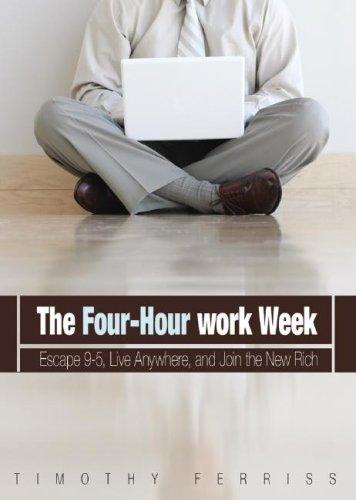
The 4-Hour Workweek: Escape 9-5, Live Anywhere, and Join the New Rich
Read this for the mindset book that primed a generation for the Fastlane argument.
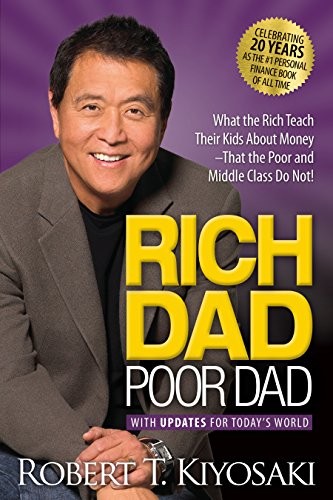
Robert Kiyosaki's 1997 classic is the book most Fastlane readers encountered first, and the overlap is real: both argue that a salary will never make you rich, that the educated middle class is playing a losing game, and that assets which generate income (businesses, real estate, paper assets) are the only exit. Kiyosaki's framing of the rich don't work for money, money works for them is essentially the Slowlane critique in embryo, told through the parable of his two dads, the educated poor one and the entrepreneurial rich one.
Go in with eyes open, though. The book is almost all mindset and nearly no mechanics; the rich dad story is widely believed to be largely invented; and Kiyosaki's empire of seminars and follow-ups has drawn heavy criticism. DeMarco himself is notably more concrete about how a business actually scales. Read it as the cultural ancestor of the Fastlane and for the asset-versus-liability reframe, not as an operating manual. If you have already absorbed DeMarco, some of it will feel thin.
The Wealthy Gardener: Lessons on Prosperity Between Father and Son
by John Soforic
Read this if you want Fastlane work ethic delivered as calm parable instead of polemic.
John Soforic, a chiropractor who retired at 49 on rental income, wrote this for his college-age son, alternating fictional parable chapters about a wealthy gardener mentoring a young man with straight-talk lessons from his own climb. It shares DeMarco's central conviction that financial freedom is bought with years of concentrated, unglamorous effort, and that purpose, not comfort, should drive the work. Where DeMarco is brash and combative, Soforic is measured and almost devotional about the same grind.
The differences are tone and road. Soforic's path ran through a practice plus aggressive real estate investing, closer to a hybrid of lanes than DeMarco's scalable-business-or-bust position, and the parable format means you get philosophy and proverbs more than frameworks. It is also long, and the two-track structure repeats its points by design. Pick it when the Fastlane's energy resonates but its tone wears on you, or as a gift to a young person who would bounce off DeMarco's style.
The 4-Hour Workweek: Escape 9-5, Live Anywhere, and Join the New Rich
by Tim Ferriss
Read this for the other defining escape-the-rat-race book, then note where DeMarco disagrees.
Tim Ferriss's 2007 bestseller and the Fastlane are the two books most often mentioned in the same breath, and they share a foundation: time, not money, is the real wealth, and deferring life to a distant retirement is a scam. Ferriss contributes tactics DeMarco mostly skips, ruthless elimination of busywork, outsourcing to virtual assistants, automating a product business (his muse concept), and negotiating remote work, all in service of mini-retirements taken now rather than at 65.
The disagreement is the point of reading it. Ferriss optimizes for minimum work and lifestyle freedom; DeMarco explicitly rejects the 4-hour framing, arguing real wealth comes from years of obsessive full-time building, after which the time freedom arrives as a result. Ferriss's muse examples have also aged unevenly since 2007. Read it for the automation and lifestyle-design toolkit, keep DeMarco's skepticism about shortcut thinking, and you will have both halves of the modern escape genre.
You Are a Badass at Making Money: Master the Mindset of Wealth
by Jen Sincero
Read this only if money mindset, not business mechanics, is your current bottleneck.
Jen Sincero's book covers the psychological territory DeMarco compresses into a few chapters: the inherited beliefs that make people sabotage earning, the guilt around wanting wealth, and the decision to commit. Sincero tells her own story of going from a broke freelance writer in a converted garage to wealthy author and coach, and her prescription, get specific about what you want, charge real prices, act before you feel ready, rhymes with DeMarco's contempt for someday thinking.
Be clear about what it is: motivational self-help with a strong law-of-attraction flavor (the universe features prominently), no business model analysis, and no math. DeMarco builds systems; Sincero builds nerve. That makes them complements rather than substitutes. Pick this up if you know the Fastlane logic but keep not acting on it; skip it if woo-adjacent pep talk grates on you, because there is a lot of it, delivered in an entertaining profane style.
Read this for the 1937 original that nearly every book on this list quietly recycles.
Napoleon Hill's classic is the source code of wealth mindset writing. Its thirteen principles, burning desire, definite purpose, persistence, the mastermind group, organized planning, echo through Kiyosaki, Sincero, and DeMarco alike; the Fastlane's insistence on a definite chief aim pursued with obsession is straight Hill. Reading it shows you which ideas in modern money books are genuinely new (very few) and which are repackaged from the Depression era.
Treat it as a historical document as much as a guide. Hill's claimed interviews with Andrew Carnegie and hundreds of magnates are poorly documented and likely embellished, some chapters (like sex transmutation) are simply strange, and the prose is dated. There is nothing in it about building a scalable business in any modern sense. It is short, free or cheap everywhere, and worth a read for foundation and pattern recognition rather than instruction.
Read this for the best version of the Slowlane DeMarco argues against.
David Bach's bestseller is, frankly, the opposing counsel: pay yourself first, automate transfers into retirement accounts and a home, stop buying lattes (his famous Latte Factor), and become a millionaire slowly without a budget or willpower. It belongs on a Fastlane reading list for two reasons. First, DeMarco's Slowlane critique lands harder once you have read the strongest plain statement of the thing he is critiquing. Second, every successful Fastlaner still needs Bach's machinery, automatic systems that turn business income into permanent wealth instead of lifestyle inflation.
Know the differences going in: Bach's plan assumes decades of compounding on ordinary income, exactly the trade of time DeMarco refuses, and the Latte Factor math has been fairly criticized as oversimplified. It is a quick, genuinely practical read with step-by-step account setup. Read it for the automation habit and the defense side of your finances, not for any path to wealth that DeMarco would call fast.
Start Your Own Business: The Only Startup Book You'll Ever Need
by The Staff of Entrepreneur Media, Inc.
Read this when you are past motivation and need the paperwork-level details.
DeMarco convinces you to build a business; this Entrepreneur Media staff manual tells you the unsexy specifics he skips: choosing a legal structure, registering the entity, licenses, basic accounting, hiring, insurance, pricing, and early marketing, organized as a reference you dip into rather than read straight through. For a reader who has finished the Fastlane and is actually forming an LLC next month, this fills the gap between DeMarco's strategy and Monday morning.
It is the least inspiring book on this list by design, closer to a textbook than a manifesto, and it is genre-agnostic: it will help you open a landscaping company as readily as a software startup, with no opinion about whether your idea satisfies DeMarco's commandments of scale and need. Editions update periodically, so get a recent one since regulatory details age. Buy it as a desk reference, not as motivation; it has none to offer.
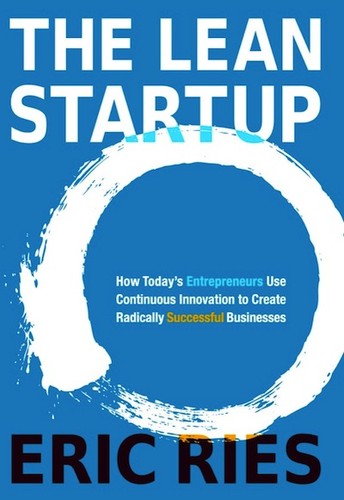
The Lean Startup: How Today's Entrepreneurs Use Continuous Innovation to Create Radically Successful Businesses
by Eric Ries
Read this for the method that keeps your Fastlane business from being built on a guess.
Eric Ries's 2011 book is the natural operational companion to DeMarco's Commandment of Need, the rule that businesses fail when they start from what the founder wants to sell rather than what the market lacks. Ries turns that into a working process: build a minimum viable product, measure real customer behavior with validated learning, and decide to pivot or persevere, repeating the build-measure-learn loop fast. Where DeMarco tells you to meet a need at scale, Ries shows you how to find out cheaply whether the need exists before you spend years on it.
The vocabulary skews toward tech startups and corporate innovation teams, and the case studies (IMVU, Dropbox-era examples) show their age; critics also note the method can excuse endless tinkering. None of that breaks the core loop, which applies to a service business or an e-commerce brand as well as an app. Of everything on this list, it is the book most likely to change what you actually do in your first six months.
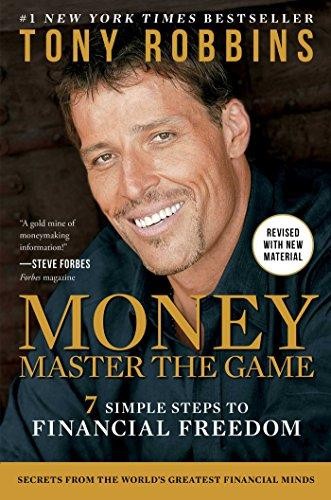
Money: Master the Game: 7 Simple Steps to Financial Freedom
by Tony Robbins
Read this for what to do with the money after the Fastlane works.
Tony Robbins's 600-plus-page tome answers the question DeMarco spends least time on: once a business generates real money, how do you keep and grow it? Built from interviews with investors like Ray Dalio, Jack Bogle, and David Swensen, it covers fee awareness (its best material, on how 401k and mutual fund fees quietly consume returns), asset allocation, and a version of Dalio's All Weather portfolio adapted for individuals. DeMarco himself treats post-business wealth as a money system that pays you; this is the long-form version of building that system.
Criticisms to weigh: it is bloated and repetitive, the annuity recommendations connect to companies Robbins had relationships with, and the seven simple steps are anything but quick. It is also pure Slowlane machinery, compounding and allocation, applied to Fastlane-sized capital. Skim aggressively, take the fee chapters seriously, and consider its shorter sequel Unshakeable if 600 pages is more Robbins than you need.
What is the closest book to The Millionaire Fastlane?
DeMarco's own sequel, Unscripted (2017), is the most direct continuation of the Fastlane worldview and is the obvious next read if you want more of him. Among other authors, The 4-Hour Workweek is the closest in spirit (escape the deferred-life plan now), though DeMarco openly disputes Ferriss's minimal-work framing, and Rich Dad Poor Dad is the closest ancestor of its salary-will-never-free-you argument.
Is The Millionaire Fastlane legit or a get-rich-quick book?
It markets itself with get-rich language but argues the opposite of quick: DeMarco is explicit that the Fastlane means years of full-time, high-intensity business building, and he attacks lottery thinking, gurus, and passive-income fantasies. The fair criticisms are different ones: it is long and repetitive, survivorship bias is real (most businesses fail), and it undervalues how well boring index investing works for people who do not want to be founders.
Should I read The 4-Hour Workweek or The Millionaire Fastlane first?
If you have read the Fastlane, read Ferriss next for the tactics DeMarco skips: automation, outsourcing, negotiating mobility, and designing the lifestyle the money is for. Just keep the disagreement in view. Ferriss optimizes for minimum work hours now; DeMarco argues real wealth requires obsessive work first and that the 4-hour framing sells a shortcut. Most readers get value from holding both.
What should I read for the investing side DeMarco skips?
From this list, Money: Master the Game covers fees, allocation, and turning a lump of business income into a lasting money system, and The Automatic Millionaire covers automating savings so wealth survives your own behavior. Off-list, JL Collins's The Simple Path to Wealth is the cleanest single book on low-cost index investing, which is what most successful founders eventually do with their proceeds anyway.
As an Amazon Associate, we earn from qualifying purchases. · About & methodology