8 books like Piranesi by Susanna Clarke, from The Starless Sea to The Memory Police: dreamlike labyrinths, quiet mysteries, and strange beautiful worlds.
Updated June 11, 2026
Susanna Clarke's Piranesi won the 2021 Women's Prize for Fiction by doing almost everything a modern fantasy novel is not supposed to do. It is short, quiet, and confined almost entirely to one setting: the House, an infinite labyrinth of halls lined with statues, where tides sweep through the lower floors and clouds drift through the upper ones. The narrator, who calls himself Piranesi, keeps meticulous journals, tends the bones of the dead, and believes the World contains only fifteen people. The plot is a slow detective story he conducts on his own past, and the real subject is innocence, memory, and what it costs to be restored to the ordinary world. Nothing else reads quite like it, which makes recommending follow-ups genuinely hard.
The books below cover the three things Piranesi readers usually want next. Some want more of the atmosphere, lush dreamlike spaces where the setting is the story, which The Starless Sea and The Night Circus deliver in a more ornate register. Some want the unsettling, philosophical side, the quiet horror of memory slipping away, which is The Memory Police and The Ocean at the End of the Lane. And some want more Clarke herself, which means her only other novel, Jonathan Strange & Mr Norrell, a very different but equally singular book.
A practical note: none of these matches Piranesi's brevity. Several are long, and Jonathan Strange & Mr Norrell is very long. Each entry below tells you which side of Piranesi it echoes, so pick by what actually held you, the House itself, the mystery, or the melancholy.
Read this if the House's beauty mattered more to you than its mystery.
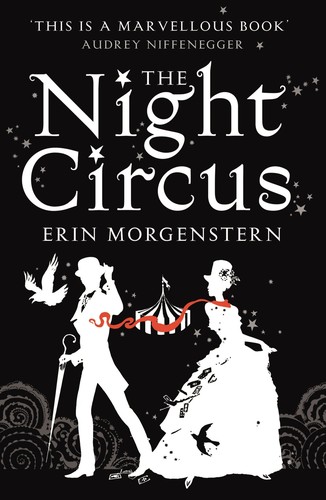
Erin Morgenstern's debut is the most popular gateway into the kind of fantasy Piranesi belongs to: fiction where an impossible place is the main character. Le Cirque des Reves appears without warning, opens only at night, and contains tents of ice gardens, cloud mazes, and wishing trees. Like Clarke's House, the circus is rendered with such sensory precision that readers come away remembering rooms rather than plot points, and the story (a long magical competition between two bound illusionists) unfolds with the same unhurried patience.
The differences are tonal. Morgenstern is lush and romantic where Clarke is austere and strange; the prose piles on sensory detail where Piranesi's narrator writes with childlike plainness. There is also a love story at the center, which Piranesi pointedly lacks. Pick this if you want immersion and atmosphere and do not mind trading Piranesi's eeriness for warmth. Readers who loved the House's solitude sometimes find the circus too crowded and sweet.
Read this if you want another labyrinth that runs on story and symbol.
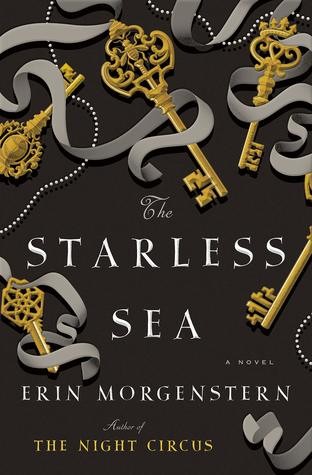
Morgenstern's second novel is the closest structural cousin to Piranesi on this list. Zachary Ezra Rollins finds a book in a university library that describes a scene from his own childhood, and the trail leads him to a vast underground harbor of stories, a honeycomb of halls, doors, bees, keys, and swords. Like the House, the starless sea is a liminal world with its own logic and its own tides, and the novel keeps asking the Piranesi question: what kind of person belongs in a place like this, and what do they give up to stay?
It is a much more maximalist book. Morgenstern interleaves the main narrative with fables and nested stories, and some readers find the symbolism beautiful while others find it indulgent and underplotted. At nearly 500 pages it asks for patience that Piranesi never needed. Choose it if the House left you hungry for more rooms to wander and you care more about mood than tight resolution. It is the best single answer to the question this page exists for.
Read this if you want the gentleness and found belonging without the eeriness.
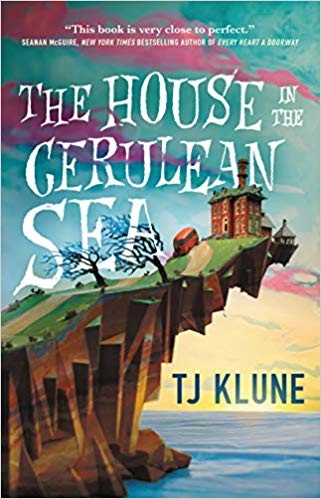
TJ Klune's novel shares something specific with Piranesi that is easy to miss under their very different surfaces: a protagonist whose innocence is the point. Linus Baker, a rule-bound caseworker sent to evaluate an orphanage of magical children on an island, sees the world freshly the way Piranesi sees the House, and both books are ultimately about a solitary man discovering what home and care mean. The tone is kind, the magic is matter-of-fact, and the emotional payoff is genuine.
Be clear about what it is not. There is no mystery, no labyrinth, and no darkness beyond a gentle critique of bureaucracy; it is a warm comfort read, openly sentimental in a way Clarke never is. Readers who loved Piranesi for its strangeness and its slow dread may find this too soft. Pick it when you want the feeling of the book's ending, the tenderness toward a beloved place and its people, stretched into a whole novel.
Read this if the blurring of memory and myth was what got under your skin.
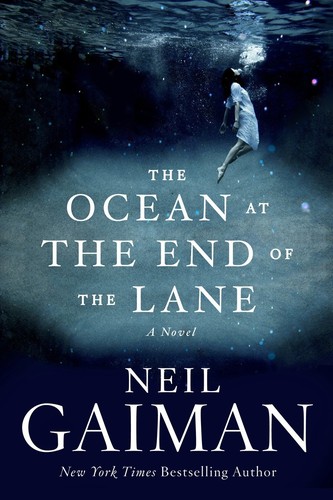
Neil Gaiman's short novel runs on the same fuel as Piranesi: an unreliable, half-erased memory of a magical world, recovered piece by piece. A middle-aged man returns to his Sussex hometown for a funeral and finds himself remembering the Hempstock farm at the end of the lane, where a pond was an ocean and something ancient and wrong followed him home when he was seven. Like Clarke, Gaiman treats the magical world as both wondrous and genuinely dangerous, and both books end with the ache of a protagonist who cannot fully keep what he found.
It is darker and more frightening than Piranesi, with real childhood terror at its center, and it moves much faster; you can read it in an evening. The mythology is folkloric and English rather than philosophical and classical, closer to fairy tale than to Plato. Choose it if the melancholy of forgetting was your favorite thread in Piranesi and you want it concentrated rather than diluted.
Read this if you want beauty and danger entwined, in a faster and more romantic package.
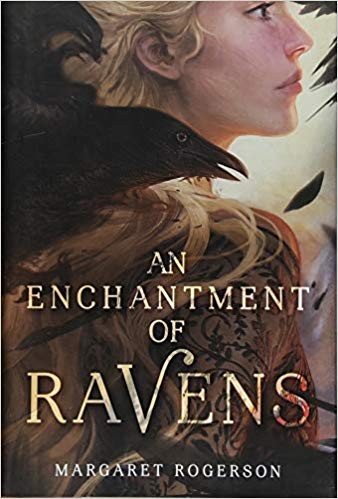
Margaret Rogerson's novel shares Piranesi's interest in the place where beauty becomes peril. Isobel paints portraits for the fair folk, beings of inhuman glamour who cannot create anything themselves, and when she paints mortal sorrow into the eyes of the autumn prince she is dragged into their world to stand trial. Like Clarke's statues and tides, Rogerson's faerie courts are gorgeous on the surface and hollow or lethal underneath, and the book keeps asking what art and humanity are worth to creatures outside them.
This is the lightest pick on the list: a standalone YA fantasy with a central romance, brisk pacing, and a conventional shape. It has none of Piranesi's formal strangeness or epistolary structure. Pick it as a palate cleanser when you want the aesthetic (lush, autumnal, slightly menacing) without the demands. Readers who came to Piranesi from literary fiction rather than fantasy may find it slight.
Read this if you want more Susanna Clarke and have a long winter ahead.
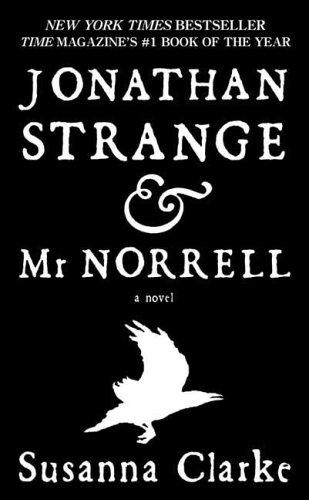
Clarke's first novel, published sixteen years before Piranesi, is the obvious next stop and a very different experience. It is a vast alternate history of the Napoleonic era in which English magic is restored by two rival magicians, told in a sly, footnoted pastiche of nineteenth-century prose. The connective tissue with Piranesi is real, though: the otherworldly realms reached through mirrors and rain, the gentleman with the thistle-down hair whose logic resembles the House's beautiful indifference, and Clarke's signature sense that magic is older, stranger, and less humane than the people who study it.
The honest warning is length and pace. At roughly a thousand pages, with long digressions and a deliberately mannered voice, it demands a commitment Piranesi never asked for, and some readers stall in the first two hundred pages before the story locks in. Persist and it becomes one of the great fantasy novels of its century. Choose it knowing you are getting Clarke's mind at a completely different scale, not Piranesi again.
Read this if Piranesi read to you as a quiet meditation on loss rather than a fantasy.
Yoko Ogawa's novel, translated from Japanese by Stephen Snyder, is the most serious literary companion here. On an unnamed island, things disappear: ribbons, birds, boats, and with each disappearance the islanders lose their memory of the vanished thing, while the Memory Police hunt the few who still remember. A novelist hides her editor, one of the rememberers, beneath her floor. Like Piranesi, it is narrated in calm, spare prose by someone whose world is being quietly erased, and both books locate their horror in acceptance rather than struggle.
It is bleaker than Piranesi and offers far less consolation; there is no detective plot pulling toward revelation, and the ending does not restore what was lost. It reads as allegory (of authoritarianism, of grief, of forgetting itself) and deliberately withholds explanation. Pick it if you finished Piranesi thinking about memory and selfhood rather than about the House, and you are willing to follow that thread somewhere genuinely sad.
Read this if you want the themes of memory and being forgotten with a propulsive story attached.
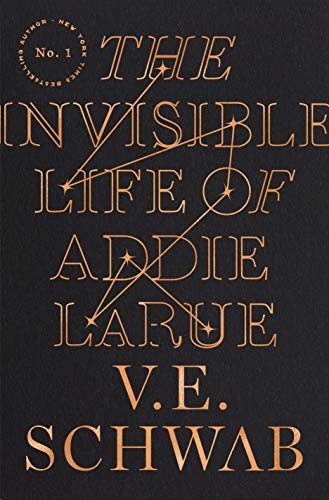
V.E. Schwab's novel inverts Piranesi's predicament in an interesting way. Piranesi has forgotten who he is; Addie LaRue, who traded her soul in 1714 for freedom and immortality, is forgotten by everyone she meets the moment she leaves their sight. Both books circle the same questions, what survives of a person when memory fails, what it means to leave a mark, and both find their turning point in a single person who finally remembers. Addie's centuries of wandering through art and history give it some of the same wistful, time-soaked texture.
It is a far more commercial novel: a romance at heart, told in alternating timelines, with a devil figure straight out of a Faust story and prose that reaches for quotable lines. It lacks Piranesi's restraint and its formal originality. Choose it when you want the emotional themes delivered with momentum and a love story, and accept that it will tug at you openly where Clarke trusted silence.
The Starless Sea by Erin Morgenstern is the closest match: another labyrinthine, liminal world explored slowly and lovingly, with mystery woven through it. If you want more Susanna Clarke, her only other novel is Jonathan Strange & Mr Norrell, which is brilliant but roughly a thousand pages and very different in style. For the quiet, melancholy side of Piranesi, The Memory Police by Yoko Ogawa is the strongest literary companion.
Is Piranesi connected to Jonathan Strange & Mr Norrell?
Not directly. They share no characters or plot, and you can read them in either order. They do share Susanna Clarke's core idea that magic belongs to older, stranger realms that humans only borrow, and readers of both often notice family resemblances between the House and the mirror-roads and faerie realms of the earlier book. Piranesi is also a fraction of the length, which is why many readers start there.
Why is the book called Piranesi?
The name nods to Giovanni Battista Piranesi, the eighteenth-century Italian artist famous for his Imaginary Prisons etchings of vast, impossible vaulted interiors. In the novel it is the name another character gives the narrator, and part of the mystery is that the narrator knows it is not really his name. The reference signals the book's central image: a human figure dwarfed by endless monumental architecture.
Is Piranesi fantasy or literary fiction?
Both, which is why its readalikes split in two directions. It won the Women's Prize for Fiction, a literary award, but its premise (an infinite magical house reached from our world) is pure fantasy. If you came to it from the literary side, The Memory Police and The Ocean at the End of the Lane will fit best. If you came from fantasy, start with The Starless Sea or The Night Circus.
As an Amazon Associate, we earn from qualifying purchases. · About & methodology