9 books like The House on Mango Street, from The Poet X to How the Garcia Girls Lost Their Accents: coming-of-age stories about identity, voice, and home.
Updated June 10, 2026
Sandra Cisneros's The House on Mango Street, published in 1984, does something almost no other assigned-in-school classic does: it builds a whole coming-of-age novel out of vignettes, forty-some sketches rarely longer than two or three pages, written in prose that scans like poetry. Esperanza Cordero, a Latina girl in a Chicago neighborhood, watches the women around her trapped by marriages, windows, and other people's expectations, and decides she will leave Mango Street and come back for the ones who cannot. It is short enough to read in a sitting and dense enough to teach for a semester.
Books get compared to it for different reasons, and this list covers each. For the same Latina coming-of-age territory a generation later, I Am Not Your Perfect Mexican Daughter and The Poet X (which is actually written in verse) are the direct heirs, with How the Garcia Girls Lost Their Accents and The Joy Luck Club widening the immigrant-family lens. For the vignette and fragment form, My Name Is Aram and Fun Home work in episodes the way Cisneros does. And for the women-claiming-their-own-lives thread, Their Eyes Were Watching God and The Color Purple are the towering predecessors Esperanza's story descends from.
A practical note: this list spans middle-school-friendly and decidedly adult. The Poet X and The Absolutely True Diary of a Part-Time Indian sit closest to Mango Street's young readership, while The Color Purple and Fun Home deal frankly with abuse and sexuality. Each entry below flags where it falls.
Read this if you want the mothers' stories Mango Street only gestures at.
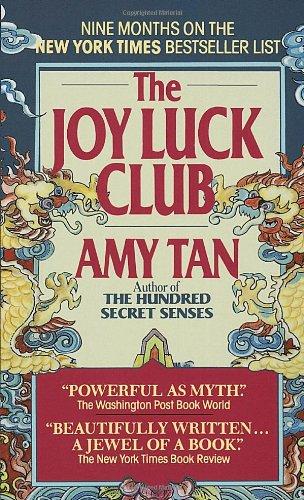
Amy Tan's 1989 novel shares Mango Street's architecture as much as its themes: it is built from sixteen interlocking stories rather than one continuous plot, circling four Chinese immigrant mothers in San Francisco and their American-born daughters. Like Cisneros, Tan is interested in how daughters inherit and resist their mothers' lives, and in the gap between the old country's rules for women and the new country's promises. Esperanza watching Mamacita, who never learns English, would recognize these households instantly.
The difference is vantage. Mango Street stays inside one girl's eyes for one stretch of childhood; The Joy Luck Club moves between generations and continents, giving the mothers full chapters of pre-war China that no child narrator could know. It is longer and more conventionally novelistic, with less of Cisneros's compression. Pick it when you want the two-generation version of the story, told from both sides of the kitchen table.
Read this for the book Esperanza's vow of independence descends from.
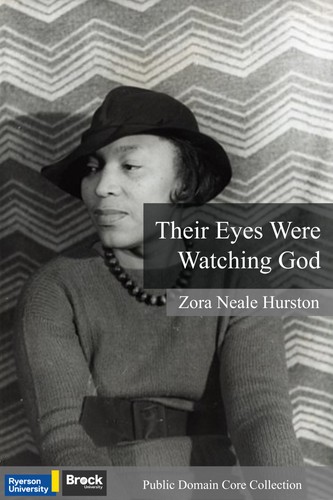
Zora Neale Hurston's 1937 novel is the great earlier telling of Mango Street's central question: what does it cost a woman to want a life of her own? Janie Crawford moves through three marriages in the Black towns of early twentieth century Florida, from being treated as a mule to finding real love and finally her own voice, and Hurston tells it in prose that swings between lyrical narration and rich Black Southern dialect. The women Esperanza watches leaning out of windows are Janie's literary granddaughters, and Cisneros's poetic compression owes much to Hurston's example.
It is an adult classic, denser than Mango Street, and the dialect takes some readers a chapter or two to settle into. The structure is also a single sweeping life rather than vignettes. Choose it when you are ready to go from a girl deciding to leave to a woman who actually walks the whole road, and to see where this entire tradition of voice-first storytelling got one of its strongest starts.
Read this if you want Esperanza's story updated, aged up, and given a plot.
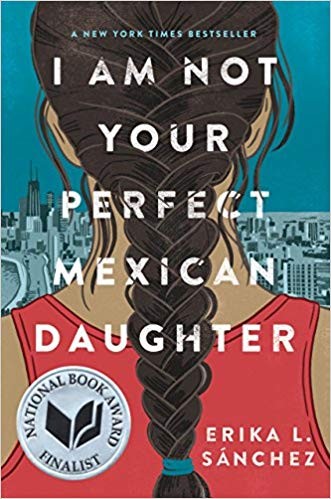
Erika L. Sánchez's 2017 novel, a National Book Award finalist for young people's literature, is the most direct descendant of Mango Street on this list, and it knows it: Julia, its narrator, is a bookish Mexican American girl in Chicago who dreams of being a writer and getting out of her neighborhood. After her seemingly perfect older sister Olga dies, Julia collides with her grieving parents' expectations while uncovering who Olga really was. The terrain, daughters policed by family, the pull between loyalty and escape, Chicago itself, is Cisneros's exactly.
Where Mango Street is impressionistic and timeless, this is a contemporary YA novel with a driving plot, a mystery thread, and frank handling of depression, sex, and a suicide attempt, so it suits readers in high school and up rather than middle schoolers. Julia's voice is also angrier and funnier than Esperanza's quiet watchfulness. Pick it when you want the same heart with modern texture and momentum.
Read this for the same leaving-the-neighborhood ache from a Native American boy's side.
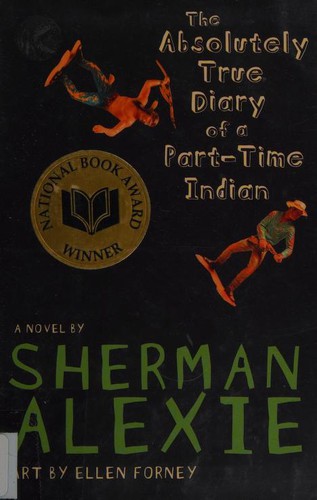
Sherman Alexie's 2007 novel, which won the National Book Award for young people's literature, runs on Mango Street's exact engine: a kid who loves words decides the only way to save himself is to leave the place that made him, and carries the guilt of that choice everywhere. Junior leaves his school on the Spokane reservation for the white town of Reardan, becoming a traitor at home and an outsider at school. Like Esperanza, he narrates in short, punchy episodes, here punctuated with his own cartoons, and like her he is funny about things that are not funny at all.
The grief is heavier than anything in Cisneros: alcoholism and a string of deaths hit Junior's family directly, and the humor is cruder, which is partly why the book is frequently challenged in schools. Readers should also know Alexie faced sexual harassment allegations in 2018, which complicates the book's classroom standing for some. As a reading experience it remains one of the closest matches here for voice and ache.
Read this if the immigrant in-betweenness was the thread you cared about most.
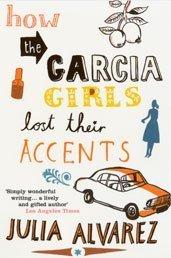
Julia Alvarez's 1991 novel follows four sisters whose family flees the Dominican Republic for New York after their father's role in a plot against the Trujillo dictatorship, and it shares Mango Street's form as well as its subject: linked stories rather than a single plot, each one a window onto the family at a different moment. The Garcia girls live Esperanza's dilemma at full scale, too American for the island, too island for America, and Alvarez is sharp on how that split lands differently on girls than boys.
Two things set it apart. It is an adult literary novel, with the sisters' adult lives, marriages, breakdowns, love affairs, given as much weight as their childhoods. And it runs in reverse chronology, opening with the grown women and ending in the Dominican childhood, which asks more of the reader than Cisneros's straight line. Pick it when you want Mango Street's themes carried across a whole lifetime and two countries.
Read this if the poetry of Cisneros's prose was what you loved.
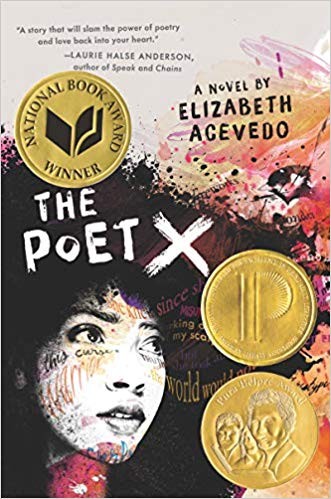
Elizabeth Acevedo's 2018 novel in verse is the truest heir to Mango Street's form on this list. Xiomara, a Dominican American girl in Harlem, fills a notebook with poems she cannot say aloud, about her changing body, the boys and men who comment on it, her mother's rigid Catholicism, and the slam poetry club that might let her finally speak. Where Cisneros wrote prose that behaves like poetry, Acevedo simply writes the poems, and the result won the National Book Award, the Printz, and the Carnegie Medal.
It is more direct than Mango Street about faith, desire, and a first relationship, which makes it ideal for teen readers and up rather than younger kids, and the verse format means it reads even faster than Cisneros. The mother-daughter conflict is also far more central and more combustible than anything between Esperanza and her mama. This is the pick for anyone who underlined sentences in Mango Street just for how they sounded.
Read this for the hardest, fullest version of women writing their way to freedom.
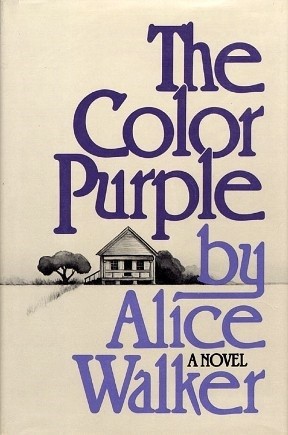
Alice Walker's Pulitzer-winning 1982 novel shares with Mango Street the conviction that writing itself is how a silenced woman survives. Celie, a poor Black woman in early twentieth century Georgia, tells her story in letters to God because there is no one else safe to tell, and over decades, through the women who love her, Shug Avery and Sofia above all, she claims a self, a livelihood, and a home of her own. The trapped wives Esperanza catalogs on Mango Street are Celie's kin, and both books end with a woman securing a house that belongs to her.
Be aware of the gap in intensity: The Color Purple opens with rape and incest and stays unflinching about domestic violence, which is why it is both a fixture of adult literature courses and a frequent target of book bans. It is for mature readers in a way Mango Street is not. Come to it when you are ready for the full-weight adult treatment of the themes Cisneros renders in a child's watercolors.
Read this if you want the fragmented coming-of-age memoir pushed into a new form.
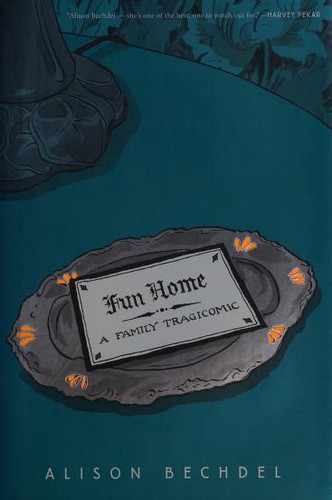
Alison Bechdel's 2006 graphic memoir connects to Mango Street through form and project rather than setting: like Cisneros, Bechdel builds a portrait of growing up out of non-linear fragments, circling the same memories repeatedly, and like Esperanza she is a kid using books and writing to decode a home that does not quite fit her. The story is Bechdel's childhood in a Pennsylvania funeral home, her coming out in college, and her closeted father's death, possibly a suicide, months later. The house itself, obsessively restored by her father, is as much a character as the house on Mango Street.
This is an adult literary memoir in comics form, dense with allusions to Joyce, Proust, and Wilde, and explicit about sexuality in ways that have made it one of the most banned books in American libraries. It is also a very different demographic story, a white queer woman in rural Pennsylvania rather than a Latina girl in Chicago. Pick it for the craft of memory in fragments, not for cultural overlap.
Read this for the closest formal twin: childhood told in warm, linked sketches.
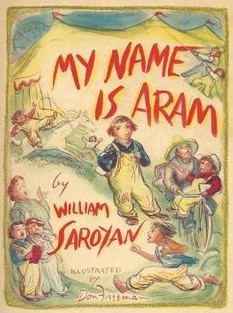
William Saroyan's 1940 collection is the book on this list that most resembles Mango Street as an object: short, interlinked stories narrated by a boy, Aram Garoghlanian, growing up in an Armenian immigrant family in Fresno, California. Each piece stands alone (the famous opener involves a cousin who secretly borrows a white horse) but together they build a neighborhood, an extended family, and a sensibility, exactly as Cisneros's vignettes do. Both books filter an immigrant community through a child's amused, clear eyes.
The temperature is the big difference. Saroyan is sunnier and more sentimental; the menace that shadows Esperanza, the predatory men, the trapped wives, the poverty that bites, has little equivalent in Aram's gentle comedies. The 1940 prose also reads as older-fashioned, and the book is far less taught today. Choose it as a charming, low-stakes companion piece, especially if you are interested in how the linked-vignette childhood book existed decades before Mango Street.
What should I read after The House on Mango Street?
For the closest modern match, read I Am Not Your Perfect Mexican Daughter by Erika L. Sánchez, another bookish Mexican American girl in Chicago fighting her family's expectations, or The Poet X by Elizabeth Acevedo if the lyrical style was what you loved. For more Cisneros, her story collection Woman Hollering Creek and Other Stories continues many of Mango Street's themes for slightly older readers.
Is The House on Mango Street a true story?
It is fiction, but closely drawn from life. Sandra Cisneros grew up in a Mexican American family in Chicago, the only daughter among six sons, and has said Esperanza's neighborhood and many of its people are composites of places and women she knew. The book is best described as autobiographical fiction rather than memoir.
What age is The House on Mango Street appropriate for?
It is commonly taught from about sixth grade through college. The vignettes are short and the language accessible, but a few chapters deal with sexual assault and domestic violence obliquely, which is worth knowing for younger readers. On this list, The Poet X and The Absolutely True Diary of a Part-Time Indian suit teens, while The Color Purple and Fun Home are for mature readers.
Why is The House on Mango Street written in vignettes?
Cisneros has said she wanted compact pieces that could be read alone or in sequence, written in a voice drawn from the way her own community spoke rather than from the literary establishment she encountered in graduate school at Iowa. The fragments mirror how childhood memory actually works, in vivid flashes rather than continuous plot, and they let a slim book hold an entire neighborhood.
As an Amazon Associate, we earn from qualifying purchases. · About & methodology