6 books like The Fountainhead, from Atlas Shrugged to Brave New World: novels of individualism and integrity matched to what gripped you in Rand.
Updated June 10, 2026
The Fountainhead works on readers the way few philosophical novels do because Ayn Rand fused her argument to a character you can watch. Howard Roark, the architect who would rather work in a granite quarry than add a fake classical facade to his design, is individualism made flesh: he does not rebel against society so much as ignore it. Published in 1943 after a dozen rejections, the novel built its audience by word of mouth, and its central drama, the creator versus the second-hander, still divides readers into devotees and detractors with almost nothing in between.
What you should read next depends on which part gripped you. If it was Rand's philosophy itself, the answer is more Rand: Atlas Shrugged is the full statement of her worldview, and We the Living is her most personal and most novelistic book. If it was the individual crushed or tested by the collective, the great dystopias take that theme to its endpoint, Brave New World and 1984 from opposite directions. And if it was the figure of the man who refuses to perform what society expects, The Stranger and The Catcher in the Rye each give you a very different refusenik.
One honest note before you choose: nobody else writes like Rand. The books below share her themes, not her romantic-heroic style or her certainty, and several of them (Orwell and Huxley especially) reach political conclusions she would have argued with. That tension is part of why they make good follow-ups rather than echoes.
Read this if you want Rand's philosophy at full scale.
Atlas Shrugged (1957) is the book The Fountainhead was building toward. Where Roark's story tests one creator against a hostile profession, this novel asks what happens when all the creators, industrialists, inventors, artists, simply withdraw from a society that resents and regulates them. Dagny Taggart, the railroad executive at its center, is the most capable of Rand's heroines, and the mystery of the vanishing producers gives the first half real narrative pull. Every theme in The Fountainhead, the creator versus the second-hander, the morality of self-interest, returns here at civilizational scale.
It is also a far heavier commitment: over a thousand pages, with the philosophy delivered ever more explicitly, culminating in a speech by John Galt that runs about sixty pages. Readers who loved Roark as a character sometimes find this book more lecture than novel. Go in knowing that it is Rand's complete philosophical statement, Objectivism in fiction form, and pace yourself. If The Fountainhead converted you, this is non-optional; if it merely intrigued you, consider We the Living first.
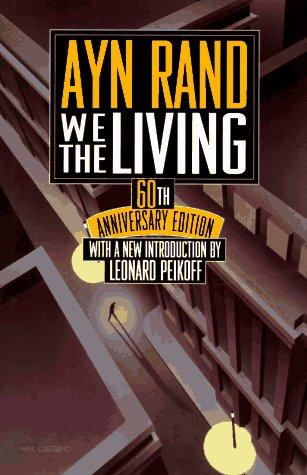
Read this for Rand's most human and most autobiographical novel.
Rand's first novel (1936) is set where her convictions came from: Soviet Russia in the 1920s, which she had escaped only a decade earlier. Kira Argounova, an engineering student from a dispossessed bourgeois family, fights to keep a self the state is methodically erasing, and the love triangle around her, an aristocrat turned black marketeer and an idealistic Communist, lets Rand show the system destroying believers and rebels alike. The theme is pure Fountainhead, the individual against the collective, but here the collective has secret police.
What surprises Fountainhead readers is how different it feels. The heroes lose. There are no granite-jawed invincible creators; Kira is brave and outmatched, and the book is closer to tragedy than to romantic triumph. Rand called it as near to an autobiography as she would ever write, about the conditions rather than the events of her life. Many readers who find her later novels too schematic consider this her best pure fiction. Start here if you want the feeling before the doctrine.
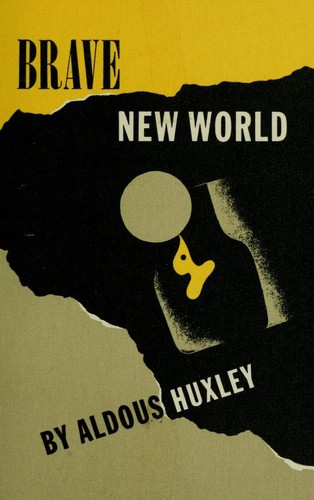
Read this if Roark's fight against conformity was the heart of the book for you.
Huxley's 1932 dystopia is the great novel of comfortable conformity, which makes it a sharper companion to The Fountainhead than the obvious tyranny stories. The World State does not crush individuals the way Ellsworth Toohey schemes to; it dissolves them with pleasure, conditioning, and the drug soma, until wanting to be exceptional becomes a malfunction. John the Savage, who demands the right to struggle, suffer, and create rather than be happy on the state's terms, is fighting a recognizably Roarkian fight with none of Roark's armor.
The differences matter. Huxley is a satirist, ironic and pessimistic where Rand is earnest and triumphant, and he is as suspicious of consumer capitalism as of collectivism, a target Rand exempted. The novel is also short and genuinely funny in places, an easy read after Rand's scale. Pick it up if you want the conformity theme handled with more wit and ambiguity, and do not expect a hero who wins.
Read this for the individual versus the collective taken to its darkest endpoint.
Orwell's 1949 novel is the definitive picture of what Rand's villains would build with absolute power. Winston Smith's quiet insistence that two plus two makes four, that reality is what it is regardless of what the Party declares, is the same epistemological ground Roark stands on, and the Party's war on objective truth is the exact nightmare Rand spent her career warning against. Reading it after The Fountainhead, you can see Toohey's methods, the manipulation of guilt and the worship of the collective, carried to completion in O'Brien.
Orwell, though, was a democratic socialist, and the book is not a defense of capitalism or heroic individualism; it is a warning about totalitarianism from inside the left, with a protagonist who is ordinary, frightened, and ultimately broken. There is no romantic victory and the ending is among the bleakest in literature. Read it for the stakes of the ideas rather than for inspiration. As a pairing with We the Living, it is devastating.
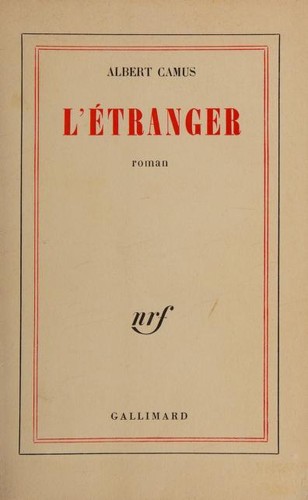
Read this if you want a radically different man who will not perform for society.
Camus's 1942 novella connects to The Fountainhead at one precise point: society puts a man on trial less for what he did than for what he refuses to pretend to feel. Meursault is condemned, the prosecution makes clear, as much for not weeping at his mother's funeral as for the killing on the beach. Roark's courtroom defense of the creator and Meursault's blank honesty before his judges are both confrontations between an authentic individual and a society that demands performance, and both novels treat that refusal as the real crime.
Everything else is opposed. Meursault is passive where Roark is purposeful; Camus's absurdism holds that the universe offers no meaning to achieve, while Rand's entire philosophy is purposeful achievement. The prose is flat, short, and sun-struck, readable in a sitting, and it will not tell you what to think. Choose it if The Fountainhead left you interested in integrity and authenticity as questions rather than settled answers.
Read this only if the anti-conformity theme matters more to you than heroic achievement.
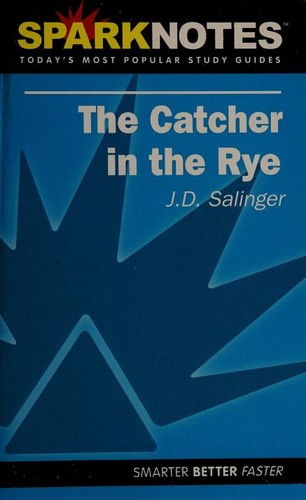
Salinger's 1951 novel shares one big thing with The Fountainhead: contempt for fakery. Holden Caulfield's war on the phonies, the performers, the people who say what the room wants, is an adolescent cousin of Roark's refusal to design buildings he does not believe in. Both books speak powerfully to readers, often young ones, who feel surrounded by people faking their way through life, and both became generational touchstones for exactly that reason.
But the two heroes diagnose the disease and then go opposite directions. Roark answers phoniness with work, building things to his own standard; Holden answers it with flight and breakdown, and he has no standard to build toward yet. Salinger's loose, vernacular first-person voice is also the stylistic opposite of Rand's marble prose. This is the lightest commitment on the list and the least philosophical. Read it as a portrait of the rebellion without the creed, and decide for yourself whether Holden is what Roark looks like before he finds his work, or what happens to someone who never does.
Should I read Atlas Shrugged or The Fountainhead first?
Most readers, and Rand's own admirers, suggest The Fountainhead first. It is shorter, more character-driven, and introduces the individualist themes through one man's career rather than a civilizational plot. Atlas Shrugged assumes you are ready for the full philosophical system, including very long speeches. If you have already finished The Fountainhead and wanted more of the ideas, Atlas Shrugged is the natural next step.
What is the closest book to The Fountainhead not written by Ayn Rand?
There is no real equivalent, because Rand's romantic-heroic style is unique to her. The closest thematic matches are the great anti-collectivist novels: Brave New World and 1984 dramatize the individual against the conformist state, and The Stranger shares the theme of a man condemned for refusing to perform what society expects. Rand also admired Victor Hugo above all novelists, so Les Miserables is a good pick for her style's roots.
Do I need to agree with Rand's philosophy to enjoy these books?
No, and several authors here would have disagreed with her sharply. Orwell was a democratic socialist, Huxley satirized consumerism as much as collectivism, and Camus's absurdism rejects the kind of objective moral certainty Rand built her system on. Reading them against The Fountainhead is useful precisely because they take the same questions about the individual and society to different conclusions.
Is The Fountainhead based on a real architect?
Howard Roark is widely associated with Frank Lloyd Wright, and Rand did research modernist architecture and corresponded with Wright while writing the novel. But Rand herself denied that Roark was a portrait of Wright, saying the character was an ideal man of her own invention and that only the pattern of an innovator fighting the architectural establishment drew on Wright's career. Treat the connection as inspiration, not biography.
As an Amazon Associate, we earn from qualifying purchases. · About & methodology