8 books like Tampa by Alissa Nutting, from Lolita to The End of Alice: transgressive novels about predators, obsession, and taboo told from the inside.
Updated June 11, 2026
Alissa Nutting's Tampa (2013) is one of the most deliberately uncomfortable novels of its decade. Celeste Price is a beautiful, married middle-school teacher in suburban Florida who takes the job specifically to prey on fourteen-year-old boys, and Nutting locks you inside her head for the whole book: glossy, funny, completely without remorse. The novel was inspired by a real Florida case (Debra Lafave, who attended high school with Nutting), and its provocation has a point, exposing how a culture refuses to see an attractive woman as a predator. It is satire delivered through a monster's voice.
Readers who can stomach it and want more usually want one of three things. For more of the unreliable, seductive predator narrator, the line runs straight through Lolita and A.M. Homes's The End of Alice, the two books Tampa is most often shelved beside. For transgressive fiction that weaponizes desire and disgust in other directions, there is Ballard's Crash and Ketchum's The Girl Next Door. And for the haunted, obsessive edges of the same territory, Psycho, The Virgin Suicides, and Sweetheart, Sweetheart approach from horror and elegy rather than satire.
A practical warning applies to most of this list: these books contain sexual abuse, violence, and narrators who are meant to repel you. None of them endorse what they depict, but several (The End of Alice and The Girl Next Door especially) are harder reads than Tampa itself. Each entry below is clear about what you are signing up for.
Read this for the book Tampa is consciously answering.
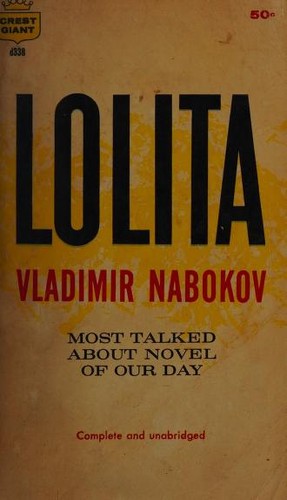
Nabokov's 1955 novel is Tampa's direct ancestor, and Nutting has been open about writing in its shadow; reviewers called Tampa a gender-flipped Lolita before the book was even out. Both novels hand the narration to a child predator who is charming, articulate, and intent on seducing the reader as much as the victim, and both make the reader's own complicity part of the experience. Humbert Humbert's lush, self-justifying eloquence is the template Celeste Price's slick confidence inverts.
The differences matter. Nabokov writes in an ornate, allusive, game-playing English that rewards rereading and has kept the book on canon lists for seventy years, where Nutting's prose is flat, contemporary, and pornographically blunt on purpose. Humbert performs remorse and romance; Celeste performs nothing. If you found Tampa's directness bracing, Lolita will feel almost decorous, but it remains the deepest book ever written in this voice.
Read this only if you want something even more confrontational than Tampa.
A.M. Homes's 1996 novel is the closest living relative to Tampa in transgressive intent. An imprisoned, middle-aged pedophile corresponds with a nineteen-year-old college student who is planning the seduction of a twelve-year-old boy in her suburban neighborhood, and the novel deliberately pairs a male and a female predator, anticipating Tampa's central provocation about gender and desire by nearly two decades. Like Nutting, Homes refuses the comfort of an outside moral voice.
It is, by most readers' measure, the harder book. The violence and sexual content are more graphic, the prison frame is grimmer, and the ending goes places Tampa does not. It was condemned by child-protection groups in Britain on publication. Pick it up only if Tampa's confrontation felt purposeful to you rather than gratuitous; if so, this is the most direct continuation on the list.
Read this for a classic study of a hidden predator behind a harmless face.
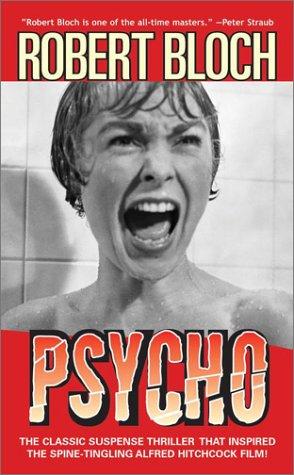
Robert Bloch's 1959 novel shares Tampa's central irony: the predator is the person the community would never suspect. Norman Bates, the mild, awkward motel keeper dominated by his mother, is the male ancestor of Celeste Price's trick of hiding in plain sight behind an appealing surface. Bloch, like Nutting, drew on a real case (Ed Gein, whose crimes broke while Bloch was writing), and both books are interested in how normality functions as camouflage.
This is a lean mid-century thriller, not transgressive literary fiction; the psychology is pulpier, the sexual content is tame by modern standards, and the famous twist has been public knowledge since Hitchcock's 1960 film. It reads fast and works best as the genre palate-cleanser on this list, a reminder of where the hidden-monster story comes from. Readers wanting Tampa's explicitness or satire will not find it here.
Read this only if you can handle abuse written as horror, with no satirical cushion.
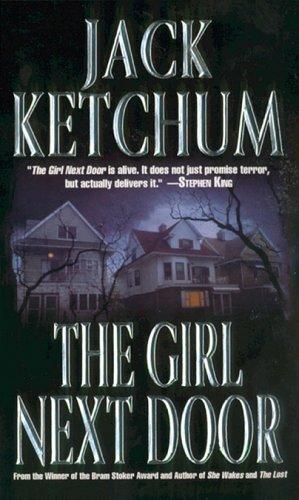
Jack Ketchum's 1989 novel connects to Tampa through the theme of adult cruelty toward children and the complicity of ordinary people who watch and do nothing. Based on the real 1965 torture and murder of Sylvia Likens in Indiana, it is narrated by a neighborhood boy who witnesses a suburban mother lead local kids in the escalating abuse of the teenage girl in her care. Like Tampa, it insists that the monster is a woman the neighborhood trusts, and that the suburbs are the crime scene.
Understand the difference in register before you start. Tampa is a satire with a glossy, comic surface; this is straight horror with none, and it is regularly described as one of the most upsetting novels in the genre. There is no eroticism and no irony, only dread and guilt. Choose it if Tampa left you thinking about bystanders and denial, skip it if the appeal was Nutting's dark comedy.
Read this if Tampa's clinical treatment of compulsion interested you more than its plot.
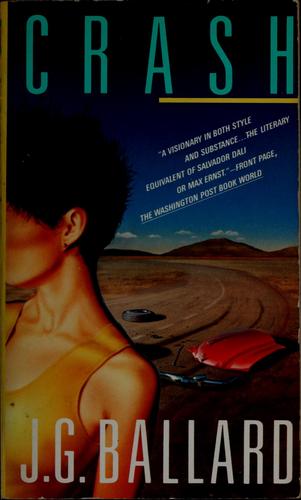
J.G. Ballard's 1973 novel shares Tampa's core method: take a desire society refuses to acknowledge, narrate it from inside with absolute deadpan calm, and let the reader's discomfort do the work. Ballard's characters are aroused by car crashes, wounds, and the meeting of flesh and machinery, and the novel describes it all in flat, almost medical prose, the same affectless surface Nutting uses for Celeste's predation. Both books were accused of being pornography and defended as satire of their cultures' real obsessions.
The subject is entirely different, no children are involved, and the book is less a story than a fever-logic descent; many readers find it repetitive and alienating by design. It is the pick for readers interested in transgressive fiction as a tradition, from Ballard through Dennis Cooper to Nutting, rather than in Tampa's specific teacher-student scenario. The 1996 Cronenberg film adaptation is similarly divisive.
Read this if you want obsession and desire steered fully into the supernatural.
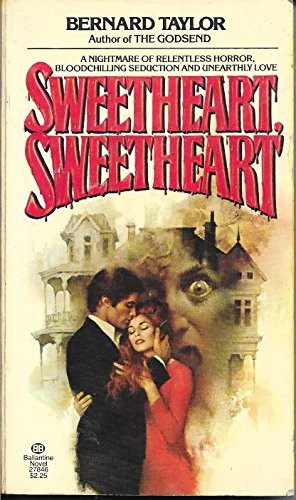
Bernard Taylor's 1977 novel belongs on this list for its treatment of desire as something predatory and consuming. A young man returns to an English village after his twin brother's death and falls under the spell of the cottage his brother lived in, and of a presence there whose love is possessive to the point of annihilation. Like Tampa, it presents seduction as a trap laid by someone who looks like the fantasy, and it builds an atmosphere of wrongness under a placid surface.
It is the outlier here in genre: a slow-burn English ghost story, championed by horror readers (Charles L. Grant called it one of the finest ghost stories of the century) and reissued by Valancourt Books for good reason. The transgression is supernatural rather than social, and there is nothing of Tampa's satire or its subject matter. Pick it when you want the obsessive, erotic dread without the real-world abuse.
Read this if what you actually want next is an honest book about identity and desire, not another predator.
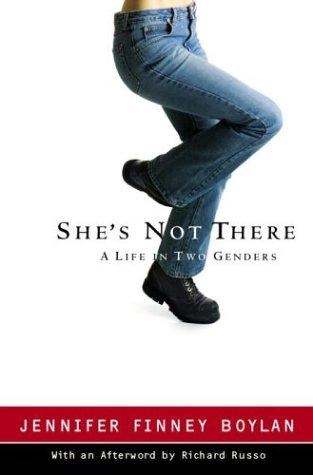
Jennifer Finney Boylan's 2003 memoir is the odd one out on this list, and it is worth saying so plainly. It connects to Tampa only at the broadest level: both books deal frankly with gender, desire, and the gap between a public self and a hidden inner life. Boylan, then an English professor at Colby College, recounts her transition in midlife, her marriage, and her friendship with the novelist Richard Russo, and the book became one of the first bestselling memoirs by a transgender American.
There is nothing transgressive or dark about it in Tampa's sense; it is warm, funny, and humane, closer to Anne Lamott than to Nabokov. Treat it as a deliberate exit ramp. If Tampa left you wanting another taboo narrative, skip this one; if it left you wanting a true story about concealment and becoming yourself, told with actual generosity, this is a fine place to land.
Read this for adolescent sexuality and obsession rendered as elegy instead of satire.
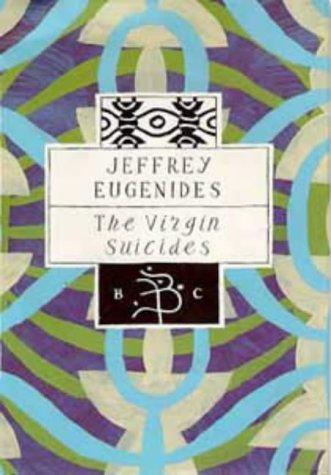
Jeffrey Eugenides's 1993 debut works the same ground as Tampa, the dangerous adult mythologizing of teenagers' bodies and inner lives, from the opposite direction. A chorus of neighborhood boys, narrating as grown men, reconstructs their obsession with the five Lisbon sisters, who all died by suicide in 1970s suburban Michigan. Where Nutting shows an adult preying on adolescents, Eugenides shows how obsessive watching itself fails and consumes the watched; both books indict the gaze, not just the act.
The experience of reading it could not be more different. The prose is dreamy and gorgeous, the collective first-person narration is one of the most imitated devices in contemporary fiction, and the mood is grief rather than provocation. There is no graphic content. This is the pick for readers who want Tampa's themes handled with beauty and distance, and Sofia Coppola's 1999 film is a faithful companion.
What book is most similar to Tampa by Alissa Nutting?
Lolita is the standard comparison, and the right one: Tampa was widely described as a gender-reversed Lolita on publication, and both novels are narrated by an articulate, unrepentant child predator. The End of Alice by A.M. Homes is the other close match, and it pairs a male and a female predator in a way that directly anticipates Tampa's provocation.
Is Tampa based on a true story?
It is inspired by real cases rather than based on one. Nutting has cited Debra Lafave, a Tampa-area teacher convicted in 2005 of sex with a fourteen-year-old student, who attended the same Florida high school as Nutting. The novel's satire targets the real media coverage of such cases, in which attractive female teachers were often treated as tabloid fantasies rather than offenders.
Why is Tampa so controversial?
Because it is narrated by an unapologetic female sexual predator and is sexually explicit about her crimes. Some Australian bookstores declined to stock it, and reviewers split over whether the explicitness was satire or shock. Nutting's stated point is that the book's discomfort exposes a double standard: readers struggle to see a beautiful woman as a monster, which is exactly how offenders like Celeste escape scrutiny.
Which book on this list should I read if Tampa was too much?
The Virgin Suicides. It deals with adolescence, obsession, and the adult gaze on teenagers, but it contains no graphic content and is written as a lyrical elegy rather than a provocation. Psycho is another easier entry, a classic thriller about a hidden predator. Avoid The End of Alice and The Girl Next Door, which are both more brutal than Tampa, not less.
As an Amazon Associate, we earn from qualifying purchases. · About & methodology