8 books like Perdido Street Station, from The Scar to The Book of the New Sun: weird fiction, living cities, and genre-blending strangeness after Mieville.
Updated June 10, 2026
Perdido Street Station (2000) is the book that made China Mieville the standard-bearer of the New Weird, and its real protagonist is the city. New Crobuzon is a sprawling, filthy steampunk metropolis where humans live alongside cactus people, insect-headed khepri, and the Remade, criminals surgically punished with grafted machinery and animal parts. The plot, a scientist named Isaac accidentally looses nightmare-eating slake-moths on the city, is a monster thriller, but what readers remember is the texture: dense, baroque prose, biology and thaumaturgy treated with equal rigor, and a refusal of every comfortable fantasy convention, including a happy ending.
What you want next depends on which part hooked you. If it is Mieville himself, three of his best are here: The Scar continues in the same world aboard a floating pirate city, The City & The City strips his obsessions down to a lean detective novel, and Embassytown takes them into pure science fiction. If it is the weirdness, Annihilation is the other defining New Weird text, and The Night Circus offers a far gentler dose of impossible atmosphere. If it is the dense, demanding worldbuilding, The Book of the New Sun and The Quantum Thief are the deep ends of that pool.
A practical note: Perdido Street Station is the first of three loosely connected Bas-Lag novels, and you do not need to read them in order. The Scar shares the setting but no main characters, and most readers rate it at least as highly. The entries below say plainly which itch each book scratches, the city, the strangeness, or the prose.
Read this if you want Mieville's city obsession in a lean, controlled package.
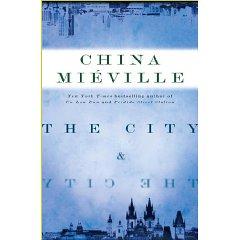
The City & The City (2009) shows what Mieville can do with restraint. It is a murder investigation set in Beszel and Ul Qoma, two cities occupying the same physical space, whose citizens are trained from birth to unsee the other city, with a shadowy power called Breach enforcing the separation. Like Perdido Street Station, it is fundamentally about how a city shapes what its inhabitants are allowed to perceive and do, and it blends genres just as deliberately, police procedural where Perdido is monster thriller.
The prose is the opposite of Perdido's baroque maximalism: clipped, noir, fast. There are no fantastical species and arguably no magic at all, just one impossible social arrangement followed to its conclusions. It won the Hugo (shared) among other awards, and it is the Mieville book to hand to people who bounce off six-hundred-page fantasies. Pick it if Perdido's ideas thrilled you but its density wore you down.
Read this if you want more Bas-Lag, and arguably the best Bas-Lag.
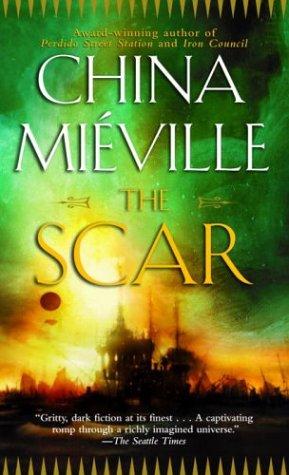
The Scar (2002) is the direct continuation of Perdido Street Station's world, and the most common answer to what to read next. It opens with Bellis Coldwine fleeing New Crobuzon in the aftermath of the first book's events, only to be captured and absorbed into Armada, a floating city built from thousands of lashed-together ships. All the Bas-Lag pleasures carry over: invented species, Remade convicts, grindylows, vampires running a ship-district, and a vast project to harness something at the edge of the world. The worldbuilding density and the political undercurrents are exactly what Perdido delivers.
It is also a tighter book. Where Perdido sprawls through New Crobuzon's districts, The Scar has the focus of a sea voyage, and Bellis is a colder, more compelling viewpoint than Isaac. Many readers, possibly most, rank it as Mieville's best novel. Start here if you finished Perdido Street Station wanting more of that world; the third Bas-Lag book, Iron Council, can wait.
Read this if you want a hidden urban underworld with the darkness turned down and the charm turned up.
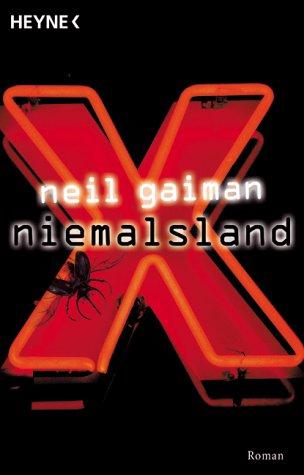
Neil Gaiman's Neverwhere (1996) is the friendly cousin of Perdido Street Station's urban fantasy. Richard Mayhew helps an injured girl on a London pavement and falls out of ordinary life into London Below, a parallel city assembled from the literalized names of Tube stations, an angel called Islington, an actual Earl holding court, shepherds in Shepherd's Bush. Like Mieville, Gaiman builds a city that is itself a character full of factions, markets, and monsters, and the pair of assassins, Croup and Vandemar, are genuinely menacing creations.
The resemblance ends at tone. Neverwhere is a fairy tale with jokes, a likable everyman hero, and a plot that resolves cleanly; it has none of Perdido's grime, politics, or cruelty, and the prose is light where Mieville's is thick. That makes it the easiest book on this list and a good palate cleanser, or a gateway to recommend to someone not ready for Bas-Lag. Readers wanting Gaiman closer to Mieville's darkness should look at his short fiction.
Read this if you want prose and worldbuilding even denser than Mieville's, with decades of rereaders behind it.
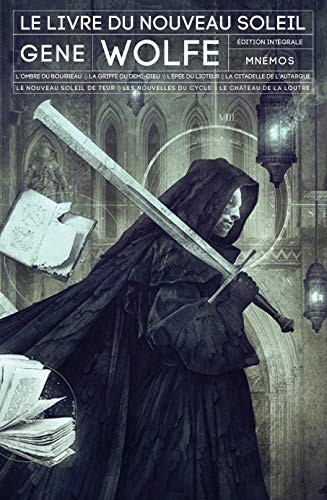
Gene Wolfe's four-volume work (1980 to 1983) follows Severian, an apprentice torturer exiled from his guild, across a far-future Earth so old that its science reads as ritual and its ruins as geology. It belongs on this list because it is the prior summit of what Perdido Street Station attempts: a fully imagined world rendered in rich, estranging language, genre furniture (swords, towers, monsters) that turns out to be something else entirely, and a city, Nessus, as layered and decayed as New Crobuzon. Mieville has named Wolfe among the writers he admires, and the lineage shows.
Be honest about the commitment. Wolfe writes an unreliable narrator who omits and distorts, the archaic vocabulary is real but unglossed, and the books reveal themselves fully only on rereading; this is the most demanding entry here by a wide margin. It is also, by consensus of writers from Le Guin onward, one of the great achievements of the field. Take it on when you want a project, not a page-turner.
Read this if you want Mieville's strangeness aimed at language instead of monsters.
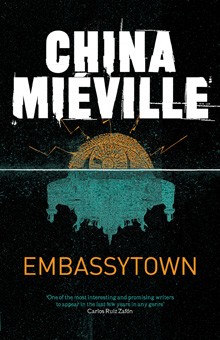
Embassytown (2011) is Mieville's full science fiction novel, set in a human enclave on a planet whose alien Hosts speak a language in which lying is impossible and words cannot be separated from reality. When a new kind of ambassador arrives, the city slides into a catastrophe as strange as anything the slake-moths inflict on New Crobuzon. The continuity with Perdido Street Station is real: an outpost city dependent on incomprehensible powers, biological weirdness treated seriously, and a crisis that remakes the society rather than restoring it.
The difference is abstraction. Embassytown's drama is linguistic and philosophical, closer to Ursula K. Le Guin than to a monster hunt, and the first hundred pages withhold a lot while the world assembles itself. Readers who loved Perdido for its action and grotesquerie sometimes find it cold; readers who loved it for its ideas often call it his smartest book. Choose accordingly.
Read this if you liked being thrown into a dense world with no explanations.
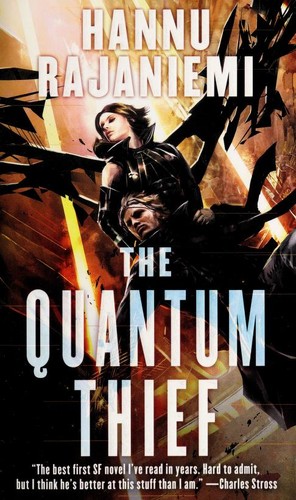
Hannu Rajaniemi's debut (2010) does in post-singularity science fiction what Perdido Street Station does in fantasy: it drops you into a fully built world, here a walking Martian city where memory is currency and privacy is enforced by shared cryptography, and trusts you to swim. The plot is a heist, master thief Jean le Flambeur broken out of a virtual prison to steal something on Mars, but the pleasure is the same torrent of invented systems, factions, and vocabulary, delivered without hand-holding. Readers who enjoyed decoding New Crobuzon tend to enjoy decoding the Oubliette.
The flavor is different: sleek, mathematical, and fast where Mieville is organic, grimy, and slow, and at about a third of Perdido's length it sprints. The cost is the same as Mieville's, multiplied; the first hundred pages are genuinely disorienting, and some readers never get traction. There is no horror here and little politics. Pick it when you want the worldbuilding-density itch scratched in a completely different register.
Read this if the slake-moths' wrongness was the part you loved.
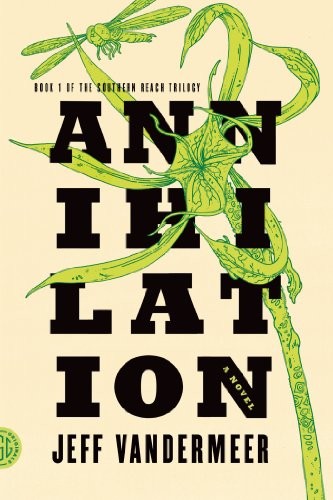
Jeff VanderMeer is the other name most attached to the New Weird, and Annihilation (2014) is his most concentrated dose. A four-woman expedition crosses the border into Area X, a stretch of coast where nature has been altered by something that cannot be named or mapped, and the biologist narrating begins to change. What it shares with Perdido Street Station is the core New Weird move: treating the impossible with a scientist's attention, horror that comes from biology and transformation rather than evil, and an ending that refuses to explain.
Formally it is Perdido's opposite: barely two hundred pages, one narrator, almost no characters, dreamlike and quiet where Mieville is crowded and loud. There is no city at all, the wilderness replaces it. Read it in one or two sittings for maximum effect, and continue into Authority and Acceptance only if you want answers deferred even further. VanderMeer's earlier Ambergris books (City of Saints and Madmen) are the pick if you specifically want his version of a weird city.
Read this only if atmosphere, not grit, is what you are chasing.
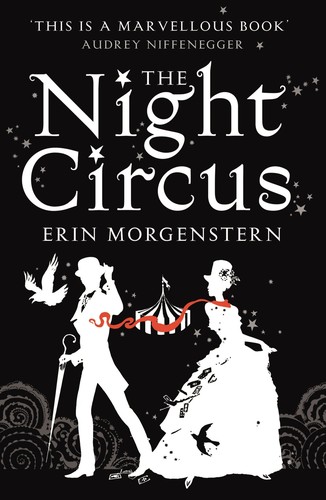
Erin Morgenstern's The Night Circus (2011) is the outlier on this list, and worth being clear-eyed about. What it shares with Perdido Street Station is a constructed impossible place rendered in loving sensory detail: Le Cirque des Reves arrives without warning, opens only at night, and contains tents of ice gardens, cloud mazes, and bottled memories, all in black and white. If what held you in New Crobuzon was the experience of wandering a place that could not exist, this delivers that experience with remarkable consistency, built around a long duel between two magicians bound since childhood.
Everything else is opposite. The Night Circus is romantic, elegant, and gentle; there is no squalor, no politics, no body horror, and the stakes stay personal. The plot is famously thin, the book is openly about mood. Readers who loved Perdido for its teeth usually find this slight, and readers who found Perdido exhausting often love this. Treat it as the rest stop between heavier books here, not a substitute for them.
The Scar is the standard answer and a good one: it is set in the same Bas-Lag world, follows a character fleeing the aftermath of Perdido's events, and many readers rate it as Mieville's best novel. You do not need to read Bas-Lag in order. If you want something outside Mieville, Annihilation by Jeff VanderMeer is the other cornerstone of New Weird fiction.
Do I need to read the Bas-Lag books in order?
No. Perdido Street Station (2000), The Scar (2002), and Iron Council (2004) share a world but not protagonists, and each stands alone. The Scar contains light references to Perdido's ending, so reading Perdido first is slightly better, but plenty of readers start with The Scar and lose nothing important.
What is New Weird fiction, exactly?
It is a loose movement from the late 1990s and 2000s that mixes fantasy, science fiction, and horror while rejecting Tolkien-style conventions: real-feeling cities instead of pastoral quests, monsters treated with biological seriousness, political grit, and endings that do not restore order. Perdido Street Station and VanderMeer's Ambergris and Southern Reach books are its defining texts. M. John Harrison's Viriconium stories are the usual cited precursor.
Is Perdido Street Station horror or fantasy?
Both, deliberately. The setting is secondary-world fantasy with steampunk technology and magic treated as a science, but the slake-moth plot is structured as horror, and the body horror around the Remade is real. It won the Arthur C. Clarke Award and the British Fantasy Award, which reflects how it straddles categories. Readers sensitive to insect imagery and grim endings should know both feature heavily.
As an Amazon Associate, we earn from qualifying purchases. · About & methodology