Books Like Percy Jackson & The Olympians: The Lightning Thief
9 books like Percy Jackson, from The Red Pyramid to Fablehaven and Artemis Fowl: mythology, humor, and middle grade adventure matched to what you loved.
Updated June 10, 2026
The Lightning Thief works because Rick Riordan made Greek mythology feel like it was happening in your neighborhood. Percy is a dyslexic, ADHD twelve-year-old who finds out his learning differences are demigod wiring, Mount Olympus sits above the Empire State Building, and the Minotaur attacks in the rain off a New Jersey highway. The first-person voice is the real engine: sarcastic chapter titles, jokes in the middle of monster fights, and a kid narrator who never sounds like an adult pretending. Plenty of books do quests; very few do this voice.
Readers who finish it usually want one of three things, and this list covers all of them. If you want more Riordan, the direct continuation is The Sea of Monsters, and his other mythologies (Egyptian in The Red Pyramid, Norse in Magnus Chase) plus his treasure-hunt opener The Maze of Bones are all here. If you want another secret-world school-age fantasy, Harry Potter and the Sorcerer's Stone and Fablehaven are the closest matches. And if you want clever kids in strange worlds without the mythology, Artemis Fowl, The Land of Stories, and A Wrinkle in Time round things out.
A practical note: these skew middle grade, roughly ages 8 to 13, but most read fine for adults who came to Percy late. If you have not finished the original five Percy Jackson books, do that before branching out; the series builds, and Magnus Chase and The Red Pyramid land better once you know how Riordan plays the formula straight the first time.
Books to Read If You Like Percy Jackson & The Olympians: The Lightning Thief
Percy Jackson and the Olympians: The Sea of Monsters
by Rick Riordan
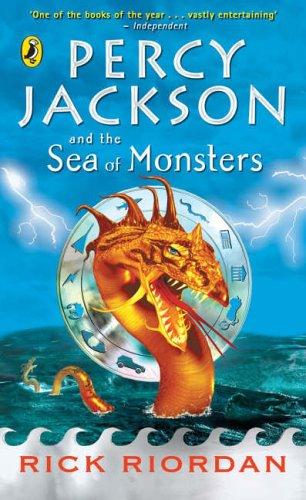
Read this first if you have only read The Lightning Thief, because it is the actual sequel.
This is book two of the same series, so it is less a similar book than the next chapter. Percy returns to Camp Half-Blood to find its magical borders failing, and the rescue mission doubles as a riff on the Odyssey, with the Sea of Monsters hiding in the Bermuda Triangle. The voice, the humor, and the monster-of-the-chapter pacing are identical to what you just enjoyed, and it introduces Tyson, one of the most beloved characters in the whole saga.
The only reason to hesitate is if you want something genuinely different rather than more of the same. It is a middle book, slightly smaller in scope than The Lightning Thief, and it ends on a reveal that will pull you straight into book three. If you are even slightly tempted to continue the series, do it now before trying the spin-offs and read-alikes below; the original five books are still Riordan's best run.
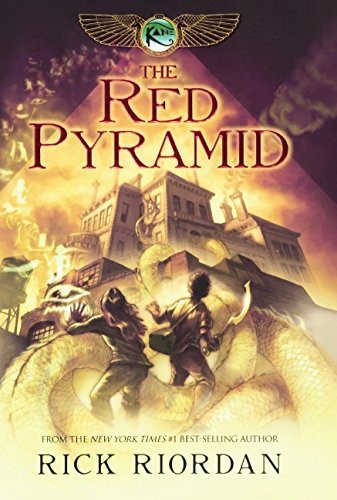
Read this if you want Riordan's exact formula running on Egyptian mythology instead of Greek.
This is the closest experience to discovering The Lightning Thief again. Siblings Carter and Sadie Kane watch their father blow up the Rosetta Stone and accidentally release the Egyptian god Set, then learn their family descends from pharaohs' magicians. Riordan keeps everything that made Percy work: gods walking around the modern world, sarcastic young narrators, real mythology smuggled in under jokes, and a countdown-clock quest across continents.
The differences are worth knowing. The story is told in alternating chapters by Carter and Sadie, framed as a recorded transcript, which some readers find fresh and others find gimmicky compared to Percy's single clean voice. Egyptian magic is also rule-heavy (hieroglyphs, hosting gods, the Duat) where Greek demigod powers were instinctive. Pick this if mythology itself was the draw; it is Riordan's most underrated series.
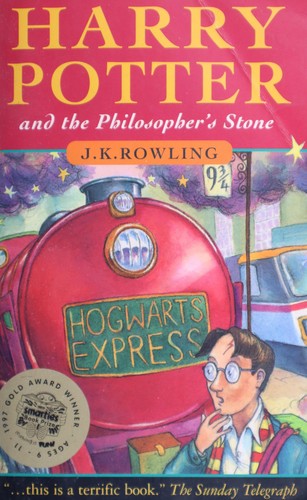
Read this if the secret world hidden inside the ordinary one was what hooked you.
The structural overlap with The Lightning Thief is enormous, and it is no accident that the two series share so many readers. An unhappy boy in a miserable home discovers he belongs to a hidden magical world, gets whisked to an institution that trains kids like him, forms a trio with a brainy girl and a loyal friend, and uncovers a plot involving a stolen object of immense power. Camp Half-Blood and Hogwarts scratch the same itch: a place where the thing that made you weird makes you belong.
What differs is tone and pace. Rowling writes in third person with a cozier, more British storybook feel, and the humor is gentler than Percy's wisecracking. There is no real mythology here, just invented magic, and the first book skews slightly younger than The Lightning Thief before the series grows up fast. If you have somehow read Percy but not Harry, this is the most obvious gap to fill on the list.
Read this if you liked the humor and want a protagonist who is the schemer instead of the hero.
Eoin Colfer's series shares Percy's DNA in one specific way: a hidden magical population living alongside the modern world, played for both action and comedy. Here it is fairies, but not storybook ones; they run a high-tech underground civilization with a special-forces unit called LEPrecon. The wit is constant, the chapters move fast, and the supporting cast (Captain Holly Short, the flatulent dwarf Mulch Diggums) is as fun as anything at Camp Half-Blood.
The big difference is the lead. Artemis is a twelve-year-old criminal mastermind who kidnaps a fairy for ransom, so for the first book you are essentially rooting for the villain, watching him out-think people rather than out-fight monsters. There is no mythology and no quest structure; it reads more like a heist thriller with magic. Pick it if Percy's narration made you laugh and you want clever over heroic.
Read this if the quest and the puzzles mattered more to you than the gods.
Riordan wrote this opener himself, and you can feel it: orphaned siblings Amy and Dan Cahill learn at their grandmother's funeral that their family has secretly shaped world history, then choose a globe-trotting clue hunt over a safe inheritance. The brother-sister banter, the breakneck chapter endings, and the kids-outsmarting-adults energy are all recognizably the same author who wrote Percy.
Know what you are getting, though. There is no fantasy at all; the hooks are history, codes, and famous figures like Benjamin Franklin rather than monsters and gods. It is also a multi-author series, so after this first book the voice changes hands (Gordon Korman, Peter Lerangis, and others take turns), with the quality varying book to book. Best for readers who loved the chase itself, or for slightly younger readers not ready for Percy's scarier monsters.
Read this if you want Riordan's funniest series and do not mind Norse doom hanging over the jokes.
Magnus is a homeless sixteen-year-old in Boston who dies in chapter one, wakes up in the Viking afterlife of Valhalla, and learns his father is a Norse god. It exists in the same universe as Percy Jackson (Magnus is Annabeth Chase's cousin, and she appears), and the chapter titles alone ('My Sword Almost Ends Up on eBay') tell you Riordan turned the humor dial even higher here. The supporting cast is his best: a deaf elf, a fashion-conscious dwarf, and Samirah, a hijab-wearing Valkyrie.
The flavor is darker than the Greek books underneath the comedy, because Norse mythology ends in Ragnarok and everyone knows it; Magnus starts the story dead, which sets the tone. The hero is also older and more battered than twelve-year-old Percy. Read the original Percy series first for the crossover to land, then come here if you want the same engine with sharper jokes and a colder sky.
Read this if you want the portal-to-another-world adventure with fairy tales instead of myths.
Chris Colfer's series does for fairy tales what Riordan did for Greek myths: it takes stories kids already half-know and asks what those characters are really like. Twins Alex and Conner fall through a magic book into a land where Cinderella, Snow White, and Red Riding Hood are reigning queens with ongoing lives, and the twins must gather items for a Wishing Spell to get home. The scavenger-hunt quest structure will feel instantly familiar to Lightning Thief readers, and Conner supplies the wisecracks.
It is the softest book on this list. The danger level is lower than Percy's, the writing is simpler, and the worldbuilding is more whimsical than mythological, so it suits readers on the younger end, roughly 8 to 11, or anyone who wants comfort-food adventure. Older Percy fans may find it slight; younger siblings of Percy fans tend to love it.
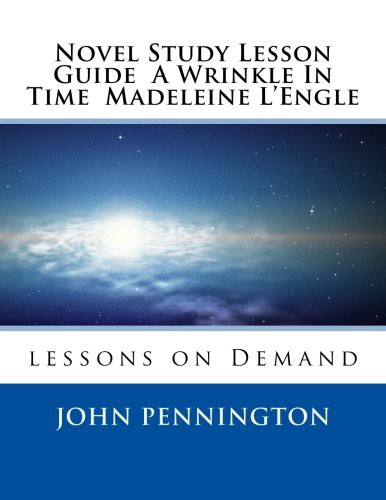
Read this if you want the classic that put a misfit kid at the center of a cosmic battle.
Madeleine L'Engle's 1962 novel is a great-grandparent of books like The Lightning Thief. Meg Murry is awkward, stubborn, and bad at school in ways adults misread, exactly the kind of kid Riordan writes, and those flaws turn out to be her strengths when she travels across space to rescue her father from a planet ruled by a disembodied mind. The pattern Percy fans know, an overlooked kid discovering the universe is stranger and bigger than anyone said, starts in large part here.
Expect a very different texture. This is science-fantasy rather than mythology, with tesseracts and dark cosmic forces instead of gods and monsters, and the tone is sincere and philosophical where Percy is jokey. The prose has a 1960s formality some modern kids bounce off. Give it to a thoughtful reader, or read it yourself to see where the genre came from; it won the Newbery Medal and still earns it.
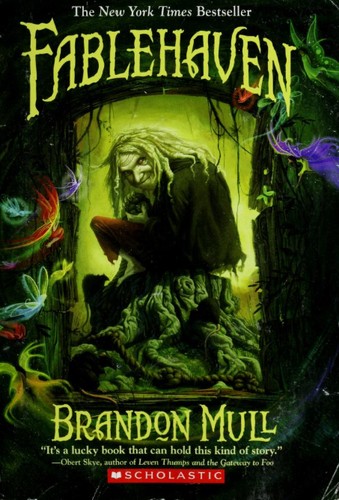
Read this for the best non-Riordan match on the list, a hidden magical world with real rules and real danger.
Brandon Mull's series is the strongest pure read-alike here. Kendra and Seth discover their grandfather's estate is a secret preserve for magical creatures, where fairies, golems, and a captive demon coexist under fragile treaties, and where breaking the rules has immediate, sometimes frightening consequences. Like Camp Half-Blood, Fablehaven is a sanctuary that turns out to be the front line of a larger war, and the five-book arc builds the way Percy's does, with each volume raising the stakes toward a final confrontation.
The differences play in its favor for some readers. Mull's magic is its own invention rather than borrowed mythology, the sibling dynamic (cautious Kendra, rule-breaking Seth) replaces the trio-of-friends structure, and the tone is a notch more ominous, with less constant joking than Riordan. If you finished all of Riordan and want a complete series of comparable quality you have not already heard of, start here.
What should I read after Percy Jackson and the Olympians?
Finish the original five books first, starting with The Sea of Monsters, since the series builds to a single climax in The Last Olympian. After that, Riordan's own follow-ups are the natural path: The Heroes of Olympus continues Percy's story directly, while The Kane Chronicles (Egyptian) and Magnus Chase (Norse) run the same formula on new mythologies. Outside Riordan, Fablehaven and Harry Potter are the closest matches.
Are there other Rick Riordan books besides Percy Jackson?
Yes, many. He wrote The Kane Chronicles (Egyptian mythology), Magnus Chase and the Gods of Asgard (Norse), The Heroes of Olympus and The Trials of Apollo (continuations of the Percy universe), and the first book of The 39 Clues. He also curates Rick Riordan Presents, an imprint where other authors write mythology-based adventures, including Aru Shah and the End of Time by Roshani Chokshi.
Is Harry Potter or Percy Jackson better to read first?
Either order works, since the series are unrelated, but they suit slightly different readers. Percy Jackson has a faster, funnier first-person voice and works especially well for reluctant readers, while Harry Potter starts cozier and grows darker and longer as it goes. Many kids read Percy first because the early books are shorter, then graduate to the later Potter books.
What age are these books for?
Most of this list is middle grade, roughly ages 8 to 13. The Land of Stories and The 39 Clues sit at the younger end, Percy Jackson, Fablehaven, Artemis Fowl, and The Red Pyramid in the middle, and Magnus Chase slightly older with a sixteen-year-old hero and darker Norse material. All are clean enough for the age range; adults who enjoy middle grade fantasy read most of them happily too.
As an Amazon Associate, we earn from qualifying purchases. · About & methodology