9 books like I Am Legend, from The Passage to World War Z and The Road: last-man survival, vampire plagues, and post-apocalyptic horror that thinks.
Updated June 10, 2026
Richard Matheson's I Am Legend, published in 1954, is the root system under most modern apocalypse fiction. Robert Neville is the last uninfected man in Los Angeles, barricading his house each night against the vampires his neighbors have become and spending his days researching the plague that made them. What keeps the short novel alive is not the siege scenes but the loneliness, the alcoholic routines, the grief, and the famous inversion of the ending, which reveals that to the new world, Neville himself is the monster of legend. George Romero credited it as the inspiration for Night of the Living Dead, which means every zombie story since owes it something.
The list below is organized around the three things readers want after finishing it. If you want the vampire plague treated seriously, with science and scale, go to The Passage and The Strain. If you want the zombie apocalypse Matheson accidentally invented, World War Z, The Girl with All the Gifts, Feed, and Zone One each take it somewhere different, from oral history to literary satire. And if what stayed with you was the desolation itself, the texture of surviving after everyone else is gone, The Road, Station Eleven, and Alas, Babylon carry that mood without a single monster.
One practical note: the famous 2007 Will Smith film changes Matheson's ending completely, so if you have only seen the movie, the novel itself is worth reading first. It is barely 170 pages, and several picks below are in direct conversation with what it actually says rather than what Hollywood made of it.
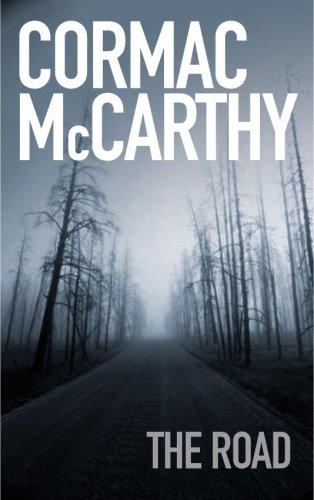
Read this if the loneliness hit harder than the vampires.
Cormac McCarthy's Pulitzer Prize winner is what you get if you remove the monsters from I Am Legend and keep everything that hurts. A father and his young son walk south through an ash-covered, dying America, pushing a shopping cart and hiding from the few survivors, some of whom have turned to cannibalism. Like Matheson, McCarthy is interested in the daily mechanics of survival, the scavenged canned goods, the fortified camps, the rituals that keep a person human, and in the question of why you keep going when the world is already over.
The differences are real. There is no plague, no science, no mystery to solve, and the prose is stripped, unpunctuated, and biblical where Matheson's is plain pulp efficiency. It is also a two-person story about love rather than a one-person story about isolation, which makes it more devastating, not less. Pick it up when you want the apocalypse taken as seriously as literature can take it. Do not pick it up looking for action; the horror here is quiet.
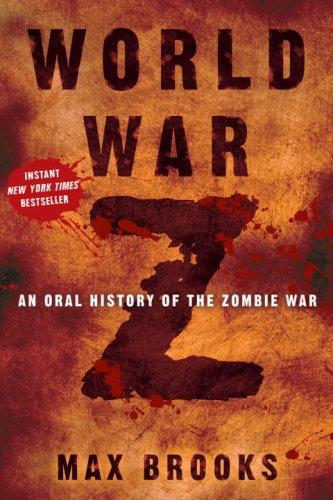
Read this if you want the plague apocalypse at global scale.
Max Brooks wrote the maximalist answer to Matheson's minimalist question. Where I Am Legend gives you one man and one city, World War Z assembles dozens of interview testimonies from survivors of a worldwide zombie war, soldiers, doctors, smugglers, submariners, and builds the whole arc of civilization's collapse and counterattack. The connective tissue is the same idea Matheson pioneered: treat the undead outbreak as an epidemiological and logistical problem, not a campfire story, and follow the implications honestly.
The trade-off is intimacy. There is no Robert Neville here, no single consciousness to live inside; the oral-history format means every chapter changes narrators, so you get breadth instead of the claustrophobia that makes Matheson's book sting. It reads fast and rewards listeners especially, since the full-cast audiobook is one of the best ever produced. Choose it when you want to zoom out from the boarded-up house to the whole burning map. Ignore the 2013 film, which shares almost nothing with the book.
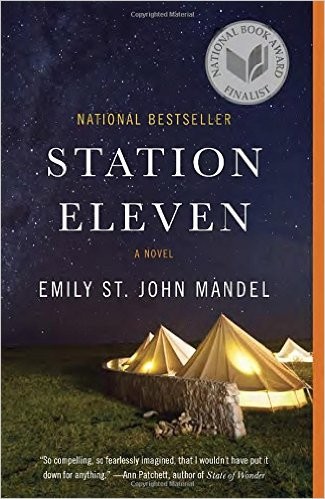
Read this if you want what comes after survival, with the horror dialed down.
Emily St. John Mandel's 2014 novel shares I Am Legend's central preoccupation, what is left of a person when civilization stops, and answers it more hopefully. A flu pandemic kills most of humanity, and the story moves between the collapse and twenty years later, following a troupe of traveling musicians and actors performing Shakespeare for scattered settlements. Like Matheson, Mandel is precise about the texture of an emptied world, but where Neville clings to research and routine, her survivors cling to art, with a caravan motto that could be the thesis of both books: survival is insufficient.
This is the gentlest pick on the list. There are no monsters, the violence is brief, and the structure is literary, braiding timelines and characters connected by a comic book and a dead actor. Readers who want sieges and dread should go to The Passage or The Strain instead. Choose this one when the bleakness of Matheson and McCarthy has done its work and you want an apocalypse that believes something beautiful survives the end of the world.
Read this for Matheson's monster-as-protagonist twist built into a whole novel.
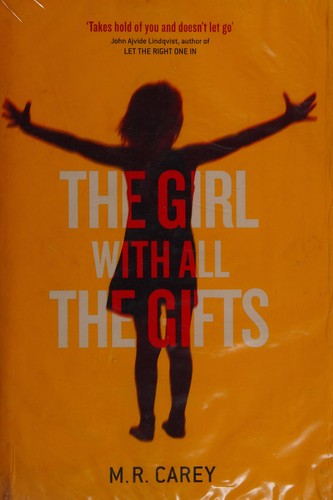
M. R. Carey's 2014 novel is the most direct heir to I Am Legend's famous inversion. Melanie is a brilliant, polite child who attends class strapped into a wheelchair at gunpoint, because she is one of the infected, a second-generation hungry whose mind survived the fungal plague that turned most of humanity into mindless feeders. Like Matheson, Carey grounds the horror in real science (the cordyceps fungus) and steers the story toward the same destabilizing question: when the infected are the future, who exactly is the monster, and whose world is ending?
The differences make it a complement rather than a retread. The perspective belongs partly to the creature, not the last man, and the emotional core is the bond between Melanie and her teacher rather than solitary grief. It moves like a thriller, with a road-trip structure across a ruined England and an ending that lands with genuine force. If the final pages of I Am Legend were what you loved, this is the book on the list that understood them best.
Read this if you want the zombie apocalypse written as literary fiction.
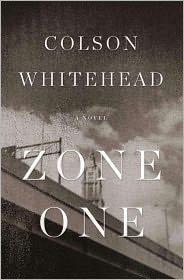
Colson Whitehead, who later won back-to-back Pulitzers for The Underground Railroad and The Nickel Boys, wrote Zone One as a zombie novel with the pacing and sentences of literary fiction. Mark Spitz is a survivor on a sweeper team clearing lower Manhattan of stragglers, the docile dead frozen in loops of their old routines, after the worst of the plague has passed. Like I Am Legend, it is less about outbreak than aftermath: the numb daily work of living among the remains of your own world, and the suspicion that the survivors are not actually rebuilding anything.
Be honest with yourself about the pace, though. The action is deliberately muffled, the timeline loops through flashback, and the prose is dense with irony and observation; readers who came for World War Z momentum often stall out. Whitehead is writing about mediocrity, memory, and post-disaster mythmaking, with the zombies as instrument. Choose it if Matheson's mood and ideas mattered more to you than his siege scenes, and skip it if you want the apocalypse to move fast.
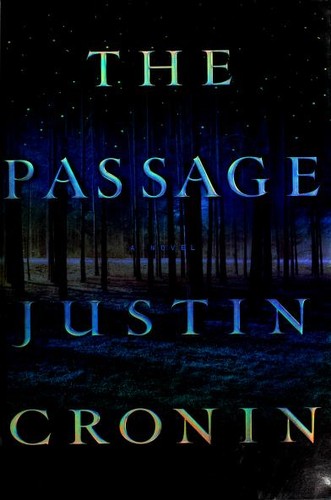
Read this if you want Matheson's vampire plague expanded into an epic.
Justin Cronin's 2010 novel is the fullest modern descendant of I Am Legend's premise. A military experiment with a virus meant to create super-soldiers instead creates the virals, vampiric creatures who empty North America, and the story runs from the outbreak through a colony of survivors nearly a century later, bound to Amy, a girl the virus changed without destroying. Like Matheson, Cronin insists on biological rather than supernatural vampires, and the long middle section, a walled settlement living behind lights that hold the dark back, is the boarded-up house on Cimarron Street scaled up to a society.
The commitment is the difference: The Passage runs near 800 pages and opens a trilogy, with a literary patience for character that thrillers usually skip (Cronin was a PEN/Hemingway winning literary novelist before this). Some readers find the time jump jarring when the opening cast gives way to the colony generations later. Stay with it. If you want one book on this list that delivers both Matheson's ideas and a long, immersive world to live in, this is it.
Read this for the vampire outbreak as fast, gory procedural horror.
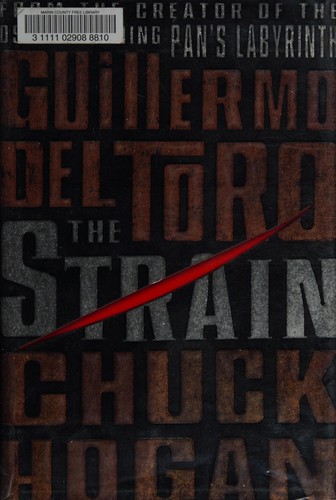
Guillermo del Toro and Chuck Hogan open with a dead airliner at JFK, every passenger drained, and build the same argument Matheson made in 1954: vampirism is an infection, with vectors, biology, and an epidemiology you can fight. Their CDC investigator Eph Goodweather plays the Neville role of the rational man applying science to a spreading horror, and the vampires themselves, parasitic, stinger-mouthed, repulsive, owe far more to Matheson's plague-creatures than to anything romantic. It is the first book of a trilogy and became del Toro's FX television series.
This is the pulpiest pick on the list, and it knows it. Characterization runs thin, the plot hits familiar beats, and an ancient-vampire mythology creeps in that Matheson would have cut. What it delivers is velocity and visceral set pieces, New York falling borough by borough. Choose it when you want the vampire-outbreak premise as pure propulsive horror entertainment, and choose The Passage instead when you want the same premise with literary weight.
Read this for the survival story Matheson's own decade told about nuclear war.
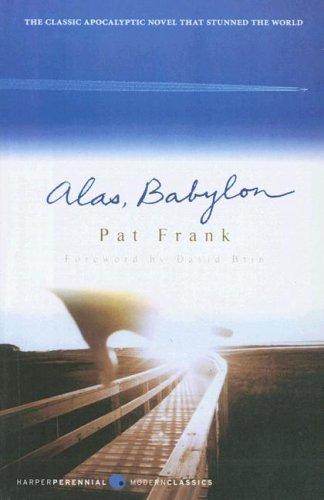
Pat Frank's 1959 novel is I Am Legend's close contemporary, and reading them together shows the same Cold War dread refracted two ways. When a nuclear exchange destroys America's cities, the small town of Fort Repose, Florida is spared the blasts and must reorganize itself to survive: water, food, medicine, law, barter. Like Matheson, Frank treats catastrophe as a practical problem and finds his drama in competence and routine, the protagonist Randy Bragg hardening from aimless bachelor into the man holding a community together.
There are no monsters here and far less despair. Frank's book is ultimately about resilience, neighbors pooling skills rather than one man alone against the dark, and its 1950s social attitudes show their age in places. It became a standard of Cold War fiction and still reads easily. Pick it if the survival logistics were your favorite part of I Am Legend and you want them with daylight and hope; pick The Road if you want the opposite.
Read this if you want the zombie aftermath with politics, media, and a working society.
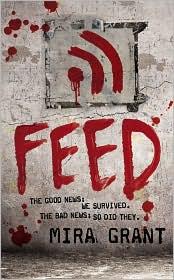
Mira Grant (a pen name of fantasy author Seanan McGuire) starts where most apocalypse stories end: decades after the zombie uprising, civilization has adapted rather than collapsed. Blood tests guard every door, the infected are a managed hazard, and blogger siblings Georgia and Shaun Mason are embedded journalists covering a presidential campaign when they uncover a conspiracy. The Matheson DNA is the rigor; like I Am Legend, Feed takes its virus seriously as science, with the Kellis-Amberlee pathogen's rules worked out in detail, including the unnerving fact that everyone is already infected and will rise when they die.
It is also the furthest from Matheson's mood: this is a political thriller with banter, told through blog posts and a sibling relationship, not a study in isolation. The 2010-era blogging premise has dated some, and the campaign plot matters more than the zombies for long stretches. Choose it when you want world-building and momentum rather than dread, and know that the ending takes a risk most thrillers would not.
The Passage by Justin Cronin is the closest match in premise: a man-made virus creates vampiric creatures who destroy civilization, treated with the same scientific seriousness Matheson brought in 1954. For the book closest to Matheson's famous ending and its who-is-the-monster reversal, The Girl with All the Gifts by M. R. Carey is the better pick.
Is the I Am Legend book different from the Will Smith movie?
Substantially. The 2007 film moves the story to New York, makes Neville a military scientist, and replaces Matheson's ending with a heroic sacrifice. In the 1954 novel, Neville realizes the infected are building a new society and that he, the daylight killer of their kind, has become their legend, which is what the title means. The novel had earlier film versions too, The Last Man on Earth (1964) and The Omega Man (1971).
Did I Am Legend really inspire the zombie genre?
Yes, by Romero's own account. George A. Romero said Night of the Living Dead (1968) grew out of his attempt to rework Matheson's premise of a besieged survivor facing hordes of the undead. Matheson's vampires are plague victims explained by biology rather than the supernatural, and that template, infection, swarms, siege, collapse, is the foundation that World War Z, The Girl with All the Gifts, and Feed all build on.
I want the post-apocalyptic loneliness without monsters. What should I read?
From this list, The Road is the purest distillation, a father and son alone in a dead world, and Station Eleven offers a more hopeful version centered on art and memory after a pandemic. Alas, Babylon gives you the survival-logistics side through a town rebuilding after nuclear war. Beyond this list, Earth Abides by George R. Stewart is the classic last-man novel Matheson's own generation read.
As an Amazon Associate, we earn from qualifying purchases. · About & methodology