7 books like French Exit by Patrick deWitt, from Less to Where'd You Go, Bernadette: tart comic novels about wealth, family, and elegant collapse.
Updated June 11, 2026
Patrick deWitt's French Exit (2018) calls itself a tragedy of manners, and that is exactly the trick of it. Frances Price, a widowed Manhattan socialite famous for her froideur, discovers her money is finally gone, sells everything, and decamps to a borrowed Paris apartment with her aimless adult son Malcolm and a cat named Small Frank, who may or may not contain the spirit of her dead husband. The dialogue is dry to the point of brittle, the supporting cast accumulates like strays, and underneath the deadpan there is real grief about a mother and son who only know how to love each other badly.
The books below are sorted by which part of that cocktail you want more of. If it was the witty, melancholy comedy of a privileged life unraveling, start with Less and The Vacationers. If it was the eccentric, fiercely difficult woman at the center, Where'd You Go, Bernadette and Eleanor Oliphant Is Completely Fine carry that torch in very different keys. And if you want the secrets-under-the-surface social machinery with more plot engine, Big Little Lies and The Lying Game lean thriller, while The Idiot is the classic study of an innocent loose in a moneyed world.
A practical note: nothing here replicates deWitt's exact voice, which is closer to his own The Sisters Brothers and Undermajordomo Minor than to anything by another writer. These picks match French Exit's themes and tone from different angles, and each entry says plainly which angle that is.
Read this for the original tragedy of manners, at full Russian scale.
Dostoevsky's 1869 novel is the deep ancestor of what French Exit is doing. Prince Myshkin, guileless and incapable of social calculation, drops into Petersburg society and exposes everyone around him simply by failing to play the game, much as Frances exposes her world by refusing, finally, to keep up its pretenses. Both books treat drawing-room society as a machine that destroys the people who will not perform for it, and both end in a kind of foreordained ruin.
Be honest with yourself about the commitment, though. This is a long, digressive nineteenth-century novel in translation, with fevered religious and philosophical argument where deWitt has deadpan one-liners. It is the richest book on this list and the least like a comic novel. Choose it if French Exit's tragedy-of-manners label intrigued you and you want to see the form at its most serious.
Read this only if the secrets and old loyalties hooked you more than the comedy did.
Ruth Ware's thriller is the furthest from French Exit in tone, but the connective tissue is there: a tight circle of people bound by money, history, and things they have agreed never to say out loud. Four boarding-school friends who once played a game of inventing lies are summoned back to the English coast when a bone turns up, and the book is at its best on the texture of old friendship curdled by a shared secret.
Understand what you are trading. There is little of deWitt's humor here; Ware writes atmospheric, slow-burn suspense in the Gothic-tinged mode of her other novels, and the pleasures are tension and reveal rather than voice. Pick it as a change of pace when you want the dark undercurrents of French Exit turned into the whole river.
Read this if you want French Exit's blend of comedy and quiet heartbreak, with more warmth.
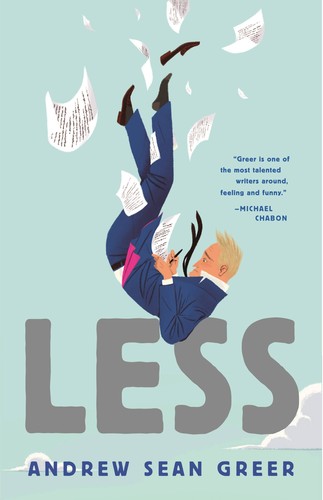
Andrew Sean Greer's Pulitzer Prize winner is the closest match in spirit on this list. Like Frances Price, Arthur Less responds to a life crisis (here, his ex-boyfriend's wedding and his own fiftieth birthday) by simply leaving the country, accepting a string of half-baked literary invitations that carry him around the world. Both novels run on dry comic set pieces, both follow a protagonist who is faintly ridiculous and fully sympathetic at once, and both smuggle real sadness in under the jokes.
The difference is temperature. Where deWitt keeps Frances at an icy, aphoristic remove, Greer is openly tender toward Arthur, and Less builds toward consolation rather than the elegant fatalism of French Exit's ending. It is the gentler book, funny in a more generous register. Pick it if you finished French Exit wishing someone in it would be allowed a soft landing.
Read this if Frances Price was your favorite character.
Maria Semple's novel is built around the same figure French Exit is: a brilliant, abrasive, socially impossible woman who has stopped performing for anyone and finally bolts. Bernadette Fox, a once-celebrated architect turned Seattle recluse, vanishes before a family trip to Antarctica, and her teenage daughter reconstructs what happened from emails, documents, and notes. The misanthropic one-liners, the contempt for polite society, and the parent-child bond at the core all rhyme directly with Frances and Malcolm.
Semple, a former television writer (Arrested Development), is broader and zanier than deWitt; the satire of private-school parents and tech-company culture is loud where French Exit is murmured, and the epistolary structure makes it a faster, busier read. It is also ultimately more optimistic about repair. Choose it for the character type and the comedy, not for deWitt's chilled, mannered prose.
Read this for the family airing its failures somewhere beautiful and European.
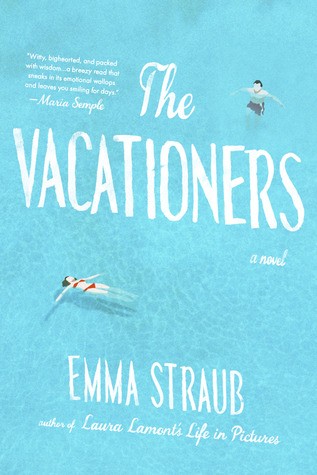
Emma Straub's novel shares French Exit's basic setup: take a well-off, unhappy family, move them to a lovely foreign setting, and let proximity do the damage. The Post family's two weeks in Mallorca surface an affair, a stalled marriage, and the gap between how the family looks and what it is, much as the Paris apartment in French Exit becomes the stage where Frances and Malcolm's evasions finally run out of room.
Straub is sunnier and more conventional than deWitt. The point of view rotates through the whole family, the observations are warm rather than acid, and the book resolves more neatly than French Exit would ever permit. It reads like a smart beach novel, which is both the appeal and the limit. Pick it when you want the same ingredients with the bitterness dialed down.
Read this if you want the social satire welded to an actual thriller plot.
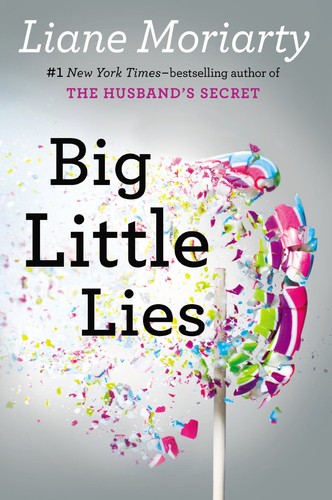
Liane Moriarty works the same seam French Exit does, the gulf between polished surfaces and the mess behind them, but in a beachside Australian school community rather than Upper East Side money. The novel opens with a death at a school trivia night and works backward through three mothers' secrets, and its sharpest material is pure comedy of manners: status anxiety, gossip, and performances of the perfect life, observed with real bite.
It is a far more plotted book than French Exit, with chapter-ending hooks, a murder mystery structure, and serious subject matter (domestic abuse) handled inside a commercial package. Readers who loved deWitt's drift and digression may find it mechanical; readers who wished French Exit had more forward motion will be happy. The HBO adaptation is famous, but the novel is funnier than the show.
Read this if you liked watching an armored, formal loner get pried open.
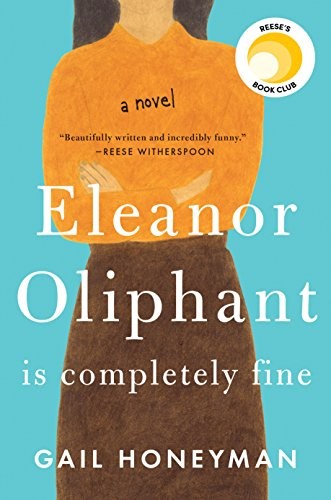
Gail Honeyman's debut shares with French Exit a protagonist whose stiff, mannered exterior is a survival mechanism. Eleanor Oliphant speaks with the same odd formality Frances wields as a weapon, keeps the world at a fixed distance, and is slowly revealed to be carrying serious damage underneath. Both books mine the gap between how their heroines talk and what they feel, and both pair the loner with an unlikely companion who refuses to be shaken off.
The trajectory is opposite, though. Eleanor's story is structured as a thaw, moving through dark territory (trauma, loneliness, a buried past) toward connection, where Frances is committed to her exit from the start. Honeyman's book is also more earnest and more plot-revealing, with a twist-driven final act. Choose it if you want the wounded-eccentric character study with hope built in.
Among books by other authors, Less by Andrew Sean Greer is the closest match: a dryly funny, quietly sad novel about a privileged person fleeing their life by going abroad. The truest matches, though, are Patrick deWitt's own novels. The Sisters Brothers and Undermajordomo Minor share French Exit's deadpan dialogue and off-kilter humor more than anything another writer has produced.
Is French Exit a comedy or a tragedy?
Both, on purpose. DeWitt subtitled it a tragedy of manners, and the book runs on comic dialogue and absurd situations (including a cat that may host a dead husband's spirit) while steering toward a genuinely sad ending. Readers who want the comic side should follow it with Less or The Vacationers; readers struck by the tragic side may prefer The Idiot.
Is the French Exit movie faithful to the book?
Reasonably so. The 2021 film stars Michelle Pfeiffer as Frances Price and Lucas Hedges as Malcolm, and deWitt wrote the screenplay himself, so the plot and much of the dialogue carry over. Pfeiffer's performance was widely praised, though many readers feel the novel's narration and dry interiority do not fully translate to screen.
What should I read if I loved the mother-son relationship in French Exit?
Where'd You Go, Bernadette is the strongest pick here, since it centers on a difficult, brilliant mother seen through her child's devoted eyes. Eleanor Oliphant Is Completely Fine also explores a damaging mother-child bond, though from a much darker angle. Outside this list, Shirley Jackson's We Have Always Lived in the Castle pairs eccentric family loyalty with a similar chill.
As an Amazon Associate, we earn from qualifying purchases. · About & methodology