8 books like Demon Copperhead, from The Glass Castle to A Tree Grows in Brooklyn: voice-driven stories of poverty, resilience, and surviving childhood.
Updated June 10, 2026
Barbara Kingsolver's Demon Copperhead won the Pulitzer Prize by doing something audacious: transplanting David Copperfield to modern Appalachia and letting the opioid crisis play the role Dickens gave Victorian poverty. Born in a single-wide trailer in Lee County, Virginia, Demon narrates his own life through foster care, child labor on tobacco farms, a football injury, and the OxyContin epidemic that hollowed out his region. What makes it work is the voice, funny, furious, and self-aware, and Kingsolver's insistence that the institutions failing Demon, not Demon, are the story.
Readers come away from it wanting one of a few things, and this list sorts by which. If it was the survived-childhood memoir quality, the true versions are here: The Glass Castle and Educated, both firsthand accounts of growing up poor and neglected in rural America. If it was the unforgettable first-person kid narrating hardship, A Tree Grows in Brooklyn, The Perks of Being a Wallflower, and The Kite Runner each give you another. And if it was the bigger swing, a marginalized life set against forces much larger than one family, The Color Purple, The Brief Wondrous Life of Oscar Wao, and The Things They Carried carry that weight.
A practical note: nothing here is light. Most of these books deal with abuse, addiction, war, or all three, though nearly all of them, like Demon Copperhead, are warmer and funnier than their subject matter suggests. Each entry below says exactly which thread of Kingsolver's novel it picks up and what it asks of you.
Read this if you want another boy narrating the wound that shaped his whole life.
Khaled Hosseini's debut shares Demon Copperhead's engine: a man telling the story of his own childhood, circling a guilt and a damage he cannot put down. Amir grows up in 1970s Kabul, betrays his closest friend Hassan, and spends decades, through the Soviet invasion, exile in America, and a return to Taliban-era Afghanistan, trying to atone. Like Kingsolver, Hosseini binds one boy's private catastrophe to a country's public one, so the personal story doubles as a portrait of a place being destroyed by forces no child can see.
The differences are tone and texture. Hosseini is earnest and melodramatic where Demon is wisecracking and dry; you lose the gallows humor that makes Kingsolver's misery bearable, and the plotting leans on coincidence in a way Demon Copperhead avoids. It is also a faster, simpler read. Pick it when you want the emotional directness and a window on Afghanistan; pick The Glass Castle if voice is what you are chasing.
Read this for the true story closest to Demon's childhood.
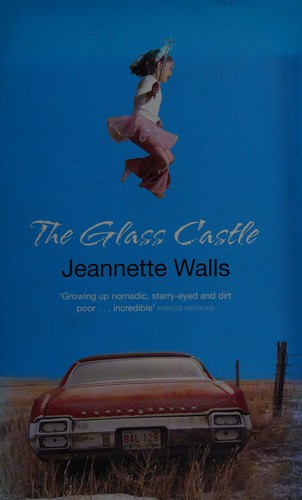
Jeannette Walls's memoir is the book Demon Copperhead readers reach for most, and rightly. Walls grew up with a brilliant alcoholic father and an artist mother who treated parenting as optional, moving between desert squats and, crucially, the same Appalachian coal country Kingsolver writes about: Welch, West Virginia, where the family settled into deep poverty. Like Demon, Walls narrates neglect without self-pity and keeps a stubborn, complicated love for the adults who failed her, which is exactly the emotional register that makes Kingsolver's novel hurt.
The difference is that it happened. The memoir trades Demon's running commentary on systems (foster care, painkillers, the DSS caseworkers) for the closer view of one family's private mythology, and Walls is more forgiving of her parents than Kingsolver is of any institution. It is also shorter and faster. If you read Demon Copperhead and thought no real childhood could work like that, this is the answer.
Read this if Demon's fight to get an education despite everyone was your thread.
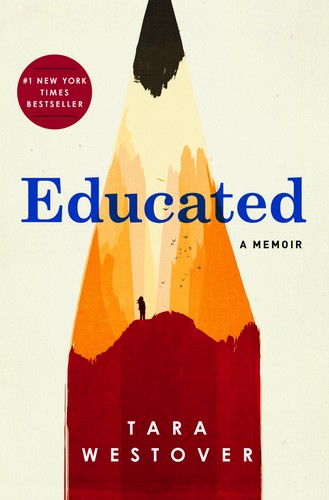
Tara Westover's memoir maps onto the escape arc of Demon Copperhead. Raised by survivalist Mormon parents in rural Idaho, kept out of school, and put to dangerous work in her father's junkyard, Westover taught herself enough to reach Brigham Young University and eventually a Cambridge PhD. Like Kingsolver, she is precise about how poverty and isolation are enforced by the adults who claim to love you, and about the guilt of leaving: the way getting out can feel like betraying the people and place that made you.
It is a colder, more cerebral book than either Demon Copperhead or The Glass Castle, much of it about memory itself, with Westover footnoting where her recollection diverges from her family's. There is no addiction epidemic and little humor. Choose it when you want the education-as-escape story told with rigor, and when you can take a family rupture that never resolves.
Read this for the classic that Demon Copperhead descends from.
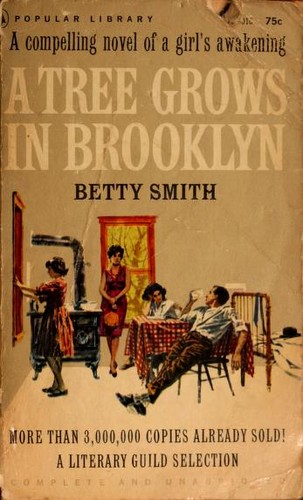
Betty Smith's 1943 novel is doing, for early 1900s Brooklyn tenements, what Kingsolver does for Appalachia: an autobiographical-feeling portrait of a poor, bright child, Francie Nolan, growing up with an alcoholic father she adores and a mother hardened by survival. Both books treat poverty with documentary specificity (what food costs, what work pays, what neighbors say) and both insist on the dignity and intelligence of people the wider world writes off. Francie's hunger for books as a way out is the same hunger Demon has for drawing.
The temperature is gentler. Smith's novel has hardship and death but none of Demon Copperhead's institutional fury; nobody is being ground up by an identifiable industry, and the tone is nostalgic where Kingsolver's is prosecutorial. It is also unhurried, a book of accumulating small scenes. Pick it when you want the same heart with less anger, or to see the century-old roots of this kind of novel.
Read this if what gripped you was how stories carry unbearable experience.
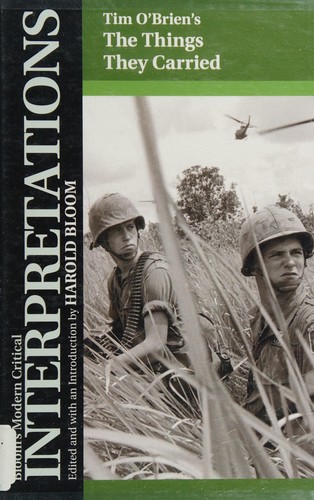
Tim O'Brien's linked stories about a platoon in Vietnam are the wild card here, connected to Demon Copperhead at the level of purpose rather than plot. Both books are about young men fed into a machine that does not care about them, and both are narrated by survivors who understand that telling the story is how you live with it. Demon writing his life down is the frame of Kingsolver's novel; O'Brien makes that idea his explicit subject, blurring memoir and fiction to ask what a true war story even is. The grief, guilt, and dark humor will feel familiar.
But this is a war book, not a childhood one, and it is formally tricky in a way Kingsolver never is: a story collection that doubles back, contradicts itself, and tells you it is lying. There is no single arc to follow. Choose it when you want short, devastating pieces about memory and survival, and skip it if you want another immersive coming-of-age novel.
Read this for a gentler, shorter take on adolescence and buried trauma.
Stephen Chbosky's novel shares Demon Copperhead's basic act of faith: a damaged teenage boy telling his own story in his own voice, and the voice winning you over completely. Charlie writes letters to an anonymous stranger through his freshman year of high school, covering first love, first parties, a friend's suicide, and a trauma he has hidden even from himself. Like Demon, he is observant, tender, and far more wounded than he lets on, and the book understands how kids normalize the terrible things that happened to them.
The scale is much smaller. This is suburban Pittsburgh, not gutted coal country; the damage is private rather than systemic, and there is no poverty, no foster care, no epidemic indicting anyone. It is also a quick YA read, a hundred-odd pages shorter than Kingsolver's shortest chapter run. Pick it as a breather between heavier books on this list, or for the teenage reader in your life who is not ready for Demon Copperhead.
Read this if you loved a voice you could not stop hearing.
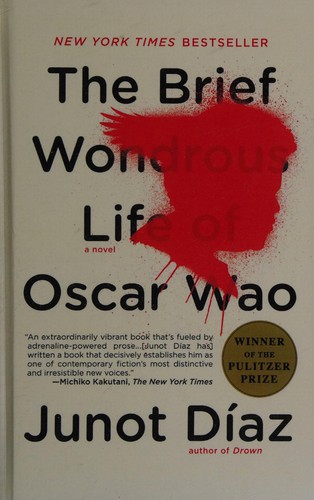
Junot Díaz's Pulitzer winner is the other great recent novel narrated in a voice as alive as Demon's. Oscar is an overweight Dominican-American nerd in New Jersey, hopeless with girls and obsessed with fantasy novels, and his story expands into his family's history under the Trujillo dictatorship, which the book frames as a generations-long curse. Like Kingsolver, Díaz writes about people crushed by forces with names and addresses, a dictator instead of a drug company, and insists on telling it with jokes, slang, and footnotes rather than solemnity.
The differences are real: the narration is profane Spanglish studded with genre references, the structure jumps between narrators and decades, and the cultural world is Dominican diaspora rather than Appalachia. Some readers find the voice exhilarating and some find it exhausting. Choose it when you want another book where how it is told matters as much as what happens, and you do not mind working a little.
Read this for the most powerful survival story on this list.
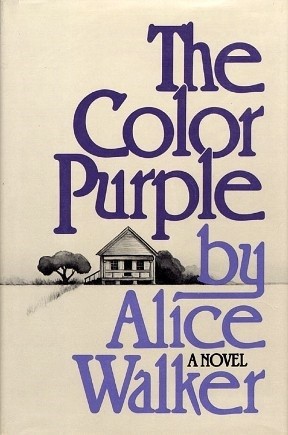
Alice Walker's Pulitzer winner is the strongest thematic match for what Demon Copperhead is actually doing: giving the full first-person account of a life that polite society would rather summarize. Celie, a poor Black girl in early twentieth-century rural Georgia, writes letters to God through years of abuse, forced marriage, and separation from everyone she loves, and slowly, through the women around her, builds a self the world tried to deny her. Like Kingsolver, Walker uses an unmistakable vernacular voice and refuses to let suffering be the whole story; both books bend, hard-won, toward repair.
It is more brutal than Demon Copperhead in its early chapters, with sexual abuse on the page, and its epistolary form and dialect take a few letters to settle into. The scope is also more intimate, one woman and her circle rather than a region-wide indictment. Read it when you are ready; it earns every bit of its standing.
The most common next step is The Glass Castle by Jeannette Walls, a memoir of rural poverty partly set in the same West Virginia coal country, told with the same unsentimental warmth. If you want the original blueprint, read David Copperfield by Charles Dickens, which Kingsolver retells chapter for chapter. For the opioid crisis itself, the nonfiction companion is Dopesick by Beth Macy, set in the same Virginia region.
Do I need to read David Copperfield first?
No. Demon Copperhead stands completely on its own, and most readers come to it without the Dickens. Reading David Copperfield afterward is rewarding rather than required: you can watch how Kingsolver maps characters like Aunt June, U-Haul, and the Peggots onto their Victorian originals, and how she swaps Victorian workhouses and debt for foster care and OxyContin.
Are there memoirs like Demon Copperhead?
Yes, two of the best are on this list. The Glass Castle by Jeannette Walls covers a neglected childhood in Appalachian coal country, and Educated by Tara Westover covers escaping an isolated, abusive rural upbringing through school. Both are true stories with the same survivor's voice Kingsolver gives Demon, and both are frequently recommended alongside the novel.
Which book on this list is most similar to Demon Copperhead?
A Tree Grows in Brooklyn is the closest in kind: a voice-driven novel about a bright, poor child surviving an alcoholic parent and a community that expects nothing of them. The Glass Castle is the closest in setting and feel, as a memoir from the same region. The Color Purple is the closest in ambition, a first-person vernacular account of a life shaped by systemic cruelty that still ends in repair.
As an Amazon Associate, we earn from qualifying purchases. · About & methodology