6 books like Come As You Are: science-based, shame-dismantling reads on sex, bodies, and connection, from Sexual Intelligence to The Body Keeps the Score.
Updated June 10, 2026
Emily Nagoski's Come As You Are did something most books about sex never attempt: it treated women's sexuality as a subject worthy of actual science, then delivered that science without a trace of judgment. The dual control model (the idea that desire runs on both an accelerator and a brake), the distinction between spontaneous and responsive desire, and the insistence that context shapes everything added up to one liberating message: you are not broken, you are normal, and you work the way you work. Readers tend to finish it feeling less ashamed and more curious, which is exactly the feeling this list tries to extend.
People come to Come As You Are from different doors, so the books below are organized around three of them. If you wanted more of the sex science, Sexual Intelligence and the official workbook keep you in that lane. If you wanted to understand relationships and how partners connect, Attached and Daring Greatly speak to desire, vulnerability, and the bonds around it. And if what moved you was the book's work on the body, shame, and self-acceptance, The Body Keeps the Score and Intuitive Eating carry that thread into trauma and into how we feed ourselves. Each entry says which door it fits.
A practical note: these are frank, adult books, written for education rather than for arousal. They discuss bodies, sex, trauma, and eating in direct language, and a couple of them (notably The Body Keeps the Score) touch on difficult material including abuse. None of them are medical advice, and Come As You Are itself is clear that a good book is no substitute for a qualified professional when you need one. Read them as smart, plain-spoken companions, not prescriptions.
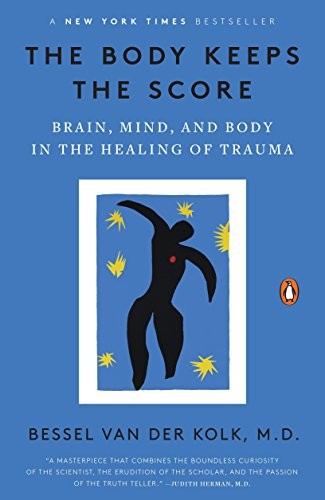
Read this if the connection between past experience and present desire is what you want to understand.
Nagoski makes the case that context and history shape the sexual response, and that stress, shame, and trauma can sit on the brake. Bessel van der Kolk's The Body Keeps the Score is the deepest popular account of exactly that link between past experience and a present nervous system. It explains how trauma lodges in the body and reshapes how we feel safe, connected, and present, which is the same terrain Nagoski touches when she talks about why desire stalls. For readers who sensed that their history was part of the picture, this goes further into the why.
Two honest caveats. First, this is not a sex book; sexuality is one strand in a broad book about trauma, treatment, and recovery. Second, it includes frank discussion of abuse and violence that some readers find heavy, so approach it when you have the space for that. It is also a clinician's overview, not a self-help program, and not a substitute for care. Read it for understanding, and hand the treatment decisions to a professional.
Read this if the shame-dismantling was the part that mattered most.
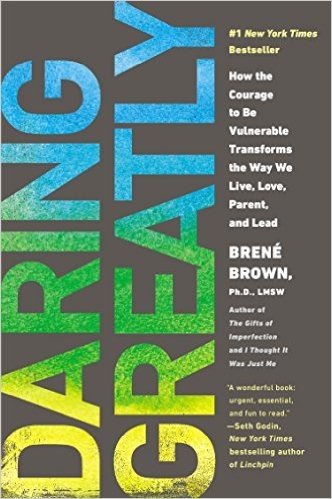
If Come As You Are loosened something in you around shame, Brené Brown's Daring Greatly works the same muscle from a wider angle. Brown's research is on shame and vulnerability across all of life, and her core finding rhymes with Nagoski's: shame thrives in secrecy and silence, and naming it is what disarms it. The warmth, the research-backed reassurance, and the refusal to treat readers as broken are all here. It speaks directly to the fear of not being enough that often sits underneath struggles with sex and intimacy.
What it isn't is a book about sex or the body in any specific way; you'll find no physiology and no desire models. It is broader and softer in focus, ranging over parenting, work, and relationships. Some readers want that bigger frame; others will wish it stayed closer to the bedroom. Treat it as the emotional companion to Nagoski's science: she explains how desire works, Brown explains why we're so afraid to want and be seen wanting.
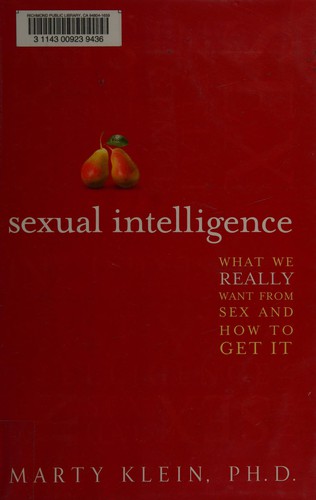
Read this if you wanted more of the sex science, from another therapist who refuses to shame you.
Marty Klein is a sex therapist of several decades, and Sexual Intelligence shares Nagoski's central conviction: that a satisfying sex life depends far more on what happens in your head than on technique, frequency, or a particular kind of body. Like Come As You Are, it spends its energy dismantling the idea of a single normal, and it reframes anxieties about performance and comparison as the real obstacles. If the parts of Nagoski's book that calmed you down were the most valuable, Klein offers more of that same steadying voice.
The differences are worth knowing. Klein writes for readers of any gender rather than focusing on women's physiology, so you won't find the dual control model or the deep dive into responsive desire here. His book is more therapist's-office wisdom than science explainer, lighter on cited research and heavier on reframing. Read it for the mindset work and the permission to stop chasing a fantasy version of sex. Pair it with Nagoski if you want both the science and the counsel.
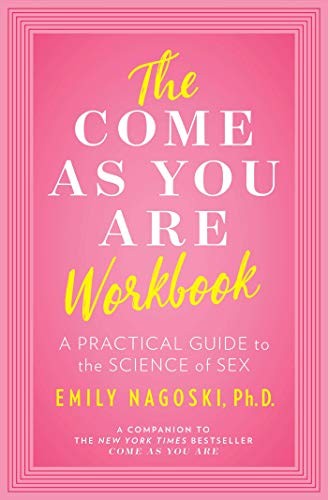
Read this if you finished the book and wanted to actually do something with it.
This is the most direct continuation possible, because it is Nagoski's own. The Come as You Are Workbook takes the original's framework (the accelerator and brake, responsive desire, the role of context) and turns it into exercises, prompts, and diagrams you fill in yourself. The voice, the science, and the non-judgmental stance are identical, because it is the same author building on the same material. If you nodded along to the book but weren't sure how to apply it to your own life, this is built to close that gap.
Be clear about what it is: a companion, not a standalone. It assumes you already know the core ideas, or are willing to learn them as you go, and it asks you to write and reflect rather than just read. Some people love the structure; others find workbooks too much like homework. It is also, like the original, focused on women's sexuality specifically. If you want the ideas in motion rather than a fresh narrative, start here.
Read this if you want to understand the relationship around the desire.
Come As You Are repeatedly returns to context, and few contexts shape sex more than the relationship it happens in. Attached, by Amir Levine and Rachel Heller, is the popular guide to attachment theory: the idea that we lean toward anxious, avoidant, or secure patterns in close relationships, and that those patterns drive how safe and connected we feel with a partner. Since safety and connection are exactly what Nagoski identifies as desire's allies, this fills in the relational half of the picture in plain, usable language.
It is a relationship book, not a sex book, so it won't address arousal or physiology directly; the link to your sex life is one you draw yourself. It can also feel a little tidy, sorting people into three styles when real people are messier than that. Read it as a practical lens rather than a diagnosis. For readers who suspect their stuck points are more about the bond than the body, it is the most useful companion here.
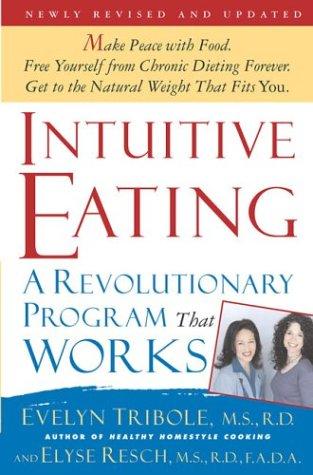
Read this if making peace with your body was the breakthrough.
One of Come As You Are's quietest revolutions is asking women to stop fighting their bodies and start trusting them. Intuitive Eating, by dietitians Evelyn Tribole and Elyse Resch, makes the parallel argument about food: it rejects diet culture and teaches a return to the body's own hunger and fullness signals. The underlying philosophy is strikingly close to Nagoski's, replacing shame and external rules with attention and self-trust. If the body-acceptance thread was what changed how you felt after reading her, this extends it to your plate.
It is, plainly, a book about eating rather than sex, so the overlap is one of spirit and approach rather than subject. It is also more of a structured program, with its principles to work through, and it engages with disordered eating, which some readers will want to approach carefully and alongside a professional. Read it as the companion volume on the same project: learning to inhabit your body as an ally instead of an opponent.
Is there a workbook or follow-up to Come As You Are?
Yes. Emily Nagoski published The Come as You Are Workbook in 2020, a practical companion full of worksheets and prompts that walk you through the original book's ideas. She also wrote Come Together (2024), which applies the same science specifically to long-term couples, and co-wrote Burnout, which extends her work on the stress cycle. The workbook is the closest direct continuation on or off this list.
Which of these books is most like Come As You Are?
For the sex science, Marty Klein's Sexual Intelligence is the nearest match in subject and tone: it is the work of a longtime sex therapist and it reframes good sex around mindset rather than performance. For the shame-dismantling spirit, Brené Brown's Daring Greatly carries that across to vulnerability more broadly. The workbook is the truest direct continuation.
Are these books just for women?
Come As You Are focuses specifically on women's sexuality, and so does Nagoski's workbook. But most of the other books here are not gender-specific. Sexual Intelligence, Daring Greatly, The Body Keeps the Score, Attached, and Intuitive Eating are written for any reader. Partners of any gender often find them useful for understanding desire, shame, attachment, and the body.
Do I need a science background to read these?
No. Every book here is written for a general adult reader, not for clinicians. They cite research and explain mechanisms, but they translate the science into plain language and concrete examples. Come As You Are itself is famous for making dense findings readable, and the picks below were chosen partly because they do the same. None require prior knowledge of psychology or physiology.
As an Amazon Associate, we earn from qualifying purchases. · About & methodology