7 books like Beach Read by Emily Henry, from People We Meet on Vacation to The Hating Game: rom-coms with real banter and real feelings.
Updated June 10, 2026
Beach Read is the book that made Emily Henry the defining rom-com writer of her generation, and its trick is right there in the title's irony. January Andrews, a romance novelist who has stopped believing in love after her father's death and the secret it exposed, spends a summer in a Michigan lake town next door to Augustus Everett, her college rival and a literary novelist allergic to happy endings. They swap genres on a dare, and the book delivers everything the premise promises (banter, slow burn, one bed energy) while sneaking in real grief, a cult subplot Gus is researching, and an argument about why love stories matter. It is funnier than most literary fiction and sadder than most romance, and that blend is what readers come back for.
The list below is sorted by which half of that blend you want more of. If you want the same author doing the same magic, People We Meet on Vacation is the obvious next step, and frankly Book Lovers and Happy Place belong on your list too. If the rivals-to-lovers banter was the draw, The Hating Game and The Unhoneymooners are the genre's gold standards. And if you valued the emotional weight under the jokes, The Kiss Quotient, One Last Stop, and You Had Me at Hola all take their characters' inner lives seriously while staying fun.
One honest calibration: nobody on this list except Henry herself writes quite like Henry, whose prose is a notch more literary than the genre average. The closest matches here are close in feeling, not voice. Each entry below says exactly which part of Beach Read it echoes so you can pick by what you actually loved.
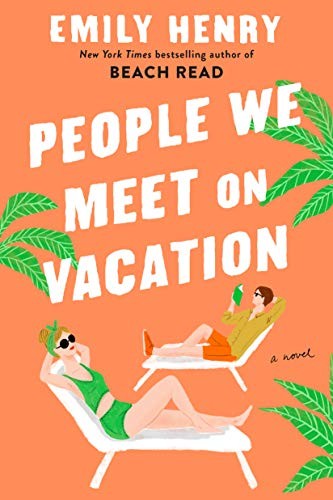
This is Henry's follow-up to Beach Read, and it is the safest recommendation in this genre: same author, same voice, same blend of genuinely funny dialogue and genuine hurt underneath. Poppy and Alex are opposites (she is chaotic and outgoing, he is tidy and reserved) who have taken a best-friends summer trip every year for a decade, until something happened two years ago that ended the tradition. The story alternates between past trips and one last attempt to fix things, and the will-they-or-won't-they tension is sustained beautifully.
The difference from Beach Read is the trope: this is friends-to-lovers rather than rivals-to-lovers, so the spark comes from years of suppressed feeling rather than sparring. The dual-timeline structure also means the central rupture stays hidden for most of the book, which some readers find tense and others find slightly withholding. If the antagonistic banter was your favorite thing about January and Gus, start with The Hating Game instead; if the emotional intimacy was, start here.
Read this for the breeziest, funniest vacation romance on the list.
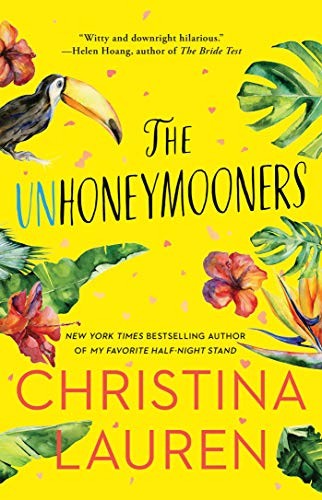
Christina Lauren's most beloved standalone runs on the same engine as Beach Read: two people who cannot stand each other stuck in close quarters in a beautiful place. Olive Torres has always considered herself the unlucky twin, until the entire wedding party at her sister's reception gets food poisoning except her and the best man, Ethan Thomas, whom she loathes. The two of them take the nonrefundable Maui honeymoon together, pretending to be newlyweds, and the fake-marriage setup generates exactly the forced-proximity comedy you want.
This is a sunnier, lighter book than Beach Read. There is family drama and a real betrayal in the back half, but nothing like January's grief or Gus's damage; the emotional stakes are lower and the pace is faster. That makes it the better pick for an actual vacation and the weaker pick if Henry's depth was the point for you. Christina Lauren is two writers working as one name, and this is the right entry point to their large catalog.
Read this if you liked watching two professionals fall for each other through their work.
Alexis Daria's rom-com shares Beach Read's smartest feature: the romance grows out of the work the two leads do together. Jasmine Rodriguez, a soap opera actress fresh off a public breakup, is cast opposite Ashton Suarez, a telenovela star guarding a serious secret, in a bilingual streaming rom-com, and the chemistry they have to manufacture on set keeps bleeding into real life. Like January and Gus trading genres, the show-within-the-book lets the characters talk about love stories while falling into one, including scenes from the fictional show woven through the novel.
It differs in texture: this is a glossy entertainment-industry book rather than a small-town lake story, with a warm, prominent Puerto Rican family dimension and more on-page heat than Henry typically writes. The conflict leans on celebrity and privacy rather than grief. Pick it if you want the writers-falling-in-love dynamic transposed somewhere more glamorous, and if you want a rom-com that treats both careers as seriously as the relationship.
Read this if you want the feelings turned up and a dose of the impossible.
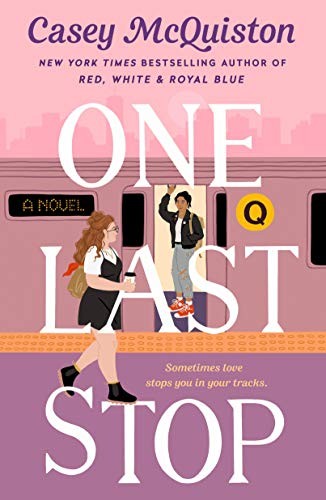
Casey McQuiston's second novel is the wild card here, and it earns its place on emotional grounds. August, a cynical transplant to New York who has stopped expecting much from people, keeps running into a gorgeous, leather-jacketed woman named Jane on the Q train, and the catch is that Jane has been displaced in time from the 1970s and cannot leave the subway. Like Beach Read, it is about a guarded protagonist learning to believe in something again, and the found-family cast around August has real Henry warmth.
Know what you are signing up for: this is a queer romance with a speculative premise, so if you want strictly grounded contemporary banter it is the furthest stretch on this list. The time-travel mechanics ask some patience, and the pacing is looser than Henry's. But the yearning is enormous, the New York texture is great, and readers who loved Beach Read for how much it made them feel, rather than its realism, tend to rank this one high.
Read this for rivals-to-lovers with the volume turned all the way up.
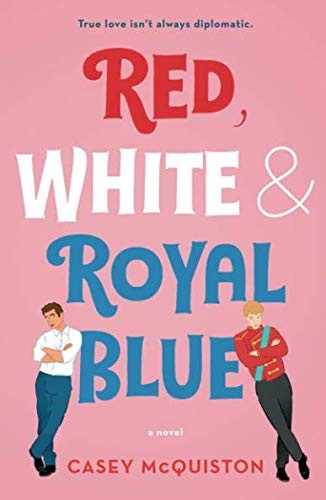
McQuiston's debut is built on the same arc as January and Gus: two people whose public personas are in opposition (here, the son of the American president and a British prince) forced together, discovering the rivalry was always something else. The banter is rapid and quotable, the emails the two leads exchange mid-book are the standout set piece, and like Henry, McQuiston hides real questions about identity, duty, and self-invention under the comedy.
The differences are scale and tone. Beach Read is small and intimate, two damaged writers in adjacent houses; this is a high-concept geopolitical fantasy with elections, palaces, and an international scandal, and it asks you to enjoy the wish-fulfillment rather than question it. It is also a queer romance with explicit scenes, and its politics are front and center. Pick it when you want the rivals-to-lovers rush at blockbuster scale rather than Henry's quieter register.
Read this if January and Gus's sparring was the best part.
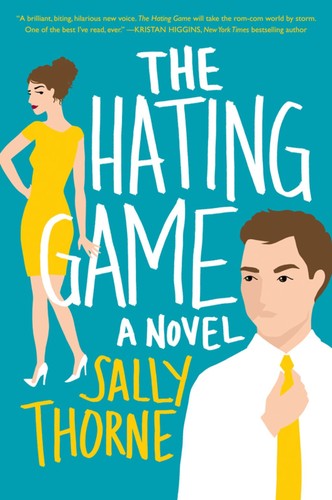
Sally Thorne's 2016 debut is the modern benchmark for enemies-to-lovers banter, and it is the single most common answer to what to read after Beach Read. Lucy Hutton and Joshua Templeman are executive assistants to co-CEOs of a merged publishing house, sitting at facing desks, playing daily games of one-upmanship until a promotion puts them in direct competition. The publishing-world setting even rhymes with Henry's books-about-books streak, and the tension between the leads is wound tighter than almost anything in the genre.
What it lacks is Beach Read's second layer. There is backstory and vulnerability, particularly Josh's, but no equivalent of January's grief or the genre-swap conceit; this is a purer, more concentrated rom-com that exists for the chemistry. The entire book also stays inside Lucy's slightly manic head, which readers find either delightful or exhausting. If you want banter density above all, this is the pick. If you want the sad parts too, stay with Henry.
Read this if you valued the vulnerability under the rom-com surface.
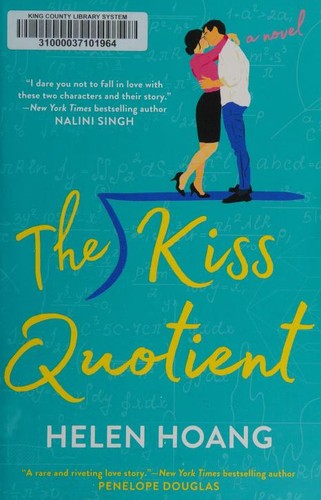
Helen Hoang's debut shares Beach Read's best quality: it lets its leads be genuinely guarded and works honestly for every inch of intimacy. Stella Lane is a brilliant, wealthy econometrician on the autism spectrum who decides she needs practice at relationships and hires an escort, Michael Phan, to teach her. The lessons-with-rules premise does the same job as Henry's genre swap, giving the couple a structured reason to keep meeting while their real feelings break the structure down. Hoang, who wrote from her own experience with autism, makes Stella's interiority specific rather than generic.
This is the steamiest book on the list by a wide margin, with frequent explicit scenes, so calibrate accordingly. It is also less jokey than Beach Read; the comedy is gentler and the emotional register sincere almost throughout. Choose it if the scenes where January and Gus actually let their guards down were the ones you reread, and skip it if you mainly wanted the verbal fencing.
Another Emily Henry novel, honestly. People We Meet on Vacation is the natural next step from this list, and Book Lovers is arguably even closer in spirit, with a publishing-world rivals-to-lovers pairing. Outside Henry's catalog, The Hating Game is the most common recommendation because it nails the antagonistic banter, though it is lighter on the grief and depth that set Beach Read apart.
Is Beach Read actually a light beach read?
Less than the title suggests, and that is partly the joke. It has all the rom-com pleasures, but January is grieving her father and the affair she discovered after his death, Gus carries a rough childhood, and one of their research trips involves a death cult. Readers who want pure sunshine should start with The Unhoneymooners from this list; Beach Read sits closer to the middle of the light-to-heavy scale.
What order should I read Emily Henry's books in?
They are all standalones, so order does not matter for plot. Publication order is Beach Read, People We Meet on Vacation, Book Lovers, Happy Place, Funny Story, and Great Big Beautiful Life. Most readers rank Beach Read and Book Lovers at the top, so a common path is to follow Beach Read with Book Lovers, then People We Meet on Vacation.
Which book on this list has the best enemies-to-lovers dynamic?
The Hating Game is the purest version, with the tightest sustained tension between its leads, and it is the standard the trope gets measured against. The Unhoneymooners is the funniest take, with the enemies trapped on a fake honeymoon. Red, White & Royal Blue scales the trope up to princes and presidents' sons if you want maximum drama.
As an Amazon Associate, we earn from qualifying purchases. · About & methodology