9 books like All Quiet on the Western Front, from A Farewell to Arms to The Things They Carried and Regeneration: war novels that tell the truth.
Updated June 11, 2026
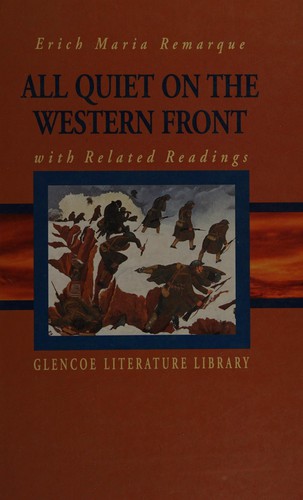
All Quiet on the Western Front is the war novel every other war novel gets measured against. Erich Maria Remarque, who served on the Western Front himself, published it in 1929 and stated his aim in the epigraph: simply to tell of a generation of men who, even though they escaped the shells, were destroyed by the war. Paul Bäumer and his classmates enlist out of schoolroom patriotism and are dismantled one by one, and the book's power lives in its flat, unheroic specifics: boots passed from a dying man to the next, the smell of the dressing station, the impossibility of explaining any of it on home leave. The Nazis burned it, which tells you it worked.
The books below extend it in three directions, and which you pick depends on what hit hardest. For more of the First World War itself, there are A Farewell to Arms, Birdsong, Regeneration, Johnny Got His Gun, and a graphic novel adaptation of Remarque's original. For the same disillusionment carried into later wars, The Naked and the Dead does it for World War II and The Things They Carried for Vietnam. And for the absurdist branch, where the honest response to war's logic is dark laughter, Catch-22 and Slaughterhouse-Five are the two summits.
A practical note: these vary enormously in difficulty and tone. Johnny Got His Gun is the most harrowing thing here by some distance; Catch-22 is long and deliberately disorienting for its first hundred pages; The Things They Carried is the easiest entry and the one most often taught alongside Remarque. Each entry says what it shares with Paul Bäumer's story and what it asks of you.
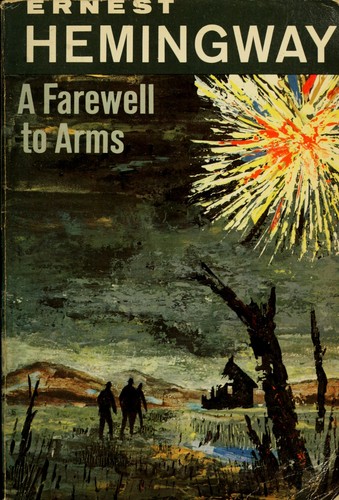
Read this for the other defining WWI novel, from the Italian front.
Published the same year as All Quiet (1929) by another veteran of the war, Hemingway's novel is its closest contemporary and natural companion. Frederic Henry, an American ambulance driver in the Italian army, lives through the same disillusionment Paul does, most famously in the retreat from Caporetto and in the passage declaring words like glory and honor obscene next to the concrete names of villages and rivers. Both books strip the romance off the war in prose pared down to the bone, and both were written close enough to the events to feel like testimony.
The difference is the love story. Half the novel belongs to Frederic's affair with the nurse Catherine Barkley, so the war shares the stage with romance in a way Remarque never allows; Paul's tragedy is that he has no life outside the front to retreat to. Hemingway's ending is as bleak as Remarque's, but it arrives through private loss rather than the trenches. Pick this if you want the same generation's verdict on the war delivered through one man's attempt to escape it.
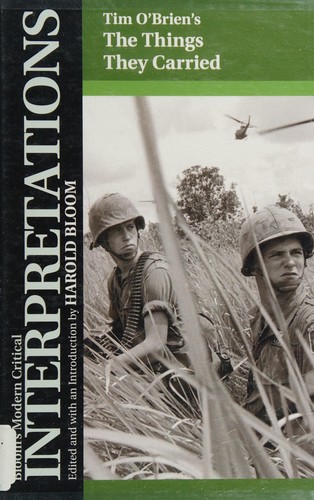
Read this for All Quiet's honesty applied to Vietnam, and to storytelling itself.
Tim O'Brien is Remarque's most direct American heir. These linked stories about a platoon in Vietnam do exactly what All Quiet does, render war through the small physical facts (the title piece inventories what each man carries, down to the ounce) and through the gulf between the soldiers and everyone back home. Like Remarque, O'Brien served in the war he writes about, and his recurring subject is the same destroyed generation: men who came home alive but not intact, like Paul's classmates who can no longer imagine a peacetime life.
What O'Brien adds is a layer Remarque never attempts: the book openly questions its own truthfulness, blurring the line between the author and his narrator and arguing that a story can be invented and still be truer than the facts. That makes it more formally playful, and a few readers find the metafiction evasive where Remarque is direct. It is also the most accessible book on this list, told in short, self-contained pieces. The standard and best first stop after All Quiet.
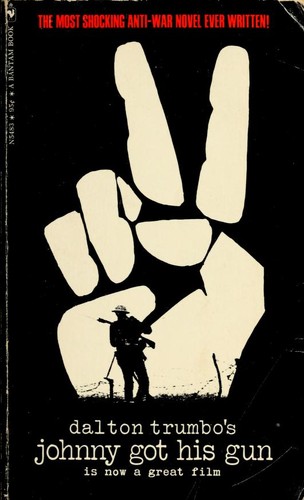
Read this only if you want the most extreme anti-war statement ever written.
Dalton Trumbo's 1939 novel takes Remarque's project to its absolute limit. Joe Bonham, an American soldier hit by a shell in the last days of World War I, wakes in a hospital bed having lost his arms, legs, sight, hearing, and face, a mind fully alive inside a body that can no longer reach the world. The book is his consciousness: memories of an ordinary American boyhood interleaved with his slow understanding of what has happened and his attempt to communicate by tapping Morse code with his head. It makes the argument of All Quiet's epigraph literal: here is what the words glory and sacrifice actually purchased.
Know what you are choosing. There is no front-line camaraderie here, none of the dark soldier humor that leavens Remarque, just one trapped voice, written in a rushing, unpunctuated stream. It was published days after World War II began in Europe and became an anti-war touchstone again during Vietnam. Read it when you are ready for it; it is short, unforgettable, and the hardest book on this list to sit with.
Read this for the trenches rendered with a novelist's full sweep, love story included.
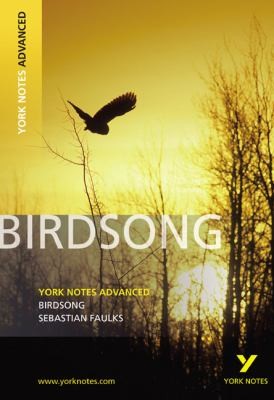
Sebastian Faulks's 1993 novel is the great modern reconstruction of the Western Front. Its long central sections, the Somme attack and the claustrophobic work of the tunnelers digging and counter-mining beneath no-man's-land, stand with anything in Remarque for physical immediacy, and Faulks shares his refusal to look away from what shells and machine guns do to bodies. Stephen Wraysford's numbed endurance, and the question of whether anything human survives it, is recognizably Paul Bäumer's condition seen from the British side of the wire.
The shape is much bigger, though. The novel opens with a long pre-war love affair in Amiens and cuts forward to the 1970s, where Stephen's granddaughter pieces his story together, so the war sits inside a frame about memory and inheritance. At around 500 pages it is the longest purely WWI book here, and some readers find the modern sections a drop in voltage. Pick it when you want to live in the war at length rather than take Remarque's swift, concentrated dose.
Read this for what the war did to minds, told through real historical figures.
Pat Barker's novel picks up exactly where All Quiet points: the psychological destruction of a generation. Set in 1917 at Craiglockhart War Hospital in Scotland, it dramatizes the real encounter between the psychiatrist W. H. R. Rivers and the decorated officer-poet Siegfried Sassoon, sent there after publicly declaring the war was being deliberately prolonged. Around them are patients with mutism, tremors, and nightmares, the conditions then called shell shock, and the novel's quiet horror is Rivers's job description: heal these men so they can be sent back to the front.
It is a different vantage from Remarque's, behind the lines rather than in them, talk therapy rather than bombardment, and it is built on documented history, with Wilfred Owen appearing as Sassoon's protégé. The prose is plain and exact, and the moral questions are explicit where Remarque leaves them implied. First of a trilogy whose finale, The Ghost Road, won the Booker Prize. The best pick here if Paul's inability to return to civilian life was the thread that held you.
Read this for the same unsparing realism carried into World War II.
Norman Mailer wrote this at 25, drawing on his own Pacific service, and it did for the Second World War something close to what Remarque did for the First: stripped the official heroism off and showed the grinding fear, pettiness, and waste underneath. Following a platoon on the invented island of Anopopei, it shares All Quiet's ground-level focus on ordinary soldiers as expendable parts, and adds a dimension Remarque mostly omits, the politics of command, through the fascist-leaning General Cummings and the sadistic Sergeant Croft.
It is a much bigger and rougher machine: over 700 pages, a large rotating cast with Dos Passos-style flashbacks for each man, and a famous publisher-imposed euphemism ('fug') standing in for the soldiers' actual speech. Mailer's ambitions sprawl where Remarque compresses. Choose it if you want the panoramic American counterpart, a war novel about an army as a society, rather than Remarque's tight circle of schoolmates.
Read this if you want to re-experience Remarque's story through images.
This is not a similar book but the book itself in a different medium: a graphic adaptation of Remarque's novel. The trench scenes, the bombardments, the dressing stations, and the quiet interludes behind the lines are material that visual storytelling can serve powerfully, and an adaptation lets the imagery carry weight the prose describes, the way the 1930 and 2022 film versions did in their mediums. For readers who connected with Paul's story, seeing it drawn can land differently than rereading it.
The honest framing: an adaptation compresses by necessity, so Paul's interior voice, the reflective passages that make the novel what it is, must be carried by art and selection rather than full text. It works best as a companion to the novel or a way back into it, not a replacement, and it is also a natural route into the story for younger readers or those new to graphic novels. If you want a new story rather than a new form, choose any other book on this list first.
Read this for war trauma told the only way Vonnegut could tell it, sideways.
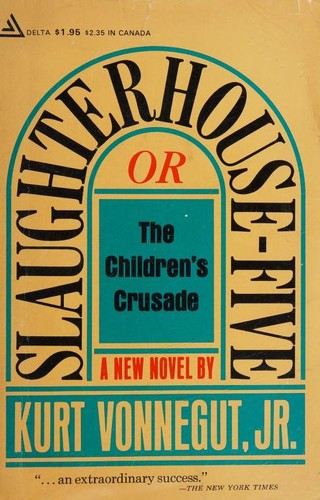
Vonnegut was a prisoner of war in Dresden when Allied firebombing destroyed the city in 1945, and he spent over twenty years failing to write a conventional novel about it before producing this one in 1969. The kinship with Remarque is real: both are veterans testifying against war's machinery, and both center on a passive young soldier (Billy Pilgrim, like Paul, is acted upon far more than he acts) swallowed by events. Vonnegut's anti-war intent is explicit; the subtitle calls it The Children's Crusade, a duty-dance with death.
The method could not be more different. Billy comes 'unstuck in time,' bouncing between Dresden, suburban optometry, and an alien zoo on Tralfamadore, and the book treats trauma not by describing it head-on but by fracturing the narrative the way trauma fractures memory. It is short, very funny, and devastating in a sidelong way, with the refrain 'so it goes' following every death. Pick it when you want All Quiet's conclusions reached by the opposite route.
Read this if you suspect the only sane response to military logic is laughter.
Heller's 1961 novel shares Remarque's deepest conviction, that ordinary men are fed into a machine run for purposes that have nothing to do with them, but expresses it as comedy instead of tragedy. Yossarian, a B-25 bombardier in the Mediterranean, simply wants to stay alive, and the famous catch blocks every exit: a man crazy enough to fly missions can be grounded if he asks, but asking proves he is sane, so he must fly. Where Remarque's enemy is the war itself, Heller's is the bureaucracy administering it, the colonels raising the mission count and the syndicate trading with both sides.
Be patient with the structure. The chronology is deliberately scrambled, the same events recur with more detail each pass, and the tone swings from farce to horror, climaxing in the Snowden scene, which is as brutal as anything in All Quiet. It is also long, and some readers stall in the repetitive first third. Stick with it; the comedy is the delivery system for an anti-war argument fully as serious as Remarque's.
What book is most similar to All Quiet on the Western Front?
A Farewell to Arms is the closest contemporary: published the same year, 1929, written by a fellow veteran, and equally committed to stripping the glory off World War I, though Hemingway adds a central love story. For a later war told with the same ground-level honesty, The Things They Carried by Tim O'Brien is the most common and most apt recommendation.
Did Erich Maria Remarque write other war novels?
Yes. The Road Back (1931) is the direct sequel in spirit, following German veterans struggling to return to civilian life after the armistice, and Three Comrades (1936) continues into the unstable Weimar years. Later novels like Arch of Triumph and A Time to Love and a Time to Die deal with the Nazi era and World War II. The Nazis banned and burned his books and revoked his citizenship.
Is All Quiet on the Western Front based on a true story?
It is fiction, but grounded in experience: Remarque was conscripted into the German army at 18 and was wounded on the Western Front in 1917. Paul Bäumer and his classmates are invented, while the conditions, the bombardments, gas, hospitals, and the gulf between front and home, reflect what Remarque and his generation lived through. He framed the book as a report on a generation destroyed by the war even when it survived the shells.
Should I read the serious war novels or the satirical ones first?
Coming from All Quiet, the realist line is the smoother continuation: The Things They Carried or A Farewell to Arms next, then Birdsong or Regeneration for depth on the First World War. Save Catch-22 and Slaughterhouse-Five for when you want the same anti-war argument made through absurdity; they land harder once the realist version is fresh in your mind.
As an Amazon Associate, we earn from qualifying purchases. · About & methodology