5 books like Catch-22, from Slaughterhouse-Five to A Confederacy of Dunces: absurdist satire and dark comedy for Joseph Heller fans.
Updated June 11, 2026
Joseph Heller's Catch-22 (1961) gave the language a phrase because it nailed a real shape of madness: Yossarian, a B-25 bombardier in World War II, can be grounded only if he is insane, but asking to be grounded proves he is sane. The novel runs on that circular logic at every level, with a fractured timeline that loops back through the same events, a huge cast of officers and profiteers (Milo Minderbinder selling the squadron's parachutes for profit), and jokes that repeat until they curdle into horror. The famous trick is that it gets less funny and more devastating the deeper you go, ending in the Eternal City chapter and Snowden's secret.
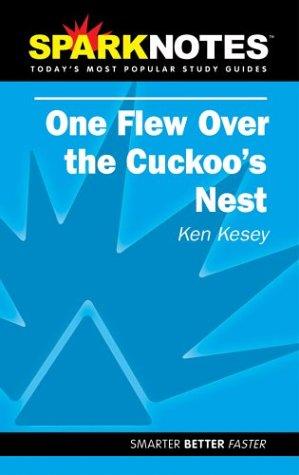
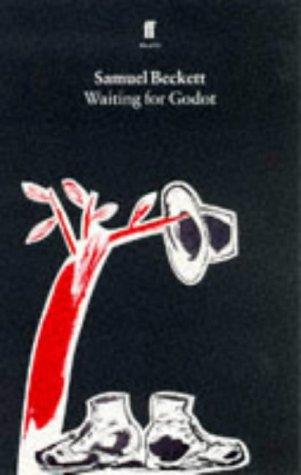
Nobody has written another Catch-22, but the books below each carry one of its threads. Slaughterhouse-Five is the closest sibling, the other great absurdist American war novel, and One Flew Over the Cuckoo's Nest pits a Yossarian-like schemer against an institution running on its own insane logic. A Confederacy of Dunces and Good Omens take the comedy without the war, and Waiting for Godot is the bleak philosophical core of the absurdity, stripped of plot entirely.
A practical note: Heller's own sequel, Closing Time (1994), exists but is widely considered a shadow of the original, so it is not the obvious next step. The picks below are sorted roughly from closest match to furthest, and each one says which part of Catch-22 it echoes, the war, the institutional madness, or the laughing-at-the-abyss tone.
Read this if you want the other essential absurdist war novel.
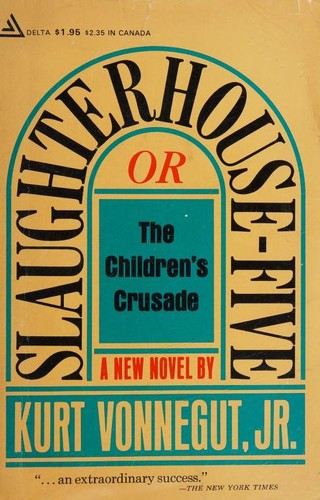
Kurt Vonnegut's 1969 novel is the book Catch-22 is most often shelved beside, and the kinship is genuine. Both were written by men who flew or fought in World War II (Vonnegut survived the firebombing of Dresden as a POW; Heller flew sixty bombing missions), both refuse to tell the war straight, and both use a scrambled timeline as their central device. Billy Pilgrim comes 'unstuck in time', bouncing between Dresden, suburban optometry, and an alien zoo, just as Heller loops obsessively back toward Snowden's death. The refrain 'so it goes', following every death, works exactly like Heller's repeated jokes: comedy as armor that keeps failing.
The difference is temperature. Vonnegut is short, flat, and deadpan where Heller is long, baroque, and manic; Slaughterhouse-Five can be read in two sittings and lands its grief through understatement rather than escalation. There is also science fiction in the mix, the Tralfamadorians, which some readers take literally and others read as trauma. If Catch-22's length and repetition wore on you, this delivers the same moral seriousness in a quarter of the pages.
Read this for Catch-22's war against institutional logic, fought in a mental ward.
Ken Kesey's 1962 novel is built on the same trap as Heller's: an institution whose rules define sanity, so that resisting the institution becomes proof you belong inside it. Randle McMurphy, a gambler who fakes insanity to escape a prison work farm, is a clear cousin of Yossarian, a self-interested schemer whose rebellion against the system, embodied in Nurse Ratched and her Combine, slowly becomes a real moral stand. Both books were defining anti-authority novels of the 1960s, and both understand that the scariest power is the kind administered with paperwork and a calm voice.
Kesey's book is far more conventionally told, a single setting, a building confrontation, and a narrator (the supposedly deaf-mute Chief Bromden) whose hallucinatory visions supply the strangeness Heller gets from structure. It is also darker about the cost of rebellion; the ending hits harder and cleaner than anything in Catch-22. Pick it if you want the madness-by-decree theme with a propulsive plot, and expect less comedy and more dread.
Read this if Heller's comic set pieces were the best part.
John Kennedy Toole's posthumously published novel (it won the 1981 Pulitzer Prize, eleven years after Toole's death) is the great American comic novel that is not about war. Ignatius J. Reilly, a flatulent, medievalist gasbag waging war on the modern world from his mother's house in New Orleans, belongs to the same family as Heller's grotesques, a man whose elaborate self-justifying logic is airtight and completely insane. The plot, like Catch-22's, is a machine of escalating farce in which every scheme (a hot dog cart, a factory uprising) collapses in ways the schemer blames on everyone else.
What it lacks is the body count. There is no war, no Snowden, no turn into horror; the darkness here is biographical (Toole's suicide before publication) rather than on the page, and the satire targets pomposity and New Orleans itself rather than systems that kill people. If you loved Catch-22 most when it was being purely, relentlessly funny, this is the strongest pick on the list. If you needed the stakes, start elsewhere.
Read this for bureaucratic absurdity played warm instead of bitter.
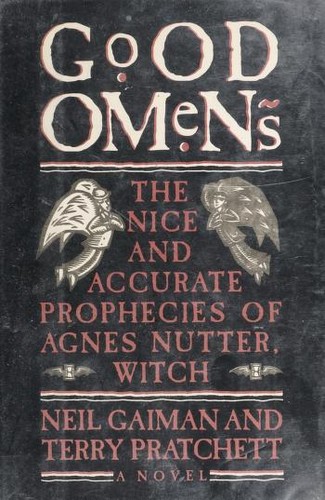
Terry Pratchett and Neil Gaiman's 1990 comedy about the apocalypse shares Catch-22's core comic engine: vast institutions (Heaven and Hell, in this case) administering a catastrophe through memos, procedure, and middle management, while the people on the ground, the angel Aziraphale and the demon Crowley, quietly conclude that the system they serve is insane and start working around it. The footnotes, running gags, and cheerfully tangled plot will feel familiar to anyone who enjoyed Heller's loops and call-backs.
But the temperature is completely different. Good Omens is fundamentally kind; it believes people are redeemable and ends warmly, where Catch-22 believes the machine will grind on and ends with Yossarian running. There is no real horror under the jokes here. Pick it when you want the absurdist wit without the despair, as a palate cleanser after Heller rather than a continuation of him. Readers who loved Milo Minderbinder's logic will recognize the Infernal bureaucracy immediately.
Read this only if you want the existential core with all the plot removed.
Samuel Beckett's 1953 play is the purest distillation of what Catch-22 is about underneath the jokes: people trapped in a loop, sustained by routines and word games, waiting for a resolution that never comes. Vladimir and Estragon's circular dialogues, repeating, contradicting, going nowhere, are the same comic-despairing music as Yossarian's arguments with Clevinger and Major Major's standing orders, and the play's two nearly identical acts mirror Heller's structure of return and repetition. Heller's debt to absurdist theater is real; his own play, We Bombed in New Haven, makes the connection explicit.
Know what you are picking up, though: this is a short play, not a novel, with no war, no story, and famously 'nothing happens, twice'. It is best read in a sitting or seen performed, and it rewards a tolerance for ambiguity that Catch-22, which always lands its satirical punches somewhere specific, never demands. Choose it if the existential dread under Heller's comedy is what fascinated you. Skip it if you came for Milo and the mess hall.
Slaughterhouse-Five by Kurt Vonnegut is the standard answer, and the right one. Both are absurdist World War II novels by veterans, both scramble their timelines, and both use repetition and dark comedy to circle a horror at the center (Snowden's death for Heller, the Dresden firebombing for Vonnegut). Vonnegut is much shorter and more deadpan, which makes it an easy next step.
Did Joseph Heller write a sequel to Catch-22?
Yes. Closing Time (1994) revisits Yossarian, Milo Minderbinder, and others as old men in New York decades after the war. It has admirers, but the general consensus is that it is far weaker than the original, more melancholy meditation than comic machine. Most readers are better served by Slaughterhouse-Five or Heller's Something Happened, his bleak 1974 corporate novel, than by the sequel.
What does 'catch-22' actually mean?
In the novel, Catch-22 is the rule that a bomber crewman can be grounded for insanity only if he asks, but asking shows a rational concern for his own safety, which proves he is sane and must keep flying. The phrase has come to mean any no-win situation where the rules block every exit, and the novel applies the same circular logic to military bureaucracy, commerce, and authority in general.
Is Catch-22 hard to read, and is there an easier place to start with this kind of book?
It is long, deliberately repetitive, and told out of order, which defeats some readers on a first attempt. If you want the same sensibility in an easier package, Slaughterhouse-Five is short and direct, and One Flew Over the Cuckoo's Nest tells a straightforward story. Many people find Catch-22 clicks on a second attempt once they stop trying to track the chronology and just ride the voice.
As an Amazon Associate, we earn from qualifying purchases. · About & methodology