7 books like Roberto Bolaño's 2666, from The Savage Detectives to A Brief History of Seven Killings: sprawling, dark, ambitious novels worth the commitment.
Updated June 10, 2026
Roberto Bolaño's 2666, published in 2004 a year after his death, is five loosely linked novels in one: European critics chasing a reclusive German author named Benno von Archimboldi, a philosophy professor losing his grip in a Mexican border city, an American reporter, a relentless catalog of the murders of women in fictional Santa Teresa (modeled on the real femicides of Ciudad Juárez), and finally Archimboldi's own life story. It is over 900 pages, it withholds the resolutions a crime novel would deliver, and its center of gravity is an evil so large no single narrative can contain it. Readers either bounce off it or consider it one of the great novels of the century.
Nothing else is quite 2666, so this list works by facets. If you want more Bolaño, The Savage Detectives is the obvious and essential next stop. If the scale and polyphony hooked you, the multi-voiced violence of A Brief History of Seven Killings is the closest living relative, with The Brief Wondrous Life of Oscar Wao covering dictatorship and curse in a tighter package. If it was the philosophical darkness, Heart of Darkness, The Unbearable Lightness of Being, The Master and Margarita, and The Book of Disquiet each take one strand (the abyss, politics and meaning, the surreal, the fragmented self) and run with it.
A practical note: several of these are demanding in different ways. Seven Killings asks you to track many narrators in heavy patois, The Book of Disquiet has no plot at all, and the Bolaño is another long haul. None of them, though, asks for more patience than 2666 already did, so pick by mood rather than by difficulty.
This is Bolaño's other masterpiece, published in 1998, and it shares 2666's deepest obsession: the search for a vanished writer as a way of asking what literature is for. Two young poets, Arturo Belano and Ulises Lima, leave Mexico City in 1976 hunting for the disappeared poet Cesárea Tinajero, and the long middle section reconstructs their next twenty years through dozens of witnesses scattered across the world. The fragmented testimony, the doomed literary movements, even the deserts of Sonora all anticipate 2666 directly, and Belano is widely read as the unnamed narrator behind it.
It is warmer and funnier than 2666, more about youth, sex, and poetic ambition than about systemic evil, and the femicide horror at 2666's core has no equivalent here. At roughly 600 pages it is still a commitment, but the energy is looser and more picaresque. If 2666 left you wanting the same author at a slightly more human temperature, this is the book; most Bolaño readers argue about which of the two is greater.
Read this if 2666's philosophical digressions were a feature, not a bug.
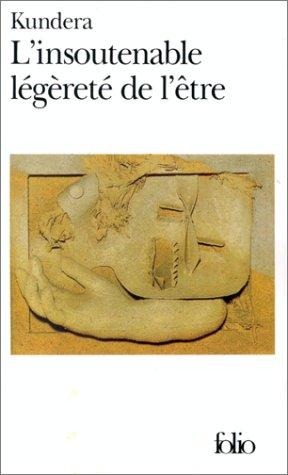
Kundera's 1984 novel shares with 2666 the conviction that a novel can stop and think out loud. Set around the 1968 Soviet invasion of Czechoslovakia, it follows the surgeon Tomas, his wife Tereza, and his lover Sabina while the narrator openly interrupts to weigh Nietzsche's eternal return, kitsch, and whether a life lived once can mean anything. Like Bolaño, Kundera treats private lives as inseparable from political catastrophe, and both books refuse the consolations of plot in favor of ideas circling a wound.
The differences are large. Kundera is compact, controlled, and essayistic where Bolaño is sprawling and accretive, and the violence here is the slow bureaucratic kind, careers destroyed and countries occupied, rather than bodies in a desert. Pick it if what you loved in 2666 was the professor Amalfitano's section, the drifting intellectual trying to think his way through dread. It reads in a fraction of the time.
Read this if you want the surreal and the political fused by a writer working under death's shadow.
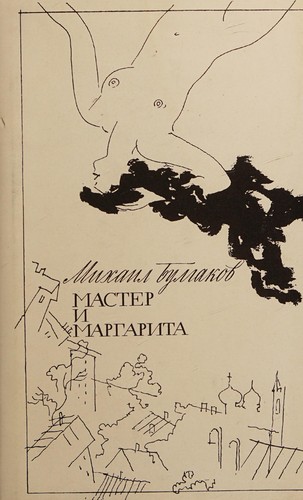
Bulgakov's novel, written in secret under Stalin and published decades after his death in 1940, shares more biography with 2666 than almost any book: both are posthumous masterpieces by authors who knew they were dying and poured everything in. The Devil arrives in atheist Moscow with a talking cat and wreaks elegant havoc, while a parallel novel retells Pontius Pilate's encounter with Yeshua. The mix of registers, satire, horror, romance, and theology, has the same anything-goes ambition that lets 2666 swing from academic comedy to forensic nightmare.
It is far more playful than Bolaño, and its evil wears a tuxedo and grants wishes rather than hiding in the desert. The structure is also tighter, two stories braided rather than five stacked. Choose it when you want 2666's scope and strangeness with actual jokes, or if the Archimboldi section's wartime episodes made you want more fiction about art surviving totalitarianism.
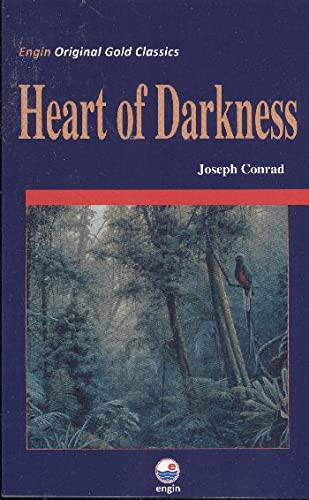
Read this for the original journey toward an evil that explanation cannot reach.
Conrad's 1899 novella is an ancestor 2666 clearly knows. Marlow travels up the Congo toward Kurtz, an ivory trader the company speaks of with awe, and what he finds is atrocity wrapped in civilization's language. The structure, an approach toward a figure of rumor who keeps receding, is exactly the Archimboldi mechanism, and the deeper move is the same too: the horror is not one man but a whole system (colonial extraction there, the borderland economy of Santa Teresa in Bolaño) that everyone profits from and no one will name.
At under a hundred pages it is the shortest book on this list and the densest per sentence; Conrad's late-Victorian prose asks for slow reading. It is also rightly contested, with Chinua Achebe's critique of its treatment of Africans now part of how it is read. Take it as a foundational text the later books argue with rather than a comfortable read. If 2666's part about the crimes felt like the moral center, this is where that tradition starts.
Read this if the polyphonic structure and unflinching violence were what gripped you.
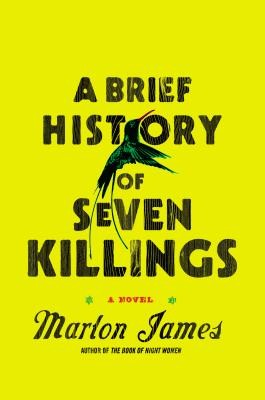
Marlon James's 2014 novel, which won the Booker Prize, is the closest thing contemporary fiction has produced to 2666's method. It orbits the 1976 attempt to assassinate Bob Marley (named only as the Singer) and then follows gunmen, CIA officers, journalists, and ghosts across Kingston, Miami, and New York over decades. Like Bolaño, James builds the book from many voices around a violence that is political, criminal, and intimate at once, and like Bolaño he refuses to look away from what bullets and machetes actually do.
The texture is very different: where 2666's catalog of crimes is flat and forensic, Seven Killings is maximalist and in your face, with long stretches in Jamaican patois and stream of consciousness that take real acclimation. It is also anchored to documented history more tightly than Bolaño's fictionalized Santa Teresa. Pick it if you want the same scale and moral seriousness with more propulsion, and skip it if the violence in 2666 was already at your limit.
Read this for Latin American history's darkness in a faster, funnier package.
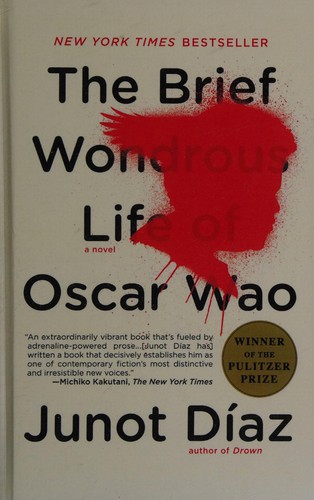
Junot Díaz's Pulitzer winner shares 2666's conviction that the violence of a place (here Trujillo's Dominican Republic rather than the Mexican borderlands) reaches across borders and generations. The story of Oscar, an overweight Dominican American nerd in New Jersey, keeps getting pulled back to the dictatorship that broke his family, narrated mostly by the swaggering Yunior with footnotes that deliver the history outright. Like Bolaño, Díaz mixes literary ambition with genre love and treats the curse, the fukú, as a real force the way 2666 treats its desert.
It is a fraction of the length, told with comic energy and Spanglish slang rather than Bolaño's hypnotic flatness, and it has an emotional warmth 2666 mostly withholds. The trade is depth of dread for momentum and heart. This is the right pick if you admired 2666 but want a book you can finish in a weekend, or if the dictatorship material in the Archimboldi section interested you more than the crimes.
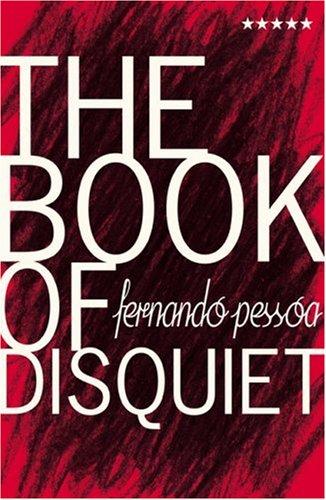
Read this if Amalfitano's unraveling interior monologue was your favorite part.
Pessoa's book, assembled from a trunk of fragments found after his death in 1935 and first published in 1982, is another great posthumous work that exists in multiple competing editions, a textual situation even messier than 2666's. Written as the factless autobiography of Bernardo Soares, a Lisbon bookkeeper, it is hundreds of short meditations on tedium, dreams, identity, and the impossibility of being one person. The kinship with Bolaño is the voice: lucid, melancholy, obsessive, circling the same wounds without resolution.
Be clear about what it is not: there is no plot, no characters beyond Soares, no violence, nothing resembling 2666's narrative engines. It is a bedside book to read a page or two at a time, possibly for years. Choose it only if what you valued in Bolaño was the metaphysical drift, the sense of a mind talking to itself at the edge of an abyss. Readers who came for the crime and the scope should pick almost anything else here first.
The most common answer is more Bolaño, starting with The Savage Detectives, which shares the fragmented structure, the search for a vanished writer, and the Sonora desert setting. If you want a different author at a similar scale and darkness, A Brief History of Seven Killings by Marlon James is the closest contemporary match. For something shorter in the same family, The Brief Wondrous Life of Oscar Wao covers dictatorship and inherited violence in about a third of the pages.
Is 2666 based on a true story?
Partly. The fictional city of Santa Teresa and its unsolved murders of women are closely modeled on the real femicides in Ciudad Juárez, Mexico, which began drawing international attention in the 1990s. Bolaño researched the killings with help from the journalist Sergio González Rodríguez, whose book Huesos en el desierto documented them. The rest of the novel, including the author Archimboldi, is invention.
Should I read The Savage Detectives or 2666 first?
Either works, but if you have already finished 2666 you have done the harder climb. The Savage Detectives is warmer and funnier, and it deepens 2666 retroactively: its protagonist Arturo Belano is generally taken to be the implied narrator of 2666, and the two books share settings, obsessions, and minor characters. Readers new to Bolaño are often advised to start with The Savage Detectives or the short novel Distant Star.
Why does 2666 have five parts, and do they connect?
Bolaño wrote it as five linked novels (the critics, Amalfitano, Fate, the crimes, Archimboldi) and reportedly considered having them published separately. They share the city of Santa Teresa and converge on the figure of Archimboldi, but the connections are deliberately loose, and the murders are never solved. The lack of resolution is the point: the book treats the violence as something no single story can explain.
As an Amazon Associate, we earn from qualifying purchases. · About & methodology