8 books like 13 Little Blue Envelopes, from Just One Day to Amy & Roger's Epic Detour: YA travel, scavenger-hunt plots, and first love abroad.
Updated June 10, 2026
Maureen Johnson's 13 Little Blue Envelopes runs on a premise that still gets passed around between readers two decades later: seventeen-year-old Ginny Blackstone receives thirteen sealed envelopes from her dead aunt Peg, each containing one instruction, and follows them across Europe with no phone, no guidebook, and no idea what comes next. The trick of the book is that the scavenger hunt is really a portrait of Aunt Peg, and the trip quietly turns into Ginny figuring out who she is when nobody back home is watching. It is light on its feet but carries genuine grief underneath.
Readers who finish it usually want one of three things, and this list covers all of them. Some want more travel-as-transformation, a teen girl loose in Europe or on the road (Just One Day, Amy & Roger's Epic Detour). Some want the chance-encounter romance, two strangers thrown together by an airport or a blackout (The Statistical Probability of Love at First Sight, The Geography of You and Me, The Distance Between Us). And some want the structural cleverness, stories built around a quest, a formula, or letters (An Abundance of Katherines, Will Grayson, Will Grayson, The Perks of Being a Wallflower).
A practical note: every book here is a fast read, most finishable in a weekend, and none require the others. If you have not read Johnson's own sequel, The Last Little Blue Envelope picks up Ginny's story directly and is the obvious first stop before any of these.
Books to Read If You Like 13 little blue envelopes
The Statistical Probability of Love at First Sight
by Jennifer E. Smith
Read this if the spark between Ginny and Keith was your favorite thread.
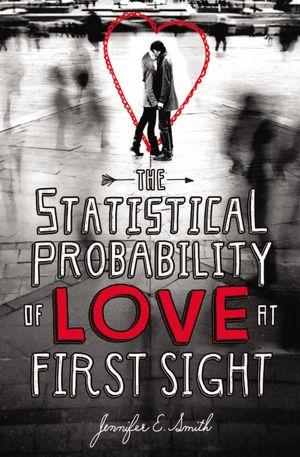
Jennifer E. Smith compresses the Ginny-in-transit feeling into a single twenty-four hours: Hadley misses her flight to London by four minutes, meets a British boy named Oliver in the airport, and spends the overnight flight falling into the kind of conversation that changes things. Like 13 Little Blue Envelopes, it pairs travel with a charming English love interest, and like Johnson, Smith hides a heavier story underneath the meet-cute, here a father's remarriage and a daughter's unresolved anger.
The difference is scope. There is no scavenger hunt and no continent-hopping; the whole book takes place over one day in airports, a plane, and London. It is the most purely romantic pick on this list, so choose it when you want the connection-with-a-stranger feeling distilled rather than another sprawling adventure. It reads in a single sitting, which suits its premise.
Read this if you liked a romance carried by postcards and distance.
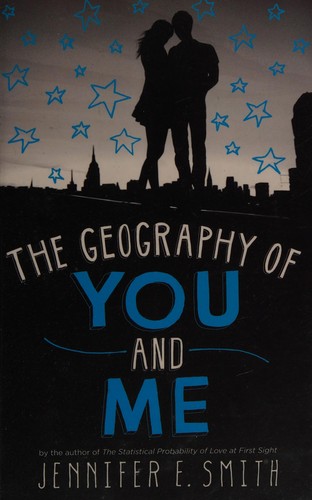
Smith's other entry here starts with a blackout in New York City: Lucy and Owen meet in a stalled elevator, share one perfect night while the city is dark, and are then pulled to opposite ends of the world by their families. They keep in touch through postcards, which gives the book the same analog, letter-driven charm that the thirteen envelopes give Johnson's novel. Both books are about staying connected to someone through paper while geography does its worst.
Where 13 Little Blue Envelopes is one girl's solo quest, this is a true dual-perspective romance, alternating between Lucy and Owen as they travel separately through Europe and across America. The stakes are quieter, there is no mystery to solve and no Aunt Peg figure, so it works best if the long-distance longing was what hooked you rather than the puzzle. It is gentle, a little wistful, and easy to read fast.
Read this if you want the found-connections energy without the travel.
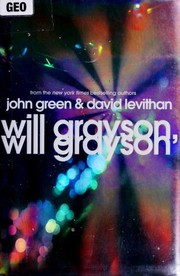
Co-written by John Green and David Levithan in alternating chapters, this follows two unrelated teenagers who share a name and collide by chance one night in Chicago, after which their lives tangle together around Tiny Cooper, a hugely lovable football player staging an autobiographical musical. The chance-meeting engine and the sense that one random encounter can reroute your whole life are very much the Ginny experience, transplanted from Europe to the Midwest.
This is the least travel-shaped book on the list, and the most emotionally raw: the second Will Grayson, written by Levithan, narrates through depression in lowercase prose, and the book is also a landmark of mainstream YA with gay protagonists at its center. Pick it when you want character voice and humor over plot momentum. Readers who wanted another European itinerary should start elsewhere; readers who wanted more heart will be fine.
Read this if you want the journey-as-grief-work, American road trip edition.
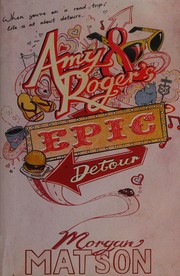
Morgan Matson's debut is the closest structural cousin to 13 Little Blue Envelopes on this list. Amy's father has died, her mother has moved to Connecticut, and Amy must drive cross-country with Roger, a family friend's college-age son, following a route that quickly goes off script. Like Ginny, Amy is processing the loss of someone she loved through a trip she did not plan, and the book uses playlists, receipts, and scrapbook ephemera the way Johnson uses the envelopes, as physical artifacts that carry the story.
The differences are the setting (motels and highways instead of hostels and ferries) and the romance, which is slower and more central than Ginny and Keith's. Matson goes deeper into grief than Johnson does, and the emotional payoff is correspondingly bigger. If you loved the envelope structure and the dead-loved-one ache underneath the fun, this is the strongest match here.
Read this for a quest with rules, footnotes, and a road trip.
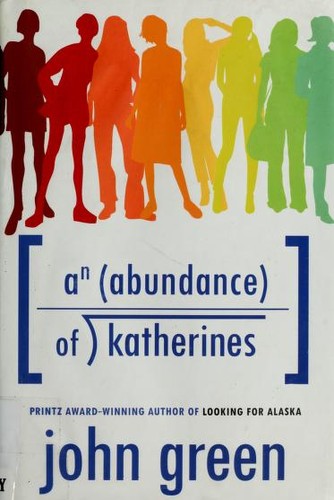
John Green's second novel shares the gimmick-driven journey: Colin Singleton, a washed-up child prodigy dumped by his nineteenth girlfriend named Katherine, hits the road with his friend Hassan and lands in Gutshot, Tennessee, where he tries to derive a mathematical theorem that predicts how relationships end. Like Johnson's envelopes, the theorem gives the story a playful formal structure, a set of rules the protagonist follows while accidentally growing up.
It is a boy's-eye-view comedy rather than a girl's travel romance, and the humor is nerdier, complete with anagrams and actual footnoted math. It is generally considered minor Green next to Looking for Alaska or The Fault in Our Stars, but its lightness is the point and the closest in tone to Johnson's banter. Choose it when you want clever and funny over swoony.
Read this if the letters mattered more to you than the itinerary.
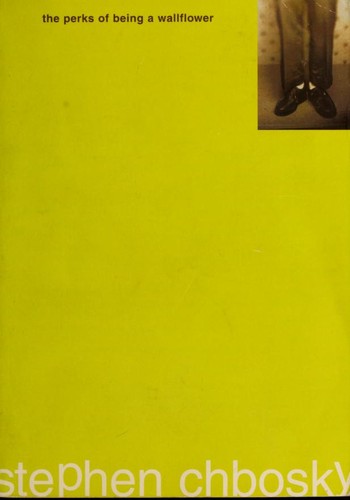
Stephen Chbosky's novel is told entirely in letters from Charlie, a freshman writing to an anonymous friend as he navigates his first year of high school, new friendships, first love, and a buried trauma. The epistolary form is the connection: like Ginny reading Peg's envelopes, you experience everything through written confidences addressed to someone who cannot answer, and both books are about a sheltered kid coaxed out of their shell by people who see something in them.
Be clear about what you are picking up, though. There is no travel and no caper energy; this is a quieter, sadder, more intense book that deals with abuse, mental health, and grief directly, and it has been frequently challenged in schools for exactly that honesty. It is also a modern classic in a way nothing else on this list is. Read it when you are ready for weight rather than wanderlust.
Read this for the grown-up version of Ginny's Europe trip.
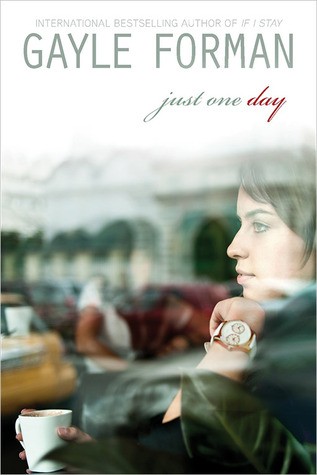
Gayle Forman's novel is the natural next step after 13 Little Blue Envelopes. Allyson, a rule-following American on a post-graduation European tour, impulsively spends one day in Paris with Willem, a Dutch actor, and then he vanishes. The rest of the book follows her first year of college as the memory of that day unravels and rebuilds her, until she goes back to find out what happened. The DNA is identical: Europe as the place an American girl discovers she is braver than her life at home allowed.
Forman writes older and deeper than Johnson. Allyson's transformation is slower and more painful than Ginny's, with a genuinely hard middle section about depression and disappointing your parents, and the romance is left deliberately unresolved until the companion novel Just One Year. It is the best overall next read here precisely because it takes the same premise more seriously. Have the sequel on hand when you finish.
Read this if you want the light, banter-forward romance side of Johnson.
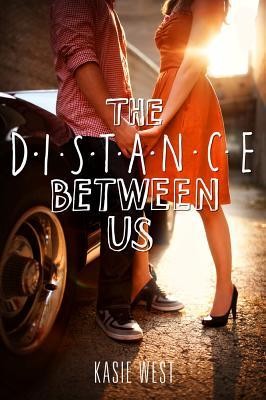
Kasie West's novel keeps the class-crossing spark that ran through Ginny and Keith's flirtation: Caymen works in her mother's struggling doll store and has been raised to distrust the rich, then Xander, heir to a hotel fortune, starts showing up at the counter. The dry, deadpan banter between them is the book's engine, and it has the same quick, comfortable readability that makes Johnson's books easy to hand to almost anyone.
This is the one pick with no journey at all, no envelopes, no airports, no Europe, just a small California beach town and a slow-burn romance complicated by money and a mother's secrets. It is also the lightest book on the list. Choose it as a palate cleanser when you want the warmth and wit of 13 Little Blue Envelopes without packing a bag.
Yes. The Last Little Blue Envelope, published in 2011, continues Ginny's story after the first book's open ending, when the contents of the final envelope resurface. If you want more of Ginny, Keith, and Aunt Peg's trail specifically, read it before anything on this list. Maureen Johnson's other books, including the Truly Devious mysteries and Suite Scarlett, share her voice but not these characters.
What is the closest match to 13 Little Blue Envelopes?
Just One Day by Gayle Forman is the closest in premise: an American girl transformed by an impulsive European adventure, with a mystery pulling her back across the ocean. Amy & Roger's Epic Detour by Morgan Matson is the closest in structure, a journey guided by artifacts while the protagonist works through the death of someone she loved.
What age is 13 Little Blue Envelopes appropriate for?
It is published as young adult and generally suits readers around 12 and up. The content is mild: some kissing, light drinking in European settings, and the underlying grief over Aunt Peg's death from cancer. Of the books on this list, The Perks of Being a Wallflower and Will Grayson, Will Grayson run noticeably older in content, while The Distance Between Us and the Jennifer E. Smith titles stay similarly gentle.
Are these books all about travel?
No, and that is deliberate. Just One Day, Amy & Roger's Epic Detour, The Statistical Probability of Love at First Sight, and The Geography of You and Me all involve real journeys. An Abundance of Katherines has a road trip that settles in one town. Will Grayson, Will Grayson, The Perks of Being a Wallflower, and The Distance Between Us stay put and match the book on voice, letters, and romance instead.
As an Amazon Associate, we earn from qualifying purchases. · About & methodology