8 books like Women, Race, & Class by Angela Davis, from Ain't I a Woman? to Sister Outsider: Black feminist thought, history, and theory.
Updated June 10, 2026
Angela Davis published Women, Race, & Class in 1981, and it remains the book people reach for when they want feminism's history told honestly. Its method is what sets it apart: Davis works chronologically through the American women's movement, from slavery and abolition through suffrage to the 1970s campaigns around rape and reproductive rights, and at each stop shows how the mainstream movement's racism and class blindness excluded Black and working-class women, and what those women built anyway. It is a work of history written by a Marxist scholar and activist, with figures like Sojourner Truth and Ida B. Wells treated as central rather than as footnotes.
The books below extend it in three directions. For the same Black feminist analysis carried forward, Ain't I a Woman? by bell hooks and Sister Outsider by Audre Lorde are the essential companions, both published within a few years of Davis's book and in direct conversation with it; Davis's own Women, Culture & Politics continues her thinking into the late 1980s. For the historical and academic deep end, Righteous Discontent and the Race, Class, and Gender anthology widen the archive and the framework. And for the white feminist canon Davis was writing against and beyond, The Second Sex and The Feminine Mystique are included here as context, with The Color Purple offering the same era's themes in fiction.
A practical note on reading order: Davis, hooks, and Lorde form a natural trilogy and can be read in any order. The Second Sex is by far the longest and densest pick. The Color Purple is the only novel and the easiest single sitting on the list.
Read this for the foundational feminist text Davis's tradition both built on and corrected.
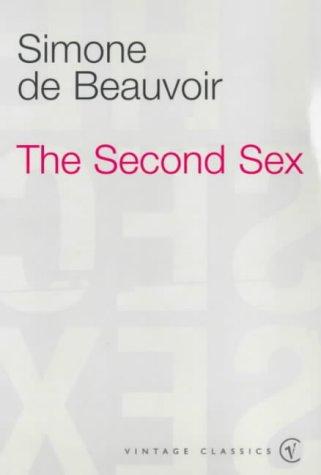
Simone de Beauvoir's 1949 study is the philosophical foundation much of modern feminism stands on, including the writers on this list. Her central move, arguing that woman is made rather than born, that femininity is a social construction imposed on a class of people defined as Other, is the kind of systemic analysis Davis applies; Beauvoir, like Davis, also wrote from the political left and connected women's condition to material and economic structures, not just attitudes. Reading it shows you the intellectual scaffolding the 1980s Black feminists inherited.
It is also precisely what Davis, hooks, and Lorde wrote to correct: Beauvoir generalizes from white, European, middle-class womanhood, and race is essentially absent from her analysis. It is additionally a very long, dense work of existentialist philosophy, and the standard English translation has its own contested history. Read it as the canon, with this list's other books as the answer to it, and feel free to read it selectively; the introduction and the chapters on myths and on the independent woman carry the core argument.
Read this for the same politics in a poet's voice.
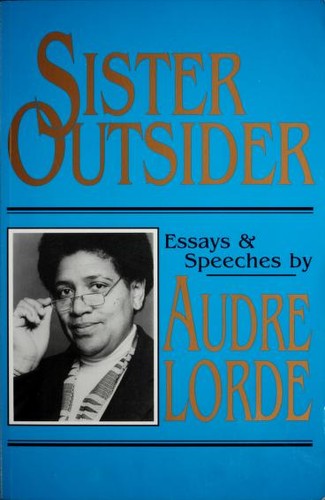
Audre Lorde's 1984 collection of essays and speeches is the third pillar, with Davis and hooks, of that founding generation of Black feminist writing. The pieces here, including The Master's Tools Will Never Dismantle the Master's House and The Uses of Anger, take up exactly the questions Davis raises about racism inside feminism, but from the inside of lived experience: Lorde writes as a Black lesbian feminist addressing white feminist audiences directly, often in speeches delivered to them. The analysis of how race, sex, class, and sexuality compound is the same intersectional terrain, before the term existed.
Where Davis builds historical arguments, Lorde works in the first person, and the prose is a poet's: aphoristic, quotable, and emotionally direct in a way Women, Race, & Class deliberately is not. The essays stand alone, so it is also the easiest book on this list to read in pieces. Choose it when you want the theory embodied rather than documented. If you want one entry point, the title essay on the master's tools is a few pages and is still argued about today.
Read this if you want the closest companion to Davis's argument.
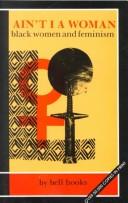
bell hooks published Ain't I a Woman? in 1981, the same year as Women, Race, & Class, and the two books are so often paired that they read like volumes of one project. hooks covers much of the same ground, the devaluation of Black womanhood rooted in slavery, the racism of the suffrage movement, the sexism Black women faced inside Black liberation politics, and the marginalization of Black women by white feminism. The title comes from the speech attributed to Sojourner Truth, the same figure Davis restores to the center of feminist history.
The difference is approach. Davis writes as a historian, building her case chronologically through movements and documents; hooks writes as a critic, organizing by theme and arguing more directly and polemically, with a sharper focus on cultural representation and on feminism's contemporary failures. hooks is also somewhat more readable for newcomers, since she wrote deliberately accessible prose her whole career. If Women, Race, & Class convinced you, this is the book that extends the indictment; read them close together and the 1981 moment comes into focus.
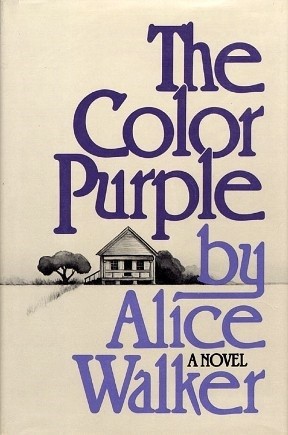
Alice Walker's 1982 novel, which won the Pulitzer Prize and the National Book Award, is the imaginative counterpart to Davis's history. Told through Celie's letters, it follows a poor Black woman in early twentieth-century rural Georgia through abuse, separation from her sister, and a slow, hard-won self-possession, aided above all by her relationships with other Black women. The forces Davis analyzes in the abstract, racism, sexism, and poverty compounding on Black women's lives, are exactly what Celie lives through, and the novel's vision of Black women sustaining each other matches Davis's recovered history.
It is, obviously, a different kind of reading: epistolary fiction in Celie's vernacular voice, emotionally raw where Davis is analytical, and frequently brutal in its first half (it remains one of the most banned books in America for its depictions of abuse and its queer love story). Some readers should know that going in. Choose it when you want the feeling alongside the framework; it is the most widely loved book on this list and the only one that may make you cry.
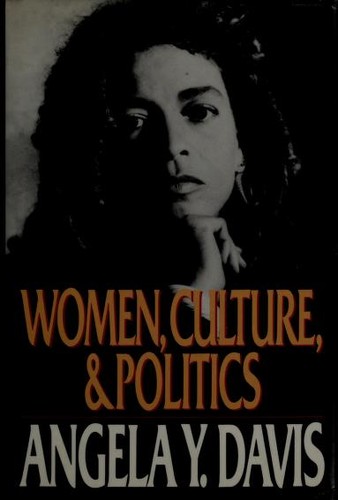
This 1989 collection gathers Davis's speeches and essays from the decade after Women, Race, & Class, and it shows the same analysis applied in real time rather than to history. The pieces take up Black women's health, reproductive rights, violence against women, art and culture, and international politics including South Africa and Egypt, always through the lens of how race, class, and gender work together. If you wanted to know what Davis thought the 1981 book's argument demanded in practice, this is her answer.
Because it is a collection of occasional pieces, it is looser and more uneven than Women, Race, & Class, which was built as one sustained argument; some essays are dated to their late-1980s moment in ways the history book is not. That is also its value as a document of Black feminist politics in the Reagan era. Read it after the first book, not instead of it, and consider her later Are Prisons Obsolete? and Freedom Is a Constant Struggle if her activism interests you as much as her scholarship.
Righteous Discontent: The Women's Movement in the Black Baptist Church, 1880–1920
by Evelyn Brooks Higginbotham
Read this if Davis's historical chapters were the part you wanted more of.
Evelyn Brooks Higginbotham's study is the scholarly deep dive this list needs. It recovers the history of Black Baptist women who built a movement inside the largest Black institution in America between 1880 and 1920, organizing schools, social services, and political pressure during the worst decades of Jim Crow. This is exactly the kind of history Davis argues mainstream feminist accounts erased: Black women doing the work of racial uplift and women's advancement at once, through channels (here, the church) that standard suffrage histories ignored. Higginbotham's concept of the politics of respectability was introduced in this book and became a standard analytical term.
It is the most academic pick here, a university press monograph with the apparatus that implies, so expect a slower read than Davis's brisk chapters. It is also focused tightly on one institution and period rather than sweeping across a century. Choose it if you read history seriously and wanted Davis's suffrage-era chapters expanded into a full book; choose hooks or Lorde first if you mainly want argument and voice.
Read this to understand exactly what second-wave feminism left out, from the inside.
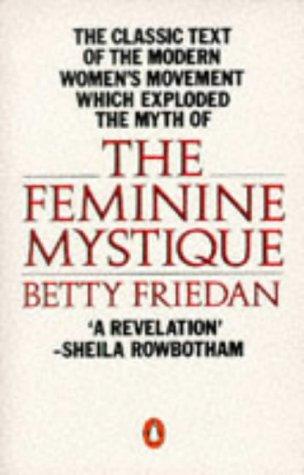
Betty Friedan's 1963 bestseller is commonly credited with sparking American feminism's second wave, and it pairs with Women, Race, & Class as document and critique. Friedan named the problem that has no name, the suffocation of educated women confined to postwar suburban domesticity, and the book's enormous success built the movement whose blind spots Davis then anatomized. Reading it after Davis is clarifying: you can see in real time how an analysis built on the experience of middle-class white housewives became the default story of what women wanted.
That is the honest frame for this pick: it belongs on the list as context, not as a book that shares Davis's analysis. bell hooks opened Feminist Theory: From Margin to Center by pointing out that Friedan's trapped housewife presumed a woman who could afford not to work, when Black and working-class women had always worked. The book is journalistic and very readable, far easier going than Beauvoir. Read it to understand the movement Davis was writing about, and let the rest of this list answer it.
Read this if you want the full intersectional framework, many voices at once.
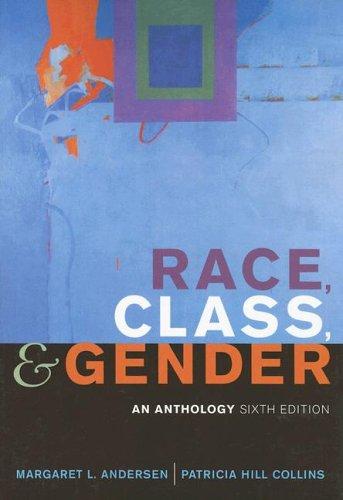
This anthology, edited by Margaret L. Andersen and Patricia Hill Collins, is essentially the college course that Women, Race, & Class helped make possible. Collins is one of the major theorists of Black feminist thought, and the collection assembles dozens of readings examining how race, class, and gender operate together as interlocking systems, the framework Davis demonstrated historically, here applied across work, family, media, violence, and institutions by a wide range of scholars and writers.
Know what an anthology means in practice: it is a textbook, built for classrooms, periodically revised through many editions, and meant to be sampled rather than read cover to cover. The selections vary in quality and difficulty, and it costs textbook money new, though used copies of earlier editions are cheap and serve a general reader fine. Pick it up if you want breadth and a map of the field after Davis's single sustained argument. If you would rather have one strong authorial voice, Collins's own Black Feminist Thought is the natural alternative.
What book is most similar to Women, Race, & Class?
Ain't I a Woman? by bell hooks is the standard companion. Both were published in 1981, both trace the combined effects of racism and sexism on Black women from slavery through the modern feminist movement, and both critique white feminism's exclusions. Davis writes more as a historian and hooks more as a cultural critic, so they reinforce rather than repeat each other.
What else should I read by Angela Davis?
Women, Culture & Politics, on this list, is the direct continuation, collecting her essays and speeches from the 1980s. Her 1974 An Autobiography covers her early life, the Black Power era, and her trial and acquittal. For her later work, Are Prisons Obsolete? (2003) is the short, influential case for prison abolition, and Freedom Is a Constant Struggle (2016) collects recent interviews and speeches.
Is Women, Race, & Class hard to read?
Not especially. It is a scholarly history, but Davis writes in clear, direct prose and the chapters are short and chronological, so it is regularly assigned to undergraduates and read by general readers. On this list, the genuinely demanding books are The Second Sex, which is long existentialist philosophy, and Righteous Discontent, an academic monograph. The hooks and Lorde books are comparable to Davis in difficulty or easier.
Where does the term intersectionality fit with these books?
Kimberlé Crenshaw coined the term in 1989, several years after Davis, hooks, and Lorde published the works on this list, but their books are core examples of the analysis the word names: that race, gender, and class are interlocking systems that cannot be understood separately. The Combahee River Collective's 1977 statement is the other key precursor, and Patricia Hill Collins, co-editor of the anthology here, later became one of the concept's major theorists.
As an Amazon Associate, we earn from qualifying purchases. · About & methodology