7 books like Tuesdays with Morrie, from When Breath Becomes Air to The Last Lecture: memoirs and novels about mortality, wisdom, and what matters.
Updated June 10, 2026
Tuesdays with Morrie works because it is not really a book about dying. Mitch Albom, a sports columnist who had drifted into a career of deadlines and money, reconnects with his old sociology professor Morrie Schwartz after seeing him on Nightline discussing his ALS diagnosis. The fourteen Tuesday visits that follow become a final class on living: love, work, marriage, forgiveness, and death, delivered by a man losing his body but not his clarity. The book is short, plainspoken, and unembarrassed about sentiment, which is exactly why it has sold tens of millions of copies and why some readers find it too neat. The aphorisms stick either way.
What readers want next tends to split three ways, and this list covers all of them. If it was the deathbed wisdom from a real person facing the end, go straight to the memoirs: When Breath Becomes Air and The Last Lecture are both written by dying professionals taking stock, and both hit harder than Morrie in places. If it was Albom's voice and his fable-like moral clarity, The Five People You Meet in Heaven is his own fictional sequel in spirit, and The Alchemist works the same parable register. If it was the unlikely intergenerational bond, A Man Called Ove and Educated approach mentorship and hard-won perspective from very different angles.
A practical note: most of these are fast reads, but do not binge the mortality memoirs back to back. When Breath Becomes Air in particular deserves room to breathe, and it will wreck you if you let it. Each entry below tells you which part of Morrie it echoes and where it goes somewhere Albom does not.
Read this if you want more Mitch Albom, with the same lessons in fictional form.
This is Albom's first novel, published six years after Tuesdays with Morrie, and it is transparently built from the same material. Eddie, a maintenance man at a seaside amusement park, dies saving a child and wakes in a heaven where five people, some strangers, explain how his seemingly small life touched theirs. The structure is Morrie's structure: a series of encounters, each delivering one lesson about sacrifice, forgiveness, love, and the hidden connectedness of lives. Albom's voice, short chapters, plain sentences, and an unapologetic reach for the heart, is identical.
Because it is fiction, Albom can engineer his payoffs, and you will feel that engineering more here than in Morrie, where the dying man was real and the lessons came with his authority. Some readers find the novel more moving for its everyman hero; others miss the documentary weight. It is the obvious next step for anyone who finished Tuesdays with Morrie wanting more of the same author, and it is short enough to read in a sitting.
Read this for the closest real-world parallel: another dying professor's final class.
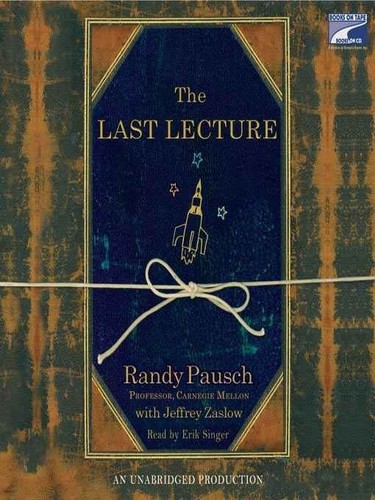
The setup is almost a mirror image. Randy Pausch, a computer science professor at Carnegie Mellon, was diagnosed with terminal pancreatic cancer and given months to live. Instead of Tuesday visits, he gave one last lecture, Really Achieving Your Childhood Dreams, which became a viral video and then this 2008 book, co-written with journalist Jeffrey Zaslow. Like Morrie, Pausch is a teacher to the end, turning his own death into a final syllabus on gratitude, persistence, and how to live, aimed largely at the three young children he knew would grow up without him.
The temperament is different, and that is the reason to read it. Where Morrie is reflective and philosophical, Pausch is an engineer: upbeat, practical, full of head fakes and concrete advice about brick walls and time management. Some readers find his relentless optimism more inspiring than Morrie's gentle melancholy; others find it less profound. It pairs naturally with Tuesdays with Morrie as the energetic younger sibling, and it is the easiest recommendation on this list for someone who wants to be lifted rather than leveled.
Read this if you want the grumpy-elder-transformed story as a full novel.
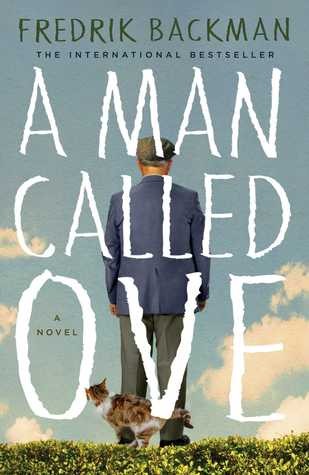
Fredrik Backman's bestseller shares the emotional core of Tuesdays with Morrie: an older man near the end of his life, the people who refuse to leave him alone, and the slow revelation that connection is the whole point. Ove is a curmudgeonly Swedish widower who has decided his life is over, until a chatty pregnant neighbor and her family barge into it. Like Albom, Backman is openly sentimental and unafraid of big emotional payoffs, and the book earns its tears through accumulating small kindnesses rather than plot twists.
The differences matter. This is fiction, and comic fiction at that; you will laugh more in the first fifty pages of Ove than in all of Morrie. The wisdom is also delivered sideways, through Ove's actions and flashbacks to his marriage, rather than stated as lessons. Pick this if you want the same warmth without the classroom framing, or if you need a recovery book after the mortality memoirs above. Readers who want explicit life lessons spelled out may find it slighter than it is.
Read this if Morrie's lessons mattered more to you than Morrie's story.
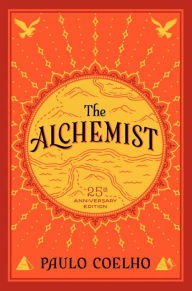
Paulo Coelho's fable about Santiago, a shepherd who crosses the desert chasing a recurring dream, shares with Tuesdays with Morrie a quality most books avoid: it states its wisdom outright. Follow what matters, do not trade your life for money and status, the treasure is closer than you think. That is essentially Morrie's curriculum (the culture tells you to chase the wrong things, so build your own) recast as an adventure parable. Both books are short, both are global phenomena, and both are loved and dismissed for the same plainness.
Everything else is different. There is no real person here, no illness, no teacher-student bond; the desert and the omens do the teaching. The Alchemist is also more mystical, with its talk of Personal Legends and the Soul of the World, where Morrie's wisdom stays grounded in family, work, and forgiveness. Choose this when you want the philosophy in story form rather than memoir form, and know going in that it reads more like scripture than like a novel.
Read this if you want the tearjerker wisdom delivered by a dog instead of a professor.
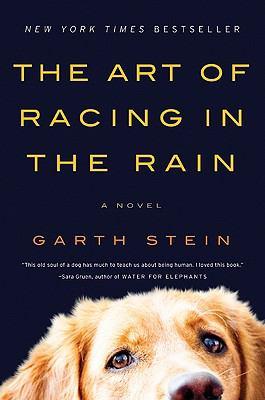
Garth Stein's novel is narrated by Enzo, an aging dog who has spent his life observing his owner Denny, a struggling race car driver, through career setbacks, his wife's illness, and a brutal custody fight. Like Morrie, Enzo is a dying philosopher with a captive audience, dispensing lessons he has gathered over a lifetime, in his case mostly through racing metaphors: the car goes where the eyes go, no race was ever won in the first corner. The book shares Albom's faith that mortality clarifies, and his willingness to go straight for the tear ducts.
It is the most commercial pick here, and the dog's-eye narration is a gimmick you either accept in the first chapter or never do. The middle section also turns into a fairly conventional legal drama that has little to do with the philosophical framing. But if you cried at Morrie and want to cry again with a faster plot and a Labrador-ish narrator who believes he will be reincarnated as a man, this delivers exactly that. Dog owners should know what they are signing up for.
Read this if the transformative power of a teacher was your thread.
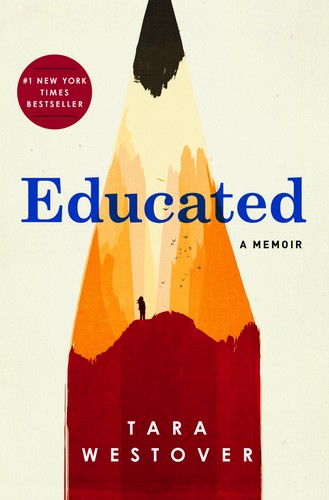
Tara Westover's 2018 memoir is on this list for a different reason than the mortality books. Morrie's deepest claim is that the right teacher can change what a life means, and Educated is the most powerful recent demonstration of that claim. Westover grew up in a survivalist Mormon family in rural Idaho, kept out of school, and worked her way from teaching herself enough math to pass the ACT to a PhD from Cambridge. Along the way, professors who saw something in her play the Morrie role, opening doors she did not know existed.
Be clear about what you are getting: this is not a gentle book. It includes serious family abuse, injuries treated without doctors, and a wrenching estrangement; the wisdom here is earned through rupture, not imparted through conversation. It is also a far more ambitious literary memoir than Tuesdays with Morrie, concerned with memory and self-invention as much as education. Pick it when you are ready for something demanding, and skip it if what you want right now is comfort.
Read this if Morrie's clear-eyed acceptance of death was what stayed with you.
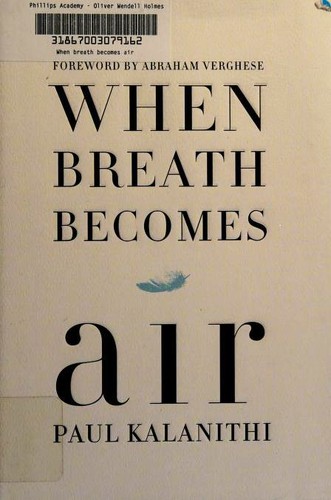
Paul Kalanithi was a Stanford neurosurgical resident, months from finishing his training, when he was diagnosed with stage IV lung cancer at thirty-six. His memoir asks the same question Morrie answers from his chair: when time is short, what makes a life meaningful? But Kalanithi asks it from both sides of the hospital bed, as a doctor who spent years guiding patients through mortality and then became the patient. Like Tuesdays with Morrie, it ends with the dying man's voice carried forward by someone who loved him; his wife Lucy wrote the epilogue after his death in 2015, and it is the most affecting thing in the book.
The difference is register. Kalanithi was a serious reader of literature before he was a surgeon, and his prose is denser and more literary than Albom's; he reaches for Eliot and Beckett where Albom reaches for the clean quotable line. There is also less comfort here. Morrie had decades to make peace and a student to teach; Kalanithi was mid-ascent with an infant daughter. If Tuesdays with Morrie felt a little tidy to you, this is the harder, deeper version. If you loved Morrie precisely for its warmth, brace yourself.
What book is most similar to Tuesdays with Morrie?
The Last Lecture by Randy Pausch is the closest match in premise: a real professor facing a terminal diagnosis who turns his final months into a last set of lessons. When Breath Becomes Air by Paul Kalanithi covers the same ground with more literary depth and less comfort. Between the two, choose Pausch for warmth and practicality, Kalanithi for prose and gravity.
Is Tuesdays with Morrie a true story?
Yes. Morrie Schwartz was a real sociology professor at Brandeis University, and Mitch Albom really did visit him on Tuesdays during the final months of Morrie's ALS in 1995, after seeing him interviewed by Ted Koppel on Nightline. Albom wrote the book partly to help cover Morrie's medical bills, and it became one of the bestselling memoirs ever published.
What should I read next by Mitch Albom?
The Five People You Meet in Heaven is the natural next step and is included on this list; it recasts the Morrie formula, a series of encounters each carrying a life lesson, as a short novel. After that, Have a Little Faith returns to nonfiction with two real religious figures, and For One More Day imagines a son getting one more day with his late mother. All share the same plain, openly emotional voice.
Are these books too sad to read after a loss?
It depends on the book. A Man Called Ove and The Last Lecture are the gentlest picks, sad in places but fundamentally consoling. When Breath Becomes Air and The Art of Racing in the Rain are genuine tearjerkers, and Educated involves family estrangement rather than death. Many grief counselors actually point readers to Morrie-type books because they treat death directly but kindly; pace yourself and start with the gentler ones.
As an Amazon Associate, we earn from qualifying purchases. · About & methodology