7 books like The Wind in the Willows, from Winnie-the-Pooh to Charlotte's Web: gentle animal classics with the same riverbank warmth and adventure.
Updated June 10, 2026
Kenneth Grahame published The Wind in the Willows in 1908, and it remains the high-water mark of a very particular kind of book: animal characters who are really Edwardian gentlemen, a river and a Wild Wood rendered with genuine landscape writing, and a tone that swings between cozy domesticity (Ratty's picnics, Mole's little home) and outright farce (Toad, motorcars, jail, the battle for Toad Hall). It is a children's classic that adults reread, partly because chapters like The Piper at the Gates of Dawn are doing something closer to nature mysticism than nursery storytelling.
Readers looking for more usually want one of three things, and this list covers each. For the same gentle, friendship-centered animal world, the closest kin are The Complete Tales of Winnie-the-Pooh, Charlotte's Web, and Beatrix Potter's The Tale of Mr. Tod. For animal adventure with real stakes and plot, The Secret of NIMH and The Rescuers carry Toad's escapade energy into full quest stories. And for the cozy-yet-adventurous childhood-classic feeling beyond talking animals, Paddington and Little House on the Prairie sit at the edges of the list.
A practical note on reading aloud, since that is how many families meet these books: Pooh and Paddington work for the youngest listeners, Charlotte's Web and The Rescuers suit early independent readers, and The Secret of NIMH (published as Mrs. Frisby and the Rats of NIMH) is the most grown-up pick here, closer to age nine and up. Each entry below says which side of Grahame, the riverbank calm or the Toad chaos, it most resembles.
Read this for the Wild Wood in miniature, from the other great Edwardian animal writer.
Beatrix Potter published The Tale of Mr. Tod in 1912, four years after The Wind in the Willows, and it is her closest book to Grahame's territory: a story about two thoroughly disagreeable animals, Mr. Tod the fox and Tommy Brock the badger, whose feud over a house ends in a brawl while the kidnapped rabbit family is rescued behind their backs. Potter announces on the first page that she is tired of making books about well-behaved people and will now write about two disagreeable ones, and the result has the same edge as Grahame's stoats and weasels seizing Toad Hall.
It is, of course, a picture book, a single sitting rather than a novel, and Potter's precise watercolors and dry Lakeland realism are a different flavor from Grahame's lyricism; her animals keep more of their actual animal nature. Read it to younger children as a first taste of the talking-animal tradition with teeth, or alongside The Wind in the Willows to see how two Edwardian masters handled the same countryside. Pair it with The Tale of Jeremy Fisher for Potter's own riverbank.
Read this if Toad's well-meaning catastrophes are what made you laugh.
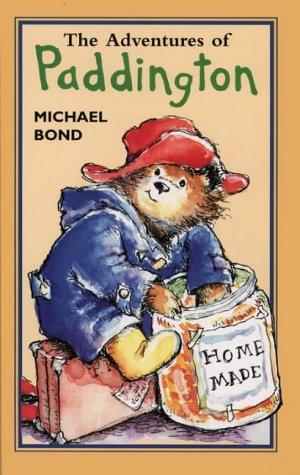
Michael Bond's Paddington stories, which began with A Bear Called Paddington in 1958, inherit the comic half of Grahame directly. Paddington, a polite bear from Darkest Peru adopted by the Brown family, is what you get if you give Toad good manners and good intentions: every episode is an ordinary errand, a haircut, a trip to the seaside, home repairs, escalating into magnificent chaos through sheer enthusiasm. The humor of a courteous animal moving through human institutions, baffled and undefeated, is the Toad-in-the-motorcar joke sustained across decades of books.
There is no riverbank here and no nature writing at all; Paddington is urban, modern London, and the warmth comes from family and neighborhood rather than landscape. The stories are also episodic and gentle, with nothing as dark as the Wild Wood. This is the best pick on the list for reading aloud to children of five or six, and the chapters are exactly bedtime length. Adults will notice Bond's quiet running theme of welcoming the stranger, which has aged beautifully.
Read this if Toad's escapades left you wanting animal adventure with genuine danger.
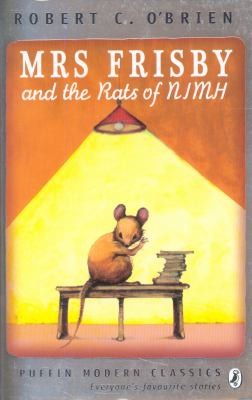
Robert C. O'Brien's novel, published in 1971 as Mrs. Frisby and the Rats of NIMH and widely known by its film title used here, takes the talking-animal tradition Grahame helped found and gives it real stakes. Mrs. Frisby, a widowed field mouse, must move her family before the farmer's plow destroys their home, and her search for help leads to a hidden society of escaped laboratory rats with human-level intelligence. The underground rat colony, with its halls and politics, scratches the same itch as Grahame's animal society, a complete hidden civilization running parallel to ours.
But this is not a cozy book. It won the Newbery Medal as a genuine adventure with science fiction underneath, animal experimentation, ethical questions about the rats' stolen knowledge, and moments of real peril and sacrifice. There is no Edwardian whimsy and almost no comedy. Pick it for a reader of nine or older who has outgrown picnics and wants plot, or for an adult who wants to see how far the animal novel can stretch.
Read this if you want a brave-small-animals quest told with wit older readers will catch.
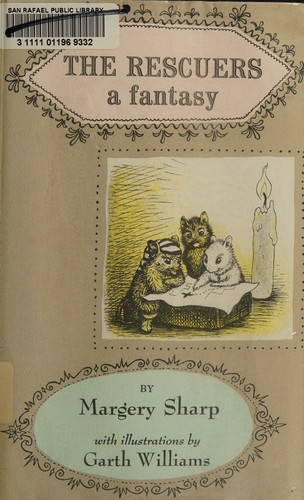
Margery Sharp's 1959 novel runs on the same delight as the Toad Hall campaign: small animals organizing themselves, with great seriousness, to pull off something far too big for them. Miss Bianca, a pampered white mouse who lives in a porcelain pagoda, joins the Mouse Prisoners' Aid Society on a mission to free a Norwegian poet from a grim fortress called the Black Castle. Like Grahame, Sharp writes animal society as a comedy of manners, Bianca's drawing-room elegance against her companion Bernard's plainness, and the joke lands for adults as much as children.
It differs in being a true quest narrative with a destination, a villain (the Black Castle's cat is genuinely frightening), and a tidy rescue, where The Wind in the Willows wanders by design. Sharp wrote mainly for adults, and it shows in the dry narration. Note that the Disney film kept little but the premise. A good fit for readers who liked the adventure half of Grahame more than the lyrical half, and the sequels (Miss Bianca especially) are just as good.
Read this if the riverbank chapters, friendship and idleness and small comforts, were your favorite part.
A.A. Milne's Pooh stories (1926 and 1928, collected here) are the closest thing English literature has to the Mole-and-Ratty side of The Wind in the Willows. The Hundred Acre Wood runs on the same fuel as the River Bank: a small society of distinct animal personalities, low-stakes expeditions, picnics, and an enormous tenderness for a particular English landscape. Milne even shares Grahame's trick of writing animals who are types you recognize from life, the anxious one, the gloomy one, the bouncy one who causes all the trouble.
The differences are scale and age. Pooh is episodic and aimed younger; there is no Wild Wood menace, no Pan chapter, and nothing like the Toad plot, just self-contained adventures that resolve by teatime. The prose is also funnier in a drier, more quotable way. Pick this for the youngest readers in the house, or for yourself when you want the comfort of Grahame with none of the peril. The final chapter of The House at Pooh Corner lands as hard as anything in children's literature.
Read this if you want the gentle animal world with a real emotional spine.
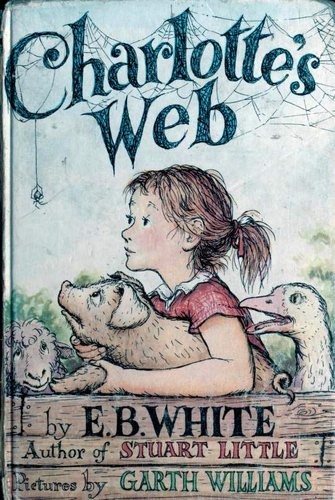
E.B. White's 1952 novel shares Grahame's two great strengths: animal characters with fully human personalities and a deep, specific love of place. White's barnyard, with its seasons, smells, and routines, is written with the same attentive affection Grahame gives the river, and the friendship between Wilbur the pig and Charlotte the spider belongs in the same family as Mole and Ratty, an unlikely pair where one patiently looks after the other. White was, like Grahame, a stylist first, and the book is full of sentences worth reading aloud slowly.
What it adds is mortality. Charlotte's Web is honestly about death in a way The Wind in the Willows never attempts, and the ending makes generations of readers cry without ever feeling manipulative. It is also American farm country rather than English riverbank, and there is no comic Toad figure, the humor is quieter (Templeton the rat comes closest). Choose it when a child is ready for a book with real loss in it, handled as kindly as it can be.
Read this if the landscape and domestic coziness mattered more to you than the talking animals.
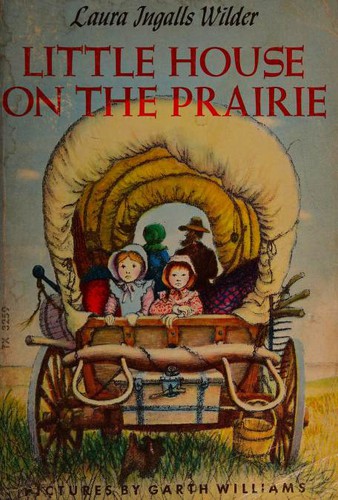
This is the one pick with no animal characters, and it earns its place through atmosphere. Laura Ingalls Wilder's 1935 book, third in her autobiographical series, follows the Ingalls family by covered wagon onto the Kansas prairie, where they build a house, dig a well, and survive fire, fever, and wolves. What it shares with Grahame is the texture: the deep pleasure of small domestic comforts won from a vast natural world, Ma's hearth standing in for Mole End, the prairie itself as alive on the page as Grahame's river.
It is realism, not fantasy, and the dangers are real frontier dangers. Modern readers should also know the book reflects 1870s settler attitudes, and its portrayal of Osage people is dated and handled with much more care in current discussions of the series; many families read it with that conversation attached. Choose it for a reader who loved the snug-home-in-wild-country feeling of The Wind in the Willows and is ready to trade whimsy for history.
What book is most similar to The Wind in the Willows?
The Complete Tales of Winnie-the-Pooh is the closest match: a small society of animal friends, gentle episodic adventures, deep affection for an English landscape, and prose adults enjoy as much as children. For Grahame's adventurous side rather than his cozy side, The Rescuers and The Secret of NIMH (published as Mrs. Frisby and the Rats of NIMH) are the better fits.
Is The Wind in the Willows actually a children's book?
It straddles the line. Grahame wrote it from stories told to his young son, and the Toad plot is pure children's comedy, but the prose is sophisticated and chapters like The Piper at the Gates of Dawn are essentially nature mysticism aimed at adults. It works best read aloud to children around six to ten, and reread alone later. Many adults report loving it more on the second pass.
What age are these books good for?
Roughly: Paddington and the Pooh tales for ages four to seven as read-alouds, The Tale of Mr. Tod for the same range in one sitting, Charlotte's Web and The Rescuers for about seven to ten, Little House on the Prairie for seven and up, and The Secret of NIMH for nine and up, since it includes real peril and science fiction ideas about animal experimentation.
Are there sequels to The Wind in the Willows?
Grahame never wrote one, but William Horwood published authorized-in-spirit continuations beginning with The Willows in Winter (1993), which many fans enjoy while agreeing they are not the original. A.A. Milne also adapted the Toad chapters into the popular play Toad of Toad Hall in 1929. Among Grahame's own books, The Reluctant Dragon is the natural next read.
As an Amazon Associate, we earn from qualifying purchases. · About & methodology