8 books like City of Bones, from Clockwork Angel to Daughter of Smoke and Bone and Shadow and Bone: hidden worlds, demon hunters, and YA fantasy romance.
Updated June 10, 2026
City of Bones launched the Shadowhunter universe on a setup that has been imitated ever since: Clary Fray watches a murder in a Brooklyn nightclub that nobody else can see, and within days the New York she knew dissolves into a hidden world of demon-hunting Nephilim, vampires, werewolves, and warlocks layered under the real city. What kept readers through six books was less the plot than the package: Jace's armor-plated sarcasm, the found family of the Institute, a romance complicated by a genuinely shocking twist, and Cassandra Clare's knack for making the urban fantasy world feel both dangerous and like somewhere you would want to live.
The books below are sorted by what you are actually missing now that you have finished. If it is the Shadowhunter world itself, Clockwork Angel takes you to the Victorian London Institute and City of Ashes simply continues Clary's story. If it was the discovery of a hidden supernatural world next to ours, Daughter of Smoke and Bone, The Iron King, and Vampire Academy run that same current with different creatures. And if it was a heroine finding out what she is and what she can do, Shadow and Bone, Graceling, and The Darkest Minds carry that thread into secondary worlds and dystopias.
A practical note: most of these are first books in long series, so check your appetite before starting. The Shadowhunter universe alone runs to more than a dozen novels across four series, and the widely accepted reading order is publication order, meaning all of The Mortal Instruments before The Infernal Devices, though Clockwork Angel works fine as a standalone entry point too.
Books to Read If You Like The Mortal Instruments: City of Bones
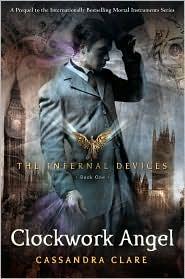
Clockwork Angel
by Cassandra Clare
Read this if you want more Shadowhunters with better prose and a stronger love story.
This is the same universe roughly 130 years earlier: Tessa Gray arrives in Victorian London, discovers she can transform into other people, and is taken in by the London Institute, whose residents Will Herondale and Jem Carstairs form the most beloved pairing Clare has written. Everything you know carries over, the runes, the Clave, the Downworlders, and the series plants ancestors of Mortal Instruments characters everywhere, so the connections land as steady small rewards.
Most longtime readers consider The Infernal Devices the better trilogy: the writing is tighter, the villain (the clockwork-army-building Magister) is more coherent than Valentine, and the central love triangle actually earns its anguish instead of stalling the plot. The Victorian setting trades Brooklyn snark for a more gothic, mannered tone, which is the only real adjustment. If City of Bones worked for you at all, this is the safest bet on the list.
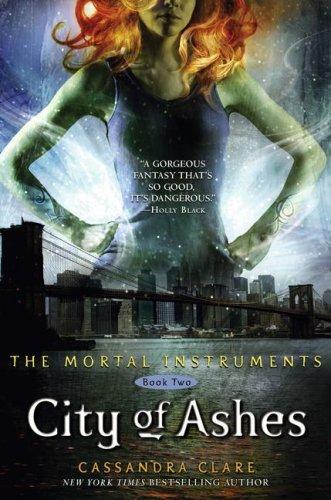
Read this first if you have only finished City of Bones, because it is the direct sequel.
This is book two of The Mortal Instruments, not a read-alike, so the question is just whether to continue. The answer is yes if the first book's ending hooked you: City of Ashes deals immediately with the fallout of Valentine's revelation about Clary and Jace, raises the demon stakes with the second Mortal Instrument, and gives Simon a storyline that changes him permanently. The Inquisitor arrives as a genuinely hateful new obstacle, and the Seelie Court scene became one of the most argued-about moments in the series.
Fair warning that the middle trilogy has a particular shape: the original story was planned as three books ending with City of Glass, which most fans agree is the high point, and books four through six are a later extension of softer quality. So a sensible plan is to read through City of Glass, then decide whether you want more or would rather jump to Clockwork Angel.
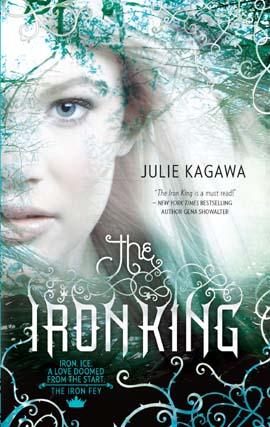
Read this if you want the hidden-world discovery again, with faeries instead of demons.
Julie Kagawa's opener follows the City of Bones blueprint closely: Meghan Chase is an ordinary, overlooked teenager whose half-brother is stolen by faeries, and her rescue mission reveals that she is the half-human daughter of Oberon, the Summer King. The beats Clary fans know are all here, the parent with a hidden identity, the snarky-but-devoted best friend (Puck, who is literally Shakespeare's Puck), and the dangerous, beautiful love interest from the other side, ice prince Ash.
The difference is the world. Instead of urban fantasy layered into New York, most of the story happens inside the Nevernever, a faerie realm built from Celtic and Shakespearean material plus Kagawa's own invention, the Iron Fey, faeries born from technology that traditional fey cannot touch. It leans harder into romance than City of Bones does, and the love triangle is more central. Pick it if Jace-and-Clary was your favorite thread.
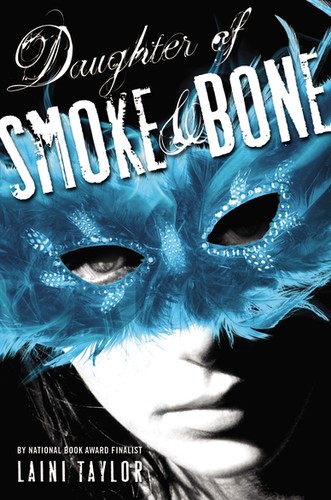
Read this if you want the angels-and-monsters premise written at a sentence level Clare does not reach.
Laini Taylor's novel scratches the same itch as City of Bones, a girl with a hidden heritage caught in an ancient war between angelic and demonic beings, but it is the best-written book on this list by a wide margin. Karou is a blue-haired art student in Prague who runs errands through portal doors for Brimstone, a chimaera who trades wishes for teeth. When a beautiful seraph named Akiva tries to kill her, the mystery of who Karou actually is unspools into something genuinely surprising, and the forbidden-romance angle hits harder than Clary and Jace's because the war between their peoples is real and morally messy.
The trade-off is pace and tone. Taylor writes lush, deliberate prose and withholds answers longer than Clare does, and a long mid-book flashback divides readers. It is less banter-driven and more melancholy, with the second and third books becoming nearly war novels. Choose this if you want to be moved as well as entertained; it is the strongest overall recommendation here.
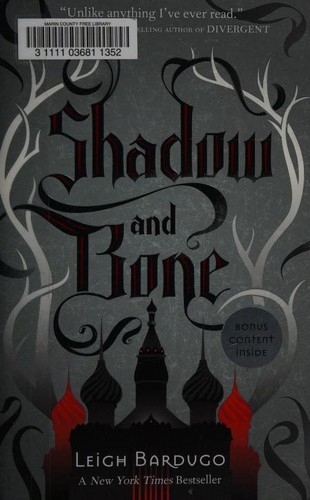
Read this if you want the chosen-one discovery arc in a full fantasy world instead of modern New York.
Leigh Bardugo's debut delivers the same core pleasure as City of Bones, an ordinary girl learning she has rare power and being pulled into a glamorous, dangerous new order, transplanted into Ravka, a fantasy Russia split by a strip of living darkness called the Shadow Fold. Alina Starkov turns out to be a Sun Summoner, the only person who might destroy the Fold, and the magnetic, morally ambiguous Darkling who recruits her gives the book its version of the dangerous-love-interest energy Clare fans tend to want.
There is no urban fantasy element, no demons under a real city, so know you are trading the contemporary setting away entirely. The original trilogy is solid but uneven; Bardugo's later Six of Crows duology, set in the same world, is markedly better and is where many readers say the Grishaverse becomes great. Starting with Shadow and Bone is still the right call for a Mortal Instruments reader, since Alina's arc is the closest match to Clary's.
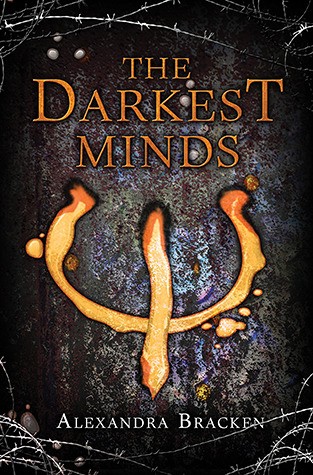
Read this if you want kids with dangerous abilities and found family, minus the supernatural worldbuilding.
Alexandra Bracken's novel keeps the parts of City of Bones that are about people, a teenager terrified of her own power, a makeshift family formed on the run, slow-burn romance under constant threat, and swaps the demon-hunting mythology for dystopia. After a disease kills most American children, the survivors develop psychic abilities and are sent to government camps sorted by color-coded threat level. Ruby, who can alter minds, escapes and falls in with a crew of runaways whose van-bound dynamic is the warmest thing in the book.
This is the only pick with no magic system or hidden world to learn; the abilities are unexplained and the tone is grimmer, closer to The Hunger Games shelf than the urban fantasy one. The emotional register is also heavier, with real losses that stick. Pick it if Clary, Simon, and the Institute's found-family bond mattered more to you than the runes and Downworlders.
Read this if the Institute was your favorite part and you want the boarding-school version with bite.
Richelle Mead's series shares City of Bones' basic architecture: a secret society of supernatural guardians (the dhampir, half-vampire warriors who protect the living Moroi vampires from the undead Strigoi), a training institution hidden from the human world, and a heroine whose loyalty and recklessness drive the plot. Rose Hathaway narrates with more attitude than Clary ever managed, and her bond with her best friend Lissa, a Moroi princess whose mind she can enter, gives the series an emotional core that is about friendship before romance.
It reads older than City of Bones, with more overt sexuality and a central romance (Rose and her instructor Dimitri) that involves a real age gap, so it suits the upper end of the YA audience. The first book is also the weakest; the series finds its footing in books two and three and becomes genuinely gripping. Stick with it past the setup if the school-drama-plus-stakes mix appeals to you.
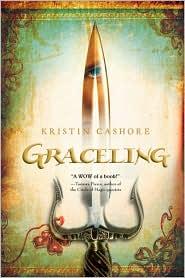
Read this if you want the strong-heroine thread without any romance-triangle machinery.
Kristin Cashore's debut takes the question under Clary's arc, what do you do when you discover what you are, and makes it the whole book. Katsa was born Graced with killing, and her king uses her as an enforcer until she begins to refuse. Like City of Bones, it is about a young woman wresting control of an ability others want to exploit, and her partnership with the fighter Po develops into one of YA fantasy's most respectful, equal romances.
It is the furthest from urban fantasy on this list: a quiet, character-driven secondary-world story with no hidden world, no creatures, and a measured pace that readers hooked on Clare's cliffhangers may find slow at first. What it offers instead is depth; Katsa's insistence on autonomy (including her firm choice not to marry) made the book a touchstone. Pick it when you want fewer fireworks and a heroine with more interior life than Clary.
What order should I read the Shadowhunter books in?
Most readers and Cassandra Clare herself recommend publication order: The Mortal Instruments first (starting with City of Bones), then The Infernal Devices (Clockwork Angel), then The Dark Artifices and later series. Some fans prefer reading The Infernal Devices between Mortal Instruments books three and four. Clockwork Angel also works as a fresh entry point since it is set in 1878 with a separate cast.
What is the most similar series to The Mortal Instruments?
Inside Clare's own universe, The Infernal Devices is the obvious answer and is widely considered the stronger trilogy. Outside it, The Iron King by Julie Kagawa matches the structure best (ordinary girl, hidden parentage, supernatural world under ours), while Daughter of Smoke and Bone by Laini Taylor matches the angels-and-demons-war premise with better prose.
Do I need to finish all six Mortal Instruments books?
No. The story was originally planned as a trilogy ending with City of Glass, which resolves the Valentine arc and is a satisfying stopping point. Books four through six (starting with City of Fallen Angels) are a later extension centered on a new threat, and fan opinion on them is more mixed. A common path is to read through City of Glass, then move to Clockwork Angel.
Are these books appropriate for younger teens?
City of Bones, The Iron King, Shadow and Bone, and Graceling are standard YA, generally fine for ages 13 and up with fantasy violence and mild romance. Vampire Academy and Daughter of Smoke and Bone run a bit older, roughly 14 to 15 plus, with more explicit romantic content. The Darkest Minds is violent but not sexual. None of these are adult fantasy.
As an Amazon Associate, we earn from qualifying purchases. · About & methodology