8 books like The Lover by Marguerite Duras, from Giovanni's Room to The Unbearable Lightness of Being: spare, charged novels of desire and memory.
Updated June 10, 2026
Marguerite Duras published The Lover in 1984, when she was seventy, and it won the Prix Goncourt for a reason that has little to do with plot. It is a slim, semi-autobiographical novel about a fifteen-year-old French girl and her affair with a wealthy Chinese man in 1930s colonial Vietnam, but what readers remember is the voice: fragmented, hypnotic, drifting between past and present tense, between I and she. Duras writes desire and shame and poverty and a monstrous family in sentences pared down to almost nothing. The book is barely a hundred pages and it reads like memory itself, out of order and unresolved.
If you finished it wanting more, the books below are organized by which thread pulled you. Some readers want more transgressive desire written without apology, which is where Lust and The Unbearable Lightness of Being come in. Some want the ache of forbidden or impossible love against social pressure, which Giovanni's Room and A Room with a View deliver in very different registers. Some want love stretched across a lifetime and reconstructed through memory, the territory of Love in the Time of Cholera and The History of Love. And for readers who want Duras herself, Laure Adler's biography goes straight to the source.
A practical note: none of these imitate Duras's style, because almost nothing does. The closest in spareness and charge is Giovanni's Room; the furthest is the warm, ornate Garcia Marquez. Each entry below says plainly which part of The Lover it echoes, so choose by what actually held you, the voice, the desire, or the memory.
Read this if you want hidden inner lives in a French register, without the darkness.
Muriel Barbery's 2006 bestseller connects to The Lover at an angle. Its two narrators, Renee, a Paris concierge who conceals her intelligence behind a frumpy front, and Paloma, a precocious twelve-year-old planning her own death, are both people whose real selves are invisible to everyone around them. That gap between the outward person and the secret interior life is the engine of The Lover too, where a poor schoolgirl's public story hides everything that matters. Both books are also unmistakably French in their willingness to stop the story for an idea.
But this is not a novel of desire, and readers who come to it expecting The Lover's charge will not find it. It is philosophical, often cozy, sometimes openly sentimental, with meditations on art, tea, and Tolstoy in place of eros, and its emotional climax is friendship rather than passion. Choose it as a palate cleanser after the heavier books on this list, or if what you wanted from Duras was the introspection rather than the affair.
Read this if you want desire examined by a narrator who keeps stepping back to think.
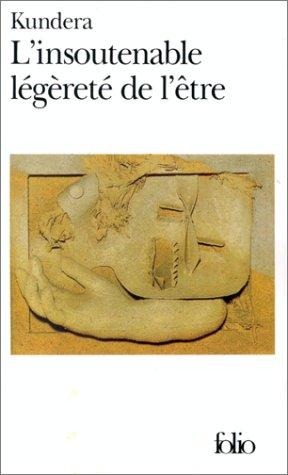
Milan Kundera's 1984 novel shares The Lover's conviction that an erotic relationship can carry the whole weight of a life and a historical moment. Set around the 1968 Soviet invasion of Czechoslovakia, it follows the surgeon Tomas, his wife Tereza, and his lover Sabina through infidelity, exile, and the question of whether anything we do matters if we only live once. Like Duras, Kundera refuses conventional storytelling: he interrupts, philosophizes, and tells you outright that his characters are inventions, and the affair sits inside politics the way Duras's sits inside colonialism.
Where Duras compresses, Kundera expands. This is a much longer, talkier book, essayistic where The Lover is imagistic, playful where Duras is severe. Some readers find the narrator's theorizing about women wearing today; others find the ideas the best part. Pick it if what you loved in The Lover was the adult, unsentimental intelligence about sex and power, and you would happily take more argument and less atmosphere.
Read this only if you want the transgression of The Lover pushed far past comfort.
Elfriede Jelinek won the Nobel Prize in 2004, and Lust is one of the books that made her reputation as the most confrontational writer of female desire in European fiction. It dissects the marriage of an Austrian factory director and his wife, rendering sex as economics and domination in language that is deliberately repetitive and assaultive. It belongs on this list because it takes The Lover's coldest insight, that desire is tangled up with money and power and cannot be cleanly separated from them, and builds an entire novel out of it with no romance left at all.
Be honest with yourself before starting: this is a far harder book than The Lover, harder in content and harder in style. Duras gives you lyricism and longing alongside the bleakness; Jelinek strips both out on purpose, and many readers do not finish. Choose it if you admired The Lover as an unflinching document about power between men and women. Skip it if what you loved was the love.
Read this if you want the same compressed intensity about a love that cannot be lived openly.
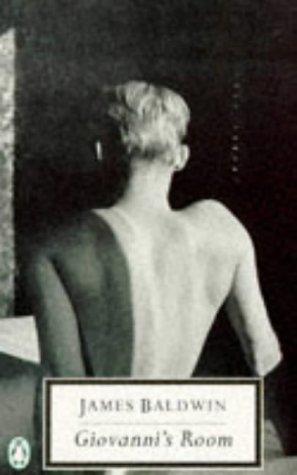
James Baldwin's 1956 novel is the closest match on this list for what The Lover actually does on the page. It is short, confessional, and told in retrospect by a narrator picking through the wreckage of an affair: David, a young American in Paris, falls for an Italian bartender named Giovanni while his fiancee is away, and the novel unfolds in the single night before Giovanni's execution. Like Duras, Baldwin writes desire and self-disgust in the same breath, and like The Lover, the affair is doomed from the first page and the telling of it is the point.
The difference is moral temperature. Duras's narrator looks back with a kind of icy detachment; Baldwin's David is being torn apart in real time by his own cowardice, and the prose is more openly emotional, more sentence-by-sentence beautiful in a traditional way. There is no colonial frame here, the pressure is sexuality and masculinity rather than race and money. If you want one book that delivers The Lover's charge with a fuller heart, this is it.
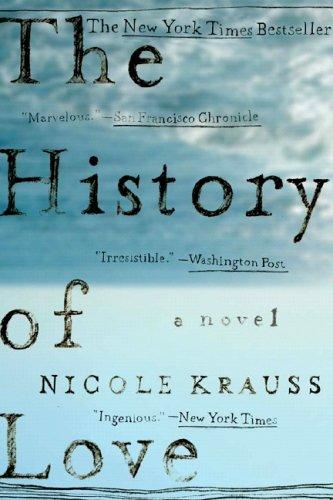
Read this if you want love reconstructed through fragments and unreliable memory.
Nicole Krauss's 2005 novel shares The Lover's formal conviction that a love story is best told broken. It braids the voices of Leo Gursky, an elderly Polish survivor who wrote a book for a girl he lost to the war, and Alma, a fourteen-year-old named after the woman in that book, and the manuscript itself, with the connections emerging slowly out of order. Like Duras, Krauss treats the written account of a love as inseparable from the love, a book inside the book, and both novels are anchored by narrators looking back across a vast distance at the person they were.
It is, however, a much warmer and more consoling novel. Krauss's fragmentation is a puzzle that clicks satisfyingly together, where Duras's never resolves, and the dominant feeling is tenderness rather than desire; there is nothing transgressive here. Pick it if the structure and the elegiac mood of The Lover moved you more than its eroticism, or if you want something in this vein you could also hand to a friend who found Duras too cold.
Read this if you finished The Lover asking how much of it was true.
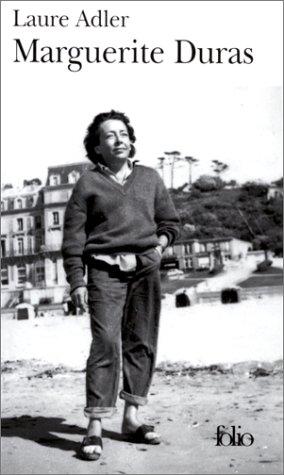
Laure Adler's biography of Marguerite Duras is the natural next step for readers The Lover leaves curious, because the novel sits so close to the life. Adler traces the actual childhood in French Indochina, the poverty, the volatile mother and brothers who appear barely disguised in the novel, and the real affair behind the book, along with everything after: the Resistance years, the alcoholism, the films, the late fame the Goncourt brought. Duras retold the story of The Lover repeatedly across her career, in different versions, and the biography lets you watch her doing it.
This is a detailed literary biography, not a companion pamphlet, so it asks some patience and an interest in French literary life. The reward is seeing how deliberately Duras turned memory into myth, which deepens The Lover rather than deflating it. Read the novel's near-twin first if you have not, her earlier The Sea Wall covers the same family material in a more conventional form, then come here for the documented account.
Read this if you want desire against convention with the lights turned up.
E.M. Forster's 1908 novel is the gentlest book here, but the spine is recognizably the same: a young woman, Lucy Honeychurch, discovers passion that her class and family cannot sanction, and the novel is about whether she will obey the rules or her own body's verdict. Like Duras's narrator, Lucy is awakened abroad, in Forster's case Florence rather than Saigon, and the foreign setting works the same way, loosening the grip of home just enough for something real to happen.
Everything else is inverted. Forster is warm, funny, and on the side of happiness; the obstacles are snobbery and a dreadful fiance rather than poverty and race, and the book famously ends well. There is no fragmentation, no shame, no edge. Read it as the daylight version of The Lover's story, the one where defying convention leads somewhere. It is the right pick when you want the theme without the wound.
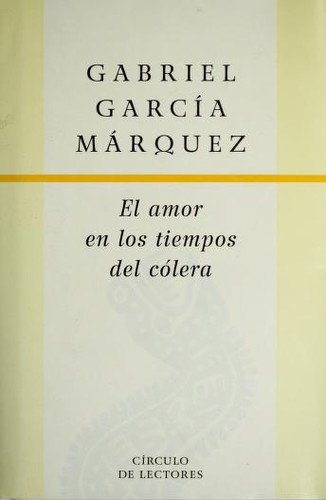
Read this if the lifelong afterlife of a first love is what stayed with you.
Gabriel Garcia Marquez's 1985 novel takes the idea that closes The Lover, a love that outlasts the affair by an entire lifetime, and makes it the whole book. Florentino Ariza falls for Fermina Daza in their youth, loses her to a respectable marriage, and waits more than fifty years for another chance. Like Duras, Garcia Marquez is interested in how desire and memory work on each other over decades, and both books end with late declarations that recast everything before them.
The texture could not be more different. Where The Lover is spare and cold, this is lush, digressive, and crowded with incident, a long novel that luxuriates in its Caribbean port city and its characters' eccentricities. Garcia Marquez is also more ironic about romantic obsession than he first appears, which rewards careful reading. Choose it when you want the same ache stretched across a full, generous novel rather than concentrated into a hundred pages.
Largely, though Duras shaped it freely. The novel draws on her own adolescence in French Indochina, her impoverished family, and a real relationship with a wealthy Chinese man. She retold the material several times, in The Sea Wall (1950) and again in The North China Lover (1991), changing details each time. Laure Adler's biography is the best account of where the life and the fiction diverge.
What should I read after The Lover?
Giovanni's Room by James Baldwin is the strongest single match: short, retrospective, and devastating about a forbidden affair. If you want more Duras, try The Sea Wall or The North China Lover, which revisit the same story, or her novel The Ravishing of Lol Stein. For the desire-and-power theme at greater length, The Unbearable Lightness of Being is the natural step up in scope.
Why is The Lover written in such a fragmented style?
Duras wrote it as memory actually works, in pieces, out of order, shifting between first and third person as the narrator moves closer to or further from her younger self. She was associated with the French New Novel and wrote extensively for film, and both influences show in the jump cuts and repeated images. The fragmentation is the meaning: the book is about how a life gets composed in retrospect.
Is The Lover difficult or explicit?
It is short and the language is simple, so it is not difficult in the usual sense, but the style asks you to tolerate ambiguity and the subject matter is genuinely uncomfortable: the narrator is fifteen and the affair is shadowed by money, race, and family violence. It is frank but not graphic by contemporary standards. Of the books on this list, only Lust by Elfriede Jelinek is more confronting.
As an Amazon Associate, we earn from qualifying purchases. · About & methodology