7 books like The Borrowers by Mary Norton, from The Littles to Mrs. Frisby and the Rats of NIMH: tiny people, hidden worlds, and small heroes in a big world.
Updated June 10, 2026
Mary Norton's The Borrowers, first published in 1952, runs on one perfect idea: that the small things that go missing in a house, safety pins, postage stamps, sugar cubes, are being borrowed by a family of tiny people living under the floorboards. Pod, Homily, and their daughter Arrietty Clock survive by ingenuity, a matchbox becomes a dresser, a postage stamp becomes a portrait on the wall, and the whole book is charged with the danger of being seen by the human beings they depend on. It won the Carnegie Medal, and the mix of domestic coziness and real peril is why it still works seventy years on.
The books below are organized around the three things readers usually want next. If you want more tiny people specifically, The Littles is the closest American cousin and The Borrowers Avenged continues Norton's own series. If it was small heroes being brave in an oversized, dangerous world, Mrs. Frisby and the Rats of NIMH and The Tale of Despereaux deliver that with animal protagonists. And if the appeal was a hidden world tucked inside an ordinary house, The Spiderwick Chronicles and, in a quieter key, A Little Princess scratch that itch, while Flat Stanley plays the size problem for pure comedy.
A note on reading order and age: most of these suit roughly the same audience as The Borrowers, around ages 7 to 11 as read-alouds or independent reads, though Mrs. Frisby is darker and rewards slightly older readers. The Borrowers Avenged is the fifth and final book in Norton's series, so if you have only read the first book, there are three more (The Borrowers Afield, Afloat, and Aloft) before it.
Read this if you want the closest thing to another Borrowers book not written by Mary Norton.
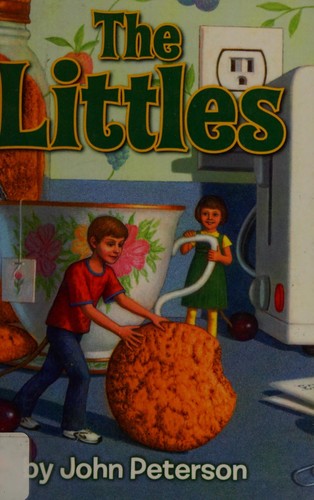
John Peterson's The Littles, first published in 1967, is the most direct descendant of Norton's idea in American children's books: a family of tiny people living secretly inside the walls of the Bigg family's house, surviving on what the humans will not miss. The setup, the constant danger of discovery, the clever repurposing of human objects, and the family-first warmth all map almost one to one onto the Clock family's life under the floorboards. The Littles even face the classic Borrowers threats, cats and mice and careless new tenants.
The differences are tone and difficulty. Peterson's books are shorter, simpler, and more episodic than Norton's, written at an easier reading level, and the Littles themselves have tails, putting them a step closer to fantasy creatures than Norton's wholly human borrowers. The prose has none of Norton's wistfulness; these are brisk adventure chapters rather than atmosphere. That makes The Littles the best pick for younger or newly independent readers, and a slight step down for adults who loved the literary texture of the original. There are many sequels if it lands.
Read this if the hidden world inside an ordinary house was the magic for you.
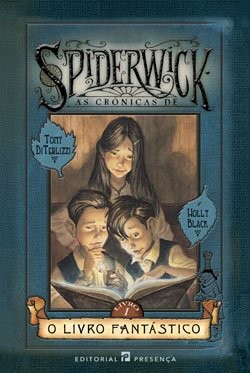
The Field Guide opens The Spiderwick Chronicles by Tony DiTerlizzi and Holly Black, and it captures the same shiver The Borrowers delivers: the discovery that an old house contains a secret population living just out of human sight. When the Grace siblings move into their great-aunt's crumbling estate, things go missing and strange noises come from the walls, and the culprit turns out to be a boggart, the first of many faeries documented in a hidden field guide. That walls-have-occupants opening is practically a Borrowers homage before the series widens out.
The difference is that Spiderwick is fantasy proper, with goblins, ogres, and real menace, where Norton's world contains nothing magical at all, just very small people. The danger here comes from monsters rather than from being seen, and the series builds an escalating quest across five short, heavily illustrated volumes. Pick it for readers who want the hidden-world feeling with more adventure and a touch of scariness; it suits the same age range but trades Norton's domestic coziness for momentum.
Read this for the best book on this list, about small creatures surviving on wits in a human-sized world.
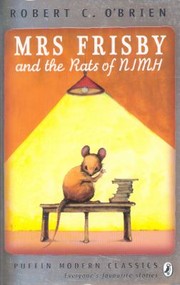
Robert C. O'Brien's 1971 Newbery Medal winner shares The Borrowers' deepest theme: small, hidden beings whose survival depends on intelligence, courage, and staying out of human sight. Mrs. Frisby, a widowed field mouse, must move her family before the farmer's plow destroys their home, and her search for help leads her to a colony of escaped laboratory rats who have built a secret, technologically sophisticated society, complete with the same moral question the borrowers face, whether it is right to live by taking from humans. The rats even debate giving up their borrowed electricity and grain to become self-sufficient.
It is a more serious book than The Borrowers, with real grief, real danger, and a science fiction backbone (the rats were made intelligent by experiments at NIMH), and it rewards readers at the older end of the range, roughly 9 and up. The protagonists are animals rather than tiny people, so the dollhouse charm of repurposed thimbles is absent. What you get instead is the strongest plot and the most emotional weight of anything here. If you only add one book from this list, make it this one.
Read this if you loved a very small hero being braver than anyone expects.
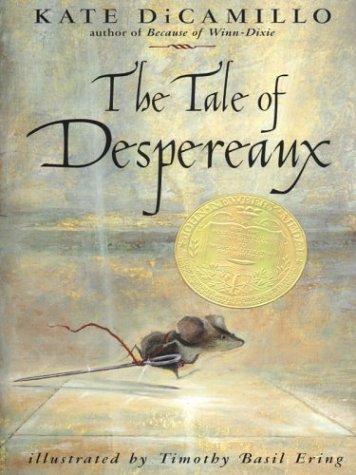
Kate DiCamillo's Newbery Medal winner is about Despereaux Tilling, an undersized mouse with oversized ears who falls in love with a human princess and is banished to the castle dungeon for the crime of talking to her. Like Arrietty, Despereaux is a small creature whose curiosity about the human world breaks his community's most important rule, and the book gets the same charge out of scale, a sewing needle becomes a sword, a castle becomes a continent, that Norton gets from matchbox furniture. Both books are fundamentally about a small person refusing to live a small life.
DiCamillo's telling is more stylized than Norton's: a storyteller's voice addresses the reader directly, the structure braids four characters' stories together, and the mood swings from fairy-tale light into genuine darkness (dungeons, betrayal, a servant girl treated cruelly) and back. It is a fable where The Borrowers is a domestic adventure. Choose it for readers who like being told a story with flourish, and read it aloud if you can; the narrator's voice is the point.
Read this for the size predicament played entirely for laughs.
Jeff Brown's 1964 classic starts when a bulletin board falls on Stanley Lambchop and flattens him to half an inch thick, after which his family cheerfully adapts: he is mailed to California in an envelope, flown as a kite, and slid under doors. What it shares with The Borrowers is the core pleasure of working out how a person of unusual dimensions navigates a world built for everyone else, the same practical-minded play with scale that makes Norton's matchbox furniture so satisfying, here compressed into a short, silly chapter book.
Everything else is different. Flat Stanley is comedy, not adventure; there is no hidden world, no danger of discovery, no atmosphere, and the whole book can be read in one sitting. It is also pitched younger, ideal for ages 6 to 8 and for kids just moving into chapter books. Think of it as a palate cleanser or a gateway, the book to hand a younger sibling who is not ready for the Clocks yet, rather than a true next step for a reader who finished The Borrowers wanting more of the same.
Read this if you simply want more of the Clock family, but mind the series order.
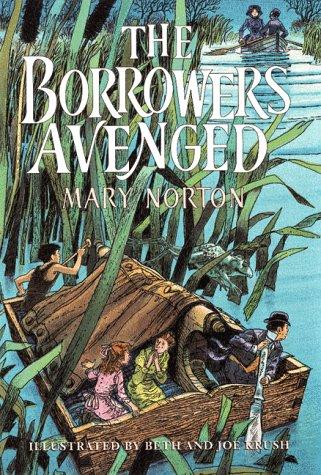
This is Mary Norton herself, so it is the only book on this list with the actual voice, the same Arrietty, Pod, and Homily, and the same lovingly inventoried miniature domesticity. Published in 1982, nearly thirty years after the original, it is the fifth and final Borrowers novel: the family escapes the attic where the scheming Platters imprisoned them and sets up home in an old rectory, where Arrietty's friendship with humans once again puts everyone at risk. For readers who want resolution for the Clocks, this is where Norton leaves them.
The important caveat is order. Three books sit between the original and this one (The Borrowers Afield, The Borrowers Afloat, and The Borrowers Aloft), and Avenged picks up directly from the cliffhanger situation of Aloft, so jumping straight to it from book one will be confusing. It is also a touch slower and more melancholy than the first book, as late series entries often are. The right way to use this recommendation: continue the series in order, knowing a real ending is waiting at the end of it.
Read this if what you loved was imagination transforming a confined, precarious life.
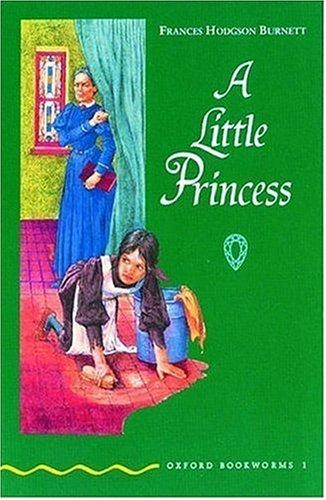
Frances Hodgson Burnett's 1905 novel is the loose fit on this list, and an honest recommendation has to say so up front: there are no tiny people here. What it shares with The Borrowers is something subtler, a heroine surviving a cramped, hidden existence through imagination and resourcefulness. When Sara Crewe's father dies penniless, she is banished to the boarding school's attic and survives by transforming her bare room through pretending, much as the borrowers transform human castoffs into a home. Both books find their magic in making much out of almost nothing, and both put a brave, observant girl at the center.
It is an older, wordier book than The Borrowers, with Victorian sentiment and a rags-to-riches arc rather than adventure, and it runs longer than anything else here. The atmosphere is its strength: the attic scenes, the secret kindnesses, the transformation of the room overnight have enchanted readers for over a century. Choose it for a patient reader, especially one who loves Arrietty more than the borrowing itself, and consider it as a read-aloud, where the old-fashioned prose becomes a feature.
Mary Norton wrote five: The Borrowers (1952), The Borrowers Afield (1955), The Borrowers Afloat (1959), The Borrowers Aloft (1961), and The Borrowers Avenged (1982), plus a short story, Poor Stainless. Read them in publication order; each picks up where the last left off, and The Borrowers Avenged directly resolves the situation at the end of Aloft.
What book is most similar to The Borrowers?
The Littles by John Peterson is the closest match: another family of tiny people living hidden in a human house and borrowing what they need. It is shorter and simpler than Norton's book, which makes it a good fit for younger readers. For the same themes with more depth, Mrs. Frisby and the Rats of NIMH is the strongest book in this territory.
What age is The Borrowers appropriate for?
It works well as a read-aloud from around age 6 and as an independent read from roughly 8 to 11. There is mild peril (the threat of being seen, a rat-catcher in the climax) but nothing frightening for most children. Of the books on this list, Flat Stanley skews younger and Mrs. Frisby and the Rats of NIMH skews a little older and darker.
Is the Studio Ghibli film Arrietty based on The Borrowers?
Yes. The Secret World of Arrietty (2010), directed by Hiromasa Yonebayashi and planned by Hayao Miyazaki, is an adaptation of Mary Norton's novel, relocated to modern Japan. It is faithful to the spirit of the book, especially Arrietty's friendship with a human boy, and it makes an excellent companion to reading the novel rather than a substitute for it.
As an Amazon Associate, we earn from qualifying purchases. · About & methodology