5 books like The Beauty Myth by Naomi Wolf, from Women & Power by Mary Beard to The Body Is Not an Apology: feminist reads on beauty and control.
Updated June 10, 2026
The Beauty Myth, published in 1990, made Naomi Wolf famous with a single sharp argument: as women gained legal and economic power through the twentieth century, an escalating, impossible standard of beauty rose to do the work that overt discrimination no longer could. Wolf traces the myth through chapters on work, culture, religion, sex, hunger, and violence, arguing that dieting, cosmetic surgery, and airbrushed imagery function as political control, not personal preference. It is a polemic, and an effective one; it is also a contested book, with critics over the years challenging some of its statistics, which is worth knowing as you read around it.
Readers who finish it tend to want one of three follow-ups, and this list covers each. For the big-picture analysis of women and power that Wolf's argument sits inside, Mary Beard's Women & Power is the sharpest short read, and Miss Representation extends the media critique into the screen age. For the body itself, where the beauty myth does its most concrete damage, The Invisible Woman confronts weight prejudice head-on and The Body Is Not an Apology offers the radical self-love counterattack. And for readers who want the personal, reclaim-it-for-yourself response rather than more critique, Reclaiming Beauty takes that lane.
A note on reading order: Wolf and Beard are critique, Taylor and Owen are repair. If The Beauty Myth left you angry, go to Beard next and stay in analysis. If it left you raw about your own mirror, start with Taylor instead; the criticism lands differently once the personal stakes are steadier.
Read this if Wolf's chapters on media imagery were the part you underlined.
This companion piece to the documentary Miss Representation picks up the thread of The Beauty Myth that has aged most urgently: how media portrayals of women, on screen, in news coverage, in advertising, narrow what girls believe they can be. The 2011 film argued that when women are valued for appearance over substance, their access to power suffers, which is Wolf's core claim restated for the era of cable news and the early internet. If you want the beauty myth tracked from glossy magazines into the screens that replaced them, this is that bridge.
It is a slighter work than The Beauty Myth, a companion to a film rather than a full standalone argument, so set expectations accordingly; the documentary itself, with interviews including Condoleezza Rice and Katie Couric, may be the stronger artifact. Choose this lane if media representation is your specific interest. If you want a heavyweight book-length treatment instead, pair the film with Beard's Women & Power from this list.
Read this if Wolf's hunger chapter hit hardest and you want the weight-stigma argument in full.
The Beauty Myth's most visceral material is about thinness, the chapter on hunger argues that the dieting culture of the 1980s functioned as a sedative on a generation of women, and W. Charisse Goodman's book takes that single thread and gives it an entire volume. Published in the mid-1990s, it examines how prejudice against fat women operates in media, employment, medicine, and daily social life, treating weight bias as a serious civil rights issue rather than a personal failing, exactly the reframing Wolf performs on beauty generally.
It is narrower and angrier than The Beauty Myth, an advocacy book focused on one form of discrimination rather than a grand unified theory, and as an older title from a small press it can be harder to find than the others here. It also predates the current fat-acceptance movement, which makes it interesting as an early statement of arguments now mainstream. Readers wanting the contemporary, more personal version of this fight should go to Sonya Renee Taylor's book below.
Read this for the deep history underneath everything Wolf describes.
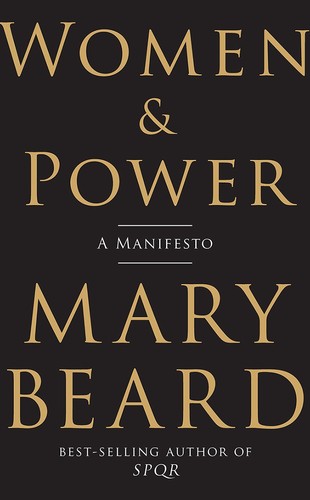
Mary Beard, the Cambridge classicist, asks the question The Beauty Myth assumes: why is power coded male in the first place? Built from two lectures, this short book starts with Telemachus telling his mother Penelope to shut up in the Odyssey and traces three thousand years of silencing women's public voices, up through internet harassment and the treatment of women politicians. Where Wolf argues that beauty standards are a backlash against women's advancement, Beard supplies the longer view: the templates for excluding women from power are ancient, and beauty policing is one modern instrument among many.
The differences are scale and temperature. This is barely a hundred pages, witty and cool where Wolf is sweeping and hot, and it is analysis without a program, Beard diagnoses more than she prescribes. It is also the most intellectually durable book on this list, written by one of the most respected classicists alive. If you read only one thing here, read this.
Reclaiming Beauty: Tuning Out the Faux and Awakening the Real
by L. K. Owen
Read this only if you want a personal, affirming response to the beauty myth rather than more critique.
Where Wolf diagnoses, L. K. Owen's book is in the repair business: a personal journey aimed at helping women tune out manufactured beauty standards and redefine beauty around individuality and authenticity. It takes the conclusion of The Beauty Myth, that the standard is fake and externally imposed, as its starting premise, and works on the practical question Wolf largely leaves open, which is how a single reader actually lives differently once she stops believing the myth.
Be aware of what you are getting: this is a personal-growth book, not journalism or scholarship, and it is the most obscure title on this list by a wide margin, without the track record of Beard or Taylor. The argument runs on encouragement rather than evidence. If you want the affirming lane with more force and a larger framework behind it, The Body Is Not an Apology covers similar ground with a sharper political edge; this suits readers who want a quieter, more individual version of the same move.
Read this for the strongest contemporary answer to the world Wolf described.
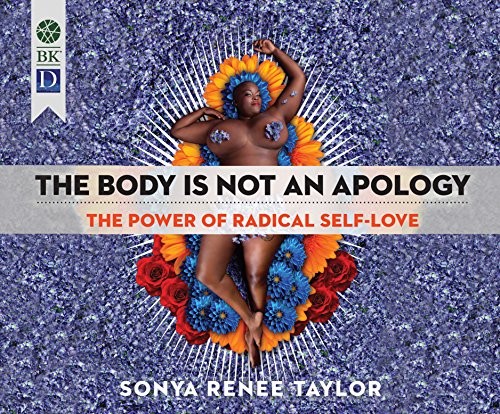
Sonya Renee Taylor's book is what the response to The Beauty Myth looks like a generation later. Taylor, a poet and activist, argues that body shame is not natural but taught, profitable, and political, and that radical self-love (stronger than self-esteem, prior to self-confidence) is the foundation for dismantling it. Her concept of the body-shame profit complex is a direct descendant of Wolf's argument that industries depend on women's self-doubt, updated to include race, disability, gender identity, and age, dimensions the 1990 book largely left out.
The form is different: part manifesto, part workbook, with reflective prompts and a program, where Wolf offers pure critique. Taylor writes from the fat, Black, queer experience the earlier beauty-myth literature mostly ignored, which is precisely its value as a companion read. Skeptical readers may find the self-help register and the unapologetic framing earnest in places, but as a practical counterattack on the machinery Wolf exposed, nothing on this list is more direct.
Naomi Wolf argues that as women won legal, educational, and economic gains through the twentieth century, an increasingly punishing ideal of female beauty arose to control them instead, operating through work, media, religion, sex, dieting, and cosmetic surgery. The standard is impossible by design, she argues, keeping women anxious, spending, and distracted from power.
Is The Beauty Myth still worth reading, and is it reliable?
It remains a landmark of 1990s feminism and its central argument still resonates, but read it as polemic rather than settled scholarship. Critics have challenged some of its statistics, most famously its anorexia death figures, and Wolf's later career became controversial for reasons unrelated to this book. Pairing it with newer work like Mary Beard's Women & Power or Sonya Renee Taylor's The Body Is Not an Apology gives a fuller picture.
What should I read after The Beauty Myth?
It depends on which thread gripped you. For women and power broadly, Mary Beard's Women & Power is the sharpest short follow-up. For body image and weight stigma, go to The Body Is Not an Apology or The Invisible Woman. Beyond this list, readers often continue with Susan Faludi's Backlash, published a year after Wolf's book and covering the same era, or Jia Tolentino's Trick Mirror for a current take.
Is The Beauty Myth similar to Backlash by Susan Faludi?
They are close companions. Both appeared in the early 1990s and both argue that women's advances triggered a counterattack, but Faludi's Backlash documents that reaction across politics, media, and the workplace with heavy reporting, while Wolf focuses specifically on beauty standards as the instrument of control. Many readers treat them as two halves of one argument.
As an Amazon Associate, we earn from qualifying purchases. · About & methodology