Books Like The Artist's Way: A Spiritual Path to Higher Creativity
6 books like The Artist's Way by Julia Cameron, from The War of Art to Big Magic: creativity guides matched to what you loved in her 12-week program.
Updated June 11, 2026
Julia Cameron's The Artist's Way, first published in 1992, is less a book you read than a program you do. Its two core tools, morning pages (three longhand pages of stream-of-consciousness writing every day) and the weekly artist date, anchor a twelve-week course in what Cameron calls creative recovery: unblocking the artist you were before fear, criticism, and practicality got in the way. The framing is openly spiritual, with God language Cameron invites you to translate however you like, and that is exactly what some readers love and others have to read around.
What you want next depends on which part worked on you. If it was the battle against your own resistance, Steven Pressfield's The War of Art names that enemy and goes to war with it. If it was the permission and encouragement, Big Magic and Steal Like an Artist carry that warmth forward in very different voices. If it was the daily practice itself, Writing Down the Bones deepens the morning-pages habit and The Creative Habit gives it Twyla Tharp's professional rigor. And if you simply want to keep doing the program, Cameron's own Artist's Way Workbook is the companion volume.
A practical note: none of these requires finishing The Artist's Way first, and several (Steal Like an Artist especially) can be read in a single sitting. The ones that ask for daily commitment, Goldberg and Tharp, reward it the way morning pages do, slowly and then unmistakably.
Our Top Picks
Best overall next read
The War of Art: Break Through the Blocks and Win Your Inner Creative Battles
Books to Read If You Like The Artist's Way: A Spiritual Path to Higher Creativity
The War of Art: Break Through the Blocks and Win Your Inner Creative Battles
by Steven Pressfield
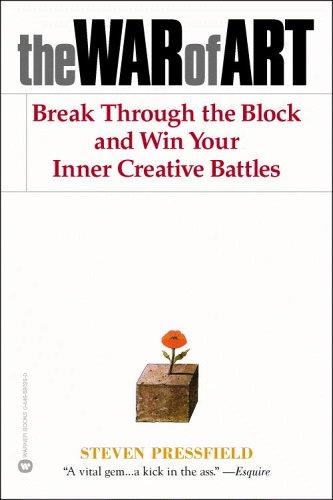
Read this if creative blocks are your real enemy and you want them named.
Pressfield's 2002 book is the natural companion to The Artist's Way because it attacks the same problem from the opposite flank. Where Cameron gently coaxes the blocked artist back to work with affirmations and recovery language, Pressfield personifies the block itself as Resistance, the universal force that keeps you from sitting down to do the work, and tells you to fight it like a professional. Both books share the conviction Cameron states outright: that creativity is a spiritual matter, and that showing up daily is the whole game. Pressfield's final section even invokes muses and angels, so the spiritual register survives the tough talk.
The difference is temperature. The War of Art is short, blunt, and aphoristic, written in bursts of a page or less, with none of Cameron's exercises, check-ins, or nurture. Some readers find the drill-sergeant tone exactly the slap they needed after twelve weeks of self-care; others find it harsh, and its insistence that turning pro cures most blocks can feel reductive. Pick it up when you have finished feeling compassionate toward your inner artist and want marching orders instead.
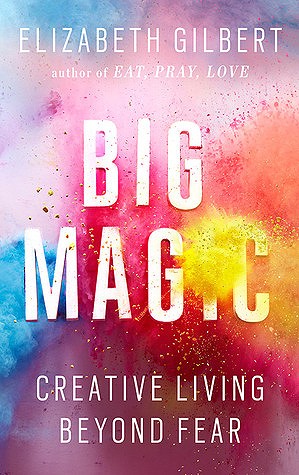
Read this if Cameron's permission-giving voice was the part that unlocked you.
Elizabeth Gilbert's 2015 book is the closest thing on this list to The Artist's Way in spirit. Gilbert, like Cameron, treats creativity as a force that wants to work through you, going so far as to describe ideas as living things that visit people looking for a collaborator. Her central project is identical to Cameron's: dismantling the fear, perfectionism, and false suffering-artist mythology that keep people from making things. Readers who underlined Cameron's lines about permission and enoughness will underline half of this book too.
What it drops is the program. There are no morning pages, no weekly tasks, no twelve-week arc, just essayistic encouragement told through stories from Gilbert's own writing life, including the years before and after Eat Pray Love. That makes it a faster, lighter read but a less practical one; you finish inspired rather than equipped. Choose it when you want the philosophy of The Artist's Way refreshed in a funny, contemporary voice, and pair it with Tharp or Goldberg if you also need structure.
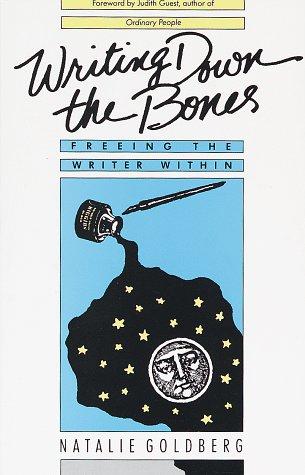
Read this if morning pages were the part of the program that changed you.
Natalie Goldberg's 1986 classic is essentially the deep version of Cameron's signature tool. Her method, timed freewriting practice where you keep the hand moving, do not cross out, and go for the jugular, is the same engine as morning pages: writing past the internal censor until something true comes out. Goldberg frames the practice through Zen (she studied with Katagiri Roshi, who told her to make writing her meditation), so it shares The Artist's Way's conviction that creative practice and spiritual practice are the same thing, just with a Buddhist accent instead of Cameron's recovery-movement one.
The book is specifically about writing, where Cameron addresses all the arts, and it is structured as short standalone chapters rather than a sequenced course, so there is no week-by-week scaffold to lean on. It is best read a chapter at a time alongside an actual notebook habit. If your morning pages started turning into real writing and you wondered what to do about that, Goldberg is the answer; if your art is painting or music, her lessons still translate but you will be doing the translating.
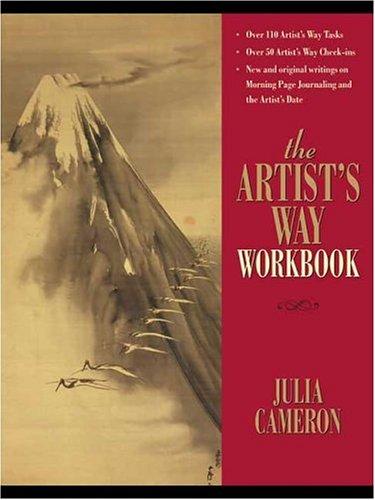
Read this if you want to do the program again, on paper, with room to write.
This is Cameron's own companion volume, the twelve-week course reformatted as a fill-in workbook: the tasks, check-ins, and contracts from the original with space to complete them directly on the page. There is nothing to fact-check about fit because it is the same program by the same author, and for people who did The Artist's Way from a borrowed or library copy, or who skipped the exercises the first time through, it is the most direct way to actually do the work rather than just read about it.
Be clear about what it is not: there is little new teaching here, so if you worked through the original thoroughly, you will find the material familiar. It functions best in two cases, as the workspace for a first serious pass at the program, or as the vehicle for a repeat round (Cameron has long said people return to the course at different life stages). If you want genuinely new Cameron material instead, her follow-ups like Walking in This World continue the curriculum, but this workbook is the faithful companion to the book this page is about.
Read this if you want the daily-practice idea with the spirituality swapped for professional discipline.
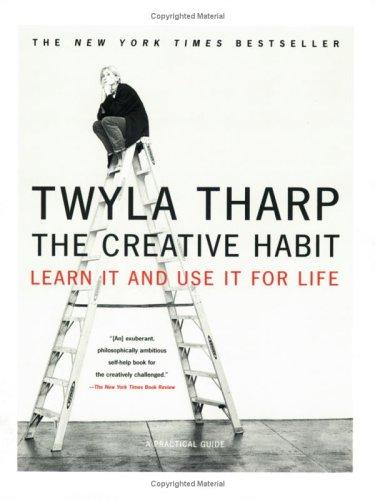
Twyla Tharp, one of the great American choreographers, agrees with Cameron on the central point: creativity is not a lightning strike, it is a practice you prepare for and protect with ritual. Her famous opening image, hailing a cab to the gym at 5:30 every morning, where the ritual is the cab, not the workout, is morning pages by another name. The book is full of concrete exercises and tools, like keeping a cardboard box for every project, and it draws on a working artist's five decades of actually shipping creative work, which gives its advice a weight that pure encouragement cannot match.
The difference is that Tharp has no interest in creative recovery or a higher power; her book assumes you want to work and shows you how professionals structure that work. There is no hand-holding and a fair amount of bracing honesty about failure, including her own flops. Readers who found Cameron's God language and inner-child framing offputting often find Tharp the perfect substitute, while readers who needed Cameron's gentleness first can treat this as the graduate course once the wound-tending is done.
Read this for the fastest, friendliest jolt of creative permission in print.
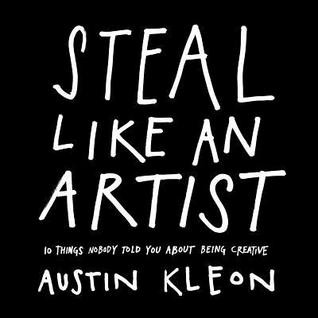
Austin Kleon's 2012 manifesto shares The Artist's Way's most important gift, permission. Its title idea, that nothing is original and every artist builds by borrowing from the artists they love, is a direct cure for the same blocks Cameron treats: the belief that you are not talented enough, original enough, or ready. Kleon even echoes specific Cameron advice, like writing by hand to think differently and doing creative work for its own sake while keeping your day job. The tone is generous and unpretentious, a working artist talking to beginners without talking down.
It is also tiny, an illustrated gift-book you can finish in well under an hour, which makes it the lightest commitment here by far. There is no program, no exercises of any depth, and no spiritual dimension at all; it is ten short chapters of practical attitude. That brevity is the point and the limit. Use it as a recharge between bigger books, or hand it to someone who would never sit through twelve weeks of morning pages but needs to hear that they are allowed to start.
For the spirit of the book, Big Magic by Elizabeth Gilbert is the closest match: the same permission-giving, creativity-as-spiritual-force philosophy in a contemporary voice. For the practice, Writing Down the Bones by Natalie Goldberg is the closest, since her timed freewriting method works the same muscle as morning pages. The War of Art is the closest in subject (creative blocks) but opposite in tone.
Did Julia Cameron write other books like The Artist's Way?
Yes, many. The Artist's Way Workbook on this list is the direct companion volume. Beyond it, Walking in This World and Finding Water continue the twelve-week course format as a loose trilogy, The Right to Write applies her approach specifically to writing, and It's Never Too Late to Begin Again adapts the program for retirees. Morning pages and artist dates run through all of them.
Do I need to believe in God to benefit from these books?
No. Cameron herself tells readers to translate her God language into whatever framework works, such as creative energy or the flow of life. On this list, Writing Down the Bones is spiritual but Buddhist, The War of Art and Big Magic use a loose, secular-friendly mysticism, and The Creative Habit and Steal Like an Artist are entirely secular. Tharp is the best pick if the spiritual framing actively bothers you.
What are morning pages, and which book deepens that practice?
Morning pages are Cameron's core tool: three pages of longhand, stream-of-consciousness writing done first thing every morning, not meant to be art or even reread at first. Writing Down the Bones is the best book for going deeper, since Natalie Goldberg's writing-practice method is built on the same principle of writing past your internal censor, and she treats the practice itself as a discipline worth a lifetime.
As an Amazon Associate, we earn from qualifying purchases. · About & methodology