Books Like The Art of Gathering: How We Meet and Why It Matters
5 books like The Art of Gathering by Priya Parker, from The Art of Community to The Power of Moments: better gatherings, stronger groups, real belonging.
Updated June 10, 2026
Priya Parker's The Art of Gathering, published in 2018, did something unusual for a book about meetings, dinner parties, and conferences: it made hosting feel like a craft with stakes. Parker, a professional facilitator who has run everything from corporate summits to conflict-resolution dialogues, argues that most gatherings fail before anyone arrives because nobody decided what they were for. Her fixes are specific and a little contrarian: commit to a sharp purpose, exclude people generously, exercise what she calls generous authority instead of being a chill host, never open or close with logistics, and design the ending on purpose. It is a how-to book that reads like a philosophy of being together.
The books below extend Parker in two directions, depending on which half of her project hooked you. If it was the design half, the idea that experiences can be deliberately engineered to land, go to The Power of Moments by Chip and Dan Heath. If it was the belonging half, the question of how a roomful of people becomes a community that outlasts the event, that is the territory of Charles Vogl's The Art of Community, Peter Block's Community: The Structure of Belonging, Andy Stanley and Bill Willits's Creating Community, and Lydia Denworth's Friendship, which supplies the science underneath all of it.
A practical note: these range from breezy to demanding. The Heaths and Vogl are quick, applicable reads; Block is slower and more conceptual; Denworth is science journalism rather than advice. None of them replaces Parker's specific playbook for running a single event well, so treat them as the next layer out: what to build once your gatherings work.
Our Top Picks
Best overall next read
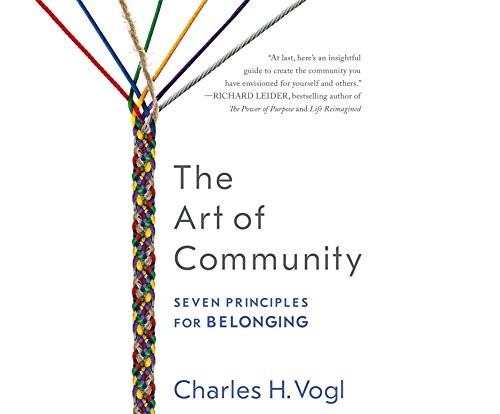
The Art of Community: Seven Principles for Belonging
Books to Read If You Like The Art of Gathering: How We Meet and Why It Matters
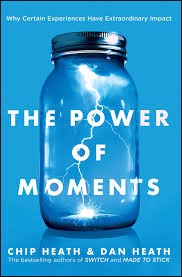
The Power of Moments: Why Certain Experiences Have Extraordinary Impact
by Chip Heath and Dan Heath
Read this if Parker's idea of designing an experience on purpose is what grabbed you.
Chip and Dan Heath ask the question that sits underneath every chapter of The Art of Gathering: why do certain experiences stick with people for years while others evaporate? Their answer is that defining moments share recognizable ingredients (elevation, insight, pride, connection) and that you can build them deliberately rather than waiting for them to happen. That is exactly Parker's stance applied beyond the event itself, and her advice about strong openings and intentional endings maps cleanly onto the Heaths' research on how people remember peaks and finales far more than averages.
The difference is scope and voice. The Heath brothers are business writers working in the Made to Stick and Switch tradition: short chapters, lots of case studies from schools, hospitals, and companies, frameworks with memorable acronyms. There is none of Parker's facilitator intimacy or her interest in conflict and ritual, and some readers find the formula machinery a bit tidy. Pick it if you want a practical toolkit for engineering moments at work and at home; skip it if what you loved in Parker was the texture of real rooms.
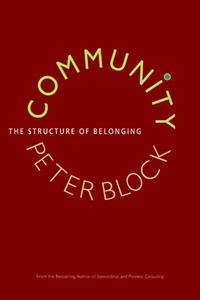
Read this for the deepest thinking on how rooms full of strangers become communities.
Peter Block is the thinker Parker's civic side most clearly echoes. This 2008 book argues that communities transform not through better programs or leaders but through small groups in conversation, and that the questions you ask a room matter more than the answers anyone gives. Block is obsessive about the same details Parker is: who is invited, how the room is arranged, what gets asked in the first ten minutes, and why the way a gathering starts determines what it can become. Readers who underlined Parker's chapters on purpose and openings will find the source code here.
Be honest with yourself about the register, though. Block writes as an organizational consultant with a philosophical bent, and the book is slower, more abstract, and more repetitive than Parker's brisk storytelling; there are no wedding anecdotes or dinner-party rules. Its natural audience is people convening civic groups, congregations, and organizations rather than hosts planning a birthday. Choose it if you want the theory of belonging behind the craft of gathering, and read it a chapter at a time.
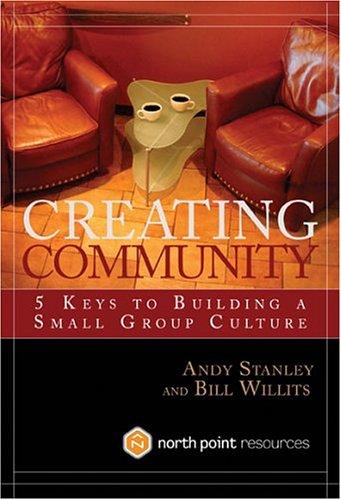
Creating Community: 5 Keys to Building a Small Group Culture
by Andy Stanley, Bill Willits
Read this if you build groups inside a church or want a faith-based playbook.
Andy Stanley and Bill Willits write from North Point Community Church near Atlanta, one of the largest churches in the United States, and this book distills how they organized thousands of people into small groups where actual relationships form. The overlap with Parker is real: both insist that connection does not happen by default, that structure creates intimacy rather than killing it, and that a group needs a clear purpose and a defined shape to work. It is the most operational book on this list, with concrete answers about group size, leadership, and lifecycle.
The plain caveat is context: this is an explicitly Christian ministry book, written for pastors and church leaders, with scripture and discipleship woven through the strategy. Readers outside that world can still extract the group-building mechanics, which are genuinely transferable, but they will be translating as they go. Pick it up if you lead groups in a faith setting or are curious how the most systematic community builders in America actually do it; choose Vogl or Block for a secular equivalent.
Friendship: The Evolution, Biology, and Extraordinary Power of Life's Fundamental Bond
by Lydia Denworth
Read this for the science of why gathering matters in the first place.
Lydia Denworth, a science journalist, supplies the evidence for the claim Parker mostly takes on faith: that human connection is not a nice-to-have but a biological need. Denworth follows friendship research from baboon colonies in Kenya to neuroscience labs and long-running health studies, showing that strong social bonds measurably affect stress, immunity, and lifespan, and that friendship has deep evolutionary roots. If The Art of Gathering convinced you to invest in bringing people together, this book explains what that investment is physiologically buying.
It is the one book here with no advice in it. Denworth is reporting science, not coaching hosts, so you will get studies, researchers, and her own family's story rather than principles for your next dinner. That makes it the wrong pick if you want tactics and the right one if you want grounding; it pairs especially well with Parker rather than substituting for her. Note that some listings misattribute this book; the author is Lydia Denworth, and it was published in 2020.
Read this if you want Parker's intentionality applied to groups that outlast a single event.
Charles Vogl's book is the closest companion to The Art of Gathering on this list, close enough that the two are often recommended together and Vogl's work circulates in the same facilitator world Parker comes from. Where Parker designs the event, Vogl designs what surrounds it: the boundary that defines who belongs, the rituals and initiations that mark membership, shared symbols and stories, and the inner rings people can grow into over time. His principles are drawn from studying religious traditions and translated for secular communities, teams, and organizations.
The main difference is altitude. Parker zooms in on the two hours of a gathering; Vogl zooms out to the months and years across which belonging accumulates, so his book is lighter on in-the-room technique and heavier on structure. It is short, plainly written, and practical, though readers wanting Parker's storytelling flair will find Vogl drier. If your gatherings keep going well but nothing seems to persist between them, this is the obvious next read, and the best overall pick here.
What book is most similar to The Art of Gathering?
The Art of Community by Charles Vogl is the closest match. Both treat human connection as something you design deliberately rather than leave to chance, and both come out of the facilitation world. The difference is timescale: Parker focuses on making a single gathering matter, while Vogl focuses on the rituals, boundaries, and stories that turn repeated gatherings into lasting belonging.
What are the main ideas of The Art of Gathering?
Parker argues that most gatherings fail because they lack a specific purpose, so the category (a meeting, a wedding, a dinner) ends up running the event. Her core principles: decide why you are really gathering, be willing to exclude, exercise generous authority instead of hosting passively, create temporary rules rather than relying on etiquette, never open or close with logistics, and design the ending deliberately.
Has Priya Parker written other books?
The Art of Gathering, published in 2018, is her main book. Since then she has focused on the same territory through other channels, including the New York Times audio series Together Apart, made during the pandemic about gathering at a distance, and ongoing work as a facilitator and speaker. Readers wanting more in book form usually go to Vogl's The Art of Community or Block's Community next.
Is The Art of Gathering useful for work meetings or just parties?
It covers both, and the workplace material is some of its strongest. Parker's examples run from dinner parties and funerals to corporate offsites, courtrooms, and conferences, and principles like sharp purpose, generous authority, and intentional openings transfer directly to meetings. For the organizational layer beyond a single meeting, The Power of Moments and Community: The Structure of Belonging extend the same thinking at work.
As an Amazon Associate, we earn from qualifying purchases. · About & methodology