Books Like The Archetypes and The Collective Unconscious
6 books like Jung's The Archetypes and the Collective Unconscious, from Man and His Symbols to The Hero with a Thousand Faces and The Red Book.
Updated June 10, 2026
The Archetypes and the Collective Unconscious is not a book Jung sat down and wrote; it is volume 9, part 1 of his Collected Works, a gathering of essays written across decades. In it Jung lays out his most famous and most contested idea: beneath the personal unconscious lies a collective layer shared by all humans, populated by inherited patterns, archetypes, that surface in dreams, myths, and art. The essays cover the mother archetype, rebirth, the trickster, the anima, and the process of individuation, and they read like what they are, dense academic psychology threaded with mythology, alchemy, and case material. People rarely finish it in order; they mine it.
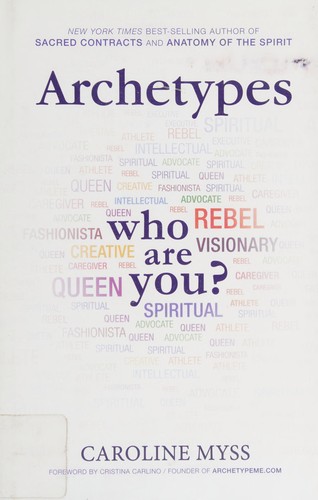
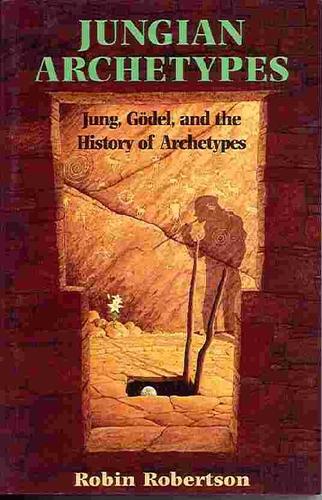
What you want next depends on which thread pulled you in. If you want Jung made accessible, Man and His Symbols was designed for exactly that, and The Red Book shows you the raw private material the theories were distilled from. If the mythology was the draw, Joseph Campbell's The Hero with a Thousand Faces and The Power of Myth take the archetypal idea and run it through the world's stories. If you want the ideas applied or extended, Caroline Myss's Archetypes does popular self-help application and Robin Robertson's Jungian Archetypes does the scholarly history.
A practical reading note: difficulty varies enormously here. Man and His Symbols and The Power of Myth are genuinely easy reads; Campbell's Hero is mid-weight; Robertson assumes some comfort with theory; and The Red Book is a massive, expensive art object as much as a text (the smaller Reader's Edition drops the facsimile pages and is the sane way in).
Read this if you want Jung's archetypal theory in the version he wrote for ordinary readers.
This is the only book Jung aimed at a general audience, conceived near the end of his life and completed with four close collaborators, including Marie-Louise von Franz. It covers the same ground as The Archetypes and the Collective Unconscious, dreams as the language of the unconscious, archetypal symbols, individuation, but in plain prose with hundreds of illustrations showing the symbols at work in art, religion, and advertising. Jung's own long opening essay, Approaching the Unconscious, is the clearest short statement of his ideas he ever produced.
The difference is depth and rigor. The Collected Works essays argue and document; Man and His Symbols explains and illustrates, so scholars treat it as an introduction rather than a source. If you fought your way through volume 9 and wanted a clearer map, this is it, and it is also the book to hand anyone who asks what Jung was actually about. Most readers should honestly read it first and return to the Collected Works after.
Read this if you want one archetype, the hero, traced through every mythology on earth.
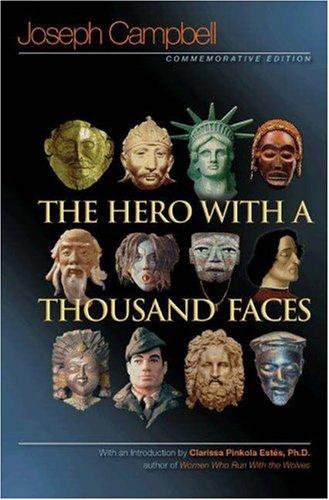
Joseph Campbell wrote the book that did for comparative mythology what Jung did for the psyche, and the debt is explicit: Campbell drew directly on Jung's archetypes and collective unconscious to argue that the world's hero myths follow one underlying pattern, the monomyth of departure, initiation, and return. Where Jung's essays treat myths as evidence for psychological structures, Campbell reverses the lens and reads the psyche through the myths, citing dreams and psychoanalytic material alongside Buddhist, Greek, Native American, and Christian sources.
It is a different kind of book: literary, sweeping, and more confident in its universal claims than careful scholarship now tends to be (critics have long objected that the monomyth flattens real differences between cultures). It is also the more influential book in popular culture, famously shaping Star Wars and decades of screenwriting. Pick it if the mythological material in Jung excited you more than the clinical theory did.
Read this for the easiest possible entry into archetypal thinking.
This is the transcript of Joseph Campbell's late-life conversations with journalist Bill Moyers, recorded for the 1988 PBS series, and it is the gentlest book on this list. Campbell talks through the ideas of his career, myths as public dreams, the hero's journey, follow your bliss, in a warm interview format, touching the same archetypal territory Jung maps clinically. For readers who found volume 9 of the Collected Works forbidding, this is the same landscape seen from a comfortable chair.
The format is also the limitation: it is conversational, digressive, and repeats itself, with none of the documentation of Hero with a Thousand Faces, let alone Jung. Treat it as an invitation rather than an argument. It works especially well as a first book for someone curious about why myths matter, and as a palate cleanser between heavier Jungian reads. If you want substance you can cite, go to Campbell's Hero or back to Jung himself.
Read this only if you want archetypes as practical self-help rather than psychology.
Caroline Myss takes the Jungian idea that archetypal patterns shape personality and turns it into a usable self-inventory. The book walks through a set of contemporary archetype families (the Caregiver, the Rebel, the Visionary, and so on) and asks you to identify which patterns govern your own behavior, with profiles describing each type's gifts, shadow sides, and challenges. If reading Jung made you want to ask which archetypes are running in me, this is the book built around that question.
Be clear about what it is not: this is popular spirituality, not Jungian scholarship, and Myss's archetype lists are her own contemporary creations rather than anything Jung catalogued. Academics and clinicians do not use it, and readers who came to Jung for intellectual rigor may find it thin. Readers who came for self-understanding, though, often get more immediate traction here than from the Collected Works. Know which reader you are before buying.
Jungian Archetypes: Jung, Gödel, and the History of Psychoanalysis
by Robin Robertson
Read this if you want the intellectual history and a serious defense of the archetype concept.
Robin Robertson's book is the scholarly companion piece on this list. It situates Jung's theory of archetypes within the history of psychoanalysis and, unusually, alongside developments in mathematics and logic, drawing a parallel between Jung's search for the deep structures of the psyche and Kurt Gödel's work on the limits of formal systems. The argument is that the archetypal hypothesis is not mysticism but a serious claim about the structure of mind, with a traceable intellectual lineage.
This is the most demanding pick here apart from Jung himself, and the Gödel material asks you to care about ideas well outside psychology. It rewards readers who finished The Archetypes and the Collective Unconscious wanting to know where these ideas came from and whether they hold up, rather than wanting more symbols or stories. If you want application, go to Myss; if you want myth, go to Campbell; if you want the argument, come here.
Read this to see the private visionary experience the entire theory grew out of.
Between roughly 1913 and 1930, Jung recorded and painted his own confrontation with the unconscious in a large red leather folio he called Liber Novus, kept private for decades and finally published in 2009. It is the raw material behind the Collected Works: the figures he encountered in active imagination, Philemon among them, are the lived experiences he later theorized as archetypes. Reading it after the essays is like seeing the field notes behind a finished theory, strange, beautiful, and often unsettling.
It is not an explanation of anything; it is visionary literature, closer to Dante or Blake than to psychology, written in a prophetic register with elaborate illuminated paintings. The full facsimile edition is enormous and costly, so most readers want the Reader's Edition, which keeps the text and Sonu Shamdasani's essential introduction. Come to it for depth and atmosphere, not clarity, and read at least some secondary Jung first or you will be lost.
Not with the Collected Works. Man and His Symbols, which Jung planned for general readers near the end of his life, is the standard starting point and covers archetypes, dreams, and individuation in plain language. From there, Memories, Dreams, Reflections (his memoir) or Modern Man in Search of a Soul are common second steps before tackling The Archetypes and the Collective Unconscious itself.
What is the difference between Jung's archetypes and Joseph Campbell's monomyth?
Jung's archetypes are psychological: inherited patterns in the collective unconscious that surface in dreams, symptoms, and myths. Campbell borrowed that framework and applied it to comparative mythology, arguing in The Hero with a Thousand Faces that hero stories worldwide share one structure, the monomyth. Roughly, Jung explains why myths resemble each other; Campbell catalogues how they do.
Is The Red Book worth reading, and which edition should I buy?
It is worth reading if you want to see the private visionary experiences Jung's theories grew from, but it is demanding, prophetic prose rather than psychology. Most readers should buy the Reader's Edition, which includes the full text and Sonu Shamdasani's introduction without the oversized, expensive facsimile of Jung's illuminated manuscript pages.
Is The Archetypes and the Collective Unconscious a single book by Jung?
Not exactly. It is volume 9, part 1 of Jung's Collected Works, a collection of essays written over many years, including pieces on the mother archetype, the trickster, rebirth, and the concept of the collective unconscious. That is part of why it feels uneven to read straight through, and why many readers approach it essay by essay rather than cover to cover.
As an Amazon Associate, we earn from qualifying purchases. · About & methodology