6 books like Reminiscences of a Stock Operator, from Market Wizards to Trading in the Zone and The Intelligent Investor, matched to what hooked you.
Updated June 11, 2026
Reminiscences of a Stock Operator has been in print for over a century, which is strange for a book about bucket shops and ticker tape until you read it. Edwin Lefevre's 1923 classic is a lightly fictionalized account of Jesse Livermore, the trader who made and lost fortunes shorting the great panics, told as the first-person story of 'Larry Livingston'. What keeps traders rereading it is not the history but the psychology: the observations about sitting tight, fighting your own hope and fear, and how the market punishes the same human errors in every era. It is the rare market book that is also a genuinely good story.
Readers who finish it tend to want one of three things, and this list covers all of them. If it was the trader's mind that gripped you, Trading in the Zone makes Livermore's hard-won psychology explicit, and Market Wizards lets dozens of modern traders tell their own Livermore-style stories. If it was the narrative of Wall Street itself, Flash Boys is the closest modern descendant, a true story of traders discovering how the game is rigged. And if Livermore's repeated ruin convinced you to invest rather than speculate, The Intelligent Investor, A Random Walk Down Wall Street, and Common Stocks and Uncommon Profits are the canonical counterweights.
One practical note: these books disagree with each other on purpose. Livermore was a speculator; Graham and Malkiel argue speculation is mostly a losing game; Fisher and Schwager's wizards sit somewhere in between. Reading across that argument, rather than only one side of it, is the real education.
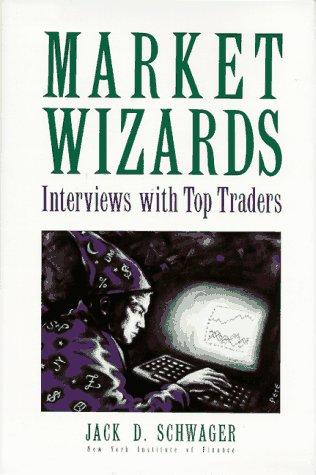
Read this if you want Livermore's story multiplied across dozens of real modern traders.
Jack Schwager's 1989 interview collection is the closest thing the modern era has produced to Reminiscences, and the traders in it know it; the book is full of them citing Lefevre as formative. Schwager sits down with Paul Tudor Jones, Ed Seykota, Richard Dennis, Michael Marcus, Bruce Kovner, and others, and draws out the same material that makes Reminiscences endure: early wipeouts, lessons paid for in real money, and the slow discovery that temperament and risk control matter more than predictions. Marcus turning a small stake into millions, and blowing up along the way, reads like Livermore's arc retold.
The differences are format and credibility. This is Q&A nonfiction, not a novelized life, so you trade narrative sweep for variety and the chance to compare wildly different methods (trend following, macro, floor trading) side by side. The repeated lessons, cut losses, size positions sanely, trade your own system, land harder for coming from many mouths. It is the natural first pick on this list, and it spawned several sequels if it takes.
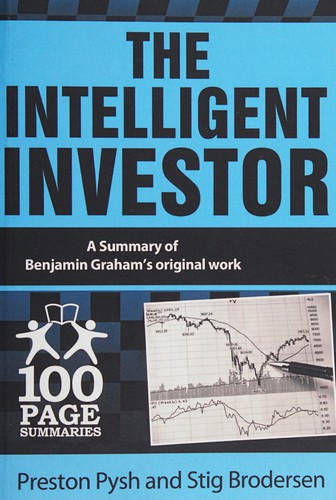
Read this if Livermore's blowups convinced you there must be a saner way.
Benjamin Graham was building his value investing framework in exactly the markets Livermore was speculating in, and his 1949 classic is the deliberate opposite of Reminiscences: where Livermore reads the tape and rides momentum, Graham buys businesses for less than they are worth and ignores the tape entirely. The two books share one deep conviction, that the investor's worst enemy is himself, and Graham's Mr. Market parable covers the same psychological ground as Livermore's lines about hope and fear, from the other side of the trade.
Be honest about the reading experience: this is a dense, methodical book, and the examples are dated (the Jason Zweig annotated edition helps a lot by adding modern commentary). There is no story here, no fortunes won and lost overnight. But it is the most influential investing book ever written, it shaped Warren Buffett, and it is the strongest available antidote if Reminiscences left you a little too eager to start trading. Read the two as a debate.
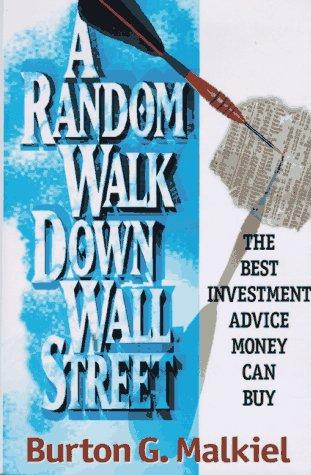
Read this for the academic case that Livermore's game is mostly unwinnable.
Burton Malkiel's book, first published in 1973 and updated regularly since, connects to Reminiscences as its most direct intellectual challenge. Malkiel walks through market history, including the same manias and panics Livermore traded, and the evidence on technical analysis, chart reading, and stock picking, and concludes that prices follow something close to a random walk: the patterns tape readers see are mostly noise, and almost nobody beats the market consistently after costs. His prescription is the index fund.
It is the most accessible serious finance book on this list, written with humor and full of cautionary bubble stories from tulips to dot-coms that fans of Reminiscences will enjoy on their own terms. The friction is the point: Malkiel would say Livermore's eventual bankruptcy proves the thesis. Read it if you want the strongest version of the skeptical case before you risk real money, or pick Graham instead if you want active stock selection defended rather than dismissed.
Read this if you loved Reminiscences as a Wall Street story more than as a trading manual.
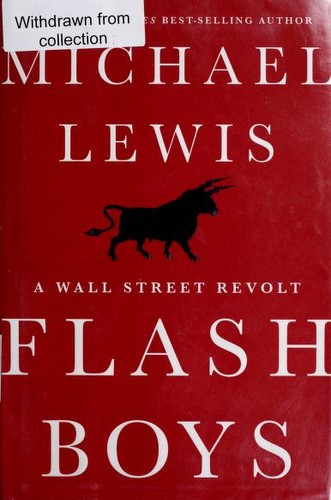
Michael Lewis is the closest thing modern finance writing has to Lefevre: a storyteller who makes market mechanics read like a novel. Flash Boys follows Brad Katsuyama, a Royal Bank of Canada trader who notices his orders are being front-run by high-frequency traders, reverse-engineers how, and builds a new exchange (IEX) designed to neutralize the speed advantage. Reminiscences readers will recognize the spirit immediately. Livermore's bucket shops and manipulated pools have simply become fiber-optic lines and exchange order types; the game of finding the edge, or being its victim, is the same.
The difference is that this is reported nonfiction about market structure rather than a speculator's education; you will learn how modern markets actually route and fill orders, not how to trade. Some industry figures disputed Lewis's framing of HFT as a rigged game, which is worth knowing. It is also the fastest, most purely entertaining read on this list. Pick it for narrative, not for method.
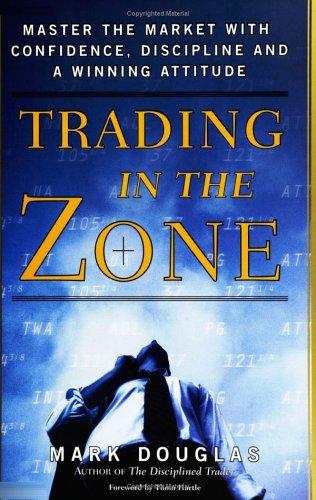
Read this if the psychology was the whole point of Reminiscences for you.
Mark Douglas's 2000 book takes the lessons Livermore paid millions to learn and turns them into an explicit framework. Everything Reminiscences dramatizes, the trader who knows the right move and cannot make himself do it, the hope that rides losers and the fear that cuts winners, is Douglas's entire subject. His core argument is that markets are probabilistic, that any single trade is essentially a coin flip within an edge, and that consistency comes from accepting risk so completely that individual outcomes stop producing fear or euphoria.
Where Reminiscences is a story you draw lessons from, this is instruction with no story at all, and Douglas is repetitive by design, circling the same ideas until they sink in. There are no setups, indicators, or strategies here, which disappoints readers expecting a method. It is the book working traders most often pair with Reminiscences, and it is best read after you have actually traded a little and met the problems Douglas describes in yourself.
Read this for the patient, business-quality opposite of tape reading.
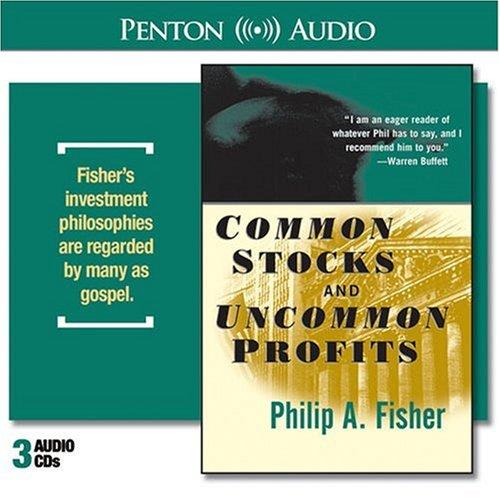
Philip Fisher's 1958 classic shares with Reminiscences a trait the purely academic books lack: it is a practitioner's testament, one investor distilling decades of his own method. Fisher's 'scuttlebutt' approach, learning about a company by talking to its customers, suppliers, and competitors, and his fifteen points for finding superior growth companies are the foundation of quality growth investing. Like Livermore, Fisher preaches concentration and conviction, and his famous counsel that the best time to sell a great company is almost never echoes Livermore's line that the big money is made in the sitting, not the trading.
The difference is horizon. Livermore traded the tape over days and months; Fisher bought companies like Motorola and held for decades, and he has no interest in charts or market timing at all. The prose is dry and the examples are mid-century. Read it if Reminiscences left you wanting an edge that does not require watching prices all day; Buffett credits his own approach as mostly Graham with a large dose of Fisher.
Is Reminiscences of a Stock Operator a true story?
Mostly. It is a fictionalized account of the real trader Jesse Livermore, written by journalist Edwin Lefevre in 1923 with the names changed (Livermore appears as Larry Livingston). The major episodes track Livermore's real career, including his fortune from shorting the 1907 and 1929-era panics. Livermore's own life ended darkly: he went bankrupt several times and died by suicide in 1940, which many readers treat as part of the book's lesson.
What is the closest modern book to Reminiscences of a Stock Operator?
Market Wizards by Jack Schwager is the usual answer. It collects long interviews with top traders of the 1970s and 1980s, many of whom cite Reminiscences as the book that shaped them, and it delivers the same mix of war stories and hard-won psychology in modern markets. For pure narrative about Wall Street, Michael Lewis's Flash Boys is the closest in storytelling spirit.
Should I read Reminiscences before or after The Intelligent Investor?
Either order works because they argue opposite sides. Reminiscences is the great book about speculation and trading psychology; The Intelligent Investor is the great book about long-term value investing and largely rejects speculation. Reading Reminiscences first is more fun, and Graham afterward acts as a corrective. Most investors get more practical use from Graham, but the pair together is the better education.
Do the trading lessons in Reminiscences still apply today?
The psychology does, which is why traders still read it. Cutting losses, not averaging into losers, sitting tight in a winning position, and recognizing hope and fear in yourself are as relevant in electronic markets as in bucket shops. The mechanics do not: tape reading, pools, and the manipulation Livermore describes belong to a pre-regulation era, and books like Flash Boys show how different modern market structure is.
As an Amazon Associate, we earn from qualifying purchases. · About & methodology