8 books like Radical Candor by Kim Scott, from Crucial Conversations to The Culture Code: feedback, coaching, and team-culture reads ranked honestly.
Updated June 10, 2026
Kim Scott's Radical Candor earned its place on management shelves with one sticky framework: care personally, challenge directly. Scott, who ran teams at Google and taught at Apple, names the failure modes most managers actually live in (ruinous empathy, obnoxious aggression, manipulative insincerity) and argues that withholding honest feedback is not kindness, it is neglect. The book works because it is built from specific stories of feedback conversations going right and wrong, not from abstractions.
Readers who finish it usually want one of three things, and the eight books below cover all of them. Some want better mechanics for the hard conversation itself, which is where Crucial Conversations and Thanks for the Feedback go deeper than Scott does. Some want the team and culture layer, how trust and safety get built around candor, covered by The Five Dysfunctions of a Team, The Culture Code, and Leaders Eat Last. And some want the day-to-day management craft of coaching and motivating, which The Coaching Habit and Drive handle best.
A practical note: these books overlap less than their covers suggest. If you only read one, pick by your actual problem. Struggling to deliver feedback? Crucial Conversations. Struggling to hear it? Thanks for the Feedback. Team that avoids conflict entirely? Lencioni. Each entry below tells you exactly which gap it fills.
Our Top Picks
Best overall next read
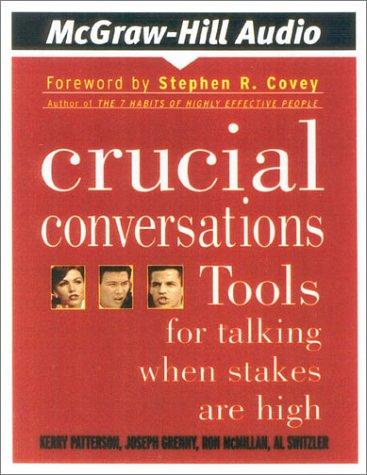
Crucial Conversations: Tools for Talking When Stakes Are High
by Kerry Patterson, Joseph Grenny, Ron McMillan, Al Switzler
Read this if avoiding hard conversations is an emotional problem for you, not a skills problem.
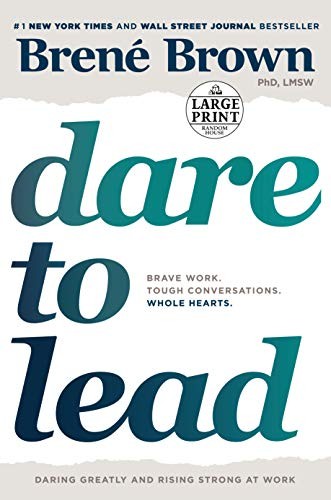
Brené Brown's leadership book and Radical Candor share a core conviction almost word for word: Brown's clear is kind, unclear is unkind is the same claim as Scott's argument that withholding criticism is ruinous empathy. Brown, a shame and vulnerability researcher, focuses on why we avoid candor, the armor of perfectionism and people-pleasing that makes managers soften feedback into uselessness, and on rumbling with vulnerability as the way through. For managers who know exactly what they should say and cannot make themselves say it, this is the more useful book.
The style is a real fork in the road. Brown writes in a personal, therapeutic register, heavy on her research vocabulary (rumbling, armoring, wholeheartedness) and personal stories, where Scott stays in tech-workplace pragmatism. Readers tend to find Brown either resonant or grating, with little middle ground. If her TED talk worked on you, this will too. If you want frameworks and tactics without the emotional excavation, stay with Scott and Patterson.
Crucial Conversations: Tools for Talking When Stakes Are High
by Kerry Patterson, Joseph Grenny, Ron McMillan, Al Switzler
Read this if you agree with Scott's philosophy but freeze in the actual conversation.
Radical Candor tells you why to challenge directly; Crucial Conversations tells you how, sentence by sentence. Patterson, Grenny, McMillan, and Switzler built a repeatable method for moments when stakes are high, opinions differ, and emotions run strong: notice when safety breaks down, restore it, state your view tentatively but honestly, and invite the other person's. It is the operating manual for the exact conversations Scott says you owe your people, and it covers what she largely assumes, that you can keep your composure once the other person gets defensive.
The difference is scope and voice. This is a general communication book, not a management book, so it applies equally to peers, bosses, and spouses, and there is no framework about caring personally or building a feedback culture. It is also drier than Scott, more workbook than memoir, with acronyms and dialogue scripts where she uses Google and Apple war stories. Pick it up if your problem is execution rather than conviction. It is the most directly useful companion to Radical Candor on this list.
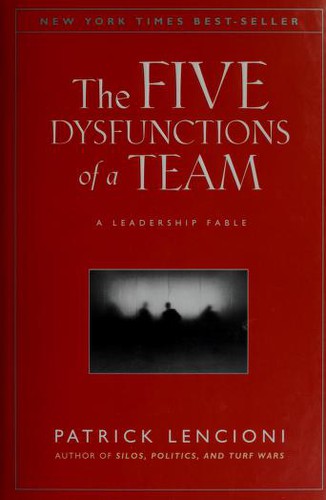
The Five Dysfunctions of a Team: A Leadership Fable
by Patrick Lencioni
Read this if your team's problem is avoiding conflict, not delivering it badly.
Lencioni's fable covers the same ground as Radical Candor from the team level up. His pyramid starts with absence of trust, which produces fear of conflict, which produces fake harmony, missed commitments, and weak results. That second layer, fear of conflict, is precisely the ruinous empathy Scott warns about, scaled from one relationship to a whole leadership team. Where Scott coaches the individual manager, Lencioni diagnoses the group dynamic that makes candor feel unsafe in the first place.
The format is the big difference: most of the book is a fictional story about a struggling Silicon Valley executive team and the new CEO who confronts them, with the model explained in a short section at the end. Some readers find the fable clarifying and fast; others find it thin and the characters cartoonish. Be honest with yourself about which reader you are. It is the right pick for anyone leading a leadership team, and probably skippable if you manage one small team and want tactical advice.
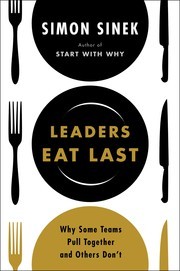
Leaders Eat Last: Why Some Teams Pull Together and Others Don't
by Simon Sinek
Read this for the caring-personally half of Scott's compass, argued at full length.
Simon Sinek's central claim, that great leaders create a circle of safety where people feel protected enough to take risks, is the precondition for everything Radical Candor asks managers to do. Criticism only lands as caring when people already believe you are on their side, and Sinek spends the whole book on how that belief gets built, drawing on Marine Corps culture, anthropology, and the biology of trust (oxytocin, cortisol, and the rest). It pairs naturally with Scott: she gives you the behavior, he gives you the environment that makes the behavior work.
Know what you are getting, though. This is big-idea inspirational nonfiction, not a how-to, and the science is presented loosely; the chemical explanations in particular are simplified to the point that skeptical readers push back. There are no scripts and few tactics. Read it when you want conviction and language for why people-first leadership matters, and read Scott or Stanier when you want to know what to actually say on Monday.
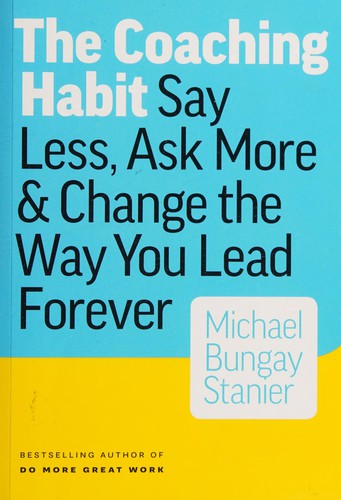
Read this if your one-on-ones turn into you talking and solving everything.
Michael Bungay Stanier's short book complements Radical Candor's guidance side. Scott says a boss's job is to guide people toward growth; Stanier's point is that most managers guide by jumping in with advice, and that the better habit is asking seven specific questions and then staying quiet. Questions like What's on your mind?, And what else?, and What's the real challenge here for you? turn the feedback relationship Scott describes into something the employee drives. It is also the most immediately actionable book on this list: you can use it in your next one-on-one.
The tradeoff is depth. It is deliberately slim, repetitive by design, and narrowly about the coaching conversation; there is nothing here about giving hard feedback, managing performance problems, or team culture. It also will not help when directness is what the moment requires, which Scott would be the first to point out. Treat it as a precision tool for one habit, advice-giving, rather than a management philosophy. For new managers it is one of the highest value-per-page books available.
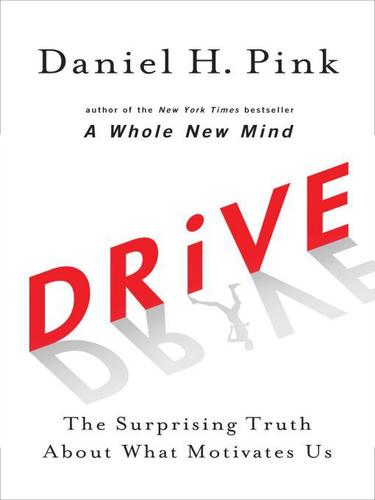
Read this for the research on why command-and-control management fails.
Daniel Pink's argument, that autonomy, mastery, and purpose beat carrots and sticks for any work requiring thought, is the motivational theory underneath Radical Candor's practice. Scott's whole approach assumes employees who want to grow and do meaningful work, and Pink supplies the evidence for that assumption, synthesizing decades of behavioral science on intrinsic motivation, including the studies showing that contingent rewards can actually degrade creative performance. If you want to know why guidance works better than control, this is the why.
It is the least similar book on the list in form: pop science synthesis, not management advice, with almost nothing about feedback or conversations. Pink writes for a general audience and includes a toolkit section, but you will translate the ideas into management practice yourself. Pick it if you are designing how a team works (goals, incentives, autonomy) rather than how you personally communicate. Skip it if you have already absorbed the autonomy-mastery-purpose framing from the many books and talks that borrowed it.
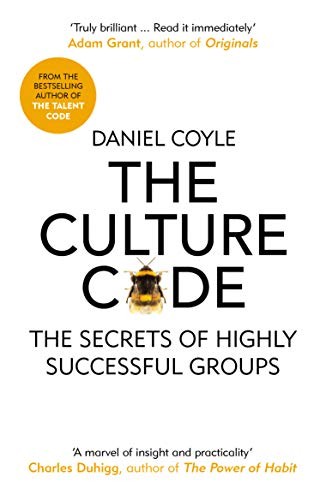
Read this if you want to build a culture where candor is normal, not heroic.
Daniel Coyle studied groups that perform far above their talent level, from Navy SEAL teams to Pixar to a champion pickpocket crew, and found three skills in common: build safety, share vulnerability, and establish purpose. The middle one is where it meets Radical Candor directly. Coyle's reporting on how Pixar's BrainTrust delivers brutal notes on early film cuts, and why those sessions strengthen rather than damage the group, is the best concrete picture in print of Scott's care-and-challenge combination working at scale.
Coyle is a storyteller first, and the book reads faster and more vividly than most business writing, but it is descriptive rather than prescriptive; you get patterns and examples, not a program. It also addresses anyone shaping a group, not specifically managers giving feedback. Choose it over Lencioni if you prefer reported nonfiction to fables, and over Sinek if you want the same safety argument with better evidence and fresher examples.
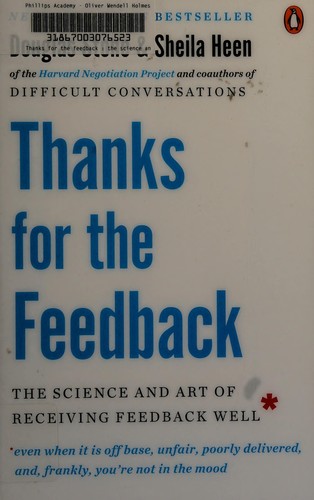
Thanks for the Feedback: The Science and Art of Receiving Feedback Well
by Douglas Stone, Sheila Heen
Read this for the half of feedback Radical Candor mostly skips: taking it.
Douglas Stone and Sheila Heen, both of the Harvard Negotiation Project, flip Scott's lens. Radical Candor is written for the person giving feedback; this book is written for the person on the receiving end, and it argues that the receiver, not the giver, controls whether feedback actually lands. They break down why even fair criticism triggers us (truth triggers, relationship triggers, identity triggers) and how to find what is useful in feedback that is badly delivered, vague, or partly wrong. Scott herself stresses soliciting criticism before dishing it out, and this is the book-length treatment of that step.
It is more psychologically dense than Radical Candor, closer to Stone and Heen's earlier Difficult Conversations than to a management memoir, and it has no organizational or leadership framework at all. That makes it the best pick here for individual contributors and for managers who notice they get defensive in their own reviews. If everyone on a team read one book to make candor survivable, it should probably be this one.
Crucial Conversations is the most common pairing, because it supplies the conversational mechanics Radical Candor assumes: how to raise a hard topic, keep the other person from shutting down, and stay honest under pressure. Dare to Lead is the closest in philosophy, since Brown's clear is kind argument mirrors Scott's case against ruinous empathy almost exactly.
Did Kim Scott write anything after Radical Candor?
Yes. Scott published Just Work in 2021, about confronting bias, prejudice, and bullying in the workplace, and Radical Respect in 2024, a revised edition of that book. She also released an updated and revised edition of Radical Candor itself in 2019. If you want more of her voice specifically, Just Work is the natural next step.
Which of these books should a brand-new manager read first?
The Coaching Habit, then Crucial Conversations. The Coaching Habit is short and immediately usable in one-on-ones, and Crucial Conversations covers the hard feedback discussions every new manager dreads. The Five Dysfunctions of a Team and The Culture Code matter more once you are responsible for how a whole team works together rather than individual relationships.
Is Radical Candor just about giving criticism?
No, and Scott is explicit about this. The framework requires caring personally as much as challenging directly; direct criticism without the relationship is what she calls obnoxious aggression. She also insists managers solicit criticism of themselves before giving it. Thanks for the Feedback covers the receiving side in depth, and Leaders Eat Last covers the trust-building side.
As an Amazon Associate, we earn from qualifying purchases. · About & methodology