8 books like Oliver Twist: orphans, crime, and Victorian social conscience, from Great Expectations and Jane Eyre to The Count of Monte Cristo.
Updated June 10, 2026
Oliver Twist, Dickens's second novel, is the one where his social fury runs hottest. A workhouse orphan asks for more gruel and is punished for it, then falls into Fagin's gang of child pickpockets, Bill Sikes's brutality, and the doomed loyalty of Nancy. What sets it apart from the rest of Dickens is that the villains are vivid and the underworld is grimy and real, while the plot itself runs on coincidence and a near-fairy-tale faith that goodness will be rewarded. You read it for the atmosphere of Victorian London's lower depths and for Dickens naming cruelty by name.
Readers leaving this book usually want one of three things, and the list is sorted that way. If you want more Dickens, his other orphan and social-critique novels (David Copperfield, Great Expectations, Bleak House, Hard Times) are the obvious next stops. If you want more Victorian orphans and institutional cruelty beyond Dickens, Jane Eyre is the natural turn. And if it was the crime, injustice, and reversal of fortune that gripped you, The Count of Monte Cristo and the boyhood mischief of Tom Sawyer point outward from London. Each entry below says which thread it carries.
A practical note: if Oliver Twist is your first Dickens, read David Copperfield or Great Expectations next rather than the heavier Bleak House, which rewards readers already comfortable with his style. For any of these classics, an annotated Penguin or Oxford edition makes the period slang and references far less of a slog.
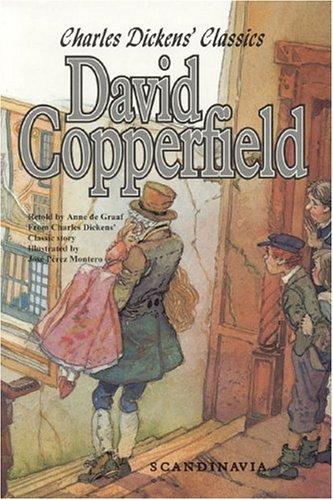
Read this if you loved the orphan-against-the-world arc and want Dickens at his warmest.
Dickens called this his favorite child, and it is the fullest version of the story Oliver Twist sketches: an orphaned boy abused by a cruel stepfather, sent to a grim boarding school, put to hard labor as a child, and slowly finding his way to safety and a calling. The same outrage at how Victorian society treats vulnerable children runs through it, and the cast (the feckless Micawber, the villainous Uriah Heep, the steadfast aunt Betsey Trotwood) is as memorable as anyone in Fagin's gang.
Where Oliver Twist is short, dark, and driven by its underworld, David Copperfield is long, sprawling, and far more tender, a full life story rather than a rescue plot. It is loosely autobiographical, which gives it an emotional warmth Oliver lacks. Choose this when you want to live inside a Dickens world for a few hundred pages rather than race through a thriller, and when you want the social criticism softened by genuine affection.
Read this if Oliver Twist's anger at broken institutions was the part that gripped you.
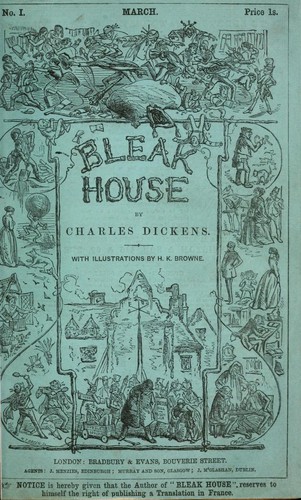
If you read Oliver Twist mainly as a furious attack on the systems that grind down the poor, Bleak House is where Dickens does that on the grandest scale. The endless lawsuit of Jarndyce and Jarndyce stands in for a whole society rotting from the top, and the novel reaches from aristocrats down to the crossing-sweeper Jo, whose death is one of the most damning indictments of neglect in English fiction. The orphan Esther Summerson and the buried secrets of parentage will feel familiar to any Oliver reader.
Be warned that this is a major step up in difficulty and length. Bleak House runs close to a thousand pages and alternates between Esther's first-person narration and a colder third-person voice, with a sprawling mystery and a pioneering detective in Inspector Bucket. It is many critics' pick for Dickens's masterpiece, but it is not a beginner's Dickens. Come to it once you already enjoy his style, not as your second taste of him.
Read this if you want the better, more personal version of Oliver's rise from nothing.
This is the most natural next step from Oliver Twist. Pip, like Oliver, is an orphan raised in harsh circumstances who is suddenly lifted toward gentility by a mysterious benefactor, and like Oliver he keeps brushing up against the criminal world, here through the escaped convict Magwitch. You get the same Dickensian machinery of secret parentage, coincidence, and fortunes reversed, plus the same gallery of grotesques, from Miss Havisham in her rotting wedding dress to the lawyer Jaggers.
The big difference is depth. Told in the first person, Great Expectations is more inward and self-critical than Oliver Twist, less interested in melodrama and villainy than in how money and snobbery corrupt a decent boy. Oliver stays morally spotless throughout; Pip does not, which makes him the more human character. If you found Oliver a little too passively good, this is the book that fixes that. Widely considered Dickens's most perfectly constructed novel.
Read this for a scrappy boy outwitting respectable society, in a sunnier key.
Tom Sawyer shares Oliver Twist's interest in a clever boy living on the margins of adult respectability, and it even brushes against real danger and crime: Tom and Huck witness a murder, testify against Injun Joe, and end up hunting buried treasure. Twain, like Dickens, has a sharp eye for the hypocrisies of polite town life, the Sunday-school piety and small cruelties that the boys cheerfully evade. The mix of episodic mischief and genuine peril echoes the rhythm of Oliver's adventures.
The mood, though, is the opposite. Set along the Mississippi rather than in fog-choked London, Tom Sawyer is nostalgic, funny, and essentially safe, a celebration of boyhood rather than an exposure of social rot. Its orphan figure, Huck Finn, is treated with affection rather than as a victim of the system. Read this when you want the lively, anti-authority energy of Oliver without the grimness, and consider following it with Huckleberry Finn for Twain's darker, deeper sequel.
Read this if you want Dickens's compassion for the poor in a single evening.
This short ghost story distills the moral heart of Oliver Twist into a hundred pages. The same concern for neglected children appears literally, in the spectral figures of Ignorance and Want, and Tiny Tim's plight presses the same nerve as Oliver's workhouse origins. Scrooge's redemption is Dickens making explicit the argument that runs under all his fiction: that indifference to the suffering poor is the real sin, and that no one is beyond change.
What is missing is the scale and the underworld. There is no sprawling cast, no criminal London, no Fagin, just one man, four spirits, and one transformative night. It is sentimental where Oliver Twist is also savage, and it ends in pure warmth rather than punishment for villains. Read it when you want the most accessible possible Dickens, a perfect introduction or a holiday reread, before committing to one of his long novels.
Read this if the crime, injustice, and reversal of fortune were what hooked you.
If you read Oliver Twist for its wronged innocence, its criminal schemers, and its faith that fortunes can turn, Dumas delivers all three at epic scale. Edmond Dantes is imprisoned for a crime he did not commit, escapes, and reinvents himself as a fabulously wealthy avenger, dismantling the men who ruined him. Like Dickens, Dumas builds his plot on secret identities, buried pasts, and a near-mathematical sense of justice catching up with the guilty. The villains are as memorable as Fagin and Sikes.
The differences are setting and engine. This is post-Napoleonic France, not Victorian London, and revenge, not survival, drives the story. It is also enormous and propulsive, a thriller more than a social critique, with far less interest in reforming society than in the satisfactions of payback. Get an unabridged translation (Robin Buss's Penguin version is the standard). Read it when you want the pace and plotting of Oliver cranked up into one of the most addictive adventure novels ever written.
Read this if you want another Victorian orphan crushed by cruel institutions, beyond Dickens.
Jane Eyre opens almost exactly where Oliver Twist's anger lives: an orphaned child mistreated by the relatives meant to protect her, then shipped off to Lowood, a charity school whose cold, hypocritical regime starves and shames its pupils. Bronte shares Dickens's fury at how Victorian institutions treat dependent children, and Jane, like Oliver, must hold onto her own goodness while the adults around her fail her. The early chapters are the closest non-Dickens match on this list.
After Lowood, though, the book becomes something Oliver Twist never is: a first-person interior drama and a gothic romance, as the adult Jane takes a post at Thornfield and falls for the brooding Mr. Rochester, who hides a secret in the attic. The social critique gives way to questions of love, conscience, and a woman's independence. Read it for a heroine with far more inner life than Oliver, and for proof that the Victorian orphan story could turn fierce and personal rather than melodramatic.
Read this if you want Dickens's social critique in its shortest, sharpest form.
Hard Times is the most concentrated dose of the social conscience that powers Oliver Twist. Set in the grim industrial town of Coketown, it skewers a philosophy of pure facts and utilitarian efficiency through the Gradgrind family, whose children are raised to suppress wonder and feeling. The same Dickensian sympathy for the exploited and contempt for those who reduce human beings to numbers runs straight through it. The factory hand Stephen Blackpool carries the suffering that Oliver's workhouse opening first dramatized.
It is by far Dickens's shortest novel, which makes it an easy entry point, but it is also more openly a thesis novel, lighter on the vivid criminal underworld and rich comic characters that make Oliver Twist fun. There is no Fagin here, no atmospheric London. Read it for the argument and the economy rather than the color. If you want Dickens's politics without committing to a thousand pages, this is the one.
What should I read next from Dickens after Oliver Twist?
Read Great Expectations or David Copperfield. Both are first-person coming-of-age novels with orphan or near-orphan heroes, and most readers find them warmer and more emotionally satisfying than Oliver Twist. If you specifically loved the social anger about poverty and institutions, go to Bleak House or Hard Times instead, though Bleak House is much longer and more demanding.
Which books on this list are closest to Oliver Twist?
For the orphan-rises-through-hardship story, Great Expectations and David Copperfield are the truest matches, both by Dickens himself. Jane Eyre carries the abused-orphan thread into a different register. For the criminal underworld and unjust imprisonment, The Count of Monte Cristo overlaps most, though it trades Victorian London for Napoleonic France.
Is Oliver Twist hard to read, and which edition should I get?
Dickens's prose is dense by modern standards, with long sentences and period slang from London's underworld. An annotated edition (Oxford World's Classics, Penguin Classics, or Norton Critical) is worth it for the footnotes explaining thieves' cant, geography, and the book's dark humor. The novel was originally serialized in Bentley's Miscellany between 1837 and 1839.
Are there non-Dickens books like Oliver Twist?
Yes. Jane Eyre by Charlotte Bronte gives you a mistreated orphan and harsh Victorian institutions. The Count of Monte Cristo by Alexandre Dumas offers wronged innocence, crime, and reversal of fortune. The Adventures of Tom Sawyer by Mark Twain shares the scrappy-boy-against-respectable-society energy, in a far sunnier American key.
As an Amazon Associate, we earn from qualifying purchases. · About & methodology