8 books like Mistborn, from The Way of Kings to The Lies of Locke Lamora and Foundryside: hard magic systems, heists, and rebellion fantasy.
Updated June 10, 2026
Mistborn: The Final Empire earns its reputation on two things working together. The first is Allomancy, the genre's gold standard for a hard magic system: swallow and burn one of a set of metals and you get one specific power, with costs, limits, and combat applications Sanderson treats almost like physics. The second is the premise, a heist crew plotting to rob and topple a god-emperor who already won, in a world of ash skies and mist where the prophesied hero failed a thousand years ago. Vin's arc from distrustful street thief to Mistborn gives the mechanics a heart, and the trilogy's endings actually pay off what the first book sets up.
Readers finish it wanting one of three things, and this list covers each. If it was Sanderson's plotting and magic-as-machinery, his own The Way of Kings and Elantris are the obvious next moves. If it was the crew and the con, The Lies of Locke Lamora and Foundryside take the heist thread further than Mistborn does. And if it was a young woman with hidden power rising against an oppressive regime, City of Stairs, A Darker Shade of Magic, The Bone Season, and Shadow and Bone each remix that shape in different registers, from murder mystery to dystopia.
A practical note on commitment: Elantris, City of Stairs, and A Darker Shade of Magic work as standalones or easy entry points, while The Way of Kings and The Bone Season open very long series that are still being written. Each pick below tells you what it shares with Mistborn and what it asks of you, so choose by appetite as much as taste.
Read this if you want Sanderson at full scale and can commit to a doorstopper.
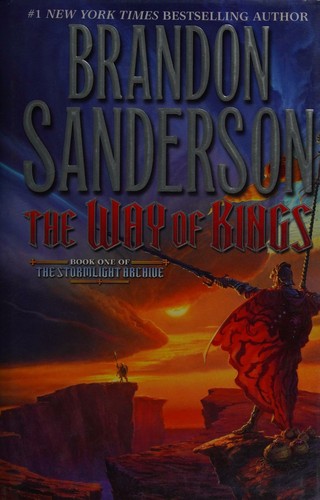
This is where most Mistborn readers go next, and for good reason: it is the same author applying the same toolkit at maximum ambition. The world of Roshar is wracked by highstorms that have shaped every plant, animal, and culture on it, the magic (Surgebinding, powered by bonds with spirits called spren) is as rule-driven as Allomancy, and the climaxes land with the same converging-plotlines snap that ends The Final Empire. Kaladin, a surgeon's son enslaved into hauling siege bridges, is the best character Sanderson has written, and his arc scratches the same underdog itch as Vin's.
The honest caveat is pace and size. The Way of Kings is over a thousand pages and spends its first half placing pieces; Mistborn's tight heist structure is replaced by slow, multi-viewpoint world-laying that pays off late. The Stormlight Archive is also a planned ten books with five published, so you are signing up for a long relationship. If you want Sanderson contained instead, start with Elantris below.
Read this for a complete Sanderson story in a single book.
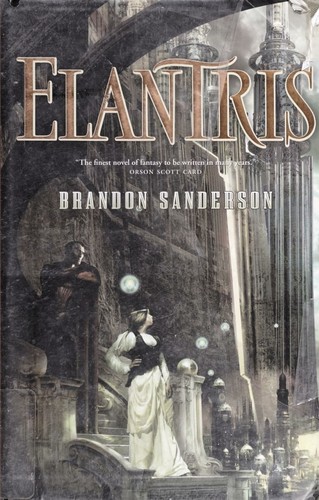
Elantris was Sanderson's debut, and its central idea is pure Mistborn-school worldbuilding: the magic broke. Elantrians were once radiant near-gods, until a cataclysm turned their transformation into a curse that leaves its victims undying, unhealing, and quarantined in their ruined city. The novel rotates between a cursed prince, a sharp-witted princess, and a fanatic priest, and like The Final Empire it builds to revelations about why the magic failed that recontextualize everything, with the system's rules doing real plot work.
It is also visibly a first novel. The prose and pacing are rougher than Mistborn, the middle sags, and there is no equivalent of Allomantic combat; the magic here is more puzzle than weapon. What you get in exchange is a complete, self-contained story with a satisfying ending and no series commitment. Pick it if you want more Sanderson without another trilogy, and read Mistborn-era Sanderson expectations down slightly.
Read this if the dead-god mythology of Mistborn intrigued you most.
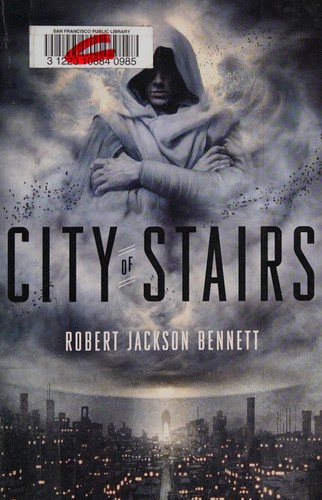
Mistborn asks what happens after the dark lord wins; City of Stairs asks what happens after the gods are killed. The continent's divinities were shot dead decades ago by the people they enslaved, their miracles collapsed overnight, and now an unassuming spy named Shara arrives in the broken holy city of Bulikov to investigate a murder that threatens the new order. Like Sanderson, Bennett treats the metaphysics as a mystery with actual answers, and the late-book payoffs about what the gods were land with Final Empire force.
The texture is quite different: more espionage novel than heist, with a roughly early-twentieth-century setting of trains and telegraphs rather than ash-and-castles, and the politics of colonizer and colonized cut deeper than Mistborn's empire ever does. The action is carried mostly by Sigrud, a one-eyed Dreyling who provides the book's Mistborn-style set pieces. Choose it if you want smarter politics with your worldbuilding and do not need a young protagonist to follow.
Read this for a lighter, faster magic adventure between worlds.
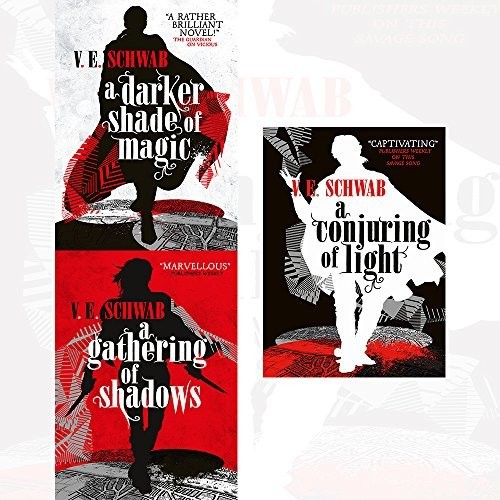
Schwab's setup has the clean high-concept appeal of Allomancy: four parallel Londons, Grey, Red, White, and lost Black, and Kell is one of the last magicians able to walk between them. The plot kicks off when a smuggled relic from dead Black London starts corrupting everything it touches, and Kell teams up with Lila Bard, a cutpurse with cross-dressing disguises and ambitions of piracy who will feel instantly familiar to anyone who loved street-thief Vin. The blood magic has rules, the villains are genuinely menacing, and the pages turn fast.
It is a noticeably lighter meal than Mistborn. The worldbuilding is mood and color more than system, the story is a chase rather than a long con, and there is no rebellion or empire-toppling at stake in this first book. Think of it as the stylish, brisk cousin of the epic fantasies on this list. Pick it for a palate cleanser between doorstoppers, with two sequels ready if the Londons hook you.
Read this if Kelsier's crew was the best part of Mistborn.
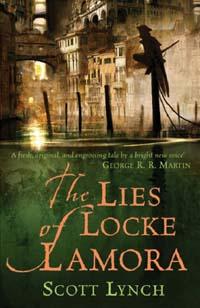
If what you loved was the heist, the crew banter, and the long con against untouchable elites, this is the purest hit available. Locke Lamora leads the Gentleman Bastards, con artists fleecing the nobility of Camorr, a Venice-flavored city built on the glass bones of a vanished civilization, while a far more dangerous game closes in around them. The flashback structure showing Locke's education echoes Vin's training chapters, and Lynch writes capers, reversals, and crew loyalty better than almost anyone in fantasy, Sanderson included.
Know what you are trading. There is very little magic and no system to learn; the cleverness is all human. The tone is also far more profane and far more brutal: the dialogue is gleefully foul and the violence, when it arrives, is genuinely vicious in a way Sanderson never gets. The crew warmth comes with real losses. Pick it if you want the Final Empire's caper energy for grown-ups, and skip it if Allomancy was the whole appeal.
Read this for the closest thing to a new Allomancy.
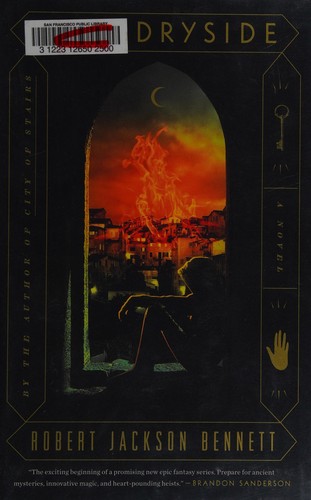
Bennett's Foundryside is the most Mistborn-like book not written by Sanderson, and it knows it. Scriving, the magic of Tevanne, works by writing instructions onto objects to convince them reality is other than it is, a wheel that believes it is rolling downhill, a blade that believes it weighs a thousand pounds, and the book explores its rules, exploits, and loopholes with exactly the systematic glee Allomancy fans want. The heroine, Sancia, is a thief from the slums with an ability she cannot control, hired to steal an artifact that turns out to threaten the whole order. Street urchin, heist, system magic, rising stakes against entrenched merchant-house power: the checklist is nearly complete.
The differences are flavor and frame. Tevanne runs on merchant houses and proto-industrial capitalism rather than a god-emperor's feudal empire, so the rebellion here is aimed at corporations more than thrones, and the vibe is closer to a magical cyberpunk thriller than to epic fantasy. The trilogy is complete, and it escalates hard. This is the easiest unqualified recommendation on the list for a Mistborn reader.
Read this if you want Vin's arc in a dystopian future instead of a fantasy past.
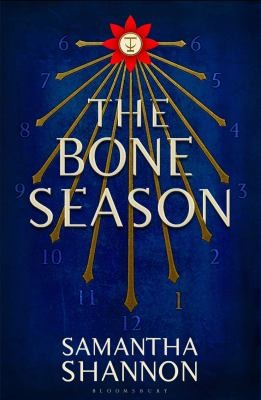
The shape of The Bone Season is recognizably the shape of Mistborn: a young woman surviving in a criminal underworld, gifted with a rare and dangerous version of her world's power, is pulled into the machinery of an oppressive regime and becomes the seed of a rebellion. Paige Mahoney is a dreamwalker, the rarest kind of clairvoyant, working for a crime syndicate in a 2059 London where her very existence is illegal, until she is captured and shipped to a hidden prison city run by an otherworldly race called the Rephaim. The master-and-captive dynamic with her keeper, Warden, drives the book the way Vin and Kelsier's mentorship drives The Final Empire.
It is dystopian urban fantasy rather than epic fantasy, and the clairvoyance taxonomy is sprawling and vibes-based where Allomancy is crisp; Shannon front-loads a lot of jargon, and the first hundred pages ask patience. The series also runs seven planned books with a revised tenth-anniversary edition of this one. Pick it for the heroine and the rebellion, not for the magic engineering.
Read this for the most accessible take on the hidden-power-versus-empire story.
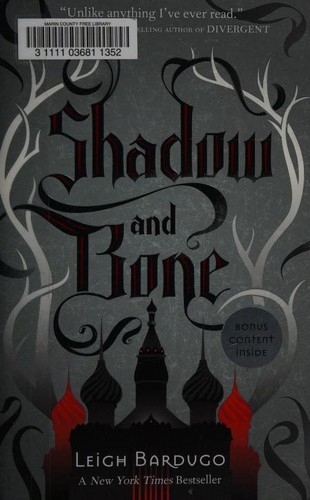
Bardugo's debut is the YA distillation of the fantasy shape Mistborn perfected: Alina Starkov, an unremarkable mapmaker in a war-torn, tsarist-flavored empire, manifests a legendary power, light itself, that could destroy the Shadow Fold cutting her country in two. Like Vin, she is plucked from obscurity, trained among the elite Grisha, and forced to figure out who actually deserves her trust, and the Darkling is a more seductive spin on the charismatic-leader-with-an-agenda problem that Mistborn poses through Kelsier and the Lord Ruler both.
This is the lightest book on the list. It is shorter, faster, and more romance-forward than anything else here, the magic is evocative rather than systematic, and seasoned fantasy readers will see most turns coming. Its real value is as a gateway: the same Grishaverse later produces Six of Crows, a heist duology that many readers rank alongside Locke Lamora. Read Shadow and Bone if you want an easy, propulsive version of the rebellion story, or skip ahead to Six of Crows if the crew was your thing.
What should I read after Mistborn: The Final Empire?
First, know that The Final Empire opens a trilogy, and The Well of Ascension and The Hero of Ages complete the story with one of fantasy's best endings. Beyond the series, The Way of Kings is the natural next Sanderson, Foundryside is the closest match by another author, and The Lies of Locke Lamora is the pick if the heist crew was your favorite part.
Which book has a magic system most like Allomancy?
Foundryside by Robert Jackson Bennett. Its scriving system, magical instructions written onto objects to alter what they believe about reality, has clear rules, costs, and exploitable loopholes, and the plot turns on understanding them, exactly the way Allomancy works in Mistborn. Sanderson's own Stormlight Archive and Elantris are the closest matches inside his catalog.
Do I need to read Mistborn before The Way of Kings or other Cosmere books?
No. Sanderson's Cosmere novels share a universe and some background characters, but each series stands alone, and plenty of readers start with The Way of Kings. Reading Mistborn first does enrich later Stormlight books, where the crossover elements become more visible, so the order you are on is the commonly recommended one.
Is Mistborn YA, and which of these books match its content level?
Mistborn is adult fantasy, but it is clean enough (minimal sex, moderate violence, no profanity) that teens read it widely. Shadow and Bone and A Darker Shade of Magic sit at or below that level. The Lies of Locke Lamora is markedly more profane and violent, and The Bone Season and City of Stairs are adult in tone but not graphic.
As an Amazon Associate, we earn from qualifying purchases. · About & methodology