8 books like Kafka on the Shore, from The Wind-Up Bird Chronicle to The Master and Margarita: surreal quests, talking cats, and dream logic.
Updated June 11, 2026
Kafka on the Shore is the Haruki Murakami novel people argue about most, because it refuses to resolve. Fifteen-year-old Kafka Tamura runs away from an Oedipal prophecy; elderly Nakata, who lost his mind in a wartime incident and gained the ability to talk to cats, sets off on a journey he does not understand; fish rain from the sky, a spirit dresses as Johnnie Walker, and the two storylines converge without ever quite explaining themselves. Murakami has said the book is a riddle without a solution, and that is the contract: you read it for dream logic, not answers.
Most readers finish it wanting one of two things. If you want more Murakami, the obvious move, this list ranks the right entry points: The Wind-Up Bird Chronicle is his other masterpiece in the same key, 1Q84 is the biggest and strangest, A Wild Sheep Chase is the early quest novel where the formula was born, and Norwegian Wood is the realist outlier for when you want his voice without the surrealism. If you want the same dream logic from other writers, The Master and Margarita, The Ocean at the End of the Lane, The House of the Spirits, and The Unbearable Lightness of Being each carry a different piece of it.
A practical note on order: do not jump straight to 1Q84, which runs over 900 pages and is better once you already trust Murakami. The Wind-Up Bird Chronicle is the strongest single follow-up. Among the non-Murakami picks, The Master and Margarita is the masterpiece but asks the most of you; The Ocean at the End of the Lane is the gentlest and can be read in an evening.
Read this if you want Murakami at maximum scale and strangeness.
1Q84 is built on the same engine as Kafka on the Shore: two narrators in alternating chapters, a woman named Aomame and a writer named Tengo, whose stories bend toward each other across a Tokyo that has slipped into a subtly wrong parallel world with two moons. The fantastical intrusions, a cult, the Little People who emerge from a dead goat's mouth, an air chrysalis, have the same unexplained dream authority as Kafka's fish rain and Colonel Sanders. If the dual-narrative convergence was your favorite part of Kafka, this is that device at triple length.
Length is the honest warning: over 900 pages in one volume, originally three books in Japan, and the middle stretch repeats itself in a way even devoted fans admit. It is a love story at heart, more romantic and more patient than Kafka on the Shore. Save it for when you want to live inside a Murakami world for a month rather than visit one for a week.
Read this if Kafka on the Shore worked on you and you want the other masterpiece.
This is the consensus pick for what to read next, and most Murakami readers rank it alongside or above Kafka on the Shore. Toru Okada, an unemployed Tokyo everyman, goes looking for his missing cat, then his missing wife, and the search pulls him into a web of psychics, a dry well he climbs into to think, and harrowing flashbacks to Japan's war in Manchuria. The architecture is the same as Kafka: a mundane quest that opens into the subconscious, alternating threads, and history bleeding into dream.
It is darker and more violent than Kafka on the Shore, with one wartime chapter that is famously hard to read, and its sprawl is even less resolved; the American edition was cut from the Japanese original, which adds to the loose ends. But the well scenes are the purest distillation of what Murakami does, descending out of ordinary life into somewhere else. If you only read one more Murakami, make it this one.
Read this for the same dream logic in a single evening.
Neil Gaiman's short novel is built on the premise Murakami keeps returning to: the membrane between ordinary life and something ancient and strange is thin, and a child can fall through it. A middle-aged man returns to his Sussex hometown for a funeral and remembers, or re-remembers, the events of his seventh year, when a lodger's suicide let something hungry into the world and the three Hempstock women at the end of the lane, who may be older than the universe, stood between him and it. Memory as a door, exactly as in Kafka's forest.
It is the most accessible book on this list, under 200 pages, written in clear, fable-like prose, and emotionally direct where Murakami is oblique. The mythology is English-pastoral rather than Murakami's jazz-and-Tokyo cool, and everything resolves, which Kafka on the Shore pointedly does not. Pick it for a palate cleanser between the longer books, or as a gift for someone you are trying to convert to this kind of fiction.
Read this for the greatest novel ever written in Kafka on the Shore's key.
Bulgakov's Soviet-era masterpiece is the strongest non-Murakami match on this list, and Murakami's own brand of matter-of-fact supernatural owes a debt to books like it. The Devil arrives in 1930s Moscow with an entourage that includes Behemoth, a giant talking black cat with a taste for chess and vodka, and the city's literary establishment unravels around them while a second narrative retells Pontius Pilate's trial of Jesus. Two interleaved storylines, one contemporary and absurd, one ancient and grave, converging at the end: the structure is Kafka on the Shore's, written sixty years earlier.
It asks more of you than Murakami does. The satire targets Soviet bureaucracy and censorship, so some jokes need the historical context, and the tone swings from slapstick to genuine religious seriousness within pages. Written in secret under Stalin and published only in the 1960s, decades after Bulgakov's death, it rewards the effort more than any other book here. Get a modern translation and let the first hundred pages teach you its rules.
Read this if the philosophy mattered to you more than the magic.
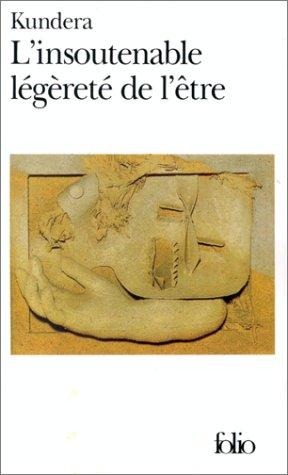
Kundera's novel has no talking cats and no parallel worlds, but it scratches the other itch Kafka on the Shore leaves: the urge to stop the story and think about fate, chance, and what a life means. Murakami pauses for Oedipus and the metaphors of the entrance stone; Kundera pauses, constantly and openly, for Nietzsche's eternal return and whether lightness or weight is the better way to live, while following two couples through love and infidelity in Prague around the 1968 Soviet invasion.
Be clear about what it is: an essayistic European novel where the author addresses you directly and the characters are openly thought experiments. Readers who loved Kafka's atmosphere and mystery may find it cold; readers who underlined Kafka's philosophical passages tend to love it. It is the pick here for the head rather than the dream, and it pairs well with Murakami rather than substituting for him.
Read this if you want Murakami's voice with the surrealism switched off.
Norwegian Wood is the book that made Murakami famous in Japan, and it shares more with Kafka on the Shore than its realism suggests: a young protagonist shaped by death and longing, a retreat from Tokyo to a secluded refuge (here a sanatorium in the hills, rather than Kafka's forest cabin), and the pull between a vital living girl and a beautiful, wounded one. Miss Saeki's frozen grief in Kafka has a clear sister in Naoko. The melancholy is the same; only the talking cats are gone.
Nothing supernatural happens in this book, so if the dream logic was the whole appeal, this is the wrong pick. It is a sad, sexually frank, autumnal love story set among the student movements of late-1960s Tokyo, and it is many readers' favorite Murakami precisely because it is his most direct. Choose it when you want to know whether you love Murakami's worlds or Murakami's voice; this answers the question.
Read this for the early, funnier novel where Murakami's quest formula was invented.
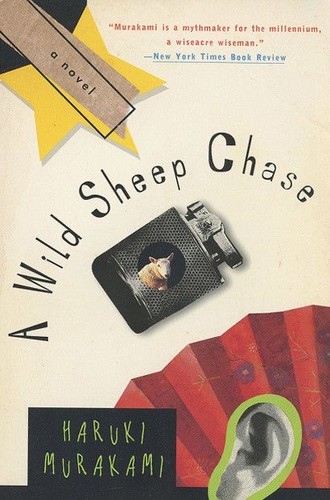
This 1982 novel is where the Murakami template that powers Kafka on the Shore first clicks into place: an unnamed, passive Tokyo narrator is blackmailed into hunting for a single mutant sheep with a star on its back, and the absurd errand becomes a journey into Hokkaido's mountains, history, and the narrator's own emptiness. The Sheep Man, who appears here, is one of Murakami's first fully strange creations, a direct ancestor of Kafka's cat-talking Nakata and Johnnie Walker.
It is shorter, faster, and noticeably funnier than Kafka on the Shore, with a hardboiled detective-novel rhythm borrowed from Raymond Chandler, and its emotional range is narrower; you will not find anything like Kafka's grief or Miss Saeki's song. Read it to see the machinery young and loose, or as a low-commitment entry if 600-page novels are not your mood. It also leads directly into its stranger sequel, Dance Dance Dance.
Read this if you want the magic woven through family and political history.
Isabel Allende's debut is the classic Latin American magical realist family saga, and it connects to Kafka on the Shore through the same root system: the matter-of-fact supernatural. Clara del Valle moves objects with her mind and converses with spirits, and nobody in the book treats this as more remarkable than the weather, which is precisely the register Murakami uses for fish falling from the sky. Both novels also let national trauma (Chile's 1973 coup there, Japan's war here) erupt into the dream.
The shape is completely different: this is a multigenerational epic told across most of a century, with a large cast and a political arc that turns brutal in its final third, where Murakami stays intimate and elliptical. Allende explains more and withholds less. Choose it if you want the magic anchored to history and family rather than to one runaway's psyche, or as a bridge from Murakami into García Márquez territory.
Which Haruki Murakami book should I read after Kafka on the Shore?
The Wind-Up Bird Chronicle is the standard answer and the right one: it is his other major surreal novel, built on the same blend of mundane quest, dream logic, and wartime history. Choose 1Q84 if you want something even bigger, A Wild Sheep Chase if you want shorter and funnier, and Norwegian Wood if you want his realist side. Hard-Boiled Wonderland and the End of the World is another strong pick for the dual-narrative structure.
What is Kafka on the Shore actually about? Does it have an explanation?
Deliberately, no single one. Murakami has said the novel contains several riddles but no solutions, and that the explanation forms differently for each reader. The broad reading most people land on is that Kafka's and Nakata's journeys are two halves of one psyche working through prophecy, guilt, and grief, with the forest and the entrance stone as doors into the unconscious. The book rewards rereading more than decoding.
Is Kafka on the Shore magical realism?
It is usually shelved there, and it shares the genre's signature move of treating the impossible as unremarkable, which is why The Master and Margarita and The House of the Spirits are on this list. Purists note that magical realism properly refers to the Latin American tradition of García Márquez and Allende, while Murakami blends Japanese settings with surrealism, pop culture, and Western literary influences. In practice, readers who like one tend to like the other.
Do I need to read Kafka's namesake, Franz Kafka, to get this book?
No. The boy chooses Kafka as his alias and the title nods to the Czech writer, but the novel is not a retelling of anything Kafka wrote. That said, if the mood of inexplicable systems and dream bureaucracy appeals to you, Franz Kafka's The Trial and The Castle are natural extensions, and Murakami has named Kafka among his influences. The more load-bearing reference in the novel is Sophocles' Oedipus Rex.
As an Amazon Associate, we earn from qualifying purchases. · About & methodology