8 books like Harry Potter, from Percy Jackson to His Dark Materials and The Magicians: magic schools, hidden worlds, and where to go after Hogwarts.
Updated June 10, 2026
J.K. Rowling's Harry Potter series pulled off a combination nobody has fully repeated: a hidden magical world layered seamlessly over the ordinary one, a school that feels like home, a found family of friends, and a story that grows up with its reader, starting as a cozy boarding-school mystery and ending as a war. The specific magic is in the texture, Diagon Alley shop by shop, the house tables, the staircases that move, as much as in the Voldemort plot. That texture is what most read-alikes chase and few catch.
What to read next depends on where you are coming from. Readers (or listeners) around the age Harry starts at have the easiest path: Percy Jackson and the Lightning Thief is the standard next series, with Artemis Fowl as the mischievous alternative and A Wrinkle in Time as the older classic. Readers who want the same wonder with more weight should go to His Dark Materials or the books that shaped Rowling's tradition, The Hobbit and The Chronicles of Narnia. And adults who grew up on Hogwarts and want magic school with hangovers and consequences have The Magicians, plus City of Bones for the urban fantasy route.
A practical note: every entry here except The Hobbit and A Wrinkle in Time opens a multi-book series, so you are choosing a commitment, not a single read. Ages vary widely on this list, from middle grade to firmly adult, and each entry below says which it is.
Our Top Picks
Best overall next read
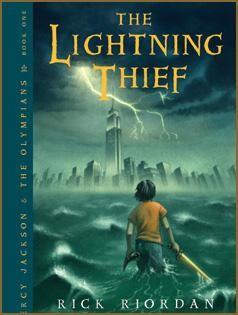
Percy Jackson & The Olympians: The Lightning Thief
Percy Jackson & The Olympians: The Lightning Thief
by Rick Riordan
Read this if you want the closest thing to the Hogwarts experience outside Hogwarts.
Rick Riordan's series is the standard recommendation after Harry Potter for a reason: the architecture matches. Percy is an ordinary-seeming boy who discovers he is a demigod, gets whisked to Camp Half-Blood (a summer-camp Hogwarts, complete with cabins instead of houses), forms a loyal trio with a clever girl and a faithful best friend, and learns a prophecy hangs over him. Riordan swaps wizardry for Greek mythology, so every monster and god comes with a real mythological backstory, which gives the books the same pleasure of a fully furnished hidden world.
The voice is the big difference. Percy narrates in first person, wisecracking constantly, so the tone is faster and jokier than Rowling's and the prose is plainer; the series also stays middle grade throughout rather than darkening book by book the way Potter does. Five books in the core series, with several sequel series after. Best for younger readers or anyone who wants comfort-food adventure rather than another slow-building epic.
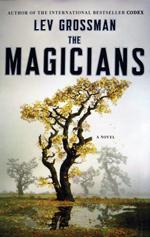
Read this if you grew up on Hogwarts and want magic school for adults, flaws included.
Lev Grossman wrote The Magicians in open conversation with Harry Potter and Narnia. Quentin Coldwater, a depressed Brooklyn teenager obsessed with a Narnia-like series of children's books, is admitted to Brakebills, a secret college of magic in upstate New York. The school material delivers exactly what adult Potter fans miss, entrance exams, drills, rivalries, drunken traditions, and then the novel asks the question Rowling never does: what happens to magical chosen ones after graduation, when the magic does not fix them?
Be clear about what you are picking up. This is an adult novel with sex, heavy drinking, and a protagonist whose self-pity is the point; readers expecting Harry's decency often bounce off Quentin entirely. Grossman's argument is that fantasy worlds do not cure unhappiness, which is either bracing or sour depending on your mood. It opens a trilogy that improves as it goes, and the SyFy TV adaptation has its own devoted following.
Read this if you want the hidden magical world run with gadgets and a villain protagonist.
Eoin Colfer's series shares Harry Potter's best trick, a complete magical civilization hidden under the modern world, but plays it as a heist. Twelve-year-old Artemis is a criminal mastermind who kidnaps Captain Holly Short of the fairy police (LEPrecon) to ransom fairy gold, and the fairy world he tangles with runs on technology, regulations, and special forces rather than wands. Colfer pitched it as Die Hard with fairies, and the mix of magic and spy-thriller hardware is what makes it feel fresh next to Hogwarts.
There is no school and no chosen one; the appeal is watching a brilliant, amoral kid slowly grow a conscience across eight books, which is roughly Draco Malfoy as protagonist, as this site's own matching notes suggest. The tone is more comic and more Irish, and individual books are shorter and faster than the later Potters. Best for readers who liked the cleverness and worldbuilding of Potter more than its earnestness.
Read this for the classic adventure Rowling's whole tradition descends from.
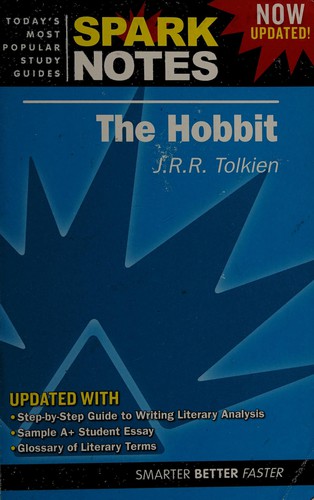
Tolkien's 1937 novel is a grandparent of Harry Potter rather than a sibling, and the inheritance is visible everywhere: a small, comfort-loving hero plucked from a safe home into a dangerous magical world, a powerful bearded wizard who arranges the adventure and disappears at inconvenient moments, goblins, trolls, a dragon, and a magic ring picked up in the dark. Bilbo's journey from timid burglar to brave one has the same growing-into-courage shape as Harry's, and the riddle game with Gollum is as iconic as anything at Hogwarts.
It is a single, complete story rather than a series, told in a warm storyteller's voice originally aimed at children, so it reads gentler and more episodic than Potter, with no school and little of Rowling's contemporary humor. Some young readers find the pace slow between set pieces. Read it on its own merits, and as the doorway to The Lord of the Rings if the bigger epic calls afterward.
Read this if misfit kids saving a parent from cosmic darkness sounds right.
Madeleine L'Engle's 1962 Newbery winner gives you the emotional core of Harry Potter a generation early: Meg Murry is awkward, stubborn, and underestimated, and with her uncanny little brother Charles Wallace and friend Calvin she travels across space to rescue her father from a planet ruled by a disembodied, conformity-enforcing intelligence. The trio dynamic, the battle against a darkness that is explicitly about love versus control, and the message that a flawed child's loyalty is the decisive weapon all map cleanly onto Rowling.
The flavor is science fantasy rather than wizardry, tesseracts and physics-adjacent ideas instead of spells, with an undercurrent of L'Engle's spiritual concerns, and at around 200 pages it is far shorter and stranger than any Potter book. The prose and pacing feel like the 1960s in ways some modern kids notice. It is the right pick when you want one beautiful, odd classic rather than a seven-book commitment; four loose sequels exist if Meg's family wins you over.
The Chronicles of Narnia: The Lion, the Witch and the Wardrobe
by C.S. Lewis
Read this for the original children-stumble-into-a-magical-world story.
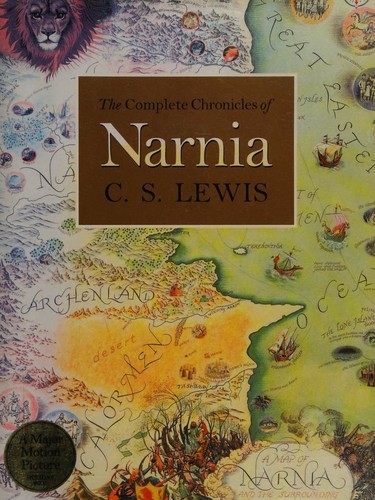
C.S. Lewis's 1950 classic is the template Harry Potter inherits its doorway from: ordinary British children pass through a portal (a wardrobe instead of a train platform) into a fully realized magical land, discover they are central to a prophecy, and join the fight against a winter-bringing witch. The sibling dynamics, the talking creatures, the sense that a hidden world has been waiting specifically for these children, all of it flows straight down the family tree to Rowling, who has named Lewis as an influence.
Lewis writes shorter, simpler, and more overtly moral books than Rowling; the Christian allegory in Aslan's arc is unmistakable to adults, which some readers love and Pullman fans famously do not. There is no school setting and the children remain visitors rather than residents of the magic. The whole seven-book series can be read in the time the last Potter alone takes. Best for younger readers, or as a fast, nostalgic foundation course in where the genre came from.
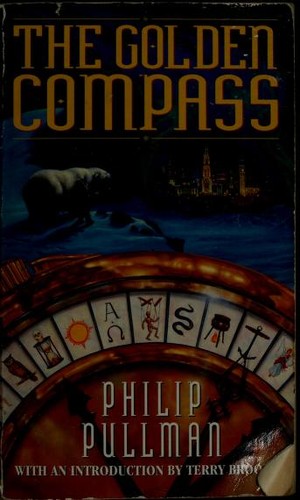
Read this if you want a children's fantasy with even bigger ideas than Potter.
Philip Pullman's trilogy (Northern Lights, published as The Golden Compass in the US, then The Subtle Knife and The Amber Spyglass) is the other great British fantasy of the Potter era, and the comparison flatters both. Lyra Belacqua is a scrappy orphan raised in an Oxford college who is pulled into a war spanning parallel worlds, armored bears, witches, and her own destiny. Like Rowling, Pullman gives you irresistible worldbuilding, especially daemons, the animal embodiments of human souls, and a child hero whose loyalty and nerve matter more than her polish.
Pullman is the more ambitious and more divisive writer. The trilogy mounts an open argument against organized religion, the emotional register is colder and more adult, and the final volume asks philosophical questions Rowling never attempts; the ending is famously heartbreaking rather than reassuring. It darkens faster than Potter and rewards slightly older readers. If Deathly Hallows left you wanting fantasy that treats children as capable of big ideas, this is the strongest pick on the list.
Read this if you want the hidden magical world relocated to modern city nightlife.
Cassandra Clare's Mortal Instruments series opener runs on recognizably Potter-shaped fuel: fifteen-year-old Clary Fray discovers an invisible world of Shadowhunters, angel-blooded demon hunters, layered over New York, learns her own hidden heritage, and is rapidly entangled in a war with a charismatic dark lord, Valentine, whose old inner circle and ideology of blood purity strongly echo Voldemort and the Death Eaters. Clare in fact began in Harry Potter fan fiction, and the DNA shows in the banter-heavy ensemble and the institute that serves as a home base.
The differences are age and flavor: this is young adult rather than middle grade, with romance central to the plot, a love triangle, and an urban gothic atmosphere of clubs, runes, and leather rather than castles and house points. The prose is serviceable and the series sprawls (six books, plus several spin-off trilogies). Best for teen readers, or anyone whose favorite part of Potter was the secret world hiding in plain sight rather than the schoolwork.
For readers around 9 to 13, Percy Jackson and the Olympians is the closest match: a hidden magical world, a chosen-one hero, a loyal trio, and a training ground that functions like Hogwarts. For older teens, His Dark Materials offers comparable depth, and for adults The Magicians is the definitive magic-school novel written with Potter readers in mind.
What should adults read after Harry Potter?
The Magicians by Lev Grossman is the standard answer: a secret magic college with adult stakes, written in deliberate conversation with Rowling and Narnia. Beyond this list, adult Potter fans often move to Jonathan Strange and Mr Norrell by Susanna Clarke for English magic with literary heft, or Naomi Novik's Scholomance series for a darker magic school.
Are there more Harry Potter books beyond the main seven?
The core series is seven novels, from Philosopher's Stone (Sorcerer's Stone in the US) through Deathly Hallows. Beyond them there is Harry Potter and the Cursed Child, a stage play script set nineteen years later, plus companion volumes like Fantastic Beasts and Where to Find Them, Quidditch Through the Ages, and The Tales of Beedle the Bard. None continue the main story the way the novels do, which is why most fans turn to read-alikes.
Which of these books suits the youngest readers?
The Lion, the Witch and the Wardrobe and A Wrinkle in Time are the gentlest entry points, both classics commonly read from about age 8. Percy Jackson and Artemis Fowl suit roughly the same range as early Potter. His Dark Materials and City of Bones skew older, and The Magicians is adults only, with explicit content and heavy drinking.
As an Amazon Associate, we earn from qualifying purchases. · About & methodology