6 books like Flowers for Algernon, from The Speed of Dark to Of Mice and Men: novels about minds, change, and what intelligence costs.
Updated June 10, 2026
Daniel Keyes's Flowers for Algernon does something almost no other novel attempts: it makes its prose the plot. Charlie Gordon, a man with an IQ of 68, undergoes an experimental operation, and his progress reports rise from misspelled fragments to dazzling fluency and then, as the experiment fails, fall back again. You watch a mind assemble and dissolve on the page, and the cruelest discovery comes in the middle, when Charlie is smart enough to understand how people treated him before. It began as a 1959 Hugo-winning story and grew into the 1966 novel that has wrecked readers ever since.
Nothing replicates that structure exactly, so this list sorts by what part of the book hit you hardest. If it was the science fiction question (what happens when a mind is deliberately changed), The Speed of Dark and Never Let Me Go carry that forward. If it was the voice of a narrator the world underestimates, The Curious Incident of the Dog in the Night-Time is the closest match. And if it was the human ache of it, the friendship and the ending, Of Mice and Men, The Giver, and Atonement work that nerve from different angles.
A practical note: Of Mice and Men and The Giver are short enough to finish in a sitting, while Atonement and Never Let Me Go are slower, more literary builds. None of these are comfortable reads, and that is the point. Each entry below tells you what it shares with Charlie's story and where it goes its own way.
Read this if Charlie's treatment by the world broke your heart.
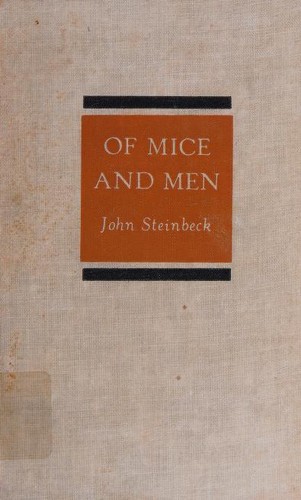
Steinbeck's 1937 novella is the classic most often shelved next to Flowers for Algernon, and the kinship is direct. Lennie Small, like Charlie Gordon, is a large-hearted man with an intellectual disability moving through a world that mocks, uses, and fears him, and both books force you to see that world through the damage it does to him. The friendship between George and Lennie carries the same mix of protectiveness and burden that runs through Charlie's relationships, and both stories end in a place you see coming and cannot stop.
The differences are era and scope. This is Depression-era California, ranch hands and dust, with no science fiction premise; Lennie never changes, the world simply closes in on him. Steinbeck writes in spare, third-person scenes rather than Charlie's intimate progress reports, so you watch from outside instead of inside. It is barely a hundred pages and hits with the same finality. Pick it if you want the tragedy without the experiment.
Read this if Charlie's first-person voice was what held you.
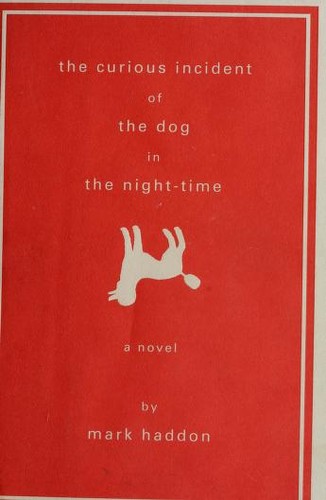
Mark Haddon's 2003 novel is the closest thing on this list to the experience of reading Charlie's progress reports. Christopher Boone, a fifteen-year-old with an autistic perspective, narrates his investigation into a neighbor's dead dog in a voice that is logical, literal, and utterly distinctive, complete with diagrams, maps, and prime-numbered chapters. As with Keyes, the form is the point: you understand Christopher not because he explains himself but because the prose is his mind. The gap between what he reports and what the reader infers (especially about his parents) generates the same ache the Algernon reports do.
The crucial difference is trajectory. Christopher does not change neurologically; the book argues he does not need fixing, which makes it a kind of answer to the premise of Keyes's experiment. It is also warmer and frequently funny, a mystery and family drama rather than a tragedy. Pick this if you want the inside-a-different-mind experience without the slow devastation of watching that mind slip away.
Read this if the quiet ethical horror of the experiment stayed with you.
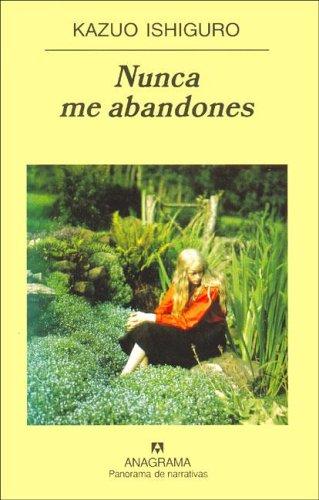
Kazuo Ishiguro's 2005 novel shares the deep structure of Flowers for Algernon: people treated as scientific material by institutions that consider the arrangement reasonable. Kathy H. narrates her memories of Hailsham, a sheltered English boarding school, slowly revealing that she and her friends are clones raised to donate their organs. Like Keyes, Ishiguro keeps the science offstage and the focus on what it feels like to live inside a foreshortened life, and both books turn on the moment their narrators fully grasp what has been done to them.
Ishiguro's method is restraint where Keyes's is intimacy. Kathy's voice is calm, even flat, and the horror accumulates through what she does not say; there is no formal device like the progress reports, and no hope of a cure, only the question of whether love can buy time. It is slower and more elliptical, a literary novel that withholds. Pick it if you want the ethics and the grief with the volume turned down and the dread turned up. Ishiguro won the Nobel Prize in 2017.
Read this for the most direct modern descendant of Keyes's premise.
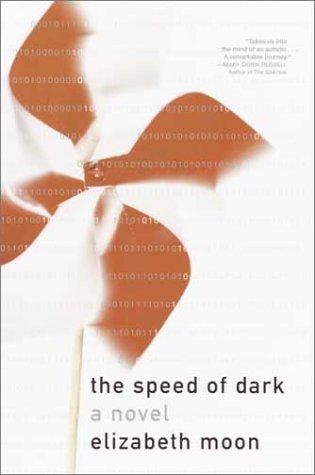
Elizabeth Moon's 2003 Nebula Award winner is the book most often recommended as the contemporary Flowers for Algernon, because it takes the same question and asks it with forty more years of neuroscience and disability awareness. Lou Arrendale is an autistic man in a near-future where autism has been nearly eliminated; his employer pressures him toward an experimental treatment that would make him normal, and the novel lives inside his first-person deliberation about whether the person who wakes up would still be him. Moon, who raised an autistic son, writes Lou's perception with patient, convincing detail.
Where Keyes shows you the aftermath of the choice, Moon dwells on the choosing, and her book is angrier about the social machinery (corporate pressure, the assumption that different means broken) that frames a cure as an obligation. The pacing is deliberate and some readers find the thriller subplot thinner than the interior story. Pick it if you finished Algernon arguing with the doctors rather than crying over the mouse, though it may make you do both.
Read this if what lingered was guilt and the wish to undo harm.
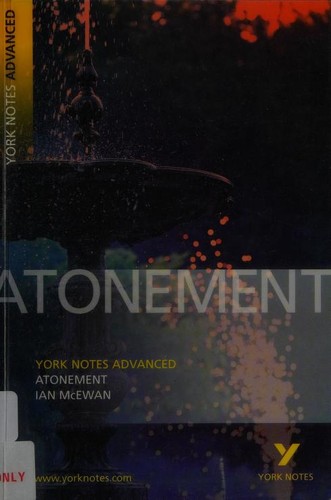
Ian McEwan's 2001 novel connects to Flowers for Algernon at the level of conscience rather than premise. Thirteen-year-old Briony Tallis misreads what she sees between her sister Cecilia and Robbie Turner, tells a lie with catastrophic consequences, and spends the rest of a long life trying to atone through the only instrument she has, which is writing. Like Keyes's novel, it is finally a book about the limits of intelligence: Briony is precociously clever, and her cleverness is exactly what enables the damage. Both books also use the act of writing itself as the frame for a life being examined.
Everything else is different. This is a sweeping literary novel that moves from a 1935 country house through the retreat to Dunkirk and wartime London, with dense, gorgeous prose and a famous final twist about what fiction can and cannot repair. There is no science fiction and no disability theme; the kinship is emotional, not topical. Pick it when you want that same hollowed-out feeling at the end, delivered by craft of a very high order.
Read this for the same awakening arc in a short, accessible dystopia.
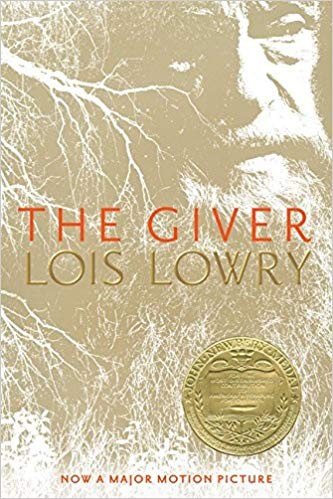
Lois Lowry's 1993 Newbery Medal winner mirrors the emotional architecture of Flowers for Algernon: a protagonist is given access to knowledge his community lacks, and the gift isolates him from everyone he loves. Twelve-year-old Jonas lives in a society that has engineered away pain, color, and memory; when he is chosen to receive the suppressed memories of the world, he, like Charlie, becomes the only one who can see what everyone around him is missing, and seeing it makes ordinary life unbearable. Both books ask whether awareness is worth its cost and refuse to give a comfortable answer.
It is a middle-grade novel, so the prose is simple and the length slight, but the ideas are not watered down, which is why it is taught alongside Algernon in many schools. The dystopian frame replaces the laboratory, and the ending is famously ambiguous rather than devastating. Pick it for a fast read, for a younger reader ready for these themes, or to revisit the awakening story in its most distilled form.
What book is most similar to Flowers for Algernon?
The Speed of Dark by Elizabeth Moon is the closest in premise: a first-person novel about an autistic man pressured to accept an experimental treatment that would change who he is. It won the Nebula Award in 2003 and is widely read as a modern response to Keyes. For the narrative voice, The Curious Incident of the Dog in the Night-Time is the nearest match, and for the emotional tragedy, Of Mice and Men is the classic companion.
Did Daniel Keyes write a sequel to Flowers for Algernon?
No. There is no sequel. Keyes did write Algernon, Charlie, and I: A Writer's Journey, a 1999 memoir about how the story and novel came to be, which is the best follow-up for readers who want more. The novel itself grew from his 1959 short story of the same name, which won the Hugo Award; the expanded 1966 novel shared the Nebula Award.
Is Flowers for Algernon science fiction or literary fiction?
Both, which is part of why it endures. The premise (an intelligence-enhancing operation) is science fiction, and the book won the field's major awards, but the execution is character study, told entirely through Charlie's progress reports. Readers who want more of the SF side should pick The Speed of Dark or Never Let Me Go; readers who want the human tragedy should go to Of Mice and Men or Atonement.
What should I read after Flowers for Algernon if it made me cry?
Of Mice and Men is the most direct route to the same feeling: short, humane, and devastating in its final pages. Never Let Me Go offers a slower, quieter grief, and Atonement ends with a twist that produces a similar hollowed-out sadness. Keep tissues nearby for all three.
As an Amazon Associate, we earn from qualifying purchases. · About & methodology