8 books like Eat, Pray, Love, from Wild to Big Magic: memoirs and travel books about starting over, matched to what you loved in Elizabeth Gilbert.
Updated June 10, 2026
Elizabeth Gilbert's 2006 memoir earned its enormous audience with a simple, repeatable shape: a woman exits a broken life (a brutal divorce, a depression she describes lying on the bathroom floor) and rebuilds it deliberately, four months at a time, through pleasure in Italy, devotion at an ashram in India, and balance in Bali. What keeps it readable is the voice, confiding and funny and willing to look silly, and the structure, 108 short chapters arranged like the beads of a japa mala. It is less a travel book than a recovery story that happens to have great food in it.
The books below sort by which of those three words pulled you hardest. If it was the journey out of crisis, Wild is the essential pick, with Eat, Pray, Love Made Me Do It as the direct companion volume. If it was the pray, Traveling Mercies covers messy, funny spirituality and The Alchemist gives the seeking a fable form. If it was the travel itself, The Geography of Bliss, The Art of Travel, and A Moveable Feast each handle place differently. And if it was simply Gilbert's voice, Big Magic is her talking straight to you.
A practical note: only Wild and A Moveable Feast are narrative memoirs in the same way Eat, Pray, Love is. Several picks here are essay collections or idea-driven nonfiction, which read best dipped into rather than straight through. Each entry says which kind it is.
Our Top Picks
Best overall next read
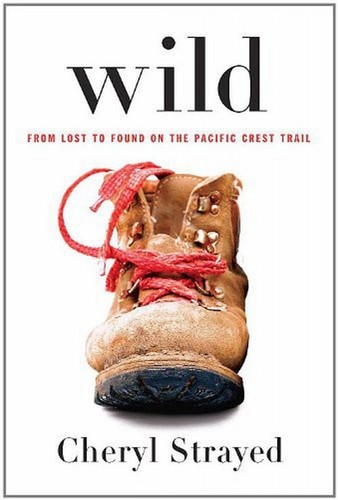
Wild: From Lost to Found on the Pacific Crest Trail
Wild: From Lost to Found on the Pacific Crest Trail
by Cheryl Strayed
Read this if the rebuilding-after-collapse arc was what held you.
Cheryl Strayed's 2012 memoir is the book most often shelved next to Eat, Pray, Love, and the kinship is structural: a woman in her twenties, wrecked by her mother's death, a heroin detour, and a divorce, walks more than a thousand miles of the Pacific Crest Trail alone with no backpacking experience. Like Gilbert, Strayed uses the journey as scaffolding for the real story, which is grief and self-forgiveness, and both books became Reese Witherspoon or Julia Roberts movies because the arc is that clean.
The temperature is very different. Where Gilbert's year includes gelato, an ashram, and a love story, Strayed's hike includes lost toenails, a too-heavy pack she names Monster, and genuine physical danger; the prose is rawer and the wounds are deeper. Pick Wild if Eat, Pray, Love occasionally felt too comfortable to you, and expect less spiritual instruction and more blunt-force honesty. It is the strongest pure memoir on this list.
Read this if the India section's seeking spoke to you and you want it as a fable.
Coelho's slim novel is the fiction counterpart to Gilbert's quest: a shepherd named Santiago leaves home, crosses a desert chasing a recurring dream, and learns that the universe rewards those who pursue their Personal Legend. The core promise is the same one Eat, Pray, Love makes in memoir form, that a life can be remade by committing to the search itself, and the two books share an audience for good reason. It reads in an afternoon and delivers its lessons in plain, parable-like sentences.
It is not a travel book and not a memoir; there is no Italy, no humor of Gilbert's confessional kind, and the wisdom arrives as aphorism rather than lived mess. Some readers find that luminous and others find it thin. Choose it when you want the distilled, allegorical version of the journey, and skip it if what you loved in Gilbert was the self-deprecating specificity of an actual flawed person eating actual pizza.
Read this if you want the pray part with more jokes and less ashram.
Anne Lamott's 1999 essay collection covers the same territory as Gilbert's middle section, a skeptical, damaged, funny woman finding a workable faith, but does it through ordinary American life rather than a journey to India. Lamott comes to her ramshackle Presbyterian church through alcoholism, single motherhood, and grief, and writes about grace with the same confiding irreverence that made Gilbert's voice feel like a friend talking. If you underlined the spiritual passages in Eat, Pray, Love, this is the natural next book.
It is a collection of standalone essays, not a single narrative, so there is no arc to ride; you can read it out of order on a nightstand for a month. Lamott's faith is also specifically Christian, where Gilbert's is deliberately eclectic, though Lamott wears it so loosely that readers of any persuasion tend to stay. Pick it for voice and spiritual honesty rather than for travel or structure.
Read this only if you want the afterlife of the book itself, told by its readers.
This 2016 anthology collects nearly fifty short essays by ordinary readers about what they did after finishing Gilbert's memoir: leaving marriages and jobs, traveling, getting sober, starting over in ways large and small. Gilbert provides the introduction. As a companion piece it is unique on this list, because it is direct evidence of the thing skeptics doubted, that a comfort-read memoir actually changed lives, and many of the essays echo the original's confessional tone.
Be clear-eyed about what it is: an uneven anthology by nonprofessional writers, best sampled rather than read cover to cover, and inevitably repetitive since every essay shares one premise. There is no Gilbert narrative here beyond the introduction. It works as a gift for a devoted fan or as encouragement if you are contemplating your own version of the leap, less so as a standalone read for someone who only liked the original.
Read this if what you really wanted was more of Gilbert's voice in your ear.
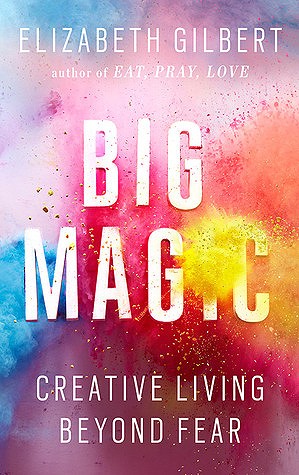
This is Gilbert herself, ten years on, writing directly about how to live with curiosity instead of fear. The subject is creativity, ideas treated almost as living things that visit you, the case for making things without quitting your day job, the uselessness of perfectionism, but the delivery is the same warm, emphatic, story-driven pep talk that powered Eat, Pray, Love, including tales from her own writing life before and after the memoir's freak success. For many readers it is the most useful book she has written.
It is self-help, not memoir: no journey, no Italy, no romance, and a structure of short themed sections rather than a story. Gilbert's certainty can also tip into the breezy, and readers who wanted the vulnerability of the bathroom-floor chapters may find this version of her armored by success. Pick it up when you want encouragement to start something, not when you want to be told another story.
Read this for the Italy feeling, the conviction that a place can feed a whole life.
Hemingway's posthumous memoir of being young, poor, and writing in 1920s Paris delivers the thing Gilbert's Rome section delivers: a city rendered so sensually, the cafes, the oysters and cold white wine, the walks, that reading it feels like being there. Both books are about a writer deciding that pleasure and attention are not frivolous but the actual work of living, and both make you want to book a flight. It is the finest pure prose on this list.
Everything else is different. Hemingway's sentences are spare where Gilbert's are chatty, there is no spiritual quest and no self-help takeaway, and the book's portraits of Fitzgerald, Gertrude Stein, and others are sharp-elbowed in a way Gilbert never is. It was also assembled from drafts after his death, so it reads as sketches rather than an arc. Choose it for atmosphere and craft, not for warmth.
Read this if you want to think about why travel changes us, not just watch it happen.
Alain de Botton's 2002 book asks the question Eat, Pray, Love acts out: what do we actually expect a place to do for us, and why does it so often disappoint? He pairs his own anticlimactic trips (Barbados, the Lake District, Madrid) with guides like Flaubert, Wordsworth, and Edward Hopper, and circles ideas Gilbert's readers will recognize, especially that we bring ourselves along everywhere we go. It is the analytical companion to her experiment, and it is frequently funny about the gap between the brochure and the self.
This is essayistic philosophy, not memoir; there is no crisis, no transformation, and de Botton's cool, ironic detachment is the opposite of Gilbert's open heart. Some readers find him illuminating and others find him precious. Pick it for the plane ride to your own trip, when you want your travel examined rather than narrated.
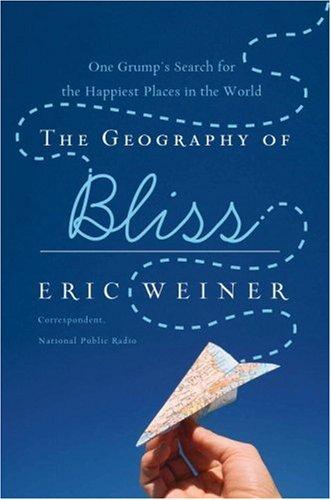
The Geography of Bliss: One Grump's Search for the Happiest Places in the World
by Eric Weiner
Read this if the around-the-world structure was your favorite part.
Eric Weiner's 2008 book is the closest structural match here: a year of deliberate travel, country by country (Iceland, Bhutan, Switzerland, Qatar, Moldova among them), organized around a single question, where in the world are people happy and why? Like Gilbert, Weiner blends reportage, self-examination, and humor, and like her he is openly using the itinerary to fix something in himself, in his case a career foreign correspondent's habitual gloom. Each chapter works as a standalone essay, which makes it an easy book to love in pieces.
The difference is distance. Weiner is a journalist interviewing researchers and locals, not a memoirist excavating a divorce, so the book stays lighter and more outward-facing; you learn more about Bhutan's Gross National Happiness than about Weiner's soul. There is also no romance and no spiritual practice. Choose it when you want the wanderlust and the wit without the emotional excavation.
Wild by Cheryl Strayed is the most common answer, and the best one. Both are memoirs by women who answer a life collapse with a long, deliberate journey, and both pair the physical trip with an interior recovery story. Wild is grittier and more grief-driven, with a hiking trail standing in for Gilbert's three countries, but readers who loved one almost always respond to the other.
Did Elizabeth Gilbert write a sequel to Eat, Pray, Love?
Yes. Committed (2010) picks up where the memoir ends, following Gilbert and Felipe, the man she meets in Bali, as immigration trouble pushes them toward a marriage she examines with deep skepticism. It is more research-driven and less beloved than the original. Big Magic (2015), included on this list, is not a sequel but is the book that best captures her voice for most fans.
Is Eat, Pray, Love a true story?
It is a memoir, so yes, with the usual caveats of the form. Gilbert really did spend a year traveling through Italy, India, and Indonesia after her divorce, on a book advance arranged before she left, and the people in it, including Felipe, whom she later married, are real. Critics have noted that the trip was professionally funded and planned as a book from the start, which is worth knowing but does not change what is on the page.
What should I read if I liked the spiritual parts more than the travel?
Start with Traveling Mercies by Anne Lamott, which has the same funny, flawed, confessional approach to faith without leaving California. The Alchemist offers the seeking in fable form if you prefer fiction. Beyond this list, readers who loved the ashram section often go to Autobiography of a Yogi by Paramahansa Yogananda, the tradition Gilbert's own practice draws on, or When Things Fall Apart by Pema Chödrön.
As an Amazon Associate, we earn from qualifying purchases. · About & methodology