6 books like Convenience Store Woman, from My Year of Rest and Relaxation to The Vegetarian: outsider women and the cost of refusing to be normal.
Updated June 11, 2026
Sayaka Murata's Convenience Store Woman is short, deadpan, and quietly radical. Keiko Furukura has worked the same Tokyo convenience store for eighteen years, and she is not trapped there; she is happy. The store's manual tells her how to speak, stand, and smile, and that script gives her a legible self that the outside world, with its demands for marriage, career, and normal feelings, never could. Murata's trick is the flat, affectless narration: Keiko reports society's expectations the way an anthropologist would, and the reader slowly realizes it is everyone else who looks strange.
Readers who want more tend to split three ways, and this list covers each. Some want more women refusing the scripts handed to them, which is where The Vegetarian, My Year of Rest and Relaxation, and The Bell Jar live, three very different registers of the same refusal. Some want more contemporary Japanese fiction about interior lives and womanhood, which Breasts and Eggs delivers directly. And some want the adjacent pleasure of Haruki Murakami's lonely, drifting protagonists, covered here by Colorless Tsukuru Tazaki, Killing Commendatore, and the rest of his catalog beyond.
A practical note: Convenience Store Woman is barely 160 pages and most of these are longer and darker. Nothing here replicates Murata's strange comic warmth exactly; her own Earthlings, much more disturbing, is the only true sequel in spirit. Start with The Vegetarian if you want intensity, My Year of Rest and Relaxation if you want the dark comedy, and Breasts and Eggs if you want the Japanese literary context.
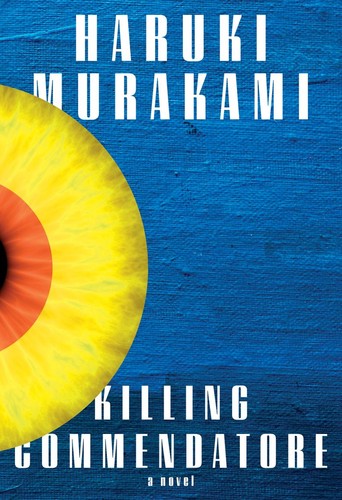
Read this only if you want to trade Murata's realism for full Murakami strangeness.
What this shares with Convenience Store Woman is the starting position: a solitary person who has stepped outside ordinary life, here a portrait painter who retreats to a mountain house after his wife leaves him, narrating his days with detached precision. The early chapters, a routine examined from the inside, isolation as a kind of clarity, will feel familiar to Murata readers. Then a bell rings in the night, a two-foot-tall figure from a painting comes to life, and the book becomes something Murata would never write.
This is a long, slow, digressive novel, over 650 pages, full of Murakami's signature furniture: mysterious pits, vanished women, art history, opera records. It demands patience that Murata's brisk 160 pages never asks for. Pick it only if you are already curious about Murakami and want a deep immersion; if you just want one Murakami, start with Colorless Tsukuru Tazaki or Norwegian Wood instead.
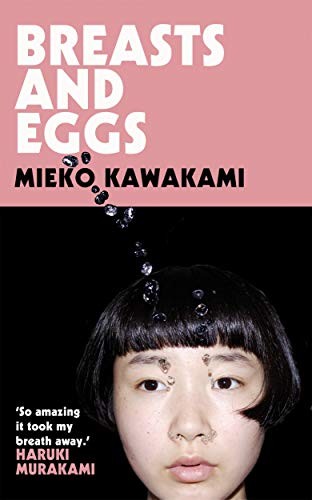
Read this if you want contemporary Japanese fiction about womanhood at full length.
Mieko Kawakami is the natural next Japanese writer after Murata, and Breasts and Eggs is her major work. It follows Natsuko, a working-class Osaka-born writer in Tokyo, her sister who is fixated on breast augmentation, and her silent teenage niece, then expands into Natsuko's decision about whether to have a child alone. Like Convenience Store Woman, it asks what a woman's body and life are for when the conventional answers (marriage, desire, family) hold no appeal, and it treats an unconventional choice with complete seriousness.
It is a much bigger, looser book than Murata's, more realist, more digressive, with long conversations about ethics and class instead of deadpan comedy. The strangeness in Murata becomes earnest inquiry in Kawakami. Pick it when you want to stay in contemporary Japan and go deeper rather than odder; readers who want odder should go to Murata's own Earthlings instead.
Read this for the funniest, meanest version of opting out of society.
Ottessa Moshfegh's narrator is Keiko's dark mirror: a young, privileged New Yorker who decides the correct response to modern life is to sleep through a year of it, assembling a pharmacy of sedatives with the help of a spectacularly negligent psychiatrist. Like Convenience Store Woman, it is narrated in a flat, unbothered voice by a woman who finds the rituals everyone else lives by absurd, and both books dare you to call the narrator the crazy one. The deadpan comedy is the closest tonal match on this list.
Where Keiko is earnest and rather innocent, Moshfegh's narrator is cruel, glamorous, and rich, and the book is far more caustic about everyone in it. It is also a New York novel set against the year 2000 with a specific historical endpoint, which gives it a shape Murata's book never reaches for. Choose it if Murata's affect appealed to you and you want it with sharper teeth and zero sweetness.
Read this for the classic that mapped this territory first.
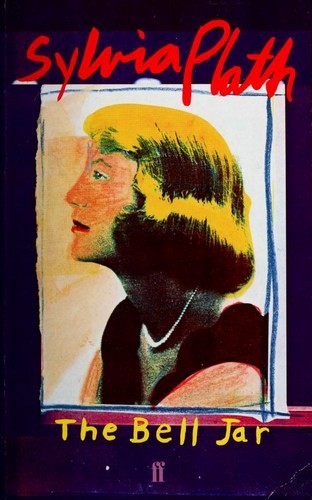
Sylvia Plath's only novel is the ancestor of every book on this list. Esther Greenwood, a talented college student interning at a New York magazine in the 1950s, can see exactly what society offers her, marriage, typing, motherhood, and feels herself suffocating under each option, the famous fig tree image of futures rotting unchosen. Like Keiko, she observes the rituals of normal womanhood with an estranged clarity that makes them look bizarre, and the prose has a dry wit people forget it has.
The crucial difference is that Esther's estrangement is suffering. Where Murata's Keiko is content and the conflict comes from outside, The Bell Jar descends into genuine mental illness, hospitalization, and electroshock treatment, drawn closely from Plath's own life. It is heavier and more painful, and it ends ambivalently. Read it if you want the historical foundation for the outsider-woman novel, and pair its anger with Murata's calm.
Colorless Tsukuru Tazaki and His Years of Pilgrimage
by Haruki Murakami
Read this for a quiet Japanese outsider written in a warmer key.
This is Haruki Murakami's most grounded recent novel and the best bridge from Murata into his work. Tsukuru Tazaki believes he is empty, a colorless man whose four closest friends cut him off without explanation years ago, and the book follows his patient attempt to find out why. Like Keiko, he is someone who suspects he lacks whatever ingredient makes other people legible to each other, and the novel takes that feeling of being a spectator to ordinary life completely seriously.
The differences matter: Murakami's melancholy is romantic and inward where Murata's is social and satirical, and there is no comedy of conformity here, just grief and slow repair. It is also a more conventional story, a mystery about friendship with an actual investigation and resolution. Choose it if what stayed with you was Keiko's loneliness rather than the satire, and you want a book that treats that loneliness gently.
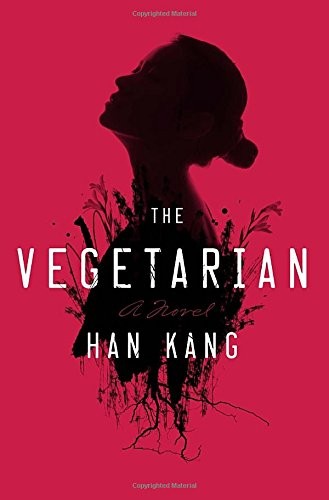
Read this if you want Keiko's quiet refusal taken to its most extreme conclusion.
Han Kang's novel is the most common companion recommendation for Convenience Store Woman, and the pairing makes sense. Yeong-hye, an unremarkable Korean wife, simply stops eating meat, and that one small refusal detonates her marriage, her family, and eventually her hold on ordinary life. Like Murata, Kang is interested in what happens when a woman opts out of one social expectation and the people around her respond as if she has broken the world. Both books make conformity itself look like the violent party.
The difference is temperature. Murata is deadpan and oddly funny; Kang is unsettling and often brutal, with sexual violence and psychiatric confinement on the page, and the story is told by the people around Yeong-hye rather than by her, so she stays opaque where Keiko narrates everything. It won the International Booker Prize in 2016. Pick it when you are ready for the same theme without the comic cushion.
The most common and best-fitting next reads are The Vegetarian by Han Kang, another short novel about a woman whose small refusal scandalizes everyone around her, and My Year of Rest and Relaxation by Ottessa Moshfegh, which matches Murata's deadpan comedy. If you want more Sayaka Murata herself, Earthlings is the next step, though it is far darker and more disturbing than Convenience Store Woman.
Are there other books by Sayaka Murata in English?
Yes. Earthlings is her best-known follow-up, a much more extreme novel about a woman who believes she is an alien; Life Ceremony is a story collection; and Vanishing World imagines a society where marital sex has disappeared. All push the social estrangement of Convenience Store Woman much further. Earthlings in particular divides readers, so do not expect the same gentle tone.
Is Keiko in Convenience Store Woman meant to be autistic?
Murata never labels Keiko, and the novel works without a diagnosis, but many readers, including many autistic readers, recognize themselves in her literal thinking, her comfort in routine and scripts, and her bafflement at unwritten social rules. Murata herself worked in convenience stores for years and has said Keiko draws on her own experience. The book is best read as leaving the question deliberately open.
Is Convenience Store Woman like Haruki Murakami's novels?
Only partly, and the shared surname is a coincidence. Both write Japanese loners observing life from the outside, which is why Colorless Tsukuru Tazaki and Killing Commendatore appear on this list. But Haruki Murakami leans into surrealism, jazz, and dreamlike quests, while Sayaka Murata stays in flat, satirical realism. If you want Murata's social satire, Mieko Kawakami's Breasts and Eggs is the closer Japanese companion.
As an Amazon Associate, we earn from qualifying purchases. · About & methodology