Books Like Can't Hurt Me: Master Your Mind and Defy the Odds
8 books like Can't Hurt Me by David Goggins, from The Obstacle Is the Way to Relentless: mental toughness, grit, and mindset reads ranked honestly.
Updated June 11, 2026
Can't Hurt Me works because it is not really a self-help book. It is a memoir first: David Goggins grew up with an abusive father, failed out of military prep, and weighed close to 300 pounds before he willed himself through Navy SEAL training (three Hell Weeks in a single year), ultramarathons, and a pull-up world record. The advice, the 40 percent rule, the accountability mirror, taking souls, lands because you watch him pay for every word of it. The book is profane, repetitive by design, and completely uninterested in your comfort, which is exactly why it converts people who roll their eyes at the genre.
Nothing on this list matches that intensity exactly, because almost nobody lives like Goggins. So the books below are sorted by which piece of Can't Hurt Me you want more of. If you want the philosophy of suffering made systematic, go to The Obstacle Is the Way or Relentless. If you want the science behind why Goggins's approach works, Grit and Mindset are the research versions of his story. And if you want the message with less screaming, Mark Manson, Jen Sincero, and Robin Sharma deliver gentler variations on owning your own life.
A practical note: several of these overlap heavily, and reading all eight back to back will feel like being lectured by eight different coaches saying related things. Pick two or three based on the labels below. The hooks tell you exactly which reader each one is for.
Our Top Picks
Best overall next read
The Obstacle Is the Way: The Timeless Art of Turning Trials into Triumph
Read this if the underdog arc gripped you more than the workout logs.
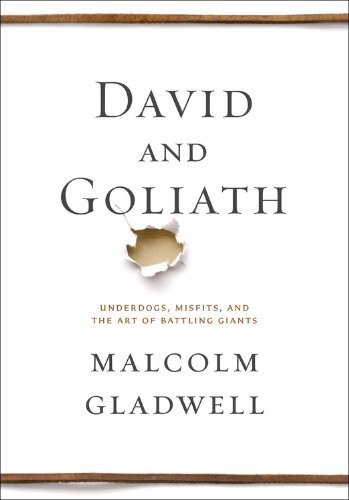
Malcolm Gladwell's book is about why apparent disadvantages, dyslexia, lost parents, being outgunned, sometimes produce people who win precisely because of what they lacked. That is the deep structure of Goggins's life: an abused, overlooked kid whose hardships became, in his telling, the engine of everything he achieved. Gladwell calls these desirable difficulties and traces them through stories from basketball to the civil rights movement.
Be clear about what this is not: it is not a self-help book, gives no advice, and asks nothing of you. Gladwell is a storyteller making an argument, and critics note he sometimes sands down evidence to fit it. It is also the easiest read on this list, genuinely entertaining over a weekend. Choose it when you want to think about adversity rather than be yelled at about it, and treat its conclusions as interesting rather than settled.
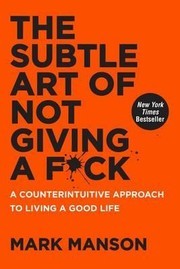
The Subtle Art of Not Giving a F*ck: A Counterintuitive Approach to Living a Good Life
by Mark Manson
Read this if you liked the bluntness but want jokes instead of Hell Week.
Mark Manson shares Goggins's central commitments: suffering is unavoidable, comfort is a trap, and taking full responsibility for your life is the only move that works. His chapter arguing that you must choose your struggle, that the question is not what you want but what pain you are willing to sustain, could be a thesis statement for Can't Hurt Me. The profanity and anti-positivity stance give it a similar permission-to-be-real appeal.
The execution is opposite, though. Manson is a blogger turned essayist, ironic and funny where Goggins is deadly serious, and his advice points toward caring about less rather than enduring more. There is no memoir spine and no physical feat to anchor it, so it can feel glib if you came straight from Goggins's childhood chapters. Pick it as a palate cleanser that keeps the honesty but drops the drill-instructor voice.
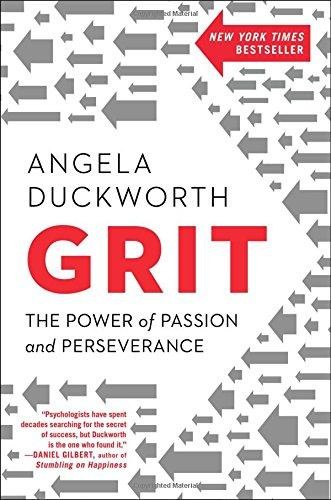
Read this if you want the research explaining why Goggins's approach actually works.
Angela Duckworth is a University of Pennsylvania psychologist who studied West Point cadets, spelling bee champions, and salespeople to ask why some people persist when equally talented people quit. Her answer, sustained passion plus perseverance, is essentially a peer-reviewed account of what Goggins demonstrates anecdotally. Her finding that effort counts twice (talent times effort builds skill, skill times effort builds achievement) is the academic cousin of the 40 percent rule.
This is a research book with a researcher's voice, so it trades Goggins's adrenaline for studies, scales, and caveats, and some chapters on parenting and education will feel far from Hell Week. Duckworth also emphasizes direction and purpose where Goggins emphasizes raw endurance, which is a useful correction if you finished Can't Hurt Me wondering what all that suffering should aim at. Best for readers who want to believe the message and need evidence to do it.
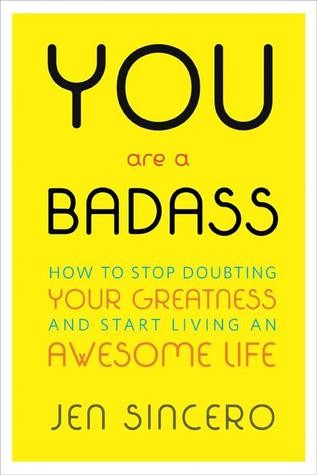
You Are a Badass: How to Stop Doubting Your Greatness and Start Living an Awesome Life
by Jen Sincero
Read this only if you want the motivation with the suffering removed.
Jen Sincero's bestseller shares one real thing with Can't Hurt Me: the insistence that the story you tell about yourself is the main thing holding you back, and that you can rewrite it starting today. Her chapters on self-sabotage and on acting before you feel ready rhyme with Goggins's accountability mirror, and for readers intimidated by his extremity, this is the most approachable on-ramp on the list to the same basic move.
Everything else is different. Sincero is breezy and jokey, leans on manifesting and the energy of the universe in ways Goggins never would, and asks for affirmations where Goggins asks for four a.m. runs. Readers who valued Can't Hurt Me precisely because it rejected feel-good shortcuts may find this book embodies what they were escaping. It earns its place as the gentle alternative, not as a substitute.
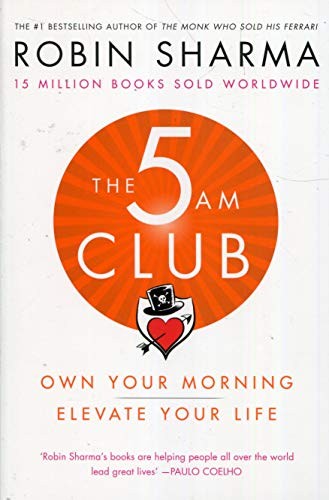
The 5 AM Club: Own Your Morning, Elevate Your Life
by Robin Sharma
Read this if you want Goggins's discipline reduced to one concrete daily habit.
Robin Sharma's book takes the part of Can't Hurt Me people most often imitate, getting up before dawn to work on yourself while everyone else sleeps, and builds an entire system around it: wake at five, then spend twenty minutes each on movement, reflection, and learning. For readers who finished Goggins wanting a repeatable protocol rather than a philosophy, this is the most prescriptive book on the list.
The packaging is the problem for Goggins fans. Sharma wraps the advice in a fictional parable about a billionaire mentoring an artist and an entrepreneur, and the dialogue is stiff, the branding heavy (the 20/20/20 Formula, the Twin Cycles of Elite Performance), and the tone closer to a seminar than a war story. The useful core fits in a chapter. Take it if you want the morning-routine blueprint; skip it if marketing language breaks the spell for you.
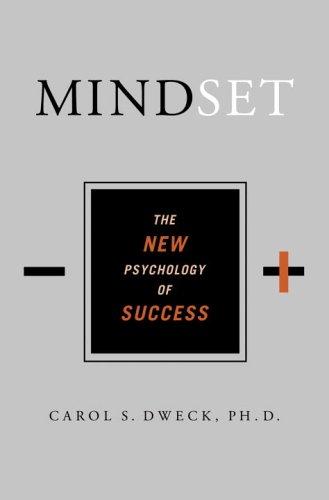
Read this for the single idea underneath every book on this list.
Carol Dweck's decades of Stanford research produced the fixed versus growth mindset distinction: whether you believe abilities are static or developable changes how you respond to failure, effort, and criticism. Can't Hurt Me is one long case study in growth mindset, a man who decided his past, his weight, and his test scores were starting conditions rather than verdicts. Dweck explains the machinery behind that decision and shows it operating in sports, business, relationships, and school.
It is the most measured book here, written by an academic for a general audience, and it has none of Goggins's narrative pull; the examples are illustrative rather than gripping, and the core idea is delivered early and then applied repeatedly. Read it if you want the foundational concept stated carefully, or if you are handing a book to someone who would bounce off Goggins's profanity. Skip it if you already accept the premise and want fuel rather than explanation.
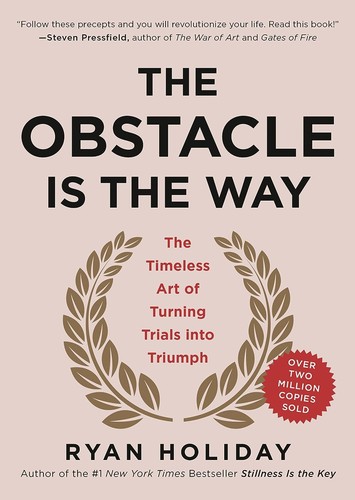
The Obstacle Is the Way: The Timeless Art of Turning Trials into Triumph
by Ryan Holiday
Read this if the 40 percent rule felt like ancient wisdom waiting for a name.
Ryan Holiday's book is the philosophical skeleton underneath what Goggins does by instinct. Built on Stoicism, particularly a line from Marcus Aurelius about the impediment to action advancing action, it argues that the obstacle in your path is the path, and illustrates the idea with short chapters on figures like John D. Rockefeller, Amelia Earhart, and Thomas Edison. Goggins treating Hell Week, racism, and his own broken feet as raw material for growth is this exact thesis lived out loud.
The difference is temperature. Holiday is calm, historical, and aphoristic where Goggins is raw and confessional; there is no memoir here, just a method. Some readers find that distance refreshing after Goggins's intensity, others find it bloodless. It is also short enough to finish in two sittings and works well as a book you revisit. If Can't Hurt Me lit the fire, this is the book that teaches you to bank it so it lasts.
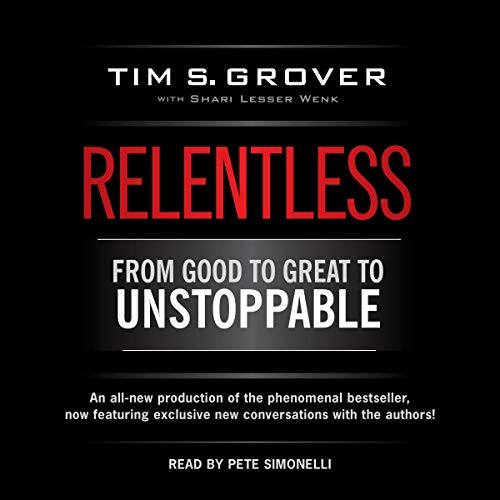
Read this if you want another voice that refuses to soften anything.
Tim Grover trained Michael Jordan, Kobe Bryant, and Dwyane Wade, and Relentless is the closest book on this list to Goggins's tone: blunt, demanding, and openly contemptuous of excuses. His framework sorts people into Coolers, Closers, and Cleaners, with Cleaners being the rare obsessives who crave pressure and never feel finished. Goggins is a textbook Cleaner, and readers who liked being challenged rather than comforted will recognize the register immediately.
The gap is credibility of source. Goggins did the suffering himself; Grover coached other people through it, and the book leans on athlete anecdotes and assertion rather than memoir or research. It is also more focused on competition and dominance than on healing from a brutal past, which was half of what made Can't Hurt Me land emotionally. Pick this for the fire, not for the depth, and expect a gym-speech energy throughout.
What should I read after Can't Hurt Me by David Goggins?
The most common next step is Goggins's own follow-up, Never Finished, which continues his story and sharpens the mental tools. After that, The Obstacle Is the Way by Ryan Holiday gives his approach a philosophical backbone, and Relentless by Tim Grover is the closest match in sheer intensity. If you want evidence rather than motivation, Grit by Angela Duckworth covers the science of perseverance.
Is Can't Hurt Me a true story?
It is a memoir, and the major events are documented: Goggins completed Navy SEAL training after multiple attempts at Hell Week, finished the Badwater 135 ultramarathon, and held a world record for pull-ups in 24 hours. As with any memoir, the framing and dialogue come from his recollection. The book also includes Challenge exercises after each chapter, which is why it is shelved as self-help despite being a life story.
What is the 40 percent rule in Can't Hurt Me?
It is Goggins's claim that when your mind tells you that you are done, you have typically used only about 40 percent of your real capacity. It is a motivational heuristic rather than a measured scientific finding, but it points at something exercise science does support: perceived exertion and actual physiological limits are not the same thing, and the brain protects margins you can train into.
Which of these books is most like Goggins in tone?
Relentless by Tim Grover. It is blunt, unapologetic, and built around the idea that exceptional people embrace pressure others avoid. The difference is that Grover writes as a trainer of elite athletes like Michael Jordan rather than from his own suffering, so it has the demand without the memoir. The Subtle Art of Not Giving a F*ck keeps the bluntness but swaps the intensity for humor.
As an Amazon Associate, we earn from qualifying purchases. · About & methodology