6 books like Bullshit Jobs by David Graeber, from James Suzman's Work to Daniel Pink's Drive: histories, critiques, and fixes for meaningless work.
Updated June 10, 2026
David Graeber's Bullshit Jobs grew out of a 2013 essay that struck a nerve hard enough to crash the website that published it. The book version, published in 2018, argues that a large share of modern jobs are pointless and that the people doing them privately know it. Graeber, an anthropologist, sorts the pointlessness into a memorable taxonomy (flunkies, goons, duct tapers, box tickers, taskmasters) and asks the harder question underneath: why does a supposedly efficient economy keep producing work that even its workers consider unnecessary, and why does it hurt so much to do it? He calls that hurt spiritual violence, and the phrase is the book's real subject.
Readers who finish it usually want one of three things, and the six books below cover all of them. Some want more big-picture thinking about what work is and where it is headed, which is where James Suzman's Work, Jeremy Rifkin's The End of Work, and Marcel van der Linden's Workers of the World come in. Some want to understand the human cost Graeber describes, which Daniel Pink's Drive and Andrew Solomon's The Noonday Demon approach from psychology rather than anthropology. And some just want a practical exit, which is what What Color Is Your Parachute? has been offering job changers for decades.
A practical note: these books vary widely in difficulty. Drive and Parachute read in a weekend, Suzman and Rifkin are substantial but accessible, and van der Linden is genuinely academic. Each pick below tells you which part of Bullshit Jobs it extends and what it asks of you, so match the book to your appetite.
Workers of the World: Essays Toward a Global Labor History
by Marcel van der Linden
Read this only if you want the serious academic backbone of labor history.
Marcel van der Linden is one of the leading figures in global labor history, and this essay collection widens the frame far beyond the offices Graeber writes about. It examines work and workers across societies and centuries, including forms of labor (coerced, unfree, informal) that standard accounts centered on Western wage workers leave out. If Bullshit Jobs made you suspect that our categories for what counts as a job are narrower and more arbitrary than they look, van der Linden makes that case with scholarly rigor.
Be honest with yourself about what this is, though: an academic volume written for researchers, with the apparatus and density that implies. There are no anecdotes from miserable consultants and no jokes. It rewards readers who want labor theory and historical method, and it will frustrate anyone hoping for another fast, furious read. Choose it if Graeber's footnotes interested you as much as his argument; skip it if the appeal was his voice.
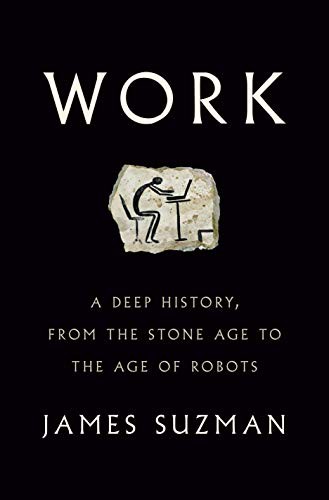
Read this if you want Graeber's anthropological lens applied to the whole history of work.
James Suzman is, like Graeber was, an anthropologist who thinks economics has the story of work backwards, and this 2020 book is the closest thing on this list to a companion volume. Drawing on his decades of fieldwork with the Ju/'hoansi of the Kalahari, Suzman traces how humans went from foragers who met their needs with modest effort to a culture that treats endless labor as natural and virtuous. His core argument, that scarcity and the work ethic are cultural inventions rather than human nature, is the deep history behind Graeber's complaint that we keep inventing jobs nobody needs.
The difference is temperament and scope. Where Bullshit Jobs is a polemic about the present, Suzman is writing a long, patient history that runs from early humans through farming, cities, and automation, and he is less interested in assigning blame. There is no taxonomy of flunkies and goons here, and less anger. Pick it if Graeber convinced you something is wrong with how we work and you now want to understand how we got here, told by a writer who is calmer but pointing at the same problem.
The End of Work: The Decline of the Global Labor Force and the Dawn of the Post-Market Era
by Jeremy Rifkin
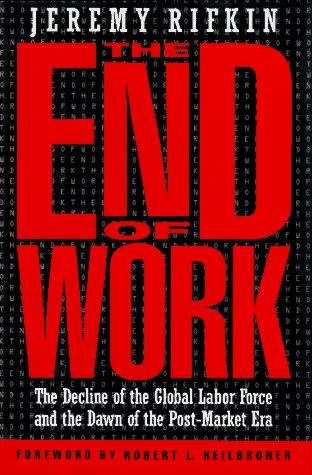
Read this for the 1990s warning that automation would hollow out employment.
Jeremy Rifkin's 1995 book argued that information technology and automation would steadily eliminate mass employment, and that societies would have to rethink income, leisure, and the civic sector as jobs disappeared. It pairs naturally with Bullshit Jobs because the two books describe complementary puzzles: Rifkin predicted technology would erase work, and Graeber asked why, decades into that technology, we all still seem busier than ever, suggesting that pointless jobs filled the space automation cleared. Graeber's argument lands harder once you have seen the prediction it complicates.
Read it knowing it is a product of its moment. Some of Rifkin's forecasts look prescient in the age of AI anxiety, others overshot, and the policy proposals (a shorter workweek, a strengthened third sector) carry a distinctly 1990s flavor. It is best approached as a foundational text in the automation debate rather than a current report. If you want the future-of-work thread of Bullshit Jobs pulled forward, this is where that conversation in its modern form began.
What Color Is Your Parachute? A Practical Guide to Job-Hunting and Career Change
by Richard N. Bolles
Read this if Bullshit Jobs made you want out of your own bullshit job.
Richard Bolles's perennial guide, updated annually for decades, is the practical answer to the problem Graeber diagnoses. Where Bullshit Jobs explains why so much work feels meaningless, Parachute starts from the assumption that you deserve work that fits who you are and walks you through finding it: self-inventory exercises, networking over job boards, and a method for identifying what you actually want to do rather than what you can merely tolerate. Its famous flower exercise is essentially a structured way to define a non-bullshit job for yourself.
Understand that this is the opposite of Graeber in spirit. Bolles has no critique of capitalism and no interest in why the system produces pointless work; his unit of analysis is one job seeker, and his tone is earnest and motivational where Graeber's is sardonic. Some of the optimism can grate if you have just absorbed a book about structural dysfunction. But if reading Graeber was the push and you now need a plan, this is the most road-tested one in print.
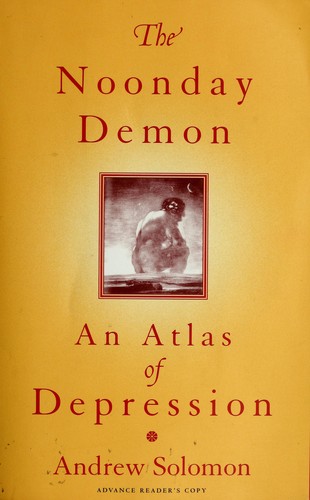
Read this for the deepest account of the misery Graeber calls spiritual violence.
Some of the most affecting pages in Bullshit Jobs are testimonies from workers describing how pointless jobs corroded them: listlessness, anxiety, a guilt they could not explain. Andrew Solomon's The Noonday Demon, which won the National Book Award in 2001, is the fullest map of that territory. Part memoir of Solomon's own severe depression and part wide-ranging investigation into its biology, treatment, history, and politics, it takes seriously the idea that suffering has social causes as well as chemical ones, which is exactly the bridge Graeber gestures at.
This is not a book about work, and that is the point of including it. It is long, heavy, and at times harrowing, with none of Graeber's comic energy, and readers in a fragile stretch should pace themselves. Choose it if the psychological thread of Bullshit Jobs is what stayed with you, or if you recognized yourself or someone you know in those testimonies. As an atlas of what meaninglessness can do to a mind, it has no real rival.
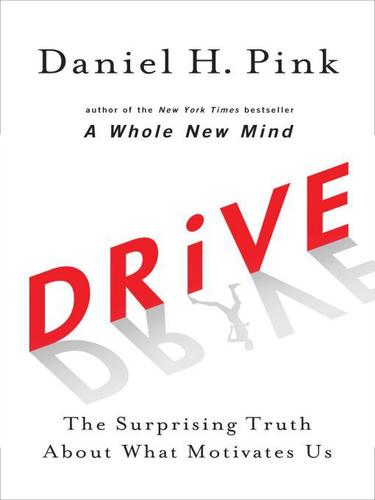
Read this if you want the psychology of why pointless work demoralizes people.
Daniel Pink's Drive supplies the motivational science underneath Graeber's central observation. Pink synthesizes decades of research showing that beyond basic pay, people are driven by autonomy, mastery, and purpose, and that carrot-and-stick management actively damages performance on meaningful tasks. A bullshit job, in Pink's terms, is a job stripped of all three drivers, which is why Graeber's box tickers and duct tapers feel so hollow even when the pay is fine. The two books reach compatible conclusions from completely different directions.
The difference is what each author wants to do with the diagnosis. Graeber is a radical asking why these jobs exist at all; Pink is a mainstream business writer offering managers and workers a framework for making jobs better, complete with case studies and a toolkit section. If Graeber's refusal to propose fixes frustrated you, Drive is the constructive follow-up. If you found his anger the point, Pink may strike you as someone optimizing the deck chairs. It is also the fastest read on this list.
The best single follow-up is Work: A History of How We Spend Our Time by James Suzman, another anthropologist asking why we work the way we do, but across the whole sweep of human history. If you want the psychology of meaningless work, go to Drive by Daniel Pink. If you want a practical way out of your own dead-end job, What Color Is Your Parachute? is the standard guide.
What does David Graeber mean by a bullshit job?
Graeber defines it as paid employment so pointless or unnecessary that even the person doing it cannot justify its existence, though they feel obliged to pretend otherwise. He distinguishes bullshit jobs from merely bad jobs: a cleaner's work is hard but useful, while a corporate box ticker may be comfortable but pointless. He sorts them into five types: flunkies, goons, duct tapers, box tickers, and taskmasters.
Did David Graeber write other books like Bullshit Jobs?
Yes. Debt: The First 5,000 Years is his most celebrated work, a sweeping anthropological history of debt and money, and The Utopia of Rules collects his essays on bureaucracy, which overlap directly with Bullshit Jobs. The Dawn of Everything, written with David Wengrow and published in 2021 after Graeber's death in 2020, rethinks the deep history of human societies.
Is Bullshit Jobs based on an essay?
Yes. The book expands Graeber's 2013 essay On the Phenomenon of Bullshit Jobs, published in Strike! magazine, which spread so widely that it was translated into many languages and inspired polls testing his claim. Surveys in the UK and elsewhere found that a substantial minority of workers doubted their own jobs made a meaningful contribution, and the book builds on hundreds of testimonies readers sent him in response.
As an Amazon Associate, we earn from qualifying purchases. · About & methodology