7 books like Buddenbrooks by Thomas Mann, from Middlemarch to The Magic Mountain: family sagas, social novels, and the slow decline of old money.
Updated June 10, 2026
Thomas Mann published Buddenbrooks in 1901, at twenty-five, and it carried him toward the Nobel Prize, which the Swedish Academy awarded in 1929 with this novel singled out by name. Its subtitle says exactly what it is: The Decline of a Family. Over four generations of a grain-merchant dynasty in a north German trading city modeled on Mann's native Lübeck, commercial vigor gives way to nerves, art, and bad teeth, and the family firm erodes in step with the family's vitality. The radical idea, delivered with patient irony rather than melodrama, is that refinement itself can be a symptom of decay: the more sensitive and inward each generation becomes, the less fit it is to run the business.
No single book replicates that, so this list is sorted by what you want more of. If you want the great social novels of marriage, money, and convention closing in on individuals, go to Middlemarch, The Portrait of a Lady, The Age of Innocence, or Howards End. If you want the family as a battlefield of ideas and faith, The Brothers Karamazov is the heavyweight. And if you want more of Mann himself, or of the German tradition he fed, The Magic Mountain and Hesse's The Glass Bead Game continue the line.
A practical note: these are long nineteenth and early twentieth century novels, and pace is part of the form. Buddenbrooks readers already know that the slow accumulation of dinners, marriages, and ledgers is the point. If you read Mann in English, the John E. Woods translation of Buddenbrooks is widely preferred, and his Magic Mountain likewise.
Read this if you want to follow Mann from the family saga into the novel of ideas.
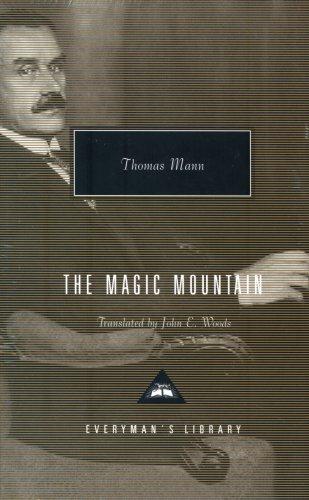
This is Mann's other towering novel, published in 1924, and the natural next step for anyone who responded to the intellectual undercurrent of Buddenbrooks. Hans Castorp visits his cousin at a tuberculosis sanatorium in Davos for three weeks and stays seven years, and the mountain becomes a sealed stage where pre-1914 Europe argues itself toward catastrophe through the duels of the humanist Settembrini and the radical Naphta. The fascination with illness as a spiritual condition, already present in little Hanno Buddenbrook, here takes over the entire book.
Be honest about the difference in difficulty. Buddenbrooks, for all its length, is a realist family story anyone can follow; The Magic Mountain is a philosophical novel where chapters are spent on time, biology, and politics, and the plot is deliberately thin. Readers who loved the Buddenbrook dinners and inheritance fights sometimes bounce off it. Come for Mann's irony and prose, which are fully intact, but expect a colder, stranger, more demanding book.
Read this for the merchant class examined with the same ironic sympathy, in English.
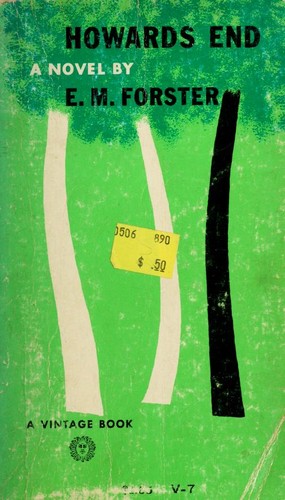
Forster's 1910 novel is the closest English cousin to what Mann does with the Buddenbrooks: it takes commerce seriously as a subject. The Wilcoxes are the Buddenbrook type, practical business people who keep England running, and the Schlegel sisters (pointedly half German) are the artistic, inward temperament that the Buddenbrook line declines into. Where Mann strings the two temperaments across generations of one family, Forster collides them in a single generation through marriage, a contested inheritance, and the house of the title.
Forster is warmer and far more compact, under four hundred pages against Mann's seven-plus hundred, and he holds out hope of connection between the two ways of being that Mann treats as a one-way slide. The famous epigraph, only connect, is almost a rebuttal to Buddenbrooks' fatalism. Pick this if you want the same questions about commerce versus culture answered with English comedy and a measure of optimism.
Read this if you want the family novel at maximum spiritual intensity.
Dostoevsky's last novel, finished in 1880, is the other great nineteenth century book about a family as the carrier of a civilization's sickness. The dissolute father Fyodor Karamazov and his sons, the sensualist Dmitri, the intellectual Ivan, and the believer Alyosha, each embody a force pulling Russia apart, much as each Buddenbrook generation embodies a stage of bourgeois decline. Both novels build toward a death that puts the family itself on trial, and both use children, Hanno and the schoolboy Ilyusha, to land their hardest blows.
The temperature is completely different. Mann observes his family with detached, faintly amused irony; Dostoevsky writes at a constant boil, with confessions, scandals, and the Grand Inquisitor chapter, one of the most argued-over passages in fiction. There is little of Mann's texture of business and domestic routine. Choose it when you want the questions underneath Buddenbrooks, what a family owes God and each other, shouted instead of murmured.
Read this for one consciousness given the depth Mann gives a whole dynasty.
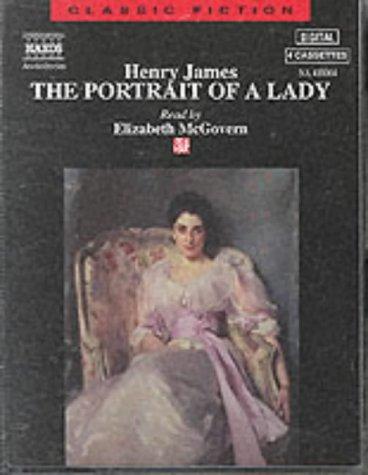
Henry James's 1881 masterpiece shares the Buddenbrooks engine: money and marriage as the machinery that decides a life. Isabel Archer, a young American made suddenly rich by an inheritance, comes to Europe determined to choose freely, and her fortune attracts exactly the wrong people. Like Tony Buddenbrook, whose marriages are arranged and rearranged for the firm's sake, Isabel discovers that wealth narrows choices as often as it widens them, and James, like Mann, lets the trap close slowly, in drawing rooms, without a single melodramatic scene.
The difference is focus. Mann spreads his attention across four generations; James pours the entire novel into one woman's mind, and the famous chapter of Isabel sitting up all night thinking is the kind of interior set piece Buddenbrooks never attempts. The prose is also more elaborate, especially if you stray into late James. Pick this when you want psychological depth over dynastic sweep.
Read this if you want the best overall next read, a whole town instead of one family.
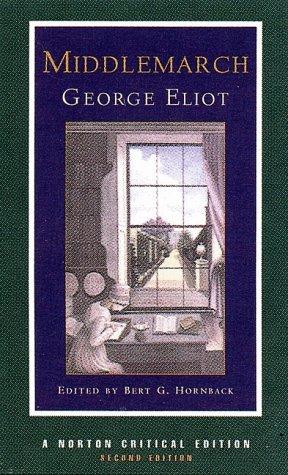
George Eliot's 1871-72 novel does for a provincial English town what Buddenbrooks does for a Lübeck merchant house: it shows how ideals are ground down by money, marriage, and the slow pressure of community expectation. Dorothea Brooke's disastrous idealistic marriage and Lydgate's compromised medical ambitions are the same story Mann tells through Tony's sacrificed engagement and Thomas Buddenbrook's exhausted senatorship, the gap between what people mean their lives to be and what the social machinery lets them become. Eliot matches Mann's irony and exceeds his generosity.
The structural difference is breadth: instead of one family across time, Eliot interweaves half a dozen households across a few years, so the book reads as a web rather than a slide. It is also, by common consent, one of the two or three greatest novels in English, so the risk is low. If you take only one recommendation from this list, take this one.
Read this for the decline of a merchant aristocracy told from inside it.
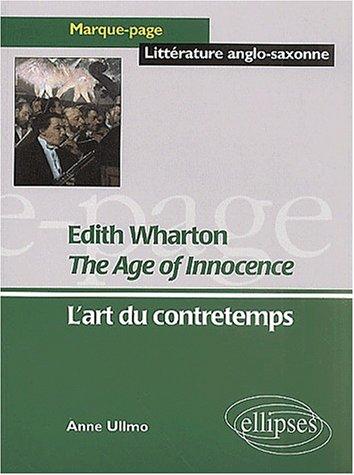
Wharton's 1920 novel, the first by a woman to win the Pulitzer Prize for Fiction, is Buddenbrooks' nearest American relative. Old New York's interlocking families, with their rituals of dinners, opera boxes, and approved marriages, are the same closed merchant patriciate as Mann's Lübeck, observed by an insider with the same blend of affection and autopsy. Newland Archer, choosing duty and May Welland over the Countess Olenska, is a Thomas Buddenbrook figure: the man who upholds the system at the cost of his inner life, and knows it.
Wharton is swifter and more pointed than Mann, the whole tragedy done in around three hundred pages with a single love triangle at its center, and her irony cuts harder at the social code itself. What you lose is the generational sweep; the famous last chapter jumps decades to show the old world already vanished, doing in twenty pages what Mann does in seven hundred. An excellent choice if you want Buddenbrooks' themes at a fraction of the length.
Read this if Hanno's chapter was your favorite, the aesthetic temperament followed to its end point.
Hesse's final novel, published in 1943 and central to his 1946 Nobel Prize, picks up exactly where Buddenbrooks leaves the family line: at the point where art and intellect have fully replaced worldly competence. Joseph Knecht rises through Castalia, a future province where an elite order devotes itself to a contemplative game synthesizing music, mathematics, and all human knowledge, sealed off from politics and commerce. It is the Buddenbrook decline inverted into a utopia, and then questioned: Knecht comes to suspect that a life of pure mind, cut off from the world, is its own kind of decay. Hesse and Mann were friends and mutual admirers, and the kinship shows.
This is the furthest pick from a family saga: no dynasty, no business, a frame of futuristic biography with appended poems and parable lives. It is slow, cerebral, and divides readers far more than anything else here. Choose it only if the ideas in Mann, music versus commerce, spirit versus life, interest you as much as his storytelling.
For the full multigenerational decline of a bourgeois family, the most cited companions are John Galsworthy's The Forsyte Saga and Giuseppe Tomasi di Lampedusa's The Leopard, neither of which is on this list. From the books above, The Age of Innocence is closest in subject, a merchant aristocracy consumed by its own code, and Middlemarch is closest in quality and ironic temperament.
Should I read Buddenbrooks or The Magic Mountain first?
Buddenbrooks. It is earlier, far more accessible, and a conventional realist narrative, while The Magic Mountain is a slower novel of ideas with minimal plot. Many readers who start Mann with The Magic Mountain stall; almost no one stalls in Buddenbrooks. Reading them in publication order also lets you watch Mann's themes, especially illness and the artist temperament, grow from one book into the other.
Which translation of Buddenbrooks is best?
Most readers and critics prefer John E. Woods's 1993 translation, which is noticeably more natural and funnier in English than H. T. Lowe-Porter's older version, the standard for most of the twentieth century. Woods also translated The Magic Mountain, Doctor Faustus, and Joseph and His Brothers, so you can stay with one translator across Mann's major novels.
Is Buddenbrooks based on Thomas Mann's real family?
Substantially, yes. The novel closely tracks Mann's own family, prosperous grain merchants and senators in Lübeck whose firm was liquidated in his father's generation, and the unnamed city is recognizably Lübeck. The portraits were close enough that the book caused real offense there. Mann drew on family papers and relatives for details, though the characters, especially Hanno, are shaped by his own artistic self-diagnosis rather than strict biography.
As an Amazon Associate, we earn from qualifying purchases. · About & methodology