9 books like As I Lay Dying, from The Sound and the Fury to Beloved and Blood Meridian: Southern Gothic, fractured narration, and family burdens.
Updated June 11, 2026
As I Lay Dying is the Faulkner novel people actually finish, and it earns that. Fifty-nine short chapters, fifteen narrators, one coffin: the Bundren family hauls their dead mother Addie across flooded Mississippi rivers and burning barns to bury her in Jefferson, and every voice in the wagon (Darl's eerie clairvoyance, Vardaman's child-logic, Addie speaking from inside the coffin, the five-word chapter 'My mother is a fish') tells a different version of the same disaster. It is stream of consciousness, but compressed and darkly funny, a tragedy that keeps tipping into farce.
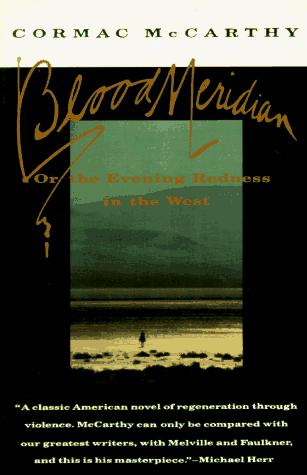
What you want next depends on which of those things hooked you. If it was the fractured, multiple-voice narration, The Sound and the Fury is the same technique pushed further, and The Things They Carried fractures truth itself. If it was the Southern Gothic atmosphere of grotesques and moral dread, Light in August, A Good Man is Hard to Find, and Their Eyes Were Watching God keep you in that soil. If it was the family carrying an unbearable past through a punishing journey, Beloved, The Grapes of Wrath, and McCarthy's The Road and Blood Meridian each take one strand of that and run.
A practical note: nothing here is harder than the book you just finished. As I Lay Dying is often called the gentler entry point to Faulkner, so if you got through Darl and Vardaman, you are equipped for everything below, including The Sound and the Fury's notoriously difficult Benjy section. Each pick says exactly what it shares with the Bundrens and where it goes its own way.
Read this if the multiple narrators were the point for you.
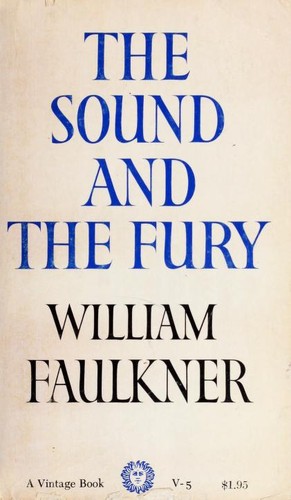
Published a year before As I Lay Dying, this is Faulkner working the same machinery at full intensity: a doomed Mississippi family (the Compsons this time, fallen aristocracy rather than poor farmers) told through rotating interior monologues, each narrator unreliable in his own way. The first section belongs to Benjy, a cognitively disabled man whose mind slides between decades without warning, and it makes Vardaman's chapters look like plain speech. The obsessions are the same: a family decaying around an absent woman, brothers who cannot say what they feel, time as a wound.
It is harder, and you should know that going in. Where As I Lay Dying gives you a road trip's forward momentum, The Sound and the Fury circles, and many readers need the appendix or a guide for the first hundred pages. The reward is that it is widely considered Faulkner's masterpiece, and the Quentin section contains some of the best prose in American fiction. Read it second, not first, exactly as you are doing.
Read this if you want Faulkner with a plot you can hold onto.
This is the same Yoknapatawpha County, the same Southern Gothic register of violence, religion, and ruin, but told mostly in third person with a narrative drive As I Lay Dying only gestures at. Two journeys structure it: Lena Grove, pregnant and serene, walking across the South to find the father of her child, and Joe Christmas, a man of ambiguous race whose life unravels into murder. Like the Bundren novel, it is built on people doggedly carrying their burdens down Mississippi roads while the community watches and judges.
The difference is scope and subject. As I Lay Dying stays inside one family; Light in August takes on race, lynching, and Calvinist cruelty across a whole society, and it is roughly twice as long. It is the Faulkner novel most often recommended to readers who admired his vision but fought his style, because the sentences open up here. Pick it if you want the world of As I Lay Dying widened rather than the technique intensified.
Read this for the dead mother's presence made literal.
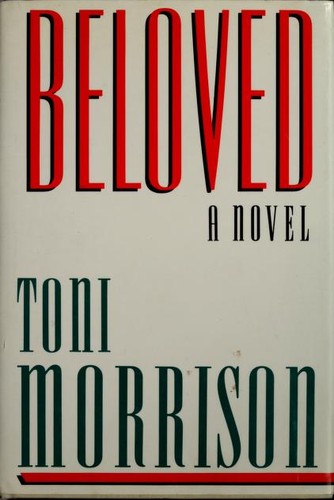
Toni Morrison read Faulkner closely (she wrote her master's thesis partly on him), and Beloved is the novel where the inheritance shows most. Addie Bundren narrates from her coffin; Morrison goes further and lets the dead daughter return in the flesh. Both books are about a family organized around a dead woman who will not stay buried, both move through fractured chronology and shifting voices, and both treat the past as a physical weight the living must haul. Sethe, a formerly enslaved woman haunted by what she did to keep her children from slavery, is as unforgettable as any character Faulkner wrote.
Where it differs is moral scale. The Bundrens' suffering is private and often absurd; Beloved's suffering is the suffering of slavery itself, and the book has none of Faulkner's dark comedy. It is also more lyrical, with prose that crests into incantation. This is the strongest novel on the list and the best answer to the question of who carried Faulkner's methods forward. Brace for it; it earns its reputation as devastating.
Read this if you want the South in a voice full of light instead of dread.
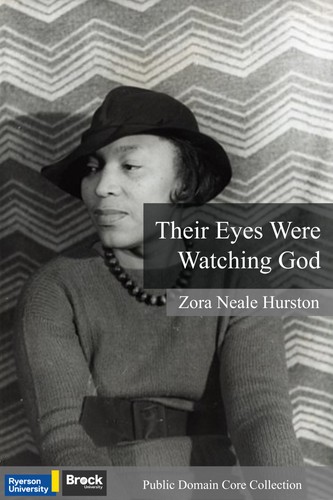
Zora Neale Hurston was writing the rural South in the same decade as Faulkner, with the same fidelity to spoken dialect and the same insistence that poor country people have inner lives worth a whole novel. Janie Crawford's story moves through three marriages, a hurricane, and a flood (a set piece that stands with the Bundrens' river crossing) toward something Faulkner rarely allows his characters: self-possession. The frame is even similar, a community of porch-sitters judging a woman who walks back into town, much as neighbors narrate and judge the Bundrens.
The temperament is the opposite, though, and that is the reason to read it. Where As I Lay Dying is claustrophobic and fatalistic, Hurston's novel is expansive, sensual, and finally affirming; Janie gets the interiority Addie was denied in life. The dialect-heavy dialogue takes a few pages to settle into. Pick this if you loved the Southern ground of Faulkner but want to see it grown into something other than ruin.
Read this for the family journey with the despair pointed at a target.
This is the other great American novel about a poor family loading everything onto a dying vehicle and traveling toward a promise that may be empty. The Joads' migration from Dust Bowl Oklahoma to California, published nine years after As I Lay Dying, has the same anatomy: a matriarch holding the family together, a death on the road, sons pulling in different directions, and a destination that keeps receding. Steinbeck even alternates the Joad chapters with choral interchapters in many voices, a gentler cousin of Faulkner's polyphony.
The crucial difference is intent. Faulkner offers no politics and no comfort; the Bundrens' ordeal means whatever each narrator says it means. Steinbeck is openly furious on his characters' behalf, and the novel is an argument about economic injustice as much as a story. The prose is far more accessible. Choose it if you want the family-odyssey structure with moral clarity and momentum, and skip it if Faulkner's refusal to editorialize was exactly what you admired.
Read this if the grim journey itself was what gripped you.
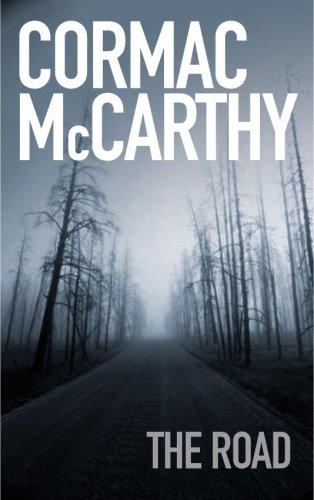
McCarthy is the most direct living heir to Faulkner's prose (early reviewers said so constantly), and The Road strips the journey narrative down to its bones: a father and son pushing a shopping cart through an ash-covered America toward the coast, carrying their dead world with them the way the Bundrens carry Addie. The same questions drive it, what we owe the dead and the dying, what keeps people moving when the errand looks hopeless, and the same flat country speech carries enormous weight.
It is far sparer than Faulkner. One point of view instead of fifteen, short declarative fragments instead of looping interior monologue, and no community, no comedy, no Mississippi, just the two of them and the cold. It is also the most emotionally direct book on this list, and the easiest to read in a sitting. Pick it when you want the elemental version of the trek, and save Blood Meridian for when you want McCarthy at full Faulknerian density.
Read this for Southern Gothic at its sharpest, in small doses.
Flannery O'Connor is the other pillar of Southern Gothic, and this collection is the place to meet her. The title story, a family road trip across Georgia that ends in an encounter with an escaped killer called The Misfit, has the exact As I Lay Dying mix you may not have known you wanted more of: a bickering family in a car, grotesque comedy, and sudden, biblical violence. Like Faulkner, O'Connor writes poor Southern characters without condescension and finds the eternal questions inside their pettiness.
The differences are form and faith. These are short stories, each a closed trap that springs in under thirty pages, so the slow accumulation of Faulkner's novel is traded for shock. And O'Connor is a deliberately Catholic writer; the violence in her stories is meant to crack characters open to grace, where Faulkner leaves meaning unsettled. If Anse Bundren's shameless self-justification was your favorite flavor of awful, her people will feel like family.
Read this if it was the voice in the head, not the South, that held you.
The honest connection here is technique: a novel that lives entirely inside one consciousness, narrated in a voice so particular you could identify it from a single sentence. Holden Caulfield's looping, digressive, self-contradicting monologue is doing what Darl's and Vardaman's chapters do, showing you a mind under strain from the inside, including the things it cannot admit to itself. Grief sits under both books too; Holden's dead brother Allie haunts his narration the way Addie haunts the wagon.
Everything else is different, and you should choose it knowing that. Prep schools and Manhattan instead of rural Mississippi, one narrator instead of fifteen, and a register of adolescent irony rather than Faulkner's high tragedy. It is the lightest, fastest read on this list. Pick it as a palate cleanser that still respects what you came for, the unreliable first-person voice, and skip it if Southern setting and family burden were the whole appeal.
Read this only if you want the violence and the sentences turned all the way up.
This is McCarthy's masterpiece and the book where his debt to Faulkner is most audible: long, unpunctuated, King James-inflected sentences, a journey across a pitiless landscape, and death treated as the landscape's native language. Following a teenage runaway with a gang of scalp hunters along the 1850s Texas-Mexico border, it asks the question As I Lay Dying keeps circling, whether there is any meaning in suffering at all, and answers it through Judge Holden, one of the most terrifying figures in American literature.
Be honest with yourself about what you are signing up for. The violence is relentless and graphically rendered, there is no character to root for in the Bundren way, and the prose demands the same slow attention Faulkner does, sometimes more. Readers tend to find it either the greatest American novel since Faulkner or unbearable, with little middle ground. Come to it for the language and the metaphysics, not for plot or comfort.
The Sound and the Fury, by Faulkner himself, is the closest match: another Mississippi family told through rotating interior monologues, written just a year earlier. Outside Faulkner, Beloved is the strongest comparison, a fractured, many-voiced novel about a family haunted by a dead woman, written by Toni Morrison, who studied Faulkner closely.
Is As I Lay Dying a good first Faulkner, and what should I read next?
Yes, it is usually recommended as the entry point: it is short, the chapters are brief, and the burial journey gives it forward motion his other major novels lack. The standard next steps are The Sound and the Fury if you want the technique deepened, or Light in August if you want a more conventionally told story in the same world. Absalom, Absalom! is generally saved for last.
What is Southern Gothic, and which books here fit it?
Southern Gothic uses the American South's decayed grandeur, poverty, and religious intensity as the setting for grotesque characters and dark, often violent stories. Faulkner and Flannery O'Connor are its two defining writers, so Light in August and A Good Man is Hard to Find are the purest examples here. Beloved and Their Eyes Were Watching God share the Southern ground but are usually classed apart from the genre.
Why does As I Lay Dying have so many narrators?
Faulkner uses fifteen narrators across fifty-nine chapters so that no single account of the Bundrens' journey is authoritative; each family member and neighbor reveals motives the others cannot see, including Addie herself speaking after her death. The method turns a simple burial trip into a study of how differently people inside the same family experience the same events. Faulkner claimed he wrote it in about six weeks without changing a word.
As an Amazon Associate, we earn from qualifying purchases. · About & methodology