6 books like Artemis by Andy Weir, from Project Hail Mary to Six Wakes: lunar heists, hard sci-fi problem-solving, and space crime matched to what you loved.
Updated June 10, 2026
Artemis is Andy Weir's second novel, and it is a stranger beast than The Martian: a heist caper set in humanity's only city on the Moon. Jazz Bashara is a small-time smuggler in the domes of Artemis who takes a sabotage job that spirals into a conspiracy over who controls the city's economy. The Weir signatures are all here, the worked-out engineering (welding in vacuum, aluminum smelting, EVA suit failure modes), the wisecracking first-person narrator, the plot that advances by solving physical problems one at a time. What is different is the setting: a functioning lunar society with tourists, guilds, organized crime, and a barter currency, which makes Artemis as much a crime novel as a space novel.
Readers who finish it tend to want one of three things, and this list covers each. If you want more Weir, his other two novels (The Martian and Project Hail Mary) are the obvious and best next stops, and both are stronger books than Artemis. If the crime-in-space angle hooked you, Six Wakes delivers a locked-room murder mystery on a starship. And if it was the texture of an off-Earth society you liked, Red Mars and The Space Between Worlds dig into colonization and inequality with far more ambition, while Cinder offers a lighter, YA take on a scrappy heroine in a futuristic city.
A practical note: Weir's three novels stand alone and can be read in any order, so do not feel obliged to have read The Martian first. Red Mars is the one long commitment on this list; everything else moves fast. Each pick below tells you which part of Artemis it echoes and where it goes its own way.
Read this if you have somehow not yet read the book that made Andy Weir.
This is Weir's debut and still his purest expression of the formula that powers Artemis: a sarcastic, hyper-competent narrator survives by working scientific problems in sequence. Mark Watney is stranded alone on Mars after his crew evacuates, and the entire novel is him farming potatoes in his own waste, repurposing rover parts, and doing arithmetic to stay alive, all delivered in log entries full of the same jokes-under-pressure voice Jazz Bashara uses. If you enjoyed the welding and smelting digressions in Artemis, this book is that pleasure at full strength, with nothing else competing for attention.
The difference is focus. There is no city, no heist, no cast of schemers, just one man, a planet, and the people on Earth trying to bring him home, which most readers find makes it the tighter and better book. Artemis tried to bolt Weir's problem-solving engine onto a crime plot; The Martian is the engine running clean. If Artemis was your first Weir, expect this to be an upgrade rather than a step sideways. It is also the rare hard sci-fi novel that works for people who do not normally read science fiction.
Read this for Weir at his best, with a bigger heart than either of his other books.
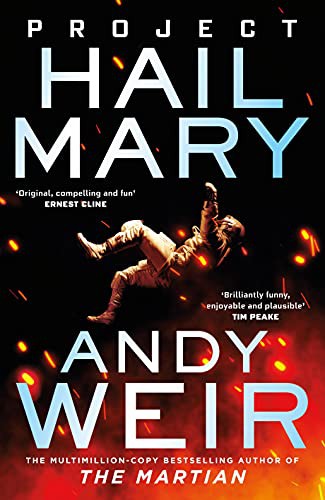
Project Hail Mary is widely considered Weir's strongest novel, and it shares the exact DNA that made Artemis fun: a lone clever narrator, science as plot, and humor as the pressure valve. Ryland Grace wakes alone on a spaceship with no memory of who he is or why he is there, and the story unfolds on two tracks, his slow recovery of the mission's purpose and his improvised solutions to a threat that could end life on Earth. The problem-solving is even more inventive than in Artemis, ranging across physics, biology, and linguistics rather than industrial engineering.
Where it differs is emotional reach. Artemis is a caper that keeps things light; Project Hail Mary builds to a genuinely moving relationship at its center that no one finishes the book unaffected by, and saying more would spoil it. It is longer than Artemis but reads faster, because the amnesia structure keeps feeding you revelations. If you only take one recommendation from this list, take this one. It works equally well whether Artemis left you satisfied or slightly underwhelmed.
Read this if the lunar city itself interested you more than the heist.
The best thing in Artemis is arguably not Jazz or the caper but the city: how a Moon settlement gets built, who owns it, how its economy and politics actually function. Kim Stanley Robinson's Red Mars is the deepest treatment of those questions in science fiction. It follows the first hundred colonists on Mars across decades as they terraform the planet and fight over what kind of society to build, with corporations, national blocs, and revolutionaries pulling in different directions. The engineering is as rigorous as Weir's, but Robinson extends the same rigor to economics, ecology, and governance.
Be clear about what you are signing up for, though. This is a long, dense, multi-viewpoint novel that opens a trilogy, and it moves at a fraction of Artemis's pace; there are chapters of geology and political argument between the action beats. There is no snarky narrator holding your hand. Pick it up if Artemis left you wanting the full systems-level version of an off-Earth colony, and skip it if what you wanted was banter and momentum.
Read this for a scrappy outsider heroine in a stratified future, with multiverse stakes.
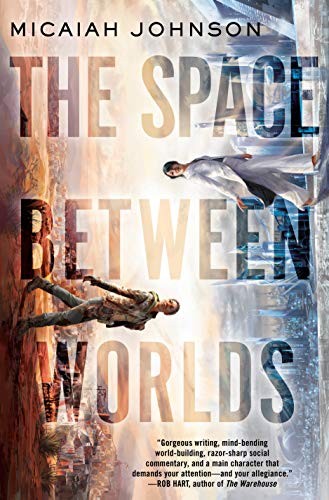
Micaiah Johnson's debut shares Artemis's most underrated strength: a protagonist from the bottom of a stratified society using the system's blind spots to survive. Cara works as a traverser, traveling to parallel Earths, a job she can only hold because she is dead on almost all of them, killed young by the poverty she was born into. Like Jazz Bashara, she is an outsider hustling inside an economy built by and for richer people, and the book is sharp about class, desert wastelands versus walled cities, in a way Artemis only gestures at.
It is a different flavor of science fiction, though: the multiverse premise is more speculative than Weir's nuts-and-bolts engineering, and the book cares more about identity, complicity, and a slow-burn romance than about technical problem-solving. The plot is a mystery that turns conspiracy, so the thriller momentum is there, but nobody does any welding. Choose it if Jazz's voice and position in her world were what you liked; pass if the appeal of Artemis was strictly the hard science.
Read this if you want the crime story in space played as a full murder mystery.
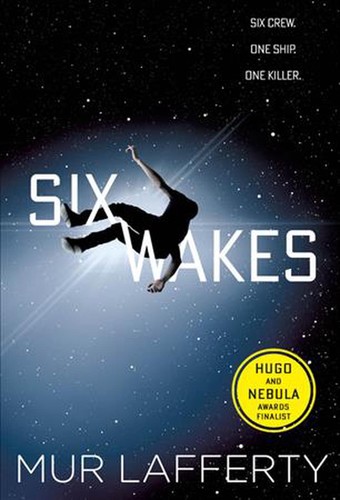
Artemis is a heist; Six Wakes is the other great crime template, the locked-room whodunit, executed on a generation ship. Six clones wake in fresh bodies to find their previous selves murdered, the ship sabotaged, and decades of memory missing, meaning one of them is the killer and none of them knows which. Mur Lafferty gives it the same pleasures that made the Artemis conspiracy fun, criminals with pasts, shifting alliances, a confined setting where every system can be weaponized, and the cloning rules are worked out with a rigor Weir readers will appreciate.
The tone is darker and more claustrophobic than Artemis's breezy caper energy, and the science is character-driven rather than engineering-driven: the ideas are about memory, identity, and the ethics of cloning rather than how to smelt aluminum. The backstories unspool in flashbacks, so it asks a little more patience than Weir's straight-ahead plotting. It was a Hugo and Nebula finalist, and it is the best pick here for readers who realized the mystery was the part of Artemis they enjoyed most.
Read this only if you want a lighter, YA spin on a resourceful mechanic heroine.
Cinder is the outlier on this list, a young adult retelling of Cinderella in which the heroine is a cyborg mechanic in the plague-ridden city of New Beijing. What it shares with Artemis is the heroine herself: Cinder is technically gifted, socially looked down on, and dragged into a political conspiracy far above her station, which is Jazz Bashara's exact situation transposed into a fairy-tale frame. Marissa Meyer keeps the pages turning, and there is even a Moon connection, since the series' villains are the Lunars, rulers of a Moon colony.
Know what it is not: there is no hard science here, and the engineering is set dressing rather than plot. The romance with Prince Kai and the fairy-tale beats put it firmly in YA territory, and it opens a four-book series (The Lunar Chronicles) that commits you to a longer arc. Pick it up for a fast, fun read or for a younger reader who liked the idea of Artemis but not its profanity; skip it if Weir's technical rigor is non-negotiable.
Weir's other two novels are the strongest follow-ups. Project Hail Mary is his best book, combining the science-driven survival plot with a surprisingly emotional core, and The Martian is the leaner original version of his formula. Outside Weir, Six Wakes by Mur Lafferty is the best match for the crime-in-space angle, with a clone murder mystery on a generation ship.
Is Artemis as good as The Martian?
Most readers and critics rank it below The Martian and Project Hail Mary. The engineering detail and humor are intact, but the heist plot and Jazz's voice divided readers, and the reviews were notably mixed compared to Weir's other books. It is still a fast, enjoyable caper; it is just not the place his fans point newcomers first.
Do I need to read The Martian before Artemis or Project Hail Mary?
No. All three of Andy Weir's novels are standalones set in unrelated futures with different characters. You can read them in any order, though many readers save Project Hail Mary for last since it is generally considered his best.
Are there other heist novels set in space?
It is a small but real niche. Beyond this list, readers who want heists and capers with sci-fi trappings often go to The Lies of Locke Lamora by Scott Lynch (fantasy rather than space, but the gold standard for crew-of-thieves plotting) or Leviathan Wakes by James S.A. Corey, which opens The Expanse series and pairs a noir detective story with working-class life among the planets.
As an Amazon Associate, we earn from qualifying purchases. · About & methodology