7 books like All the President's Men, from Bad Blood to Legacy of Ashes: investigative journalism, Watergate history, and power held to account.
Updated June 10, 2026
All the President's Men is the book that made investigative journalism a genre. Bob Woodward and Carl Bernstein were two junior Washington Post reporters when the Watergate burglary broke in June 1972, and the book is their own procedural account of how shoe-leather reporting (knocking on doors at night, cultivating the anonymous source they called Deep Throat, cross-checking every fragment) unraveled a cover-up that reached the Oval Office. It reads less like a history of Nixon's fall than like a detective story about two people doing a job, which is exactly why it still works fifty years on.
Readers who finish it usually want one of two things, and this list covers both. Some want more of the chase, the modern investigative exposé where reporters take down the powerful, and Bad Blood is the clearest heir to that tradition. Others want more of the world: Watergate itself (The Watergate: Inside Story), the secret machinery of American government (Legacy of Ashes), or the texture of journalism and big institutions under pressure (The Devil's Candy, The New New Thing). A couple of picks, like the Rolling Stone rock history and Jessamyn Conrad's politics primer, are looser companions, and the entries below say so plainly.
A practical note: these are almost all nonfiction and most are long. Bad Blood is the fastest read here and the closest in pure momentum to Woodward and Bernstein. Legacy of Ashes is the most demanding. Pick by which itch the original scratched for you, the reporting craft or the political history.
Our Top Picks
Best overall next read
Bad Blood: Secrets and Lies in a Silicon Valley Startup
Read this for the same fly-on-the-wall reporting craft, aimed at Hollywood instead of Washington.
What Julie Salamon shares with Woodward and Bernstein is method. A Wall Street Journal film critic, she was given extraordinary access to the production of Brian De Palma's 1990 adaptation of The Bonfire of the Vanities and used it the way the Post reporters used their sources: patiently, in granular detail, letting accumulated facts tell the story of how smart, powerful people drive an enterprise into the ground. It is widely considered one of the best books ever written about how movies actually get made, precisely because it reads like an investigation rather than a press kit.
The obvious difference is stakes. A studio losing money on a famous flop is not a presidency falling, and there is no villain here, just hubris and a thousand small compromises. It connects to this list through journalism (the source novel was Tom Wolfe's, and the milieu is media through and through) rather than politics. Pick it if what you loved was the procedural texture of great reporting. Skip it if you specifically want scandal and power.
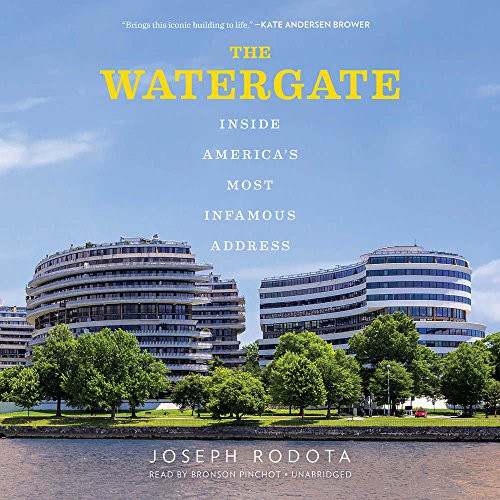
Read this if you want the rest of the Watergate story beyond the newsroom.
Joseph Rodota's book is the natural companion piece because it covers the same scandal from outside the Post's newsroom. Woodward and Bernstein wrote in the middle of events, before Nixon resigned, so their book is deliberately narrow: what two reporters knew and when. Rodota's account is built with the benefit of decades of hindsight, interviews, and firsthand material, and his organizing device is the Watergate complex itself, the famous Washington address whose offices and residents put it at the center of American political life.
Be aware that this is a broader and more leisurely book than a pure scandal narrative. Rodota is interested in the building's whole history and the cast of politicians, operatives, and socialites who passed through it, with the break-in as the most famous chapter rather than the only subject. Pick it if you finished All the President's Men wanting context, color, and the fuller arc of the era. Pick something else if you only want the investigative adrenaline.
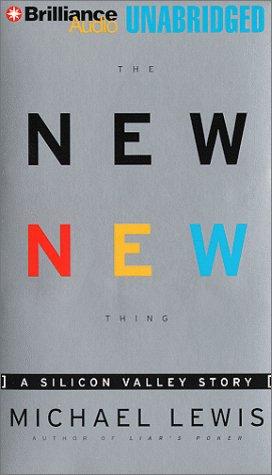
Read this if you want a master storyteller embedded with ambition and money.
Michael Lewis's 1999 book follows Jim Clark, the restless founder behind Silicon Graphics, Netscape, and Healtheon, as he chases the next fortune during the dot-com boom. The kinship with All the President's Men is the journalist's vantage point: Lewis embeds himself beside his subject and lets scenes, conversations, and telling details do the work, the same trust in observed fact over commentary that makes Woodward and Bernstein's book feel so immediate. It is also, like the original, a portrait of an American moment through the people driving it.
The difference is that Lewis is amused where Woodward and Bernstein are grave. Nobody is brought down here; Clark is an antihero of appetite rather than corruption, and the book is a character study of boom-era optimism, not an exposé. It has also dated in interesting ways, since you know how the bubble ends. Choose it for the pleasure of first-rate narrative journalism. If you want wrongdoing exposed, Bad Blood covers this same world with teeth.
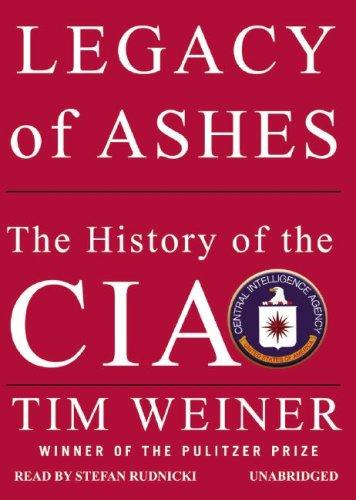
Read this if you want the institutions behind the scandal, documented at full scale.
Tim Weiner's history of the CIA, which won the National Book Award in 2007, shares the original's core conviction: that secret power in Washington can and should be dragged into the light with documents and named sources. Weiner, a longtime intelligence reporter, built the book from declassified records and on-the-record interviews, and the picture that emerges, of an agency lurching from one self-inflicted failure to another, is the institutional backdrop against which something like Watergate became possible. Several Watergate figures had intelligence ties, and the book makes that world legible.
This is a different kind of reading experience, though. It covers six decades rather than twenty-six months, and it is an argument as much as a narrative, one that some intelligence historians consider too unrelentingly negative. There is no pair of underdog heroes to follow. Choose it when you want to understand the machinery of secret government rather than relive the thrill of exposing one piece of it.
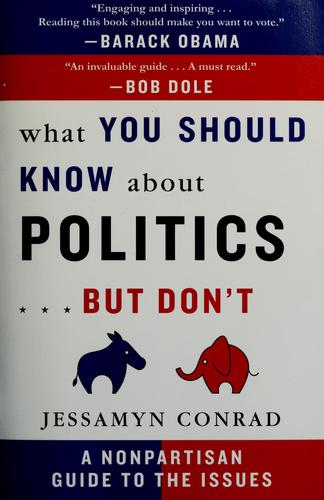
What You Should Know About Politics . . . But Don’t: A Nonpartisan Guide to Current Issues That Matter
by Jessamyn Conrad
Read this if Watergate left you wanting to actually understand how American politics works.
Jessamyn Conrad's guide is the practical pick on this list. All the President's Men assumes a working knowledge of how campaigns, Congress, and the executive branch operate, and plenty of readers finish it realizing their civics is rustier than they would like. Conrad walks through the major issue areas of American politics (elections, the economy, health care, foreign policy, and more) issue by issue, deliberately laying out the strongest version of each side's argument rather than scoring points.
Know what you are getting: this is a reference-style primer, not a narrative, and there is no story or characters to carry you. It is also periodically updated, so look for the most recent edition, since policy debates move fast. It pairs well with the rest of this list as the explainer you keep nearby while reading the histories. If you want another gripping yarn, this is not that; if Watergate made you want to be a better-informed citizen, it is exactly that.
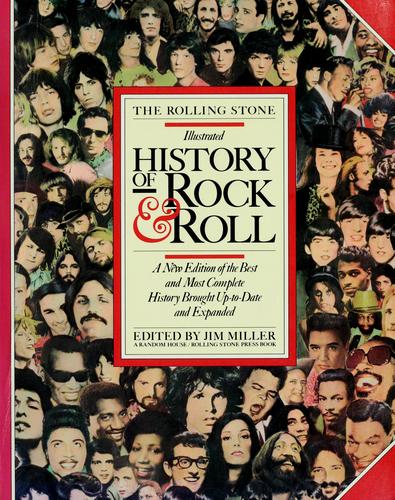
Read this only if what you loved was the era and the golden age of magazine journalism.
This is the loosest fit on the list, and it is worth being upfront about that. The connection is journalistic culture and period: edited by Jim Miller for Rolling Stone, it gathers essays by many of the best music writers of the era (the magazine's heyday overlaps almost exactly with Watergate, and Rolling Stone itself covered Nixon-era politics through writers like Hunter S. Thompson). As a portrait of the 1960s and 70s through its music, it captures the cultural weather in which All the President's Men happened.
But there is no investigation here and no politics to speak of, just authoritative, well-written history of rock and its major figures, organized as an illustrated anthology. Pick it up if Woodward and Bernstein left you nostalgic for that whole American moment and the confident long-form journalism it produced. If you came to this page for political intrigue or reporting-as-detective-story, any other book above will serve you better.
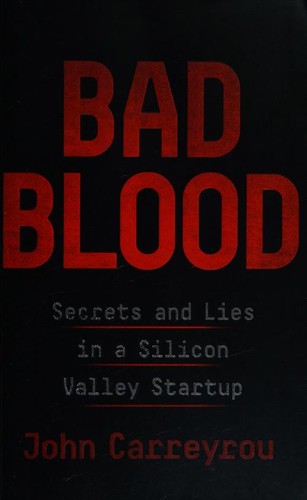
Bad Blood: Secrets and Lies in a Silicon Valley Startup
by John Carreyrou
Read this if you want the closest modern equivalent of Woodward and Bernstein's chase.
John Carreyrou's account of the Theranos fraud is the book most often called the All the President's Men of Silicon Valley, and the comparison holds up. Carreyrou was a Wall Street Journal reporter who pulled a thread on a celebrated blood-testing startup and kept pulling while the company's lawyers and founder Elizabeth Holmes tried to intimidate his sources into silence. Like Woodward and Bernstein, he shows you the mechanics: nervous insiders, documents, denials, and the slow accumulation of proof against people everyone assumed were untouchable.
The differences are mostly to its advantage as a follow-up. The target is a corporation rather than a presidency, the stakes are patients getting fake medical results rather than constitutional crisis, and Carreyrou writes his own investigation into the back half of the book, so you get both the fraud and the reporting that exposed it. It moves faster than the original, which is dense with names and meetings. If you loved the feeling of a cover-up coming apart under pressure, start here.
What book is most similar to All the President's Men?
Bad Blood by John Carreyrou is the closest match in spirit: a reporter methodically exposing powerful people through sources and documents while the target tries to shut the story down. For the same scandal rather than the same genre, The Watergate: Inside Story by Joseph Rodota and Woodward and Bernstein's own sequel, The Final Days, are the natural next steps.
Did Woodward and Bernstein write other books about Watergate?
Yes. The Final Days (1976) picks up where All the President's Men ends and covers the collapse of the Nixon presidency through the resignation. Woodward later wrote The Secret Man (2005) after Mark Felt was revealed as Deep Throat. Both authors have written extensively since, with Woodward producing a long series of inside-the-White-House books covering every president from Nixon onward.
Should I read the book if I have seen the 1976 movie?
Yes, they complement each other. The Alan Pakula film with Redford and Hoffman compresses the story and ends well before the book does, while the book contains far more sourcing detail and follows the investigation further into 1973. The movie is the better thriller; the book is the better account of how investigative reporting actually works day to day.
Is All the President's Men hard to follow today?
Somewhat. It was written for readers who knew the cast of the Nixon administration from the daily news, so the volume of names (Haldeman, Ehrlichman, Mitchell, Segretti, and many more) can be disorienting fifty years later. Keeping a character list handy or reading a short Watergate overview first helps. The reporting narrative itself is clear and propulsive once the players are straight.
As an Amazon Associate, we earn from qualifying purchases. · About & methodology