8 plays like A Streetcar Named Desire, from Long Day's Journey into Night to Cat on a Hot Tin Roof: American tragedy, family ruin, and Pinter's menace.
Updated June 10, 2026
A Streetcar Named Desire is the play that made Tennessee Williams's reputation and won him the 1948 Pulitzer Prize, and it still hits harder than almost anything written for the American stage. Blanche DuBois arrives at her sister Stella's cramped New Orleans apartment trailing a lost plantation, a ruined reputation, and a desperate set of illusions, and collides with Stanley Kowalski, who is everything she is not: physical, blunt, and merciless about the truth. Williams's gift is that nobody is simply the villain; the play destroys Blanche slowly, with poetry, heat, and a jazz score practically audible in the stage directions.
Everything on this list is a play, because what Streetcar readers usually want next is more great drama, and the list sorts into three strands. There is more Tennessee Williams, with The Glass Menagerie and Cat on a Hot Tin Roof showing the same fragile dreamers and combustible families. There is the golden age of American tragedy, where Death of a Salesman, Long Day's Journey into Night, A View from the Bridge, and Fences put ordinary families through the same wringer of illusion and ruin. And there is Harold Pinter (The Birthday Party, The Homecoming), for readers drawn to the menace under Streetcar's surface, the sense of an intruder and a household circling each other.
A practical note: plays read fast, usually in one or two sittings, but they are built to be heard. If a script feels flat on the page, try reading scenes aloud or pairing the text with a filmed production; Streetcar itself is best remembered through Elia Kazan's 1951 film with Marlon Brando and Vivien Leigh, and most of the plays below have strong screen or stage recordings.
Read this if Streetcar's collision of dreams and reality is what wrecked you.
Arthur Miller's 1949 tragedy opened on Broadway while Streetcar was still running, and the two plays have been twinned ever since: both are postwar American tragedies about people destroyed by the stories they tell themselves. Willy Loman, an exhausted traveling salesman, has built his life on a creed of being well liked, and the play moves fluidly between present humiliations and gilded memories the way Blanche drifts between Elysian Fields and Belle Reve. Both end with a fragile mind giving way and a famous, shattering final scene.
Miller's register is different, social rather than sensual. Where Williams writes desire, music, and Southern gothic atmosphere, Miller writes work, money, fathers, and sons in plain prose, and his target is the American Dream itself rather than one woman's psyche. If Streetcar felt intimate and feverish, Salesman feels public and architectural. They are the two essential American tragedies, and reading them back to back shows you the whole field.
Read this if you want the deepest, darkest family tragedy in American drama.
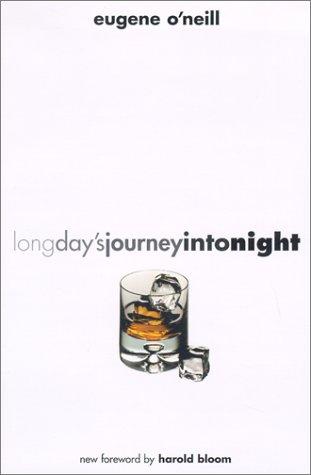
Eugene O'Neill's autobiographical masterpiece, written in the early 1940s and published only after his death, is the play most often shelved beside Streetcar at the summit of American drama. One August day with the Tyrone family, a miserly actor father, a mother relapsing into morphine addiction, and two damaged sons, delivers the same anatomy of illusion that Williams performs on Blanche: everyone clings to a story about the past, and the play strips those stories away hour by hour until only love and blame are left.
O'Neill is heavier going than Williams. There is no New Orleans heat or sexual electricity, just four people in a fog-bound Connecticut house talking in circles that tighten like a noose, and the language is repetitive by design rather than lyrical. It asks more patience and pays it back with the most devastating final act in the canon. Read it when you want Streetcar's emotional seriousness at full length and full weight.
Read this for the gentler, sadder Williams play that made Blanche possible.
This 1944 memory play is where Williams found his great subject: fragile people sheltering in illusion. Amanda Wingfield, a faded Southern belle living through her children in a St. Louis tenement, is a clear forerunner of Blanche, and her painfully shy daughter Laura, absorbed in her glass animals, embodies the vulnerability that Streetcar later puts through far rougher treatment. The famous gentleman caller scene has the same quality as Blanche's scenes with Mitch, hope offered and then withdrawn.
Menagerie is quieter and kinder than Streetcar. There is no Stanley, no violence, and the worst wound is delivered by disappointment rather than cruelty; the narrator Tom frames everything in regret, since the play is openly autobiographical, with Laura modeled on Williams's sister Rose. Read it second if you came to Williams through Streetcar: it shows where the obsessions started, and it is the easier play to press on someone new to drama.
Read this for Miller channeling Streetcar's other engine: desire a man cannot admit.
Of Miller's plays this is the one that runs closest to Williams's territory. Eddie Carbone, a Brooklyn longshoreman, harbors a fixation on his teenage niece that he cannot name, and when she falls for an illegal Italian immigrant sheltering in their home, his jealousy drives him to a betrayal his neighborhood cannot forgive. Like Streetcar it is a working-class household blown apart by an arrival from outside, and like Stanley, Eddie is a physically commanding man whose certainties curdle into violence.
Miller frames the story through a lawyer-narrator as a modern Greek tragedy, complete with a chorus figure and a sense of fate bearing down, so it feels more formal and inevitable than Streetcar's slow suffocation. It is also shorter and faster, often staged in a single driving arc. Pick it when you want the same explosive domestic material handled with a colder, more classical hand.
Read this for Williams at his most Streetcar-like: heat, lies, and a family at war.
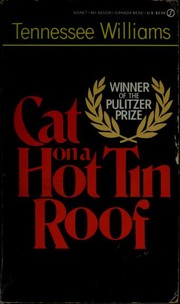
If Streetcar's mix of Southern decay, sexual tension, and brutal truth-telling is what gripped you, this is its closest sibling. Set on a Mississippi Delta plantation on Big Daddy's birthday, it locks Maggie the Cat, her drinking, withdrawn husband Brick, and a dying patriarch in rooms where everyone performs what Williams calls mendacity. Maggie shares Blanche's desperation and verbal brilliance, and Big Daddy has Stanley's bulldozer instinct for smashing through other people's illusions. It won Williams his second Pulitzer in 1955.
The difference is who holds the power. Blanche is a guest losing ground; Maggie is a fighter clawing to win, and Cat is finally a play about inheritance and survival rather than destruction. It is also talkier, with two enormous duologues doing most of the work. Note that the script exists in multiple versions, since director Elia Kazan pushed Williams to soften the third act; editions usually print both endings, and comparing them is half the fun.
Read this for an American family tragedy with a patriarch as towering as Stanley.
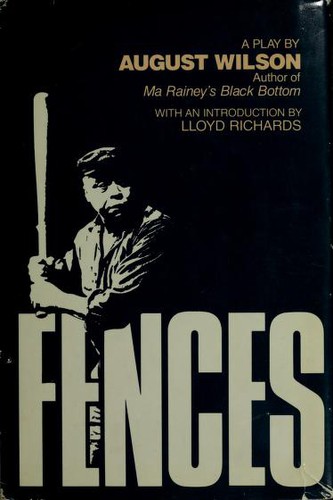
August Wilson's 1987 Pulitzer winner gives you the magnetic, domineering household force that Streetcar readers recognize instantly. Troy Maxson, a Pittsburgh garbage collector and former Negro League ballplayer barred from the majors by segregation, fills every room of the play, charming, bullying, and betraying the people who love him. Like Williams, Wilson writes speech so rich it tips into music, and the play shares Streetcar's core question of what a strong man's force does to the weaker people inside his walls.
The context is new: Fences is part of Wilson's ten-play cycle chronicling Black American life decade by decade, and Troy's bitterness is rooted in a specific, documented injustice rather than private psychology. Its sympathies are also more evenly spread; Rose, his wife, gets an answer to Stella's predicament that Stella never gets. Read it to see the family tragedy tradition Williams and Miller built carried somewhere they never went.
Read this if the menace and the cornered lodger drew you more than the romance.
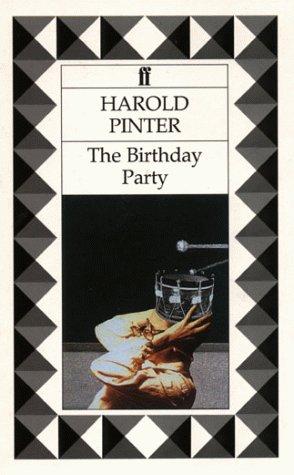
Strip Streetcar to its skeleton, a vulnerable person hiding from the past in a shabby refuge, then destroyed when outsiders force the truth in, and you have Harold Pinter's 1958 breakthrough. Stanley Webber (the shared first name is a nice accident) is the only lodger in a seaside boarding house until two strangers, Goldberg and McCann, arrive, interrogate him in dazzling nonsense duets, and break him utterly. The birthday party at the center even echoes Blanche's ruined birthday supper.
Pinter withholds everything Williams gives you. There is no backstory you can trust, no New Orleans color, no explanation of who the visitors are or what Stanley did, and the comedy is bone-dry right up until it becomes terrifying. The play famously flopped on opening before being recognized as a classic. Read it if you want Streetcar's dread distilled to pure technique, and skip it if you need motives spelled out.
Read this for the most unsettling family power struggle on the list.
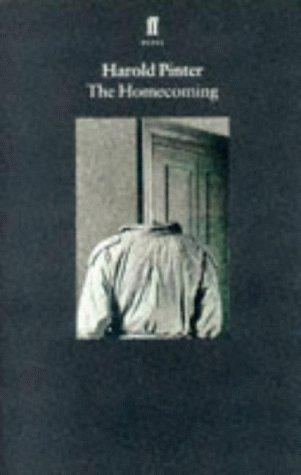
Pinter's 1965 play, widely considered his best, puts a Streetcar-like charge of sex and dominance inside a North London household of men: a retired butcher, his brothers and sons, all circling for position. When the eldest son returns from America with his wife Ruth, the family's games of intimidation converge on her, and the play's shock is that Ruth, unlike Blanche, studies the battlefield and coolly takes command of it. Every line works the way Stanley's taunts do, as a move in a contest for territory.
Be warned that it offers none of Williams's warmth or pathos; the famous Pinter pauses replace lyricism, and the ending is designed to leave audiences arguing about what they just watched rather than grieving. It reads quickly and stages unforgettably. Choose it if Streetcar fascinated you as a study of power between men and women, and you want that study run at absolute zero.
What play is most similar to A Streetcar Named Desire?
Cat on a Hot Tin Roof is the closest match, since it is also Tennessee Williams writing about desire, lies, and a Southern family under pressure, with Maggie sharing much of Blanche's desperate brilliance. Among other playwrights, Long Day's Journey into Night and Death of a Salesman are the standard companions: postwar tragedies about families destroyed by illusion, usually ranked alongside Streetcar as the peak of American drama.
Should I read The Glass Menagerie or Cat on a Hot Tin Roof next?
It depends what you loved. Cat on a Hot Tin Roof has more of Streetcar's heat, sexual tension, and confrontation, so choose it if Stanley and Blanche's collision is what held you. The Glass Menagerie is gentler and more autobiographical, with Amanda Wingfield as an early sketch of Blanche; choose it if Blanche's fragility moved you more than the violence. Both are short and worth reading eventually.
Is A Streetcar Named Desire a book or a play?
It is a play, first staged on Broadway in 1947 under Elia Kazan's direction and published as a script you can read like a book. It won the Pulitzer Prize for Drama in 1948. Most readers encounter it as a slim paperback, and it pairs well with the 1951 film starring Marlon Brando and Vivien Leigh, which preserves much of the original cast.
Are there novels like A Streetcar Named Desire, rather than plays?
This list sticks to drama, but the Southern Gothic novel tradition scratches a similar itch. Try Flannery O'Connor's Wise Blood or her stories, Carson McCullers's The Heart Is a Lonely Hunter for lonely Southern outsiders, and William Faulkner's The Sound and the Fury for a ruined aristocratic family in decline, which is essentially Belle Reve told in full.
As an Amazon Associate, we earn from qualifying purchases. · About & methodology